
The landscape of modern warfare is undergoing a radical transformation, driven by the imperatives of high-technology, information-centric operations. In this new paradigm, the military drone has emerged not merely as a tool, but as a cornerstone of tactical and strategic capability. The evolution from remotely piloted vehicles to increasingly autonomous systems represents a fundamental shift in how nations project power and gather intelligence. As I analyze the trajectory of these systems, one technological enabler stands out with profound significance: the application of advanced composite materials. Their integration is not an incremental improvement but a revolutionary leap, redefining the very parameters of design, performance, and mission profile for the modern military drone. This article explores, from my professional viewpoint, the intrinsic properties of these materials, their current deployment, the attendant challenges, and the future vectors that will shape the next generation of unmanned aerial systems.
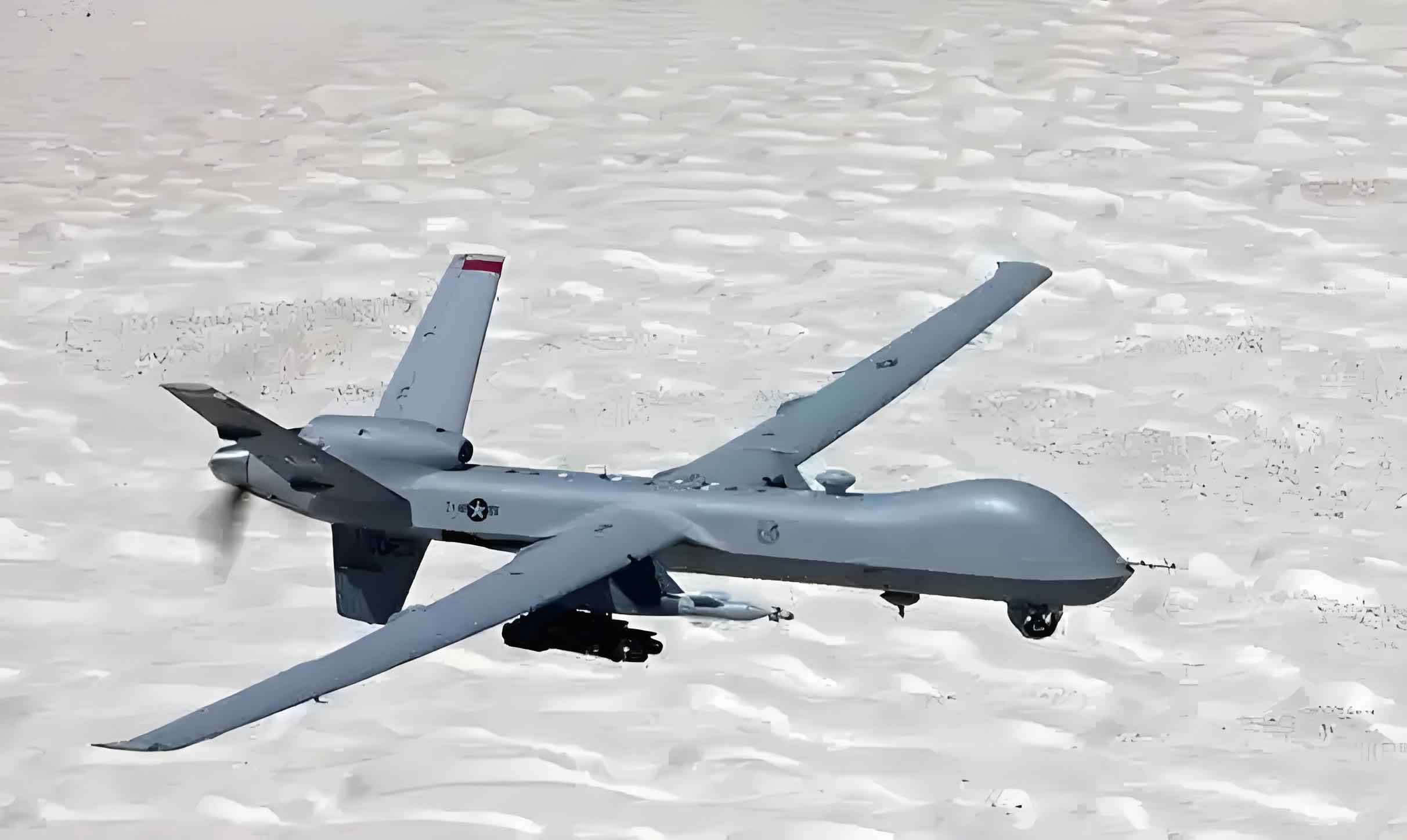
The drive towards advanced composites stems from a relentless pursuit of performance metrics that metallic alloys alone cannot satisfy. The primary advantage is encapsulated in the concepts of specific strength and specific modulus. Specific strength is defined as the material’s tensile strength divided by its density, while specific modulus is the elastic modulus divided by density. These ratios are critical for aerospace structures where every gram saved translates to extended range, higher payload capacity, or improved agility. For a military drone operating at the edge of its performance envelope, this is paramount. The fundamental advantage can be expressed as a performance gain function, $P_{gain}$, where reduced structural mass ($\Delta m$) directly enhances key parameters like endurance ($E$) or maneuverability ($\alpha$):
$$
P_{gain} = f(\Delta m) \propto \frac{E}{\alpha} \cdot \eta_{sys}
$$
where $\eta_{sys}$ represents the systemic efficiency multiplier gained from integrated design. Advanced composites, particularly carbon fiber reinforced polymers (CFRPs), exhibit specific strengths and moduli that are multiples of those for aluminum or titanium alloys. Beyond mass reduction, their anisotropic nature—the ability to tailor strength and stiffness along specific load paths by orienting the fiber layers—allows for structurally efficient designs impossible with isotropic metals. This “designability” is a game-changer. Furthermore, composites offer superior fatigue resistance, crucial for platforms enduring long-duration loitering missions, and inherent corrosion resistance, reducing life-cycle maintenance costs for military drone fleets operating in diverse environments.
The selection of composite matrices defines their operational domain. The table below summarizes the primary families:
| Matrix Type | Key Constituents | Primary Advantages | Typical Application in Military Drone | Temperature Limit |
|---|---|---|---|---|
| Polymer Matrix Composites (PMCs) | Epoxy, BMI, PEEK reinforced with carbon, glass, or aramid fibers. | High specific strength/modulus, excellent fatigue, good corrosion resistance, ease of complex shaping. | Primary & secondary structures (wings, fuselage, control surfaces), radomes. | ~120°C (epoxy) to ~250°C (PEEK) |
| Metal Matrix Composites (MMCs) | Aluminum, Titanium, or Magnesium matrix reinforced with SiC or B4C particles/fibers. | Higher specific stiffness & strength than base metal, better elevated temperature performance, low CTE. | Engine components, actuator housings, high-stress brackets. | ~300°C – 450°C |
| Ceramic Matrix Composites (CMCs) | SiC or Carbon matrix reinforced with continuous SiC or carbon fibers. | Exceptional high-temperature strength & thermal shock resistance, low density. | Leading edges, exhaust components, hot sections of propulsion systems. | >1200°C |
| Carbon-Carbon Composites (CCCs) | Carbon fiber reinforcement in a carbon matrix. | Extreme temperature tolerance, high specific strength at very high temperatures, ablation resistance. | Hypersonic vehicle leading edges, rocket nozzles (for high-speed drones). | >2000°C |
The application of these materials in military drone structures is systematic and driven by functional requirements. The airframe, constituting the largest mass fraction, is the primary target for PMCs. Monolithic sandwich constructions with carbon fiber facesheets and honeycomb or foam cores are ubiquitous for wings and fuselage sections, providing immense bending stiffness for minimal weight. For instance, the structural weight savings for a medium-altitude long-endurance (MALE) military drone wing can be modeled approximately as a function of material density ($\rho$) and required bending stiffness ($EI$):
$$
\Delta W_{wing} \approx \int_{span} \left( \rho_{Al} – \rho_{CFRP} \right) \cdot A(s) \, ds \quad \text{subject to} \quad EI_{CFRP} \geq EI_{req}
$$
where $A(s)$ is the cross-sectional area along the wing span. This can result in net mass reductions of 20-30% compared to conventional aluminum designs. The drive for low-observable or stealth characteristics further incentivizes composites. Their ability to be formed into complex, faceted shapes with embedded radar-absorbent material (RAM) layers or conductive patterns is integral to reducing the radar cross-section (RCS) of a military drone. The RCS reduction for a simple shape, while highly complex in reality, can be conceptually linked to geometric shaping and material absorption properties.
Propulsion and thermal management systems increasingly leverage MMCs and CMCs. MMCs like SiCp/Al are used for lightweight pistons in heavy-fuel engines for unmanned aerial vehicles (UAVs), improving specific power. For turbine-powered military drones, CMC components allow for higher turbine inlet temperatures, boosting efficiency without the cooling penalty and weight of nickel superalloys. The benefit in specific fuel consumption (SFC) can be significant for long-endurance missions. The table below outlines specific component-level applications:
| Drone Subsystem | Component | Composite Type | Functional Benefit |
|---|---|---|---|
| Airframe Structure | Wing skins, spars, fuselage shells, empennage | Carbon/Epoxy, Carbon/BMI sandwich | Mass reduction, high stiffness, fatigue resistance, integrated shape for low RCS. |
| Propulsion | Engine fan blades, casings, exhaust ducts | SiCf/SiC CMCs, SiCp/Al MMCs | Weight saving, high-temperature capability, reduced cooling needs. |
| Low Observables | Leading edges, inlet ducts, radome | Frequency Selective Surface (FSS) laminates, RAM-integrated CFRP | RCS reduction, aerodynamic shaping with EM functionality. |
| Mechanical Systems | Landing gear, actuator components, brackets | High-strength CFRP, MMCs | Lightweight, high stiffness/damping, corrosion-free operation. |
Despite these transformative advantages, the widespread adoption of advanced composites in military drone manufacturing faces significant headwinds. The foremost challenge remains cost. The raw material expense of high-grade carbon fiber and premium resins, coupled with energy-intensive and often labor-heavy manufacturing processes like autoclave curing, leads to high upfront costs. While this is less prohibitive for high-performance military platforms than for commercial aviation, it impacts the feasibility of large-scale production for attritable or swarm military drone concepts. The total cost equation for a composite structure, $C_{total}$, includes not just material ($C_{mat}$) but also tooling, labor, and energy for processing ($C_{proc}$), and non-destructive inspection (NDI) costs ($C_{NDI}$):
$$
C_{total} = C_{mat} + C_{proc}(t, E) + C_{NDI} + C_{tooling}
$$
Process automation—such as Automated Tape Laying (ATL) and Automated Fiber Placement (AFP)—is reducing $C_{proc}$ by increasing deposition rates and material utilization. Out-of-Autoclave (OOA) curing prepregs and Liquid Composite Molding (LCM) techniques like Resin Transfer Molding (RTM) are also key to driving down costs and cycle times. Another critical challenge is damage tolerance and repair. While composites have excellent fatigue properties, they are susceptible to impact damage (e.g., from tool drops, hail, or debris) which can cause internal delaminations that are difficult to detect visually. Developing rapid, reliable, and field-capable inspection and repair techniques for composite structures on a forward-deployed military drone is an ongoing area of intense research. Furthermore, the certification of composite structures, especially for novel designs integrating functions like energy storage or sensing, requires extensive testing and analysis to build validated predictive models, adding to development time and cost.
Looking forward, the future of advanced composites in military drone technology is oriented towards greater integration, intelligence, and multifunctionality. The trend is moving beyond using composites merely as passive structural elements. We are entering an era of “smart structures” where the material system itself is an active sensor and actuator. The integration of fiber Bragg grating (FBG) sensors or piezoelectric transducers into the laminate during layup allows for real-time health monitoring, load sensing, and even active vibration or shape control. For a military drone, this means in-flight structural integrity assessment and adaptive aerodynamics.
Multifunctional composites represent another frontier. Research is focused on developing materials that combine load-bearing capability with other functions: structural power composites (capable of storing electrical energy), composites with embedded thermal management channels, or those with dynamically tunable electromagnetic properties for adaptive signature control. The performance metric for such a multifunctional composite for a military drone can be expressed as a multi-objective function seeking to maximize several properties ($p_i$) simultaneously, such as stiffness, electrical conductivity, and thermal conductivity, subject to weight constraints:
$$
\text{Maximize: } F = \sum_{i=1}^{n} w_i \cdot p_i(\phi_f, \theta, \Lambda) \quad \text{subject to} \quad m \leq m_{max}
$$
where $w_i$ are weighting factors, $\phi_f$ is fiber volume fraction, $\theta$ is fiber orientation, and $\Lambda$ represents microstructural parameters.
Additive manufacturing (AM) or 3D printing of composites is poised to revolutionize prototyping and the production of complex, integrated components. Continuous fiber-reinforced AM processes enable the creation of topology-optimized structures with internal lattices and channels that are impossible to manufacture with traditional methods, further pushing the boundaries of lightweight design for the next-generation military drone. Finally, sustainability and lifecycle management are becoming considerations. Developing recycling pathways for thermoset composites and increasing the use of thermoplastic matrices (which are recyclable and weldable) are important for the responsible lifecycle management of future military drone fleets.
In conclusion, the synergy between advanced composite materials and military drone technology is a defining characteristic of modern aerospace development. From my assessment, composites have evolved from being an alternative material to becoming the essential enabler of the performance, stealth, and functionality demanded by contemporary and future unmanned missions. The journey involves navigating significant challenges in cost, manufacturing, and certification. However, the relentless progress in automation, multifunctional materials, and digital design tools is steadily overcoming these barriers. The future military drone will likely be a system where the airframe is not just a structure but an integrated, intelligent subsystem—a manifestation of composite technology’s fullest potential. This ongoing revolution in materials science continues to be the critical force propelling the capabilities of the unmanned systems that are reshaping the very nature of aerial operations.