
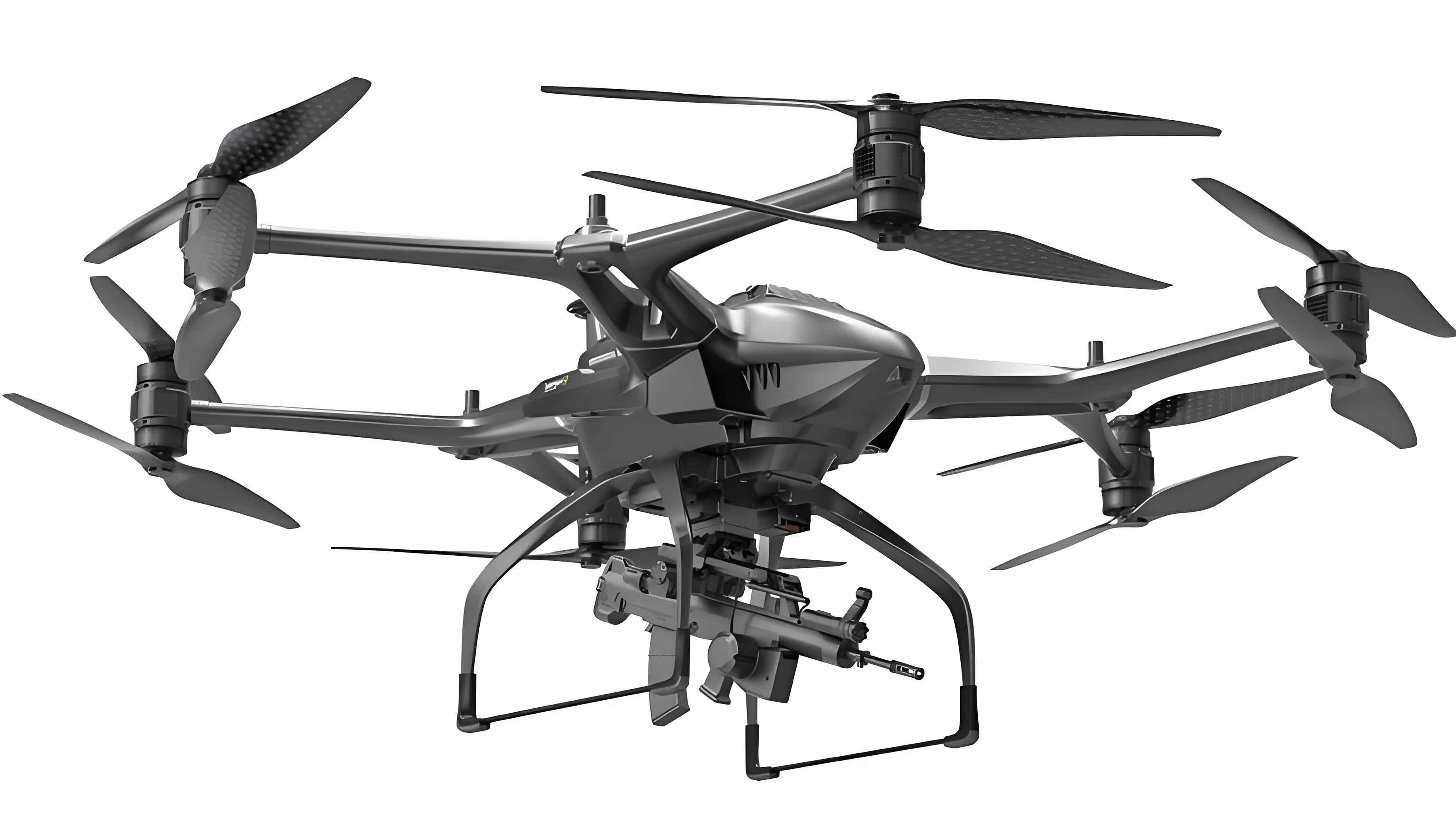
The proliferation and tactical integration of unmanned aerial systems have irrevocably altered the modern battlespace. From persistent intelligence, surveillance, and reconnaissance (ISR) to precision strike and electronic warfare, the military drone has evolved from a niche asset into a cornerstone of contemporary military operations. The efficacy of these systems, however, remains intrinsically linked to the human operator at the control station. Unlike fully autonomous systems, most current military drone operations, especially in complex or contested environments, demand significant human judgment, real-time decision-making, and manual control intervention. Consequently, the proficiency of the military drone operator is a critical determinant of mission success, platform survivability, and overall combat effectiveness.
Traditional methods for evaluating operator capability often focus on isolated performance metrics, such as basic flight maneuver accuracy or written test scores on theoretical knowledge. While these metrics are valuable, they frequently fail to capture the holistic and multifaceted nature of the skills required for operating a military drone in a dynamic, high-stress environment. Such simplistic models struggle to account for the complex interplay between psychomotor skills, technical knowledge, maintenance aptitude, and psychological resilience. Furthermore, human assessments inherently involve subjectivity and linguistic ambiguity (e.g., “good,” “adequate,” “excellent”), introducing a layer of fuzziness that purely crisp, quantitative models cannot adequately process.
To address these limitations, this article develops a robust, multi-criteria decision-making framework for the comprehensive assessment of military drone operator competency. The proposed methodology integrates the Analytic Hierarchy Process (AHP) with fuzzy set theory, creating a Fuzzy Analytic Hierarchy Process (F-AHP) model. This hybrid approach allows for the systematic structuring of diverse evaluation criteria, the quantitative determination of their relative importance through pairwise comparisons, and the effective handling of the inherent vagueness in human judgment during the scoring process. The ultimate goal is to provide a scientifically grounded, objective, and operationally relevant tool for assessing and enhancing military drone operator readiness.
1. Constructing the Military Drone Operator Competency Index System
The foundational step in any multi-criteria evaluation is establishing a comprehensive and logically structured index system. For a military drone operator, competency is not a monolithic skill but a synthesis of several interdependent domains. Based on a functional analysis of operator tasks—spanning pre-flight checks, mission execution, basic troubleshooting, and post-flight procedures—four primary competency pillars are identified. These form the criterion layer (A) of our hierarchical model. Each pillar is then decomposed into specific, observable indicators, forming the sub-criterion layer (B). The complete hierarchy is presented in Table 1.
| Target Layer (Goal) | Criterion Layer (A) | Sub-Criterion Layer (B) – Indicators |
|---|---|---|
| Military Drone Operator Proficiency Assessment (M) | A1: Flight Skills | B1: Take-off, Landing, and Standard Turning |
| B2: Hovering and Orbiting (Station-keeping) | ||
| B3: Dive, Climb, and Energy Management Maneuvers | ||
| B4: Aileron Rolls and Axial Maneuvers | ||
| B5: Tactical Maneuvers (Terrain masking, Evasive action) | ||
| B6: Looping and Advanced Aerobatics | ||
| A2: Flight Theory & Knowledge | B7: Airframe, Propulsion, and Systems Knowledge | |
| B8: Operational Safety and Regulations | ||
| B9: Principles of Navigation, Communication, and Payload Operation | ||
| A3: Maintenance & Technical Skills | B10: Routine Inspection, Cleaning, and Lubrication | |
| B11: Preventive Maintenance and Component Testing | ||
| B12: Corrective Maintenance and Fault Diagnosis | ||
| A4: Psychological Fitness | B13: Situational Awareness and Mental Focus | |
| B14: Stress and Emotional Regulation | ||
| B15: Emergency Response and Decision-Making Under Pressure |
A1: Flight Skills constitute the core psychomotor competency for a military drone operator. This domain evaluates the operator’s ability to physically control the drone through a spectrum of maneuvers, from fundamental actions essential for all missions to complex tactical movements required for survivability and effectiveness in contested environments.
A2: Flight Theory & Knowledge underpins safe and effective operation. A deep understanding of aerodynamics, platform limitations, airspace regulations, and sensor capabilities enables informed decision-making, optimal mission planning, and appropriate responses to system anomalies.
A3: Maintenance & Technical Skills are crucial for operational readiness. Given the forward-deployed nature of many military drone units, operators often must perform field-level maintenance. Proficiency in inspection, basic troubleshooting, and component handling reduces downtime and enhances mission availability.
A4: Psychological Fitness is a critical yet often under-weighted factor. Operating a military drone, particularly in combat, involves prolonged concentration, processing of chaotic sensory data, and making high-consequence decisions remotely. Resilience to stress, fatigue, and cognitive overload is paramount for sustained performance.
2. Determining Factor Weights Using the Fuzzy Analytic Hierarchy Process (F-AHP)
Not all competencies contribute equally to overall operator proficiency. The F-AHP method is employed to determine the relative weight of each criterion and sub-criterion, transforming expert judgment into quantifiable priorities.
2.1 Constructing the Fuzzy Judgment Matrix
Instead of using crisp numbers in standard AHP, F-AHP utilizes triangular fuzzy numbers (TFNs) to capture the uncertainty in expert comparisons. A TFN is represented as $\tilde{m} = (l, m, u)$, where $l$, $m$, and $u$ are the lower, most likely, and upper bounds, respectively. Experts compare elements pairwise using the linguistic scale and corresponding TFNs shown in Table 2.
| Linguistic Importance | TFN $(l, m, u)$ | Reciprocal TFN |
|---|---|---|
| Equally Important | (1, 1, 1) | (1, 1, 1) |
| Weakly More Important | (1, 3, 5) | (1/5, 1/3, 1) |
| Strongly More Important | (3, 5, 7) | (1/7, 1/5, 1/3) |
| Very Strongly More Important | (5, 7, 9) | (1/9, 1/7, 1/5) |
| Absolutely More Important | (7, 9, 11) | (1/11, 1/9, 1/7) |
For $n$ elements in a comparison set, a fuzzy judgment matrix $\tilde{A}$ is constructed:
$$
\tilde{A} = [\tilde{a}_{ij}]_{n \times n} =
\begin{bmatrix}
(1,1,1) & \tilde{a}_{12} & \cdots & \tilde{a}_{1n}\\
\tilde{a}_{21} & (1,1,1) & \cdots & \tilde{a}_{2n}\\
\vdots & \vdots & \ddots & \vdots\\
\tilde{a}_{n1} & \tilde{a}_{n2} & \cdots & (1,1,1)
\end{bmatrix}
$$
where $\tilde{a}_{ji} = 1 / \tilde{a}_{ij} = (1/u_{ij}, 1/m_{ij}, 1/l_{ij})$.
2.2 Calculating Fuzzy Weights and Performing Consistency Check
The geometric mean method for TFNs is applied to compute the fuzzy weight of each element. For criterion $i$, its fuzzy geometric mean $\tilde{r}_i$ is calculated as:
$$
\tilde{r}_i = \left( \prod_{j=1}^{n} \tilde{a}_{ij} \right)^{1/n} = \left( \left(\prod_{j=1}^{n} l_{ij}\right)^{1/n}, \left(\prod_{j=1}^{n} m_{ij}\right)^{1/n}, \left(\prod_{j=1}^{n} u_{ij}\right)^{1/n} \right)
$$
The fuzzy weight $\tilde{w}_i$ is then obtained by:
$$
\tilde{w}_i = \tilde{r}_i \otimes (\tilde{r}_1 \oplus \tilde{r}_2 \oplus … \oplus \tilde{r}_n)^{-1}
$$
To check consistency, the fuzzy matrix $\tilde{A}$ is converted to a crisp matrix $A$ using the centroid method ($a_{ij} = m_{ij}$ from the TFN). The consistency ratio ($CR$) is calculated as:
$$
CR = \frac{CI}{RI}, \quad \text{where} \quad CI = \frac{\lambda_{max} – n}{n-1}
$$
Here, $\lambda_{max}$ is the principal eigenvalue of matrix $A$, and $RI$ is the Random Index. A $CR < 0.10$ indicates acceptable consistency.
2.3 Defuzzification and Final Weight Determination
The resulting fuzzy weights $\tilde{w}_i$ are defuzzified to obtain crisp weights $w_i$ using the Center of Area (COA) method:
$$
w_i = \frac{l_i + m_i + u_i}{3}
$$
Finally, the weights are normalized so that their sum equals 1. Applying this F-AHP process to the hierarchy for a military drone operator yields the local and global weights shown in Table 3. The calculations are performed separately for the criterion layer (A) relative to the goal (M) and for each sub-criterion layer (B) relative to its parent criterion (A). The global weight for each sub-criterion is the product of its local weight and its parent criterion’s weight.
| Criterion (A) Weight (Global) |
Sub-Criterion (B) | Local Weight (within A) |
Global Weight |
|---|---|---|---|
| A1: Flight Skills $w_{A1}=0.449$ |
B1: Take-off/Landing/Turning | 0.286 | 0.128 |
| B2: Hovering/Orbiting | 0.104 | 0.047 | |
| B3: Dive/Climb | 0.162 | 0.073 | |
| B4: Axial Rolls | 0.151 | 0.068 | |
| B5: Tactical Maneuvers | 0.167 | 0.075 | |
| B6: Looping | 0.130 | 0.058 | |
| A2: Flight Theory $w_{A2}=0.080$ |
B7: Systems Knowledge | 0.376 | 0.030 |
| B8: Safety & Regulations | 0.263 | 0.021 | |
| B9: Navigation & Payload Theory | 0.361 | 0.029 | |
| A3: Maintenance Skills $w_{A3}=0.370$ |
B10: Routine Inspection | 0.362 | 0.134 |
| B11: Preventive Maintenance | 0.362 | 0.134 | |
| B12: Corrective Maintenance | 0.275 | 0.102 | |
| A4: Psychological Fitness $w_{A4}=0.101$ |
B13: Situational Awareness | 0.302 | 0.030 |
| B14: Stress Regulation | 0.302 | 0.030 | |
| B15: Emergency Decision-Making | 0.397 | 0.040 |
Note: The sum of global weights for all 15 sub-criteria equals 1.000.
The weight analysis reveals critical insights. Flight Skills (A1) and Maintenance Skills (A3) are the dominant pillars, with combined weight of 0.819. This underscores the hands-on, practical nature of the military drone operator role. Within Flight Skills, basic take-off, landing, and turning (B1) carries the highest single global weight (0.128), highlighting its foundational importance. The near-equal high weights for Routine (B10) and Preventive (B11) Maintenance within A3 emphasize the operator’s direct role in platform sustainment. While Psychological Fitness (A4) has a lower overall weight, the sub-criterion for Emergency Decision-Making (B15) is its most significant component, pointing to the critical need for composure during crises.
3. The Multi-Level Fuzzy Comprehensive Evaluation Algorithm
With the index system and weights established, the next step is to evaluate a specific military drone operator. This involves fuzzy comprehensive evaluation, which aggregates performance ratings across all fuzzy indicators into a single, clear result.
3.1 Establishing the Evaluation Set
An evaluation set $V$ is defined to contain all possible qualitative assessment levels. For this model, we use a four-level set:
$$
V = \{v_1, v_2, v_3, v_4\} = \{\text{Excellent}, \text{Good}, \text{Fair}, \text{Poor}\}
$$
A score vector $S$ is associated with $V$ for final quantitative calculation. A common assignment is:
$$
S = [s_1, s_2, s_3, s_4] = [90, 75, 60, 45]
$$
3.2 Determining the Membership Matrix
For a specific operator, a group of $k$ evaluators (instructors, peers, SMEs) assesses each sub-criterion $B_i$ and assigns it a grade from $V$. The membership degree $r_{ij}$ for $B_i$ to grade $v_j$ is the proportion of evaluators who assigned that grade. For example, if 8 out of 10 evaluators rate an operator’s “Take-off/Landing” (B1) as “Good” ($v_2$), then $r_{12} = 0.8$.
For each criterion $A_p$ containing $t$ sub-criteria, a membership matrix $R_p$ is formed:
$$
R_p =
\begin{bmatrix}
r_{11} & r_{12} & r_{13} & r_{14}\\
r_{21} & r_{22} & r_{23} & r_{24}\\
\vdots & \vdots & \vdots & \vdots\\
r_{t1} & r_{t2} & r_{t3} & r_{t4}
\end{bmatrix}
$$
3.3 Single-Level and Multi-Level Fuzzy Synthesis
The evaluation begins at the sub-criterion level. For criterion $A_p$, its fuzzy evaluation result vector $B_p$ is calculated by synthesizing the local weight vector $W_p$ (from Table 3) with its membership matrix $R_p$:
$$
B_p = W_p \circ R_p = (w_{p1}, w_{p2}, …, w_{pt}) \circ
\begin{bmatrix}
r_{11} & r_{12} & r_{13} & r_{14}\\
\vdots & \vdots & \vdots & \vdots\\
r_{t1} & r_{t2} & r_{t3} & r_{t4}
\end{bmatrix} = (b_{p1}, b_{p2}, b_{p3}, b_{p4})
$$
The operator “$\circ$” denotes a fuzzy synthesis operator, typically using the weighted average model: $b_{pj} = \sum_{i=1}^{t} (w_{pi} \cdot r_{ij})$. The result $B_p$ is a vector indicating the degree to which the operator’s performance in pillar $A_p$ belongs to each grade in $V$.
These criterion-level results $B_1, B_2, B_3, B_4$ then become the rows of the membership matrix $R$ for the overall goal (M):
$$
R =
\begin{bmatrix}
B_1\\
B_2\\
B_3\\
B_4
\end{bmatrix}
=
\begin{bmatrix}
b_{11} & b_{12} & b_{13} & b_{14}\\
b_{21} & b_{22} & b_{23} & b_{24}\\
b_{31} & b_{32} & b_{33} & b_{34}\\
b_{41} & b_{42} & b_{43} & b_{44}
\end{bmatrix}
$$
The final, comprehensive evaluation vector $E$ for the operator is calculated using the criterion-level global weights $W = (w_{A1}, w_{A2}, w_{A3}, w_{A4})$:
$$
E = W \circ R = (e_1, e_2, e_3, e_4)
$$
3.4 Result Interpretation and Final Score
The vector $E$ represents the fuzzy overall assessment. It can be interpreted using the maximum membership principle: the grade $v_j$ with the largest $e_j$ is the primary evaluation. For a precise score, the vector is combined with the score vector $S$:
$$
\text{Final Score} = E \cdot S^T = e_1 \times 90 + e_2 \times 75 + e_3 \times 60 + e_4 \times 45
$$
This score provides a cardinal ranking of operator proficiency.
4. Illustrative Case Study
To demonstrate the practical application of this framework, consider a trainee operator, referred to as Candidate X, undergoing a final proficiency assessment at a military drone training school.
4.1 Data Collection and Membership Matrices
A panel of five expert evaluators assessed Candidate X on all 15 sub-criteria using the evaluation set $V$. The aggregated membership matrices for each criterion are shown below.
For Flight Skills (A1):
$$
R_{A1} =
\begin{bmatrix}
0.4 & 0.6 & 0.0 & 0.0 & \text{(B1)}\\
0.2 & 0.6 & 0.2 & 0.0 & \text{(B2)}\\
0.0 & 0.6 & 0.4 & 0.0 & \text{(B3)}\\
0.0 & 0.4 & 0.6 & 0.0 & \text{(B4)}\\
0.0 & 0.2 & 0.6 & 0.2 & \text{(B5)}\\
0.0 & 0.0 & 0.8 & 0.2 & \text{(B6)}
\end{bmatrix}
$$
Using local weights $W_{A1} = (0.286, 0.104, 0.162, 0.151, 0.167, 0.130)$:
$$
B_{A1} = W_{A1} \circ R_{A1} = (0.114, 0.457, 0.357, 0.072)
$$
This indicates Candidate X’s flight skills are rated 11.4% “Excellent”, 45.7% “Good”, 35.7% “Fair”, and 7.2% “Poor”. The strongest membership is to “Good.”
Following the same process for other criteria (with simulated data):
For Flight Theory (A2): $B_{A2} = (0.250, 0.550, 0.180, 0.020)$
For Maintenance Skills (A3): $B_{A3} = (0.150, 0.350, 0.400, 0.100)$
For Psychological Fitness (A4): $B_{A4} = (0.350, 0.500, 0.150, 0.000)$
4.2 Comprehensive Evaluation and Analysis
The criterion-level results form the overall membership matrix:
$$
R =
\begin{bmatrix}
0.114 & 0.457 & 0.357 & 0.072\\
0.250 & 0.550 & 0.180 & 0.020\\
0.150 & 0.350 & 0.400 & 0.100\\
0.350 & 0.500 & 0.150 & 0.000
\end{bmatrix}
$$
Using the global criterion weights $W = (0.449, 0.080, 0.370, 0.101)$:
$$
E = W \circ R = (0.449, 0.080, 0.370, 0.101) \circ
\begin{bmatrix}
0.114 & 0.457 & 0.357 & 0.072\\
0.250 & 0.550 & 0.180 & 0.020\\
0.150 & 0.350 & 0.400 & 0.100\\
0.350 & 0.500 & 0.150 & 0.000
\end{bmatrix}
$$
$$
E = (0.166, 0.425, 0.332, 0.077)
$$
Applying the maximum membership principle, the grade “Good” ($v_2$) has the highest membership degree (0.425). The final numeric score is:
$$
\text{Score} = (0.166\times90) + (0.425\times75) + (0.332\times60) + (0.077\times45) = 71.9
$$
4.3 Interpretation and Developmental Insights
The evaluation places Candidate X in the “Good” category with a score of 71.9. The detailed breakdown offers actionable feedback:
- Relative Strength: Psychological Fitness (A4) shows the strongest profile $(0.350, 0.500,…)$, a positive trait for a future military drone operator facing high-stress scenarios.
- Primary Development Area: The most significant weakness lies in Maintenance Skills (A3), which has the highest membership to “Fair” (0.400) and a notable “Poor” component (0.100). Given the high global weight of A3 (0.370), this substantially drags down the total score. Targeted training on field maintenance procedures is urgently recommended.
- Skill-Specific Focus: Within Flight Skills (A1), the lower scores in advanced maneuvers (B5, B6) are apparent. While basic skills (B1) are solid, advanced tactical and recovery maneuvering requires more simulator and flight time.
This structured output moves beyond a simple pass/fail, providing a diagnostic profile to guide individualized training for the military drone operator candidate.
5. Conclusion
The effective deployment of military drone assets is contingent upon the proficiency of their human operators. This article has presented a rigorous and practical framework for assessing this proficiency, addressing the multifaceted and fuzzy nature of the evaluation problem. By integrating the Fuzzy Analytic Hierarchy Process (F-AHP) with multi-level fuzzy comprehensive evaluation, the model achieves several key advantages for military drone operator assessment:
- Systematic Structure: It decomposes complex operator competency into a logical hierarchy of four primary pillars and fifteen specific indicators, ensuring all critical skill domains are considered.
- Objective Weighting: It translates expert judgment on the relative importance of skills into quantitative weights, minimizing subjective bias and highlighting that operational proficiency for a military drone operator is dominated by hands-on flight and maintenance skills.
- Handling of Ambiguity: It formally accommodates the inherent vagueness in human performance ratings through fuzzy set theory, leading to more robust and realistic aggregations.
- Diagnostic Output: The model yields not only a clear overall score and rating but also a detailed profile across competency pillars. This diagnostic capability is invaluable for identifying individual strengths and weaknesses, enabling personalized training programs to enhance the readiness of the military drone operator corps.
The illustrative case study validates the model’s operational utility, demonstrating its ability to process qualitative assessments into a quantifiable and interpretable result. This framework provides military training institutions and evaluation boards with a powerful, science-based tool to ensure their military drone operators are not just qualified, but optimally prepared for the demands of modern aerial operations. Future work could involve integrating real-time performance data from simulators or live flights directly into the membership functions, further enhancing the model’s objectivity and dynamism.