
Inland waterways are critical components of transportation networks, directly influencing regional economic vitality and resource allocation. Traditionally, waterway inspection has relied heavily on manual patrols using vessels, which are often inefficient, costly, and pose safety risks, especially in complex or adverse weather conditions. With the rapid development of drone technology, new solutions have emerged, but conventional DJI drone systems still face limitations such as short battery life, manual operation dependencies, and unstable data transmission, hindering全天候 automated operations. The DJI Dock 2, as an integrated unmanned solution, combines high-precision positioning, multi-sensor coordination, and cloud management platforms to revolutionize inspection paradigms. In this study, we explore the technical architecture and implementation pathways of the DJI Dock 2 based on practical cases in inland waterway inspection, validating its comprehensive benefits through measured data to provide a foundation for intelligent waterway management systems.
Our project, initiated in 2024, focuses on key sections of a major river basin, covering critical areas for navigation aid monitoring and obstacle detection. The core platform is the DJI Dock 2, which includes the dock本体, drone hangar, weather station, and remote control units, enabling automated takeoff, landing, charging, and data transmission for DJI drones. Deployed along riverbanks with limited space, a single DJI Dock 2 can cover an inspection radius of 15 km. The system integrates key technologies such as RTK positioning and omnidirectional obstacle avoidance. Operations follow standardized procedures for task planning, equipment maintenance, and emergency response, forming a robust management framework. Data is transmitted and stored in real-time via the DJI司空 2 cloud platform, ensuring seamless workflow integration.
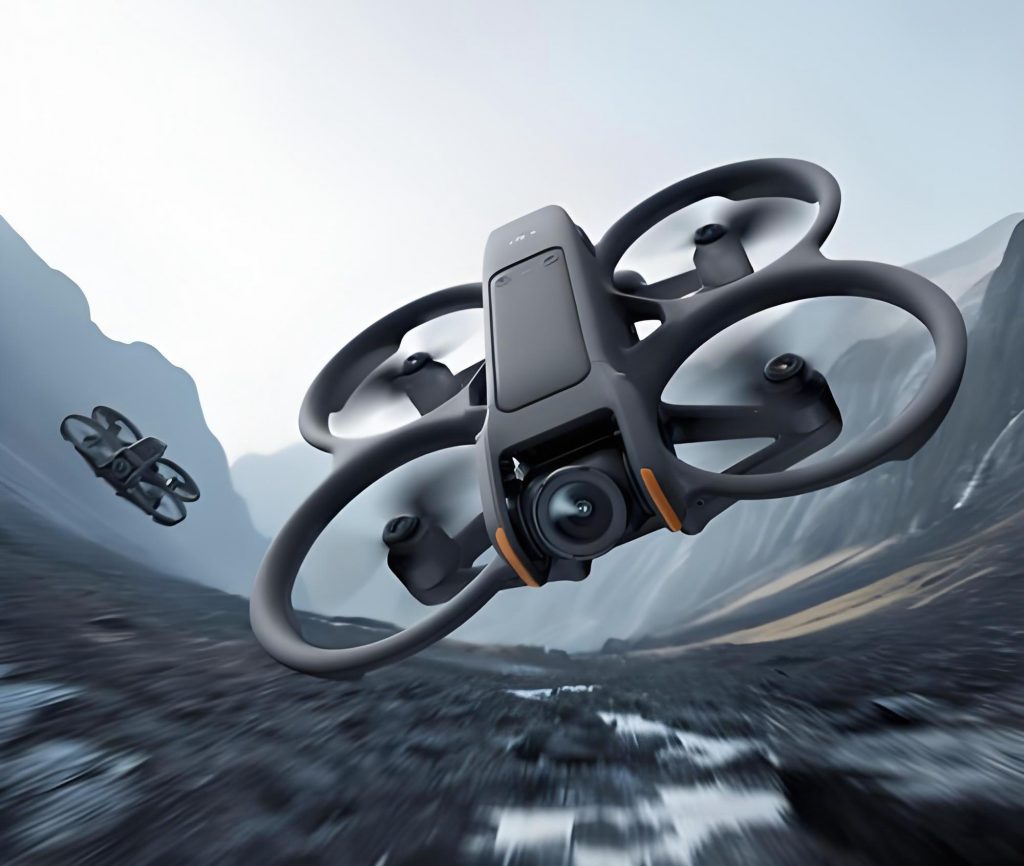
The effectiveness of the DJI Dock 2 in waterway inspection hinges on several core technologies. First, RTK centimeter-level positioning achieves high spatial accuracy through the collaboration between ground base stations and onboard receivers on the DJI drone. Using carrier phase differential principles, it corrects errors in satellite signal propagation. The RTK module on the DJI Matrice 3E drone demonstrates stable performance, with measurement accuracy for navigation aids reaching ±1.5 cm. The positioning error can be modeled as: $$\epsilon = \sqrt{\sigma_{\text{satellite}}^2 + \sigma_{\text{ionospheric}}^2 + \sigma_{\text{receiver}}^2}$$ where $\epsilon$ represents the total error, and $\sigma$ terms denote variances from satellite, ionospheric, and receiver sources. In tests, the DJI drone maintained a trajectory deviation below 3 cm along预设航线 with 0.5 m spacing, ensuring complete image coverage. Redundancy algorithms in the RTK module switch to backup signal sources if satellite signals are lost, maintaining continuity. Data from the DJI drone is transmitted in real-time via 4G enhanced图传 to the cloud platform for synchronized processing.
Second, 4G enhanced图传 technology leverages multi-network coordination (e.g.,移动,联通,电信) to automatically switch to 4G networks when remote control signals are interrupted, ensuring real-time data回传. The DJI Matrice 3E drone’s 4G module supports dual-SIM functionality, intelligently selecting the optimal network based on signal strength. With multi-band antennas, the DJI drone enhances signal reception in complex environments. When图传 signals are lost during flight, the 4G链路 is activated, maintaining image transmission rates. Compared to pure图传 modes, the 4G enhancement extends the effective inspection radius from 5 km to 15 km, accommodating long-distance waterway巡查. The data transmission integrity is ensured through priority scheduling algorithms, with an average packet loss rate below 1.2% under 4G networks. Encryption protocols like AES-256 secure data during public network transmission.
Third, omnidirectional obstacle avoidance uses sensors in six directions (front, back, left, right, up, down) to ensure flight safety for the DJI drone in complex waterway environments. The DJI Matrice 3E integrates visual and infrared sensors to detect obstacles and automatically adjust flight paths. For instance, when encountering power lines over waterways, the system识别障碍物 at 10 m and plans绕行路径, raising flight height from 30 m to 45 m. The avoidance module employs multi-sensor fusion algorithms, processing environmental data 20 times per second. Upon obstacle detection, the flight control system prioritizes hovering or climbing over emergency return, ensuring task continuity. Tests show that the DJI drone can identify obstacles larger than 5 cm in diameter under foggy conditions with visibility below 500 m, with a response time less than 0.3 seconds, suitable for dense obstacle areas like bridges and mountains.
Fourth, multi-load application technology allows the DJI drone to adapt various sensors—visible light, infrared thermal imaging, and LiDAR—through modular design. The gimbal interface on the DJI Matrice 3E supports rapid load changes to meet diverse inspection needs. For example, navigation aid light status detection requires a 200x zoom visible light camera, while nighttime obstacle identification switches to an infrared thermal imager with a temperature sensitivity of 0.1°C. In waterway projects, the DJI drone performs three tasks by swapping loads: visible light captures aid details, infrared detects underwater obstacles via temperature anomalies, and LiDAR generates 3D point cloud models of channels. During task switching, the flight control system automatically matches load parameters; for instance, LiDAR operations reduce flight speed to 3 m/s to ensure data density. Tests indicate that a single flight can simultaneously acquire three data types, with processing platforms auto-classifying storage by task type, reducing重复飞行. Load compatibility extends to power management: the DJI drone’s smart battery dynamically adjusts output based on load consumption, e.g., reducing endurance from 55 minutes to 40 minutes during LiDAR operations, with system alerts for backup route planning. This design greatly expands the DJI drone’s application scenarios, covering all-weather, full-element waterway inspection needs.
Fifth, unmanned值守 technology relies on the DJI Dock 2 for autonomous takeoff, landing, charging, and data transmission. The dock features三防 design, operating stably in rain, dust, and other harsh conditions. In our deployment, the DJI Dock 2 is installed on narrow platforms 3 m wide along banks, with built-in weather stations monitoring wind speed; tasks are automatically delayed if winds exceed level 12, resuming once conditions improve. The remote control system supports multi-task queue management. Inspection command centers dispatch tasks via the DJI司空 2 platform, with the DJI drone executing automatically by priority. For example, urgent obstacle排查 tasks can interrupt periodic inspections,无缝恢复原计划 after completion. Charging modules use dual-cell fast-charge technology, replenishing 80% of the DJI drone’s battery in 35 minutes after landing, meeting daily high-frequency作业 demands of up to 6 sorties. The dock includes self-check programs, reporting device status daily. In network setups with multiple docks, technical teams remotely diagnose faults through the platform, resolving 80% of software issues via online updates, reducing annual on-site maintenance to 2 instances, significantly saving labor costs.
Sixth, data security protection employs link encryption and localized storage双重机制 to ensure compliance. The DJI司空 2 platform uses AES-256 encryption, verifying data integrity in real-time during transmission. During waterway inspection, if 4G图传 signals are干扰 causing packet loss, the system automatically retransmits and marks异常节点, ensuring cloud data completeness. Localized storage follows GB/T 22239-2019 Level 3 standards, with raw data encrypted and stored on the dock’s internal hard drive, syncing to private servers at command centers after tasks, physically isolating public network access. Permission management modules划分四级访问权限, e.g., flight teams can only access route data, while original影像 require authorization from data processing supervisors for decryption. In offline states, the DJI drone continues tasks, data暂存于机载存储器, auto-syncing once网络恢复.
The automated inspection方案 with the DJI Dock 2 involves three phases: pre-operation preparation, mid-operation flight, and post-operation processing. In pre-operation, flight teams develop detailed plans based on waterway characteristics. Using the DJI司空 2 platform, they obtain navigation aid coordinates and plan带状航线 covering key areas. Tasks define takeoff points, waypoint density, and flight heights, typically setting waypoints at 0.5 m intervals to ensure no遗漏 in aid细节拍摄. Equipment checks encompass the DJI drone, dock, and辅助工具, with technicians testing motors, propellers, and RTK modules, confirming battery levels and firmware updates. The DJI Dock 2’s weather sensors are calibrated to monitor parameters like wind speed and temperature. If风速 exceeds level 12 or visibility drops below 500 m, tasks auto-delay. Teams gather meteorological data for巡查区域, analyzing risks based on历史记录. For instance, in downstream areas prone to spring fog with visibility under 1 km, flight times are adjusted to afternoons. Obstacle locations such as power lines and bridges are录入系统 to support avoidance algorithms.
During mid-operation flight, unmanned值守 is core, relying on automation for full-process control. The DJI drone autonomously takes off from the DJI Dock 2 and executes巡查 per preset routes. For navigation aid light checks, the DJI drone hovers at 110 m, capturing details with a 200x zoom lens; a single task can cover 8 aids. During flight, 4G enhanced图传 and remote control signals provide dual-link保障 for real-time data回传. When entering峡谷区域, terrain may block 2.4GHz图传, prompting auto-switch to 4G网络 at 4 Mbps. Flight control interfaces display real-time位置, battery, and避障状态, allowing remote intervention for route adjustments.
Post-operation processing focuses on data integration and system maintenance. After landing, inspection data is encrypted on the DJI Dock 2’s hard drive and synced to the DJI司空 2 cloud platform. Data teams process images for denoising, stitching, and enhancement; for example, aid位移分析 compares multi-period coordinates with precision errors controlled within ±0.5 m. The system auto-marks anomalies like damaged aid lights or obstacle堆积, generating preliminary reports with位置坐标 and影像证据. Technicians further verify data, adding处置建议. In projects, this流程 compresses report generation from 48 hours to 4 hours, boosting efficiency. After tasks, dock self-checks assess device wear, e.g., battery cycles and sensor sensitivity. Technical teams monthly aggregate故障案例 to optimize应急预案.
Application效果分析 reveals significant advantages. In typical waterway scenarios,对比测试 on a 20 km航道 shows无人机巡查 outperforms传统人工巡查 in efficiency and accuracy. Traditional patrol boats take 6.3 hours per inspection with 4 crew, while the DJI drone completes the same task in 2.1 hours via preset routes. For aid位移监测, manual methods rely on目视 and handheld GPS with errors of ±1.5 m; the DJI drone with RTK improves accuracy to ±0.5 m, enhancing reliability by 98%. Complex terrain tests confirm adaptability: in峡谷区域, the DJI drone uses 4G enhanced图传 and避障 systems to稳定完成数据采集 despite intermittent signals, whereas traditional vessels cannot approach due to湍急水流. For 3D modeling, the DJI drone generates point cloud models with planar errors under 5 cm, while manual surveying requires an extra 3 days for data correction. Overall, the DJI drone achieves 95% coverage in challenging areas like mountains and narrow waters.
| Parameter | Traditional Inspection | DJI Drone Inspection |
|---|---|---|
| Inspection Time per 20 km | 6.3 hours | 2.1 hours |
| Personnel Required | 4 crew members | Minimal remote oversight |
| Positioning Accuracy | ±1.5 m | ±0.5 m |
| Coverage in Complex Terrain | Limited (e.g., 70%) | 95% or higher |
| Data Processing Time | 48 hours for reports | 4 hours for reports |
Economic analysis demonstrates cost savings. As shown in Table 2, traditional inspection incurs high fuel and labor costs, while the DJI drone system reduces these significantly. The annual fuel cost for traditional patrols is approximately $28,000 (converted from 185,000 CNY), with单次油耗 of 192 L; the DJI drone eliminates fuel use, with only electricity costs around $1,700 (12,000 CNY) per year. Labor方面, traditional methods require 3294 hours annually, but the DJI drone cuts this to 876 hours through automation. Maintenance costs are also lower: the DJI Dock 2’s durable design results in annual expenses at 35% of traditional vessels, e.g., $2,500 vs. $7,000 for boat repairs. Automated data processing reduces manual review time, increasing report generation efficiency 12-fold. Overall, the investment payback period is 2.3 years, with long-term economic benefits. The savings can be expressed as: $$\text{Total Annual Savings} = (C_{\text{fuel}} + C_{\text{labor}} + C_{\text{maintenance}})_{\text{traditional}} – (C_{\text{electricity}} + C_{\text{labor}} + C_{\text{maintenance}})_{\text{drone}}$$ where each $C$ represents cost components.
| Cost Component | Traditional Inspection (Annual) | DJI Drone Inspection (Annual) |
|---|---|---|
| Fuel Costs | $28,000 | $0 |
| Electricity Costs | $0 | $1,700 |
| Labor Hours | 3294 hours | 876 hours |
| Maintenance Costs | $7,000 | $2,500 |
| Total Operational Cost | ≈$35,000 + labor | ≈$4,200 + labor |
Safety and compliance are ensured through technical and managerial双重机制. The omnidirectional避障系统 on the DJI drone identifies obstacles larger than 5 cm with response times under 0.3 seconds; dual-link 4G and remote control ensure safe return if signals中断. Inspection protocols adhere to automated无人机巡查系统工作制度, with 12 pre-flight procedures including airspace approval and equipment checks to mitigate违规风险. For data security, AES-256 encryption and localized storage meet GB/T 22239-2019 Level 3 standards; no data breaches occurred during the project year. Emergency response mechanisms were refined through three drills, reducing average故障处置时间 from 45 minutes to 12 minutes.
In conclusion, the application of the DJI Dock 2 with advanced technologies like RTK centimeter-level positioning, 4G enhanced图传, and omnidirectional obstacle avoidance addresses inefficiencies, high costs, and safety hazards in traditional manual waterway inspection, propelling management toward intelligence and digitalization. Our project data shows a 70% reduction in inspection time, annual fuel savings of approximately $28,000, and a 73% decrease in manual labor hours, highlighting substantial economic benefits. As AI algorithms and sensor technology evolve, the DJI drone system can further optimize obstacle recognition精度 and data processing时效, offering an even more robust platform for inland waterway management. Future work may focus on integrating更多的传感器 and enhancing autonomous decision-making capabilities for the DJI drone, ultimately contributing to safer and more efficient waterways globally.