
From my perspective, observing the evolution of the technology landscape, few corporate maneuvers are as strategically fascinating as DJI’s expansion from its undisputed dominion in the consumer drone market into the fiercely competitive arena of intelligent driving. This move is a textbook case of related diversification. Related diversification strategy involves a company entering new business fields that are linked to its existing products or services, thereby achieving strategic expansion. The connection is not merely superficial; it is deeply rooted in shared technological DNA. My analysis identifies several core commonalities: (1) Both DJI drone operations and intelligent driving systems rely on the intricate coordination of hardware—like computer vision and distance sensors—and software, including obstacle avoidance and machine learning algorithms, to ensure stable and safe operation. (2) As the global leader in drones, DJI possesses a rich reservoir of talent, proprietary technology, and patents that are remarkably transferable, enabling a near-seamless technological “crossover.” (3) The market for personal consumer drones, while significant, has inherent limitations. In contrast, the intelligent driving sector represents a trillion-dollar battlefield. For a company like DJI, already in a monopolistic position in drones, leveraging its accumulated expertise to transition into this vast new domain is not just logical but imperative for sustained growth.
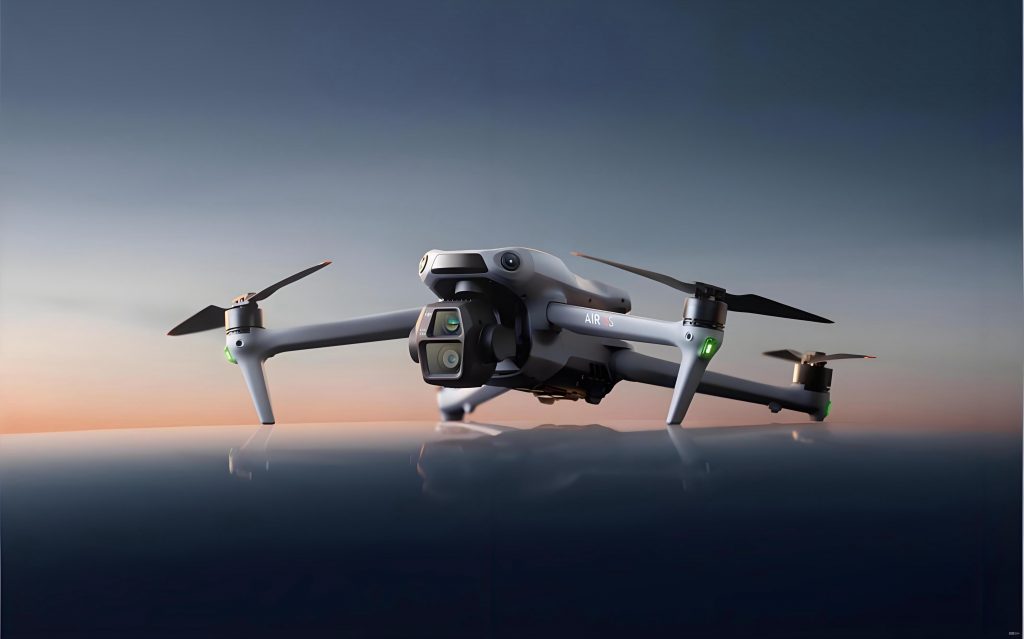
This strategic pivot cannot be understood in a vacuum. It must be analyzed through established strategic lenses to appreciate the environmental forces at play and the competitive dynamics it engages with.
1. Theoretical Foundation for Analysis
To dissect DJI’s strategic environment, I employ a multi-layered framework. First, the concept of related diversification itself provides the “why” behind the move. Second, a PESTEL analysis offers a macro-environmental scan, examining the broad Political, Economic, Social, Technological, Ecological, and Legal factors shaping the industry. Finally, Michael Porter’s Five Forces model helps map the micro-environment—the competitive intensity within the intelligent driving industry itself.
The macro-environment encompasses all external factors that affect every industry and company within a nation or region. The PESTEL model systematically categorizes these influences.
Porter’s Five Forces model posits that the competitive intensity and profitability of an industry are determined by five forces: the threat of new entrants, the bargaining power of buyers, the bargaining power of suppliers, the threat of substitute products or services, and the rivalry among existing competitors.
2. Macro-Environment Analysis: A PESTEL Deep Dive
The intelligent driving sector is burgeoning within a specific and potent macro-environment. The following table summarizes the key PESTEL factors, followed by a detailed discussion.
| Factor | Key Drivers & Implications |
|---|---|
| Political (P) | National strategies emphasizing technological self-reliance (“科技自立自强”), innovation-driven development, and the cultivation of “New Quality Productive Forces.” Government work reports consistently highlight new energy vehicles (NEVs) as a pillar of this new productivity. |
| Economic (E) | Massive and growing vehicle parc (435M motor vehicles, 204M NEVs in China). NEV penetration exceeded 50% in monthly retail sales in mid-2024, signaling a mainstream shift. Intelligent driving is becoming a key purchase criterion. |
| Social (S) | Consumer acceptance of intelligent driving is rapidly increasing. L2 ADAS penetration has moved from high-end to mid-range (¥150k) vehicles. Public pilot programs (e.g., robotaxis) are familiarizing the public with the technology. |
| Technological (T) | China leads in patent filings for key hardware (LiDAR, radar). The competitive landscape is stratified into tech giants (Baidu, Huawei), traditional OEMs, and startups. Convergence of AI, sensing, and computing is accelerating. |
| Ecological (E) | Global “carbon neutrality” mandates are phasing out internal combustion engine (ICE) vehicles. EVs offer a ~43% reduction in operational emissions. This regulatory and social push is a tailwind for electrification and the smart systems that accompany it. |
| Legal (L) | A robust and evolving regulatory framework at national and provincial levels supports pilot zones, sets safety and准入 standards, and provides long-term policy certainty for industry players. |
2.1 The Political & Economic Calculus
The political mandate is clear. China’s 14th Five-Year Plan and the focus on “New Quality Productive Forces” create a national imperative for technological leadership in fields like intelligent driving. This translates into supportive industrial policy. Economically, the numbers speak for themselves. The automotive market is undergoing a fundamental transformation. The growth trajectory of NEVs can be modeled to show the expanding addressable market for intelligent systems:
$$ \text{NEV Market}_t = \text{Base Parc} \times (1 + \alpha)^t $$
Where \( \alpha \) is the compound annual growth rate of NEV adoption, and \( t \) is time. With penetration crossing 50%, we are at an inflection point where intelligent features, once differentiators, are becoming standard expectations.
2.2 Social Acceptance and Technological Diffusion
Social adoption often follows a technology diffusion curve. Intelligent driving is moving from the “early adopters” phase into the “early majority.” The rapid decrease in the cost of L2 systems, bringing them to more affordable vehicle segments, is a critical enabler. This diffusion can be conceptually framed using a simplified adoption model, where the rate of adoption is proportional to both the number who have already adopted and the fraction who have not:
$$ \frac{dF(t)}{dt} = \beta F(t)(1 – F(t)) $$
Here, \( F(t) \) is the fraction of new cars equipped with L2+ systems at time \( t \), and \( \beta \) is a coefficient capturing the combined effect of social influence, price reduction, and perceived utility. The widespread discussion of robotaxis acts as a powerful social proof, increasing \( \beta \).
2.3 The Technological and Ecological Imperative
Technologically, the battleground is defined by sensor fusion, AI algorithms, and computing architecture. While many players focus on a “LiDAR + high-compute chip” stack, which offers high performance at a significant cost, alternative paths exist. The ecological driver is a global constant. The phase-out timelines for ICE vehicles set by major economies and automakers create a non-negotiable timeline for the industry. The competitive advantage for an intelligent driving solution is amplified if it can be deployed efficiently across both electric and, during the transition, legacy vehicle platforms.
3. Industry Competition Structure: A Five Forces Analysis
Applying Porter’s Five Forces model to the current state of the intelligent driving industry in China yields the following assessment:
| Force | Assessment | Rationale |
|---|---|---|
| Rivalry Among Existing Competitors | Moderate | The industry is in a growth/introductory phase. Multiple player types (tech firms, OEMs, startups) coexist with differentiated approaches. No single dominant player has emerged, keeping direct rivalry in check as the market expands. |
| Threat of New Entrants | Low to Moderate | Barriers are high due to immense R&D costs, need for specialized talent, and long development cycles. New entrants are more likely to partner with incumbents rather than compete head-on. |
| Bargaining Power of Suppliers | Moderate to High | For key components like advanced chips and LiDAR sensors, a few global suppliers hold significant leverage, especially for cutting-edge technology. This creates dependency and cost pressure. |
| Bargaining Power of Buyers (OEMs) | Increasing | As more tier-1 suppliers (like DJI and Huawei) enter the market, OEMs have more choice. However, the scarcity of mature, reliable, and cost-effective solutions currently limits their power. This force is poised to grow. |
| Threat of Substitute Products | Low | There is no direct substitute for vehicle automation in achieving its core promises of safety, convenience, and efficiency. The threat is less about substitution and more about the potential failure of the technology to meet expectations. |
The overall industry attractiveness is currently high due to growth potential and moderate rivalry. However, supplier power and the eventual increase in buyer power as solutions commoditize are significant considerations.
4. Analyzing DJI’s Core Competitiveness in Intelligent Driving
My examination of DJI‘s foray, branded as DJI Automotive, reveals a strategy not of simply replicating the leaders, but of leveraging its unique heritage to attack the market on two flanks: radical cost efficiency and unparalleled adaptability.
4.1 The Decisive Cost Advantage: A Formula for Disruption
The dominant paradigm in advanced intelligent driving has been the “fusion” approach, heavily reliant on expensive hardware. A typical high-end system cost can be broken down as:
$$ C_{\text{Fusion}} = C_{\text{LiDAR}} \times n_{\text{LiDAR}} + C_{\text{GPU}} \times n_{\text{GPU}} + C_{\text{HD Map}} + C_{\text{Integration}} $$
Where \( C \) represents cost and \( n \) represents quantity. This sum often exceeds tens of thousands of dollars.
DJI‘s approach, rooted in the efficient sensing and processing paradigms perfected for the DJI drone, challenges this. Its “成行平台” (Ready-to-Go Platform) employs a stereo vision-centric, “light fusion” strategy. The cost structure is fundamentally different:
$$ C_{\text{DJI}} = C_{\text{Stereo Cam}} + C_{\text{IMU}} + C_{\text{Efficient Algo}} + C_{\text{Low-power Compute}} $$
The result is a dramatic reduction in the hardware Bill of Materials (BOM). While competitors’ systems may cost over ¥20,000, DJI’s solution delivers comparable core L2++ functions (like highway and map-free urban NOA) for as low as ¥7,000, with basic L2 functions available for ¥2,000-4,000. This is not just incremental improvement; it is a potential order-of-magnitude shift in the cost-performance curve, unlocking mass-market adoption. The expertise in making compact, reliable, and cheap sensing systems for the DJI drone is directly translatable here.
4.2 Unmatched Adaptability and Strategic Positioning
DJI‘s second strategic masterstroke is platform versatility. The industry’s focus has been almost exclusively on new electric vehicle (EV) platforms, which offer abundant, stable power. The vast existing fleet of internal combustion engine (ICE) vehicles has been largely ignored for higher-level autonomy due to power and integration challenges.
DJI, with its heritage of creating power-efficient systems for battery-operated DJI drones, has engineered its automotive platform to be exceptionally low-power. This allows it to be the first viable tier-1 supplier to bring competent L2+ systems to mainstream ICE vehicles, as evidenced by its deployment in the Volkswagen Tiguan L Pro. This opens a massive, underserved market segment and provides a crucial bridge for traditional OEMs to offer smart features during the lengthy EV transition.
The platform’s other technical features—its independence from high-definition maps and lower reliance on brute-force compute—further enhance its adaptability across diverse vehicle architectures and geographic markets. This strategic positioning can be summarized in a competitive matrix:
| Competitive Dimension | DJI Automotive | Typical High-End Fusion Solution | Basic Vision-Only Solution |
|---|---|---|---|
| Primary Hardware | Stereo Vision + IMU (+ optional radar) | LiDAR + Cameras + Radars + High-power Compute | Monocular/Basic Cameras |
| Core Cost Driver | Proprietary Algorithms & Efficient Integration | Exotic Sensors & Compute Chips | Basic Chip & Camera Cost |
| Performance Level | High L2, approaching L2+ | L2+ to L3 (Target) | Basic L2 |
| Vehicle Platform Fit | Universal (EV & ICE) | Primarily High-end EV | Primarily Low-cost EV |
| Strategic Role | Mass-market Enabler & Disruptor | Technology Leader & Differentiator | Compliance & Basic Feature Enabler |
4.3 Synthesis: The Drone-Descended Disruptor
In conclusion, my analysis finds that DJI is not merely another participant in the intelligent driving race. It is a uniquely positioned disruptor. The company’s strategy is a direct application of its core competencies honed in the DJI drone business: achieving exceptional robotic perception and decision-making within severe constraints of size, weight, power, and cost—the SWaP-C paradigm. By transferring this philosophical and technical approach to the automotive sector, DJI is bypassing the escalating “sensor and compute war” and offering a pragmatic, scalable, and affordable path to automation.
Its partnerships with a wide range of OEMs, from SAIC-GM-Wuling to Volkswagen and BYD, demonstrate the market’s receptiveness to this value proposition. As these collaborations yield more models like the Baojun Yundou and the Tiguan L Pro, the pressure on the entire industry to deliver performance at a rational cost will intensify. Therefore, the entry of the DJI drone leader into automotive does more than just introduce a new supplier; it accelerates the timeline for the widespread democratization of intelligent driving technology, reshaping the competitive landscape from one purely focused on peak performance to one that equally values accessibility and intelligent efficiency.