
For as long as I can remember, the sky has held an irresistible allure, a vast blue canvas waiting to be painted with the dynamic brushstrokes of flight and imagery. My journey into aerial cinematography began not with complex, unwieldy machines, but with the advent of a revolutionary tool that democratized the heavens: the DJI drone. Before 2014, the concept of a consumer-grade drone was virtually nonexistent; the realm of aerial photography was guarded by expensive, intricate assemblies that demanded significant technical expertise. The introduction of the DJI Phantom series was a paradigm shift. It transformed the DJI drone from a niche professional instrument into an accessible portal to the skies, simplifying the complex and inviting countless enthusiasts like myself to explore perspectives once reserved for birds and pilots.
The relentless innovation from DJI has always focused on a critical balance: bridging the gap between professional-grade capability and operational simplicity. This pursuit led from the iconic Phantom to the professional workhorse S900, and ultimately to the Inspire series. The recent releases, particularly the Inspire 2 paired with the X5S and now the groundbreaking Zenmuse X7, mark a pivotal moment where DJI’s mastery over flight control and transmission systems has matured, allowing them to channel immense resources into the heart of the imaging system—the gimbal and camera. Today, I want to share my firsthand experience and technical exploration of the latest marvel: the Zenmuse X7, a camera that doesn’t just capture video but aspires to capture cinema from the air.
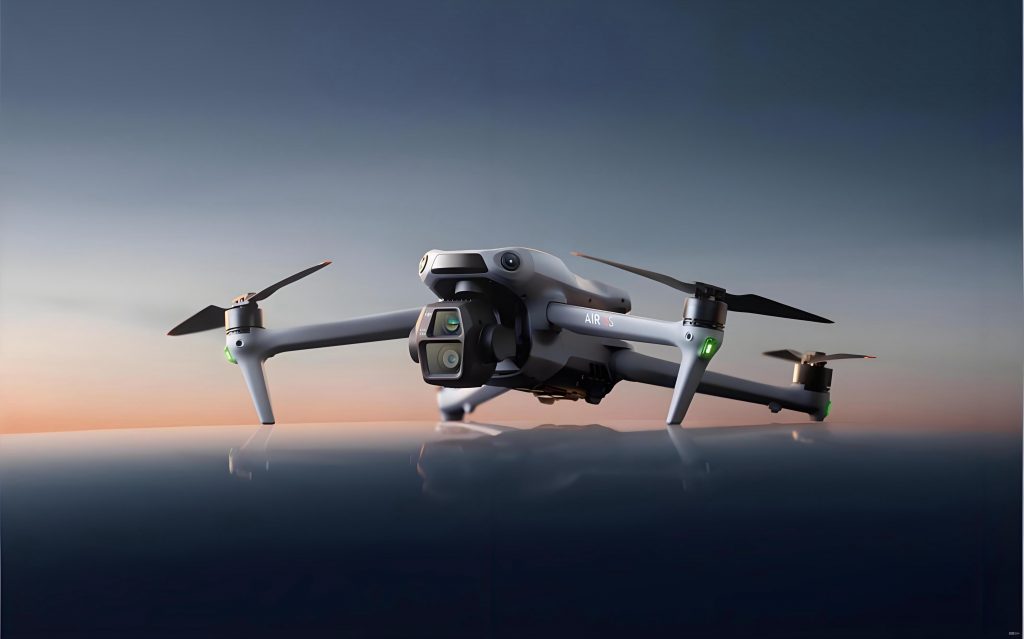
The most significant leap forward with the Zenmuse X7 is, without a doubt, its adoption of a Super 35mm sensor. In the world of imaging, sensor size is a fundamental determinant of image quality, depth of field, and low-light performance. The progression of DJI drone camera sensors has been a story of strategic enlargement: from 1/2.3-inch to 1-inch, then to the Micro Four Thirds (M4/3) sensor in the X5S. The X7’s S35 sensor represents the most ambitious step yet, aligning aerial capture with the standard sensor size used in a vast majority of contemporary cinematic productions.
The benefits of a larger sensor can be quantified. The light-gathering capability is fundamentally linked to the sensor’s area. We can express the approximate light capture advantage relative to a smaller sensor using a simple ratio of areas. For instance, comparing the S35 sensor to an M4/3 sensor:
$$ \text{Area Ratio} = \frac{A_{\text{S35}}}{A_{\text{M4/3}}} $$
Where the approximate imaging areas are:
– S35 (23.6mm x 13.3mm): ~314 mm²
– M4/3 (17.3mm x 13mm): ~225 mm²
Thus,
$$ \text{Area Ratio} \approx \frac{314}{225} \approx 1.4 $$
This ~40% increase in area allows for larger individual photosite size on the X7’s 24-megapixel CMOS, which directly translates to improved signal-to-noise ratio and dynamic range. This means cleaner shadows, more recoverable highlights, and overall image quality that truly meets cinematic standards, whether the DJI drone is battling the harsh contrast of a midday sun or capturing the subtle gradients of twilight.
The commitment to a professional imaging ecosystem is most boldly declared through the introduction of the proprietary DL lens mount. This is more than a mechanical interface; it’s a statement of intent and a cornerstone for DJI’s closed-loop “Sky-to-Ground” ecosystem. Having their own mount liberates DJI from adapting to other manufacturers’ optical and mechanical constraints, allowing for optimizations specifically for the unique vibrational and weight-critical environment of an aerial gimbal.
A key characteristic of the DL mount is its remarkably short flange focal distance—the distance between the lens mount and the sensor. This design allows for greater flexibility in lens design and potential adapters. The following table compares the flange distances of various popular mounts:
| Manufacturer | Lens Mount | Flange Focal Distance (mm) |
|---|---|---|
| DJI | DL Mount | 16.84 |
| SONY | E-Mount | 18.0 |
| CANON | EF-Mount | 44.0 |
| NIKON | F-Mount | 46.5 |
| PANASONIC | M4/3 Mount | 20.0 |
| CINEMA Standard | PL-Mount | 52.0 |
The shorter flange distance of the DJI DL mount, denoted as $F_{DL}$, can be expressed as:
$$ F_{DL} = 16.84 \text{ mm} < F_{E-mount} = 18.0 \text{ mm} $$
This minimal distance is a clever engineering feat that contributes to the overall compact and balanced design crucial for a DJI drone’s gimbal system.
Complementing the X7 camera, DJI unveiled a suite of four prime lenses designed specifically for the DL mount: 16mm, 24mm, 35mm, and 50mm. These lenses are engineered with aerial-specific priorities. Their construction utilizes carbon fiber shells, making them exceptionally lightweight—a non-negotiable feature for maintaining gimbal stability and flight efficiency on a DJI drone. Every gram saved at the camera payload translates directly to longer flight times and more responsive handling.
The optical formula appears to be of high quality, likely sourced from specialized Japanese optical manufacturers. For aerial cinematography, which often favors wider perspectives, this set of primes covers essential ground. It’s a focused, professional selection. The equivalent field of view on the S35 sensor is the lens’s marked focal length, unlike the M4/3 system in the X5S which required a crop factor. For the X5S, the equivalent focal length ($EFL$) was calculated as:
$$ EFL_{M4/3} = \text{Actual Focal Length} \times 2.0 $$
For example, a 35mm lens on the X5S yielded a 70mm full-frame equivalent view. With the X7’s S35 sensor, the crop factor ($C_{S35}$) is approximately 1.5-1.6 relative to full-frame, but more importantly, it natively matches the cinema standard, simplifying lens selection and visual planning for directors of photography.
| DJI DL Prime Lens | Maximum Aperture | Key Application (Aerial) |
|---|---|---|
| 16mm | f/2.8 | Ultra-wide landscapes, establishing shots |
| 24mm | f/2.8 | Standard wide-angle, versatile shooting |
| 35mm | f/2.8 | Environmental portraits, detail shots |
| 50mm | f/2.8 | Tight compositions, compressed perspectives |
My field testing with this system involved capturing footage in various resolutions and codecs. The X7 offers a robust selection, from highly compressed H.264/H.265 for quick turnaround to the sublime quality of Apple ProRes and CinemaDNG RAW. The choice of recording format is a critical decision that balances image quality, workflow, and storage requirements—a decision every pilot of a high-end DJI drone must make.
In my analysis, ProRes 4444 XQ emerged as the optimal sweet spot for most high-end productions. It provides exceptional fidelity with manageable file sizes. The data rate for ProRes 4444 XQ at 6K resolution can be estimated. If we consider a 6K frame (approx. 6144 x 3240 pixels) with 4:4:4 chroma subsampling at 12 bits per component and a frame rate ($f_r$) of 30 fps, the raw data rate before compression ($R_{raw}$) is:
$$ R_{raw} = (6144 \times 3240) \text{ pixels/frame} \times 3 \text{ components} \times 12 \text{ bits/component} \times f_r $$
$$ R_{raw} \approx 6144 \times 3240 \times 3 \times 12 \times 30 \text{ bits/second} $$
$$ R_{raw} \approx 21.5 \text{ Gbps} $$
ProRes 4444 XQ applies a high-quality compression to bring this to a more practical range of around 1.5-2 Gbps. The mathematical relationship between compression ratio ($C_r$), raw rate ($R_{raw}$), and final rate ($R_{final}$) is:
$$ C_r = \frac{R_{raw}}{R_{final}} $$
For ProRes 4444 XQ, $C_r$ is typically between 10:1 and 15:1, preserving immense detail in both highlights and shadows, as confirmed in my DaVinci Resolve grading sessions.
CinemaDNG RAW, while offering the absolute maximum post-production flexibility, comes with a colossal storage footprint. The same 6K footage in RAW can consume data at a staggering rate, filling a 480GB SSD in roughly 10-15 minutes. The choice becomes an economic and logistical one. For projects demanding the ultimate grade, the RAW data from this DJI drone camera is impeccably clean and malleable. For others, ProRes 4444 XQ delivers a “near-RAW” experience that integrates seamlessly into professional post-production pipelines without the heavy overhead.
The following table summarizes the key recording formats and their typical use cases for the Zenmuse X7 on a compatible DJI drone like the Inspire 2:
| Recording Format | Color Sampling / Bit Depth | Best For | Approx. Data Rate (6K 30fps) |
|---|---|---|---|
| H.264 / H.265 | 4:2:0 / 8-bit | Fast delivery, news, non-graded content | 100-200 Mbps |
| ProRes 422 HQ | 4:2:2 / 10-bit | High-quality broadcast, moderate grading | ~1 Gbps |
| ProRes 4444 XQ | 4:4:4 / 12-bit | Cinematic production, VFX, heavy grading | ~1.5-2 Gbps |
| CinemaDNG RAW | RAW / 14-bit+ | Maximum dynamic range, complex color science | > 3 Gbps |
Operating this system over several days of rigorous testing solidified my appreciation for the engineering marvel it represents. The integration between the airframe, gimbal, camera, and lenses is seamless. Every aspect feels considered, from the tactile feedback of lens changes to the rock-solid stability in flight, a testament to the evolution of the DJI drone platform. The image output is nothing short of spectacular. The combination of the S35 sensor, sharp DL primes, and robust codecs results in footage that holds up on large cinema screens, with rich colors, fine detail, and a filmic texture that was previously unattainable from an aerial platform.
Reflecting on the journey from strapping a GoPro to a early DJI drone to now commanding a flying S35 cinema camera, the trajectory of innovation is breathtaking. DJI didn’t just enter the market; they defined and continuously redefine it. They transformed the DJI drone from a novel gadget into an essential tool for creatives across industries. This path of innovation is fraught with challenges—balancing weight, power, heat, and cost while pushing the boundaries of what’s possible. The Zenmuse X7 is a clear indicator of where this is heading: a future where the line between aerial and ground-based cinematography continues to blur, where the sky is not a limitation but an extension of the creative workspace.
The formula for this success, in my view, is a relentless focus on vertical integration and user-centric design. It can be symbolically represented as a function where the output “Cinematic Aerial Quality” ($Q$) depends on several optimized factors:
$$ Q = f(S, L, M, C, F) $$
Where:
– $S$ = Sensor Size and Technology
– $L$ = Lens Optical Performance (optimized for mount $M$)
– $M$ = Gimbal Mechanical Stability
– $C$ = Codec and Processing Capability
– $F$ = Flight Platform Reliability (the DJI drone itself)
By controlling and perfecting all variables in this function, DJI achieves a synergistic output that is greater than the sum of its parts. The Zenmuse X7 exemplifies this principle. It’s not merely an accessory; it’s the culmination of a vision to put true cinematic storytelling into the hands—or rather, into the sky—of filmmakers.
In conclusion, my experience with the Zenmuse X7 has been transformative. It has reshaped my approach to aerial imagery, allowing for planning and execution that rivals ground-based shoots. Every time I launch the DJI drone equipped with the X7, I’m reminded that we are in a golden age of visual exploration. The barriers between imagination and realization are lower than ever. The DJI drone, once a simple flying camera, is now a sophisticated aerial cinematography studio. The Zenmuse X7 is not just a product; it’s a statement that the future of filmmaking is, quite literally, up in the air, and it is accessible. The journey of innovation continues, and I, for one, am eager to see—and capture—what comes next from the horizon.