
The evolution of topographic mapping has been profoundly accelerated by the integration of Unmanned Aerial Vehicle (UAV) technology. Large-scale topographic maps, essential for urban planning, land administration, and engineering construction, were historically produced through labor-intensive and time-consuming traditional surveying methods, often compromising both efficiency and accuracy while incurring significant field costs. The advent of DJI drone technology has revolutionized this paradigm, offering a highly efficient, accurate, and flexible alternative. Among the myriad of platforms available, the DJI Phantom 4 Pro and the DJI Matrice 300 RTK have gained widespread adoption in the professional surveying sector. While both are capable DJI drone solutions, their performance characteristics, operational workflows, and resultant data quality exhibit notable differences, particularly for specific applications like corridor or belt-shaped terrain mapping. This article presents a detailed comparative analysis of these two popular DJI drone models, focusing on their application in generating large-scale topographic data for linear infrastructure projects, providing practical insights for surveyors and project managers.
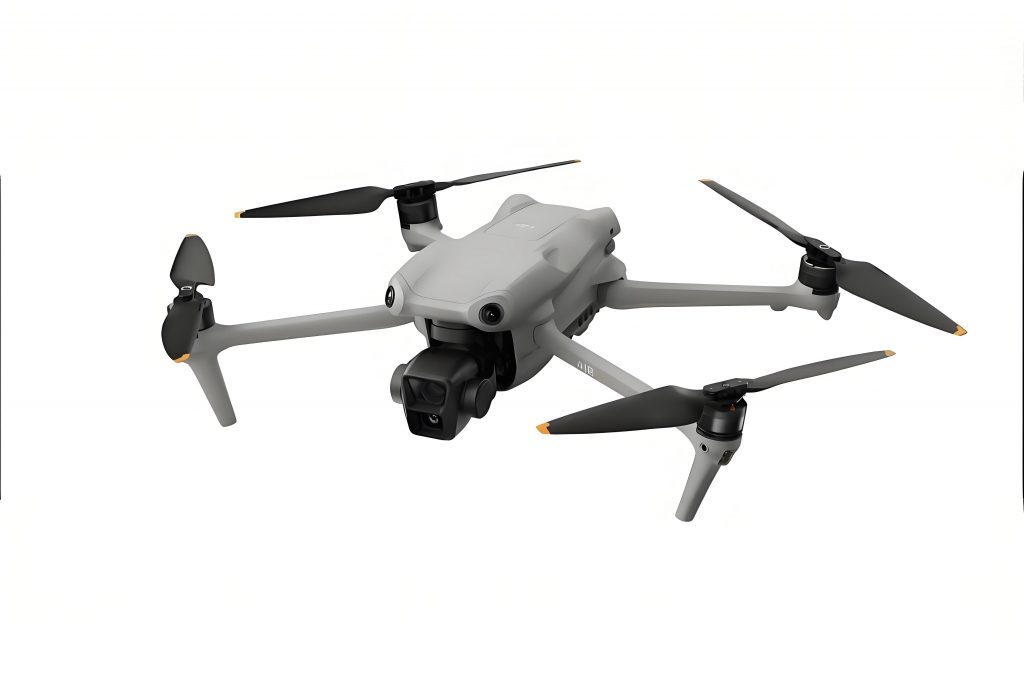
The primary objective was to evaluate and compare the operational efficiency and survey accuracy of the consumer-grade DJI Phantom 4 Pro and the enterprise-grade DJI Matrice 300 RTK for a specific corridor mapping task. The study area was a 1.1 km long water channel, part of a medium/small river regulation project. The corridor for mapping extended approximately 80 meters to each side of the channel centerline, resulting in a total survey area of 0.15 km². This environment is typical for linear projects such as roads, pipelines, and riverbanks, where the survey area is long and narrow.
Materials and Methodology
Survey Equipment: DJI Drone Specifications
The core of this comparative study hinges on the technical specifications of the two DJI drone platforms. The Phantom 4 Pro, released in 2016, is renowned for its portability, stability, and user-friendly operation, making it an accessible tool for many professionals. In contrast, the Matrice 300 RTK, launched in 2020, is a robust industrial platform featuring extended flight endurance, advanced AI capabilities, six-directional sensing and obstacle avoidance, and a versatile multi-payload system. The key sensor specifications for photogrammetry are fundamentally different, as summarized in Table 1.
| Parameter | DJI Phantom 4 Pro | DJI Matrice 300 RTK (with P1 Payload) |
|---|---|---|
| Sensor Format | 1-inch CMOS (13.2 mm x 8.8 mm) | Full-frame (36 mm x 24 mm) |
| Focal Length (f) | 8.8 mm | 35 mm (Typical for P1; 50 mm used in this study’s calculation) |
| Effective Pixels | 20 MP (5472 x 3648) | 45 MP (8192 x 5460) / Note: Study used a 60MP sensor (9504 x 6336) |
| Pixel Size (a) | 2.4 µm (0.0024 mm) | 3.8 µm (0.0038 mm) for 60MP sensor |
| Endurance | ~30 minutes | ~55 minutes |
| RTK/PPK Support | Optional (requires additional RTK module) | Integrated high-precision RTK module |
Mission Planning and Flight Parameters
For large-scale topographic mapping (e.g., 1:500 scale), achieving a required Ground Sampling Distance (GSD) is paramount. The flight altitude (H) is calculated based on the sensor’s focal length (f), the desired GSD (R), and the camera’s pixel size (a). The fundamental photogrammetric formula used is:
$$ H = \frac{f \times R}{a} $$
Where:
- H is the flight altitude above ground (in meters).
- f is the camera focal length (in millimeters).
- R is the target Ground Sampling Distance (in meters/px).
- a is the pixel size (in millimeters).
For a target GSD of approximately 2.5 cm/px (suitable for 1:500 mapping), the calculated flight altitudes for each DJI drone were set as follows. It is critical to note that different focal lengths and pixel sizes directly dictate different operational altitudes for the same GSD. The mission parameters for both platforms are detailed in Table 2.
| Parameter | DJI Phantom 4 Pro | DJI Matrice 300 RTK |
|---|---|---|
| Calculated Flight Altitude (H) | 100 m | 220 m |
| Side Overlap | 75% | 75% |
| Front Overlap | 75% | 75% |
Ground Control and Accuracy Assessment Methodology
To rigorously assess the geometric accuracy of the models produced by each DJI drone, a network of ground control points (GCPs) and independent check points (CPs) was established. GCPs, marked with clear targets, were laid in pairs at approximately 200-meter intervals along the corridor to control the photogrammetric bundle adjustment. Additionally, eight check points were uniformly distributed across the site; these points were used exclusively for accuracy validation and were not included in the model processing. All point coordinates (X, Y, Z) were surveyed using high-precision RTK in fast-static mode, achieving accuracy at the centimeter level, which served as the “ground truth” for comparison.
The workflow involved: 1) Conducting autonomous flights with each DJI drone using the parameters in Table 2; 2) Processing the collected imagery using professional software (ContextCapture Center Master) to generate dense point clouds and 3D mesh models; 3) Extracting coordinates for the check points from the generated 3D models; 4) Comparing these extracted coordinates against the RTK-surveyed “true” coordinates.
The accuracy was quantified by calculating the Root Mean Square Error (RMSE) in the X, Y, and Z dimensions, as well as the horizontal and total errors. The relevant formulas for a set of ‘n’ check points are:
$$ RMSE_X = \pm \sqrt{\frac{\sum_{i=1}^{n} (X_{model,i} – X_{RTK,i})^2}{n}} $$
$$ RMSE_Y = \pm \sqrt{\frac{\sum_{i=1}^{n} (Y_{model,i} – Y_{RTK,i})^2}{n}} $$
$$ RMSE_Z = \pm \sqrt{\frac{\sum_{i=1}^{n} (Z_{model,i} – Z_{RTK,i})^2}{n}} $$
$$ RMSE_{Horizontal} = \pm \sqrt{RMSE_X^2 + RMSE_Y^2} $$
For context, the Chinese national standard for engineering surveys (GB50026-2020) specifies maximum permissible errors for detailed mapping of general structures as 70 mm for horizontal position and 30 mm for elevation.
Results and Analysis
The coordinate differences (∆X, ∆Y, ∆H) between the model-extracted values and the RTK-measured values for the eight independent check points were calculated for models generated from both DJI drone datasets. Points affected by obscuration (foliage, water) were excluded from the analysis to ensure the comparison reflected the inherent sensor and processing accuracy.
Accuracy Performance Comparison
The statistical summary of the coordinate differences and the calculated RMSE values are presented in Table 3. This quantitative comparison is central to understanding the precision capabilities of each DJI drone system in this specific scenario.
| Metric | DJI Phantom 4 Pro (100m AGL) | DJI Matrice 300 RTK (220m AGL) |
|---|---|---|
| ∆X Range (m) | -0.005 to +0.024 | -0.039 to +0.025 |
| ∆Y Range (m) | -0.011 to +0.014 | -0.030 to +0.023 |
| ∆H Range (m) | -0.037 to +0.032 | -0.129 to +0.106 |
| RMSE_X (m) | ±0.012 | ±0.019 |
| RMSE_Y (m) | ±0.009 | ±0.019 |
| RMSE_Horizontal (m) | ±0.015 | ±0.027 |
| RMSE_Z / Vertical (m) | ±0.029 | ±0.087 |
| Flight Time for Corridor | ~23 minutes | ~12 minutes |
Analysis of Results
1. Surveying Accuracy: The data reveals a clear distinction in accuracy performance. The DJI Phantom 4 Pro, flying at the lower altitude of 100m, achieved superior results. Its horizontal RMSE of 15 mm and vertical RMSE of 29 mm both comfortably meet the 70 mm and 30 mm tolerances for general structure mapping, respectively. In contrast, while the DJI Matrice 300 RTK’s horizontal accuracy of 27 mm is still well within specification, its vertical accuracy of 87 mm exceeds the 30 mm tolerance. This indicates that for this specific mission setup (220m flight with a longer focal length), the vertical precision of the M300-derived model was lower. This is a critical finding for projects where height accuracy is paramount.
2. Operational Efficiency: The efficiency advantage of the enterprise DJI drone is pronounced. Despite covering the same area, the Matrice 300 RTK completed the aerial survey in approximately 12 minutes, nearly half the 23 minutes required by the Phantom 4 Pro. This is primarily due to its higher cruising speed and the fact that flying at 220m allows for a larger image footprint per photograph, requiring fewer flight lines to cover the corridor width. Furthermore, the M300’s 55-minute endurance vastly outperforms the Phantom 4 Pro’s ~30-minute limit, enabling the coverage of much longer linear projects in a single flight session without battery changes.
3. Practical Considerations: The Phantom 4 Pro excels in portability, ease of deployment, and lower initial cost. It is an excellent tool for small to medium-sized projects where ultimate survey-grade vertical accuracy is less critical, or where budget constraints are significant. The Matrice 300 RTK offers industrial robustness, superior endurance, faster data acquisition, integrated high-precision GNSS (often leading to better absolute accuracy with fewer GCPs), and payload flexibility (e.g., carrying LiDAR). However, this comes with a significantly higher acquisition cost and greater operational complexity.
Conclusion and Discussion
This comparative analysis of two distinct DJI drone platforms for corridor topographic mapping yields definitive, actionable conclusions. The choice between the DJI Phantom 4 Pro and the DJI Matrice 300 RTK is not a matter of one being universally better, but rather which is more appropriate for a project’s specific constraints and requirements.
Key Conclusions:
- For projects where vertical accuracy is the foremost priority and the survey area is manageable, the DJI Phantom 4 Pro, flown at a lower altitude (e.g., 100m), can produce results that meet strict engineering standards for large-scale mapping, as demonstrated by its sub-30mm vertical RMSE.
- For projects emphasizing maximum field efficiency, coverage of long distances, or operation in more complex environments, the DJI Matrice 300 RTK is the superior tool. Its speed, endurance, and ruggedness translate directly into higher productivity and operational flexibility.
- The integrated RTK system on the M300 platform provides a pathway to high absolute accuracy with minimal ground control, a significant advantage for large or inaccessible sites, though this aspect’s full benefit was not the focus of the vertical precision test in this study’s setup.
Limitations and Further Research: This study has inherent limitations that warrant discussion. First, the comparison of vertical accuracy was conducted at different flight altitudes, as dictated by the photogrammetric equation to achieve a similar GSD. A more controlled comparison might involve flying both DJI drone platforms at the same altitude (with different GSDs) or configuring them to achieve the same GSD through lens selection on the M300. Second, the data processing was performed using a single software suite (ContextCapture). Repeating the processing with other industry-standard software like DJI Terra, Pix4Dmatic, or Agisoft Metashape could provide insights into software-related variations in accuracy. Finally, future research could incorporate the RTK/PPK capabilities of both systems more directly to assess their impact on reducing the need for dense GCP networks while maintaining accuracy.
In summary, both the DJI Phantom 4 Pro and the DJI Matrice 300 RTK are powerful tools in the modern surveyor’s arsenal. The Phantom 4 Pro stands out for its cost-effectiveness and capability to deliver high-precision results for focused projects. The Matrice 300 RTK is the clear choice for professional, high-throughput operations where time, coverage, and operational resilience are critical financial and project drivers. The optimal DJI drone selection ultimately depends on a careful balance between project-specific accuracy requirements, logistical constraints, survey area size, and available budget.