
As an avid aerial photographer, the relentless pace of innovation from DJI never fails to captivate me. The recent release of the DJI Air 3S, merely 15 months after its predecessor, presented a compelling opportunity to upgrade. I promptly exchanged my trusty Air 3 for this new platform, eager to test its claimed advancements. This report details my comprehensive hands-on experience, breaking down the technical leaps and practical performance of this latest DJI drone.
The DJI drone landscape evolves rapidly, and the Air 3S is a focused iteration that packs several industry-first features. While retaining the familiar dual-camera form factor, it introduces refinements and new capabilities that significantly enhance both creative potential and operational safety. The core appeal lies not in a complete overhaul, but in the strategic application of cutting-edge technologies that address specific photographer pain points.
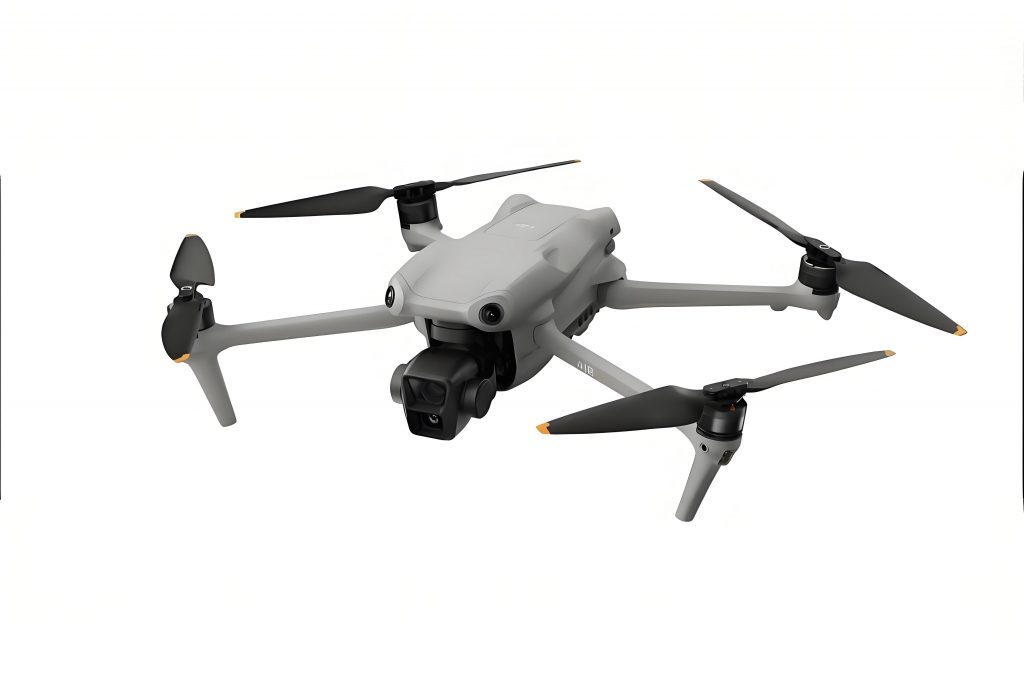
At first glance, the physical design philosophy remains consistent. The folding mechanism, general proportions, and weight are nearly identical to the Air 3, with a negligible increase of just 4 grams. This continuity is beneficial for users familiar with the series, and importantly, it maintains compatibility with key accessories like propellers, batteries, the charging hub, and shoulder bags. The intelligent flight battery sees a minor capacity bump to 4276 mAh, though interestingly, the maximum flight time is rated at 45 minutes, a one-minute decrease from the previous model. This trade-off likely powers the new, more demanding onboard processing systems.
| Feature | DJI Air 3S | DJI Air 3 |
|---|---|---|
| Wide Camera Sensor | 1-inch CMOS | 1/1.3-inch CMOS |
| Wide Camera Effective Pixels | 50 MP | 48 MP |
| Medium Tele Camera Sensor | 1/1.3-inch CMOS | 1/1.3-inch CMOS |
| Medium Tele Effective Pixels | 48 MP | 48 MP |
| Takeoff Weight | ~724 g | ~720 g |
| Battery Capacity | 4276 mAh | 4241 mAh |
| Max Flight Time | 45 min | 46 min |
| Internal Storage | 42 GB | 8 GB |
| Key New Features | Free Panorama, Night Vision Omni-Directional Obstacle Sensing | N/A |
Deconstructing the Technological Advancements
The DJI drone engineering team has concentrated its efforts on several key areas that collectively define the Air 3S upgrade. These are not marginal improvements but substantial enhancements that redefine what is possible with a consumer-grade aerial platform.
1. Enhanced Imaging Hardware and Computational Pipeline. The most significant hardware upgrade is the new 1-inch sensor for the wide-angle camera. The increase in sensor area is a critical factor for image quality, particularly in dynamic range and low-light performance. The relationship between sensor size, pixel size, and light-gathering capability can be simplified as:
$$ Q_{\text{light}} \propto A_{\text{pixel}} \times \eta_{\text{sensor}} $$
where $Q_{\text{light}}$ is the total photonic charge, $A_{\text{pixel}}$ is the pixel area, and $\eta_{\text{sensor}}$ is the quantum efficiency. The larger sensor, coupled with a new image processing platform and algorithms, yields visibly cleaner images with more detail in shadows and highlights. The 50MP resolution provides immense cropping flexibility. The medium telephoto camera retains a capable 1/1.3-inch, 48MP sensor but now supports identical video specifications and color profiles as the wide camera, streamlining post-production workflows.
2. Free Panorama: A Revolutionary Capture Mode. This is a landmark feature for any DJI drone. Unlike fixed panorama modes (Wide, 180°, Sphere), Free Panorama allows the pilot to manually select the composition’s top-left and bottom-right corners directly on the remote controller’s screen. The DJI drone then automatically calculates the required number of shots, captures them by panning and tilting the gimbal, and stitches them into a seamless, high-resolution panorama. Crucially, both cameras support this mode. The wide camera enables incredibly vast scenes, while the telephoto camera produces panoramas with minimal distortion and a unique, compressed perspective. The number of shots $N$ required is a function of the selected field of view:
$$ N \approx \left\lceil \frac{\theta_H \cdot \theta_V}{\alpha_H \cdot \alpha_V} \right\rceil $$
where $\theta_H$ and $\theta_V$ are the horizontal and vertical angles of the desired panorama, and $\alpha_H$ and $\alpha_V$ are the horizontal and vertical fields of view of the lens.
3. Night Vision Omni-Directional Active Obstacle Sensing. This is arguably the most groundbreaking safety feature on a consumer DJI drone. Traditional vision-based obstacle avoidance systems struggle or fail in low-light conditions. The Air 3S integrates a forward-facing laser rangefinder (LiDAR) with low-light visual sensors and downward Time-of-Flight (ToF) sensors to create a robust perception system effective in near darkness. The probability of a collision $P_c$ in a given environment is drastically reduced:
$$ P_{c,\text{night}} = f(V_{\text{obs}}, L_{\text{ambient}}) \approx 0 \text{ for } L_{\text{ambient}} > L_{\text{threshold}} $$
where $V_{\text{obs}}$ is the obstacle visibility and $L_{\text{ambient}}$ is the ambient light level. This system allows for confident flight and complex maneuvers like ActiveTrack in nighttime environments, opening up entirely new creative possibilities.
4. Advanced Support Systems: RTH, Follow, and Focus. The technological suite extends to smarter automation. The Advanced Return to Home (RTH) now utilizes visual Simultaneous Localization and Mapping (vSLAM) to remember its flight path in good light, enabling safe returns even from GPS-denied areas like balconies. The LiDAR assists in dark RTH by detecting and ascending over obstacles. The omnidirectional ActiveTrack system is more robust, maintaining a lock on subjects even when partially occluded. A new Subject Tracking Autofocus reliably keeps focus on a subject, regardless of its position in the frame.
Imaging Performance and Practical Workflow
The dual-camera system is the heart of this DJI drone. The wide camera (24mm equivalent, f/1.8) and medium telephoto camera (70mm equivalent, f/2.8) offer distinct creative tools. The image quality from both cameras shows a perceptible step up from the Air 3, with better noise control and color depth. Low-light performance is notably improved, especially from the wide camera, producing usable images at higher ISOs than before.
The expanded digital zoom capabilities are now available in photo mode, which was a limitation on the Air 3. The wide camera offers up to 2.9x digital zoom, and the telephoto camera extends to 9x. While digital zoom inherently involves cropping and potential resolution loss, the high base megapixel count makes it a practical tool for framing shots from a fixed position. The effective focal length range $F_{\text{eff}}$ becomes:
$$ F_{\text{eff, wide}} = 24\text{mm} \times Z_{\text{wide}}, \quad 1 \leq Z_{\text{wide}} \leq 2.9 $$
$$ F_{\text{eff, tele}} = 70\text{mm} \times Z_{\text{tele}}, \quad 1 \leq Z_{\text{tele}} \leq 9 $$
where $Z$ is the digital zoom factor.
| Camera | Specifications | Primary Use Cases |
|---|---|---|
| Wide-Angle (24mm eq.) | 1-inch CMOS, 50MP, f/1.8, ISO 100-3200 | Landscapes, architecture, environmental portraits, low-light scenes, expansive panoramas. |
| Medium Telephoto (70mm eq.) | 1/1.3-inch CMOS, 48MP, f/2.8, ISO 100-3200 | Compressed perspectives, detail shots, portraits from a distance, low-distortion panoramas. |
| Free Panorama | User-defined frame, multi-shot automatic stitching. | Creating ultra-high-resolution, custom-sized panoramic images with either lens perspective. |
| Digital Zoom (Photo Mode) | Wide: 2.9x, Tele: 9x. | Framing flexibility without moving the drone, subject isolation. |
In practice, the workflow is seamless. The 42GB of internal storage is a massive quality-of-life improvement, acting as a reliable backup or primary storage if needed. The new features are integrated intuitively into the DJI Fly app. Launching a Free Panorama shot is a matter of seconds, and watching the DJI drone autonomously execute the precise gimbal movements is impressive. The confidence granted by the night vision obstacle avoidance is transformative; flying at dusk or in urban night environments feels secure, shifting focus from piloting anxiety to pure composition.
Pricing, Ecosystem, and Final Verdict
The DJI drone comes in three variants, with a slight price increase over the Air 3’s launch price. The standard combo with a basic remote controller starts at a certain price point, with the Fly More Combo (including three batteries and a charging hub) with either the standard or the high-brightness screen remote commanding a premium. At launch, trade-in programs for the Air 3 were available, making the upgrade path financially accessible for existing users.
No product is without its minor shortcomings. The inability to shoot true vertical (portrait) photos by rotating the gimbal 90°, a feature available on the Mini series, is a missed opportunity for social media content creators. The so-called vertical mode in video is merely a crop of the horizontal frame. Furthermore, the omission of a charging adapter in the box, now a common practice for DJI, can be an unwelcome surprise for first-time buyers who must purchase it separately.
In conclusion, the DJI Air 3S is a masterclass in targeted innovation. It doesn’t reinvent the wheel but strategically bolts on a jet engine. The twin pillars of its advancement—the revolutionary Free Panorama mode and the game-changing Night Vision Obstacle Avoidance—are not mere spec sheet items but tangible features that expand the creative and operational envelope for pilots. The enhanced image processing and larger sensor deliver the incremental yet meaningful quality boost that enthusiasts expect.
This DJI drone solidifies DJI’s commanding lead in the consumer market. It demonstrates a deep understanding of user needs, addressing both the desire for more creative tools (panoramas, dual-camera workflow) and the fundamental need for safety in expanded conditions (night flight). The technologies debuted here, particularly the panoramic algorithm and low-light sensing fusion, are undoubtedly precursors to their implementation in future flagship models. For an aerial photographer looking for the most capable, safe, and creatively versatile tool in its class, the Air 3S presents a compelling and, in many ways, unparalleled proposition.