
From its inception, our journey has been defined by a singular focus: to unlock the creative and practical potential of aerial perspective for everyone. The path from a modest start to becoming synonymous with the global drone industry was paved not by following trends, but by defining them. This is our story, told through the lens of relentless innovation, strategic global vision, and an unwavering belief in the power of superior product engineering.
Our foundation was built on a commitment to core technological mastery, a philosophy that allowed us to create entirely new product categories. In an ecosystem often characterized by iterative improvement, we prioritized foundational, from-zero-to-one innovation. This commitment is quantified in our resources: over 25% of our workforce is dedicated to research and development, with annual investment exceeding 15% of our profits. The output of this focus is a formidable intellectual property portfolio, with over 20,000 patent applications globally, forming an unassailable technological moat.
The evolution of our flagship product line, the Phantom series, perfectly illustrates our philosophy of sensed iteration—advances that users can immediately feel and utilize. We can model the progression of key performance indicators (KPIs) that define a DJI drone:
| Product Generation | Flight Time (minutes) | Max Range (km) | Camera Resolution | Key Innovation |
|---|---|---|---|---|
| Phantom 1 | ~10 | ~0.3 | N/A (User-provided) | Integrated GPS for Position Hold |
| Phantom 2 | ~25 | ~1.0 | 1080p Video Link | HD Video Downlink |
| Phantom 4 Pro | ~30 | ~7.0 | 20MP / 4K Video | Obstacle Sensing, Advanced Tracking |
This progression isn’t merely linear; it represents exponential gains in usability and capability. The integrated GPS system in the first Phantom was transformative, solving a fundamental instability problem. The mathematical principle behind stable hovering can be simplified as a closed-loop control system:
$$
\text{Position Error} = P_{target} – P_{current}
$$
$$
\text{Control Output} = K_p \cdot \text{Position Error} + K_i \cdot \int \text{Position Error} \, dt + K_d \cdot \frac{d(\text{Position Error})}{dt}
$$
Where our flight controller continuously calculates the Position Error and applies Proportional, Integral, and Derivative (PID) adjustments to the motors, maintaining a stable hover against wind and other disturbances. This was just the beginning. The Lightbridge transmission system broke the tether between the DJI drone and the operator, enabling real-time, high-definition First Person View (FPV), a leap that transformed drone operation from piloting to immersive filming.
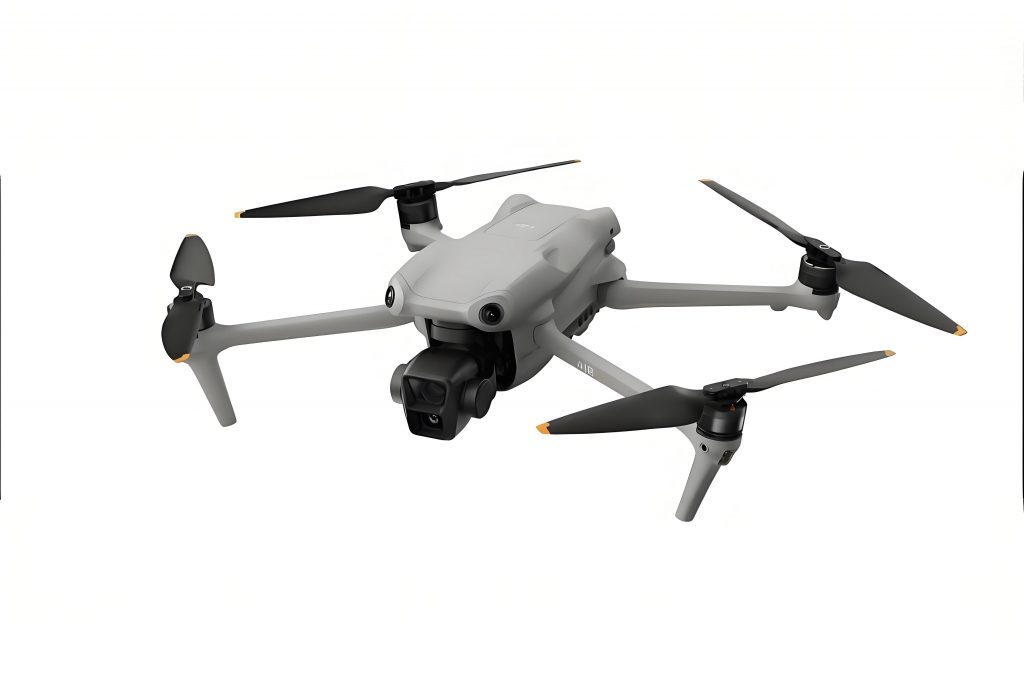
Success in the consumer realm was a launchpad, not a destination. We systematically expanded our product matrix to cover the full spectrum of aerial and imaging needs. The launch of the compact, foldable Mavic series redefined portability without compromising performance, bringing professional-grade imaging to a backpack. Simultaneously, we directed our technological prowess toward enterprise solutions. By adapting and hardening our core technologies, we created platforms for agriculture, search & rescue, infrastructure inspection, and public safety. For instance, in search and rescue, a DJI drone equipped with a mobile signal detector can locate survivors under rubble by identifying signals from active phones, even without network connectivity. The effectiveness of such a drone fleet can be conceptualized by its area coverage rate:
$$
\text{Coverage Rate}(t) = N \cdot v \cdot s \cdot t
$$
Where \(N\) is the number of drones, \(v\) is the average search velocity, \(s\) is the effective sensor sweep width, and \(t\) is the operational time. This equation highlights how our focus on flight time, stability, and payload integration directly scales operational efficacy.
Our global market strategy was deliberately architected. We viewed the world through a tiered lens, allocating resources with precision. The foundational logic was clear: first conquer the most demanding and receptive markets to build an uncontestable brand of quality and innovation.
| Market Tier | Primary Regions | Strategic Focus | Key Objective |
|---|---|---|---|
| Tier 1 | North America (e.g., USA) | Performance & Brand Leadership | Drive purchase conversion |
| Tier 2 | Western Europe (e.g., UK, DE, FR) | Market Deepening & Customization | Increase coverage & traffic conversion |
| Tier 3 | Asia, Australia | Awareness & Market Education | Build brand & product category awareness |
This reverse path—from global to local—allowed us to enter the Chinese market not as a novelty, but as the undisputed global leader. Social media became our global showroom. On platforms like YouTube and Instagram, we didn’t just advertise; we inspired, showcasing breathtaking visuals captured by our products. Collaborations with creators and organic endorsements from technology leaders and Hollywood amplified our reach authentically. Furthermore, we cultivated high-engagement communities like SkyPixel, which evolved into one of the world’s largest aerial photography platforms. The annual SkyPixel awards generate tens of thousands of submissions, creating a virtuous cycle of user-generated content that continuously demonstrates the capabilities of a DJI drone.
Our technological and market success inevitably placed us at the center of geopolitical friction. Facing external pressures and purported security concerns, our response was anchored in the very product strength that built our position. When challenged, we engaged transparently, developed enhanced, security-focused product versions for enterprise clients, and deepened local operations. Crucially, our supply chain resilience was tested and proven. While a drone incorporates numerous components, its most critical asset is the integrated system of proprietary technologies—the flight controller, gimbal stabilization, and transmission systems—all developed in-house. Even when facing restrictions on certain general-purpose components, the depth of our vertical integration and our collaborative work with domestic partners ensured continuity. The fundamental performance of a DJI drone is not defined by a single sourced chip, but by the synergistic formula of our holistic design:
$$
\text{Drone Performance} = \int ( \text{Flight Control}_{DJI} + \text{Stabilization}_{DJI} + \text{Transmission}_{DJI} + \text{Aerodynamics}_{DJI} ) \, dt
$$
This integral of deeply owned technologies is difficult to replicate or disrupt.
The market’s verdict has been clear. Despite all challenges, our global market share in the consumer and enterprise drone sectors remains dominant. This endurance is the ultimate testament to creating a product so essential, so reliable, and so innovative that it becomes indispensable. The value created extends beyond the company; it pioneers a new model for Chinese tech giants—one led by groundbreaking product force, scientific global strategy, and deep community engagement. Every time a DJI drone takes flight, whether to capture a once-in-a-lifetime moment, inspect a critical bridge, or aid in a life-saving mission, it reaffirms that the most powerful language in the global market is that of superior, meaningful innovation.