
From my perspective as an analyst in the field of unmanned aerial vehicles (UAVs), the evolution of drone technology has been nothing short of revolutionary. Among the key players, DJI Innovations has emerged as a global leader, largely due to its strategic patent portfolio. In this article, I will delve into the development of DJI drone patent technology, tracing its growth, highlighting core innovations, and examining future trends. The focus will be on how DJI drones have shaped the industry through intellectual property, with an emphasis on technical aspects supported by tables and formulas. I aim to provide a comprehensive overview that underscores the importance of patent analysis in understanding the trajectory of DJI drone advancements.
Unmanned Aerial Vehicles, commonly known as drones, are aircraft that operate without a human pilot onboard. They are controlled autonomously or remotely and have applications ranging from military operations to commercial and consumer uses. DJI drones, in particular, have dominated the consumer market, offering advanced features like high-resolution imaging, stable flight control, and user-friendly interfaces. The technology behind DJI drones encompasses multiple systems, which I will break down in detail. Generally, drones can be classified into fixed-wing, rotary-wing, and flapping-wing types, each with distinct advantages. For instance, rotary-wing DJI drones, such as the Phantom series, excel in vertical take-off and landing, making them ideal for aerial photography and surveillance.
The core systems of a DJI drone include six major subsystems, as summarized in the table below. These subsystems work in harmony to ensure efficient operation, and DJI has patented innovations across all of them, contributing to the robustness of DJI drone platforms.
| Subsystem | Description | Key DJI Drone Innovations |
|---|---|---|
| Unmanned Aircraft Subsystem | Includes the airframe, propulsion, and flight control; it carries payloads and executes missions. | Patents on foldable structures, lightweight materials, and efficient rotor designs for enhanced DJI drone maneuverability. |
| Mission Equipment Subsystem | Comprises sensors, cameras, and other payloads for tasks like imaging, mapping, or delivery. | Patents related to gimbal stabilization, high-resolution cameras, and obstacle avoidance systems in DJI drones. |
| Measurement, Control, and Data Transmission Subsystem | Handles remote control, telemetry, and data links between the DJI drone and ground stations. | Patents on wireless communication protocols, low-latency transmission, and secure data encryption for DJI drones. |
| Command and Control Subsystem | Involves flight management, mission planning, and real-time monitoring interfaces. | Patents for intuitive remote controllers, mobile app integrations, and autonomous flight algorithms in DJI drones. |
| Launch and Recovery Subsystem | Facilitates take-off and landing through mechanisms like catapults or parachutes. | Patents on automated landing systems, precision GPS-based return-to-home features for DJI drones. |
| Support and Maintenance Subsystem | Ensures upkeep, testing, and repair of the DJI drone and its components. | Patents on diagnostic tools, modular designs for easy part replacement in DJI drones. |
The growth of DJI drone patent technology can be modeled mathematically. If we let \( P(t) \) represent the number of patents filed by DJI in year \( t \), we can observe an exponential increase over time. Based on available data, the trend aligns with a logistic growth curve, common in technology adoption. The formula can be expressed as:
$$ P(t) = \frac{L}{1 + e^{-k(t – t_0)}} $$
where \( L \) is the maximum patent capacity, \( k \) is the growth rate, and \( t_0 \) is the inflection point. For DJI drones, \( t_0 \) corresponds roughly to 2013, when patent filings surged due to market expansion. This surge is evident in the table below, which outlines the patent development phases for DJI drone technology from 2008 to 2020.
| Phase | Years | Patent Count | Key DJI Drone Technologies Patented | Growth Rate (Approx.) |
|---|---|---|---|---|
| Initial Phase | 2008-2012 | 33 | Basic flight control systems, gimbal stabilization for DJI drones. | Slow, linear growth |
| Growth Phase | 2013-2015 | 877 | Foldable structures, obstacle avoidance, target tracking in DJI drones. | Exponential, with \( k \approx 0.8 \) |
| Expansion Phase | 2016-2020 | Over 1000 per year | AI-based image processing, smart robotics, autonomous driving integrations for DJI drones. | Steady, nearing saturation |
In the Initial Phase, DJI drone patents focused on foundational elements. For example, early patents covered helicopter control systems that laid the groundwork for later DJI drone models. The gimbal stabilization patents were crucial for aerial photography, a hallmark of DJI drones. During the Growth Phase, the number of DJI drone patents skyrocketed, driven by consumer demand and technological breakthroughs. Patents on deformable airframes allowed DJI drones to optimize portability, while target tracking algorithms enabled intelligent flight modes. This period saw the release of iconic DJI drone products like the Phantom series, which revolutionized the market.
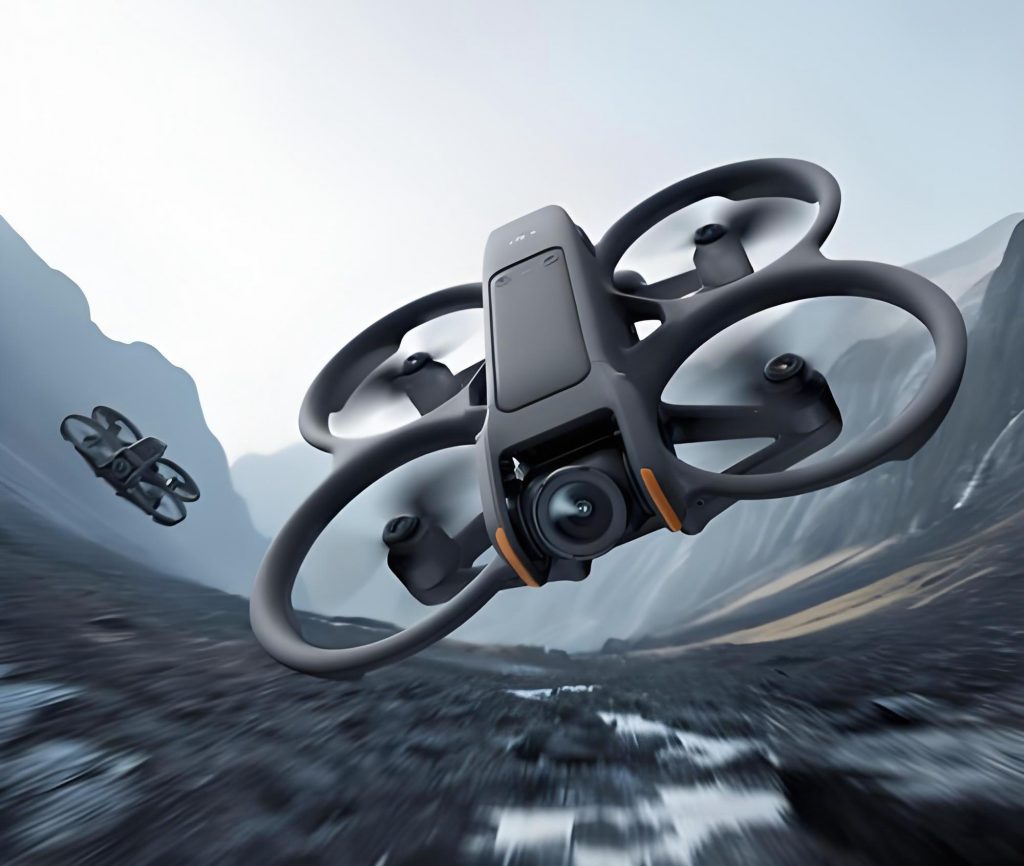
The Expansion Phase reflects diversification in DJI drone technology. Beyond core UAV systems, patents extended into adjacent fields such as robotics and smart transportation, leveraging DJI drone expertise in control systems and sensors. This aligns with the broader trend of convergence in tech industries, where DJI drones serve as platforms for innovation. The patent count for DJI drones during this phase can be approximated by a polynomial function, indicating sustained investment in R&D. For instance, the cumulative patents \( C(t) \) by year \( t \) might follow:
$$ C(t) = at^3 + bt^2 + ct + d $$
where \( a, b, c, d \) are constants derived from historical data. This model highlights the accelerating pace of DJI drone patent filings, underscoring the company’s commitment to maintaining leadership.
To understand the technical focus of DJI drone patents, I analyzed the International Patent Classification (IPC) codes associated with their portfolio. The table below lists the top IPC categories, revealing hotspots in image communication, control systems, and aeronautical components. These categories are integral to the functionality of DJI drones, emphasizing areas where DJI has built competitive barriers.
| IPC Code | Category | Percentage of DJI Drone Patents | Key Applications in DJI Drones |
|---|---|---|---|
| H04N | Image Communication | 18% | Camera control, video transmission, and stabilization systems for DJI drones. |
| G05D | Control Systems | 15% | Autopilot, altitude hold, and navigation algorithms in DJI drones. |
| B64C | Aircraft Structures | 14% | Rotor designs, foldable mechanisms, and lightweight frames for DJI drones. |
| B64D | Aircraft Equipment | 7% | Payload integration, energy systems, and safety features in DJI drones. |
| G01S | Radio Navigation | 7% | GPS, obstacle detection, and positioning technologies for DJI drones. |
| G06F | Digital Data Processing | 6% | Onboard computing, image analysis, and AI implementations in DJI drones. |
| F16M | Supports and Mountings | 8% | Gimbal mounts and stabilization platforms for DJI drone cameras. |
| H02J | Power Supply | 3% | Battery management and charging systems for DJI drones. |
| G03B | Photography | 3% | Lens control and exposure settings in DJI drone cameras. |
| G06T | Image Processing | 4% | Real-time video enhancement and object recognition in DJI drones. |
The dominance of H04N and G05D codes underscores the importance of imaging and control in DJI drones. For instance, the gimbal stabilization system, a key feature of DJI drones, relies on precise control algorithms. The attitude of a DJI drone can be described using Euler angles—roll (\( \phi \)), pitch (\( \theta \)), and yaw (\( \psi \))—and the dynamics are governed by equations of motion. A simplified model for a quadcopter DJI drone is:
$$ \begin{align*}
\ddot{x} &= (\sin\psi \sin\phi + \cos\psi \sin\theta \cos\phi) \frac{U_1}{m} \\
\ddot{y} &= (-\cos\psi \sin\phi + \sin\psi \sin\theta \cos\phi) \frac{U_1}{m} \\
\ddot{z} &= -g + (\cos\theta \cos\phi) \frac{U_1}{m}
\end{align*} $$
where \( x, y, z \) are position coordinates, \( m \) is the mass, \( g \) is gravity, and \( U_1 \) is the thrust input. DJI drone patents often optimize these control parameters for stability, as seen in patents for flight management systems. Similarly, image transmission in DJI drones involves compressing video data to reduce latency, which can be modeled by a bandwidth allocation formula:
$$ B = \sum_{i=1}^{n} \frac{R_i}{C_i} $$
where \( B \) is the total bandwidth, \( R_i \) is the data rate for stream \( i \), and \( C_i \) is the channel capacity. DJI drone patents in H04N improve this by adaptive bitrate algorithms, ensuring smooth video feed even in congested environments.
Another critical area is obstacle avoidance in DJI drones, which uses sensors like LiDAR or cameras. The distance \( d \) to an obstacle can be calculated using time-of-flight principles:
$$ d = \frac{c \cdot \Delta t}{2} $$
where \( c \) is the speed of light and \( \Delta t \) is the time difference. DJI drone patents enhance this with machine learning models for better accuracy, contributing to safer flights. Moreover, the energy efficiency of DJI drones is vital for longer flight times. The power consumption \( P \) of a DJI drone can be expressed as:
$$ P = P_{\text{prop}} + P_{\text{avionics}} + P_{\text{payload}} $$
where \( P_{\text{prop}} \) is propulsion power, often modeled as \( P_{\text{prop}} = k \cdot \omega^3 \) for rotors, with \( \omega \) as angular velocity and \( k \) as a constant. DJI drone patents in B64D and H02J focus on optimizing these components to extend battery life.
Looking at market applications, DJI drones are used in agriculture, filmmaking, inspection, and logistics. The patent trends reflect this diversification. For example, recent patents for DJI drones include swarm coordination algorithms, where multiple DJI drones operate collaboratively. The coordination can be described by a consensus algorithm:
$$ \dot{x}_i = \sum_{j \in N_i} (x_j – x_i) $$
where \( x_i \) is the state of DJI drone \( i \), and \( N_i \) is its neighbors. Such innovations position DJI drones at the forefront of autonomous systems. Additionally, the integration of AI in DJI drones for tasks like object tracking relies on convolutional neural networks (CNNs), with output layers defined as:
$$ y = \sigma(W * x + b) $$
where \( \sigma \) is an activation function, \( W \) are weights, \( * \) denotes convolution, \( x \) is input, and \( b \) is bias. DJI drone patents in G06F and G06T cover these implementations, enabling features like subject tracking in the latest DJI drone models.
In summary, the development of DJI drone patent technology showcases a strategic approach to innovation. From early patents on basic controls to recent forays into AI and robotics, DJI has consistently leveraged intellectual property to secure its market position. The data suggests that the growth of DJI drone patents follows a sigmoid curve, indicating maturation in core areas but continued expansion into new domains. For companies in the UAV space, analyzing DJI drone patents offers insights into technology trends—such as the emphasis on image stability and autonomous control—that are critical for competitiveness. As DJI drones evolve, future patent filings will likely focus on sustainability, such as green energy solutions, and deeper AI integrations, pushing the boundaries of what DJI drones can achieve. Ultimately, the story of DJI drone patents is one of relentless innovation, driven by a clear vision for the future of unmanned systems.