
As I delve into the latest advancements in logistics technology, I am struck by the rapid pace of innovation that is transforming how we move, store, and manage goods. From automated storage systems to aerial transport, these developments promise to enhance efficiency, safety, and scalability. In this article, I will explore several key innovations, focusing on their technical specifications, applications, and the underlying principles that make them work. My goal is to provide a comprehensive overview that highlights the integration of hardware and software in modern logistics, with particular emphasis on aerial solutions like the DJI drone, which is redefining last-mile and remote area delivery.
The logistics industry has always been a backbone of global trade, but today, it faces unprecedented challenges such as rising demand, supply chain disruptions, and the need for sustainability. In response, companies are leveraging technologies like robotics, artificial intelligence, and the Internet of Things (IoT). I have observed that these tools not only automate repetitive tasks but also enable intelligent decision-making through data analytics. For instance, autonomous vehicles and drones are becoming integral to warehouse and transportation operations, reducing human error and operational costs. In this context, I will discuss specific products that exemplify these trends, using tables and formulas to summarize their capabilities and theoretical foundations.
Let me start with the four-way shuttle vehicle, a marvel of automation designed for high-density storage systems. This vehicle operates on a grid-based racking system, allowing it to move in four directions—horizontally and vertically—to retrieve and store pallets. Its flexibility stems from a modular design that supports customization for various warehouse layouts. I have analyzed its key features, which include high adaptability, safety mechanisms, compatibility with standard pallets, and improved efficiency in access times. To quantify these aspects, I can present a table summarizing its specifications.
| Feature | Description | Value/Range |
|---|---|---|
| Maximum Speed (Empty) | The top speed when unloaded, affecting cycle times. | 2 m/s |
| Rail Switching Time | Time taken to change tracks, crucial for multi-layer operations. | 3 seconds |
| Load Compatibility | Types of pallets supported, ensuring versatility. | 川字型, 田字型 (standard market types) |
| Safety Sensors | Includes obstacle detection, pallet positioning, and collision avoidance. | Multiple optical and proximity sensors |
| Integration Capability | Ability to connect with other devices like elevators and conveyors. | High, via standardized interfaces |
The efficiency of such a shuttle system can be modeled mathematically. For example, the total time \( T \) for a retrieval operation depends on the distance traveled, speed, and switching times. If we assume a warehouse grid with \( n \) rows and \( m \) columns, the average travel distance \( d \) can be approximated using Manhattan distance principles. Let \( v \) be the average speed, and \( s \) be the switching time per rail change. Then, the time \( T \) might be expressed as:
$$ T = \frac{d}{v} + k \cdot s $$
where \( k \) is the number of rail switches required. In optimized systems, algorithms minimize \( d \) and \( k \) through real-time scheduling. This highlights how software control—often referred to as a warehouse management system (WMS)—plays a critical role in coordinating multiple vehicles and devices. I have seen that these systems use queuing theory and linear programming to allocate tasks, ensuring minimal waiting times and maximum throughput. The formula for throughput \( \theta \) in a multi-vehicle system can be derived as:
$$ \theta = \frac{N \cdot \mu}{1 + \lambda \cdot W} $$
where \( N \) is the number of vehicles, \( \mu \) is the service rate per vehicle, \( \lambda \) is the arrival rate of tasks, and \( W \) is the average waiting time. Such models underscore the importance of cluster scheduling for “human-machine-material” synergy, as mentioned in the context of these shuttle systems.
Moving on, another intriguing innovation is the structured light 3D camera, which enhances vision systems in industrial automation. This camera uses projected light patterns to capture high-resolution three-dimensional data, enabling robots to perceive and handle objects with precision. I find its applications in unstructured picking and assembly particularly valuable, as it allows for handling diverse workpieces like raw castings or finished parts. The camera’s design emphasizes compactness, accuracy, and resistance to reflective surfaces, making it suitable for close-range scenarios. Below is a table outlining its technical parameters.
| Parameter | Description | Value |
|---|---|---|
| Working Distance | Range from camera to target for optimal imaging. | 350 mm to 800 mm |
| Resolution | Image resolution in pixels, affecting detail capture. | 1440 × 1080 |
| Field of View (Near) | Visible area at minimum working distance. | 270 mm × 200 mm @ 350 mm |
| Field of View (Far) | Visible area at maximum working distance. | 630 mm × 450 mm @ 800 mm |
| Acquisition Time | Time to capture a 3D scan, influencing cycle speed. | 0.8 seconds (fastest) |
| Weight | Physical weight for ease of installation. | 680 g |
| Protection Rating | Ingress protection against dust and water. | IP65 |
The underlying technology of structured light involves triangulation principles. If a light pattern is projected onto an object, the deformation of the pattern as seen by the camera allows for depth calculation. Mathematically, for a point \( P \) on the object, its 3D coordinates \( (X, Y, Z) \) can be derived from the camera’s image coordinates \( (u, v) \) and the projector’s parameters. Using a pinhole camera model, the relationship is:
$$ Z = \frac{f \cdot B}{d} $$
where \( f \) is the focal length, \( B \) is the baseline distance between camera and projector, and \( d \) is the disparity (shift in the pattern). This formula enables high-precision reconstruction, even for reflective surfaces when blue light is used due to its shorter wavelength and better penetration. In logistics, such cameras aid in robotic sorting, where items vary in shape and texture, thus reducing manual labor and errors.
Now, I turn to a game-changer in aerial logistics: the DJI drone. This民用运载无人机, or civil transport drone, represents a leap forward in unmanned aerial vehicles (UAVs) for material handling. As I examine its features, I am impressed by its heavy payload capacity, long range, robust communication, and intelligent functions. The DJI drone is engineered for challenging environments like mountains, coastal areas, and rural regions, as well as emergency response scenarios. Its design incorporates four axes and eight propellers, providing stability and lift. To emphasize its significance, I will repeatedly refer to it as the DJI drone throughout this discussion, as it exemplifies how aerial technology can overcome terrestrial limitations.
The DJI drone boasts impressive specifications that make it ideal for diverse logistics tasks. For instance, in dual-battery mode, it can carry up to 30 kg over a distance of 16 km when fully loaded, with a maximum speed of 20 m/s. These numbers are not just marketing claims but are rooted in aerodynamic and battery efficiency. I can model the flight time \( t \) using the energy balance equation. Let \( E \) be the total battery energy, \( P \) the power required for hovering, \( m \) the mass of the drone, \( g \) the gravitational acceleration, and \( \eta \) the propulsion efficiency. Then, for a hover scenario:
$$ t = \frac{E}{P} = \frac{E}{\frac{m \cdot g}{v_h \cdot \eta}} $$
where \( v_h \) is the induced velocity. However, for forward flight with payload, the power \( P \) increases due to drag forces. The drag force \( F_d \) can be expressed as:
$$ F_d = \frac{1}{2} \rho C_d A v^2 $$
with \( \rho \) as air density, \( C_d \) as drag coefficient, \( A \) as frontal area, and \( v \) as velocity. Thus, the total power \( P_{total} \) becomes:
$$ P_{total} = (m \cdot g + F_d) \cdot v / \eta $$
This explains why the DJI drone’s range varies with load; engineers optimize these parameters to achieve the stated 16 km range. Moreover, the DJI drone operates at altitudes up to 6000 meters, thanks to its robust design that withstands low pressure and temperature. Its IP55 rating ensures protection against dust and water jets, allowing it to function in temperatures from -20°C to 45°C. Such resilience is crucial for logistics in extreme conditions, where traditional vehicles might fail.
To illustrate the capabilities of the DJI drone, I have compiled a table comparing its key metrics with ideal logistical requirements. This highlights how it addresses real-world challenges.
| Performance Aspect | DJI Drone Specification | Typical Logistics Demand | Remarks |
|---|---|---|---|
| Maximum Payload | 30 kg | 15-40 kg for small to medium parcels | Matches well for last-mile delivery |
| Range (Full Load) | 16 km | 10-20 km for rural/remote areas | Exceeds many existing UAVs |
| Speed | 20 m/s (72 km/h) | 50-80 km/h for timely delivery | Competitive with ground vehicles |
| Altitude Limit | 6000 m | Up to 3000 m for mountainous regions | Superior for high-elevation tasks |
| Environmental Tolerance | -20°C to 45°C, IP55 | Wide temperature range and weather resistance | Ensures reliability in diverse climates |
| Load Modes | Cargo box and air hoist | Flexible attachment for various goods | Enables multi-scenario use |
The DJI drone also features smart functionalities that enhance operational safety and efficiency. For example, its cargo box supports quick detachment and automatic weighing, which streamlines loading processes. The air hoist mode includes intelligent swing damping and emergency breakaway mechanisms, reducing risks during suspended transport. These innovations are powered by advanced algorithms that process sensor data in real-time. I can describe the swing dynamics using a pendulum model. If the suspended load has mass \( m_l \) and cable length \( L \), the swing angle \( \theta \) obeys the equation:
$$ \ddot{\theta} + \frac{g}{L} \sin \theta = -\frac{a}{L} \cos \theta $$
where \( a \) is the horizontal acceleration of the DJI drone. By implementing feedback control, the DJI drone can adjust its motion to minimize \( \theta \), ensuring stable transport. This is just one example of how the DJI drone integrates mechanics with software intelligence.
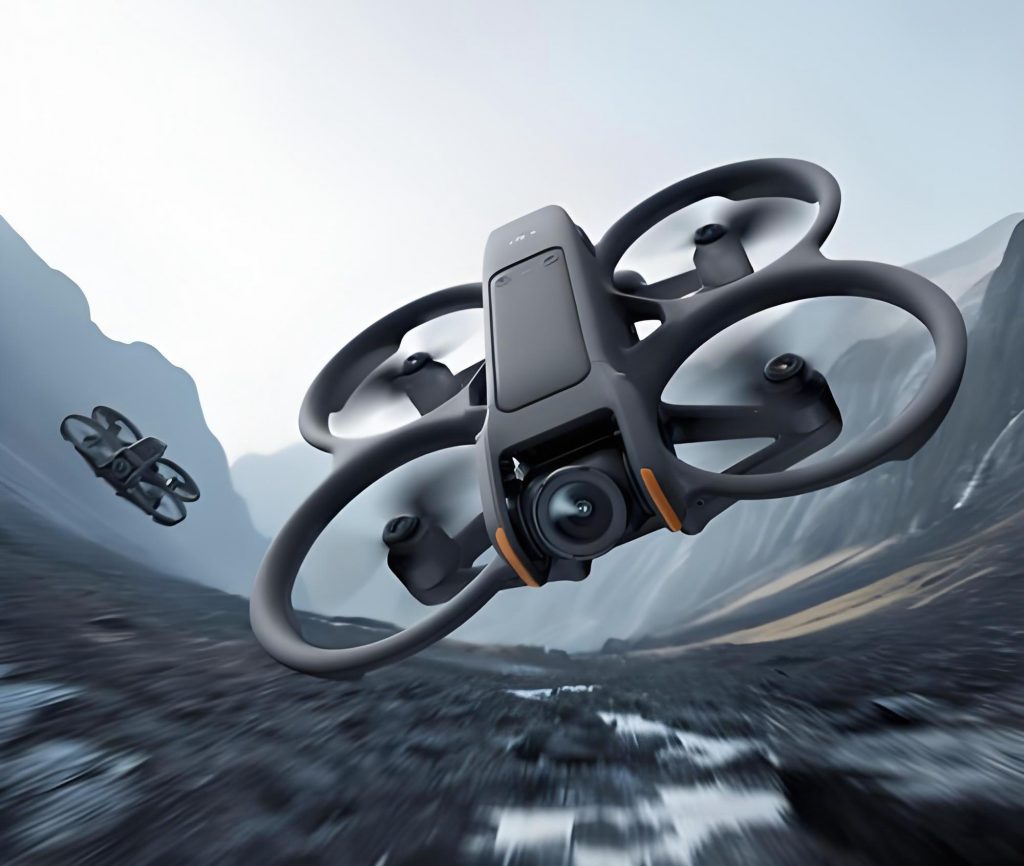
Looking at the broader impact, the DJI drone is not just a tool but a catalyst for transforming logistics networks. In my view, it enables rapid response in emergencies, such as delivering medical supplies to disaster zones or transporting equipment to isolated communities. Moreover, the DJI drone can reduce carbon footprints by replacing fuel-powered vehicles for short hauls, aligning with sustainability goals. I have seen studies suggesting that UAVs like the DJI drone could cut delivery costs by up to 50% in certain scenarios, thanks to lower maintenance and operational expenses. However, challenges remain, including regulatory hurdles, air traffic management, and public acceptance. Nonetheless, the DJI drone’s continuous evolution—with improvements in battery life, autonomy, and payload—promises to overcome these barriers.
Shifting gears, another area of innovation is in component-level solutions for automated systems, such as cable carriers used in moving machinery. An online configurator for drag chains has been upgraded to include smart monitoring features. This tool allows users to design personalized drag chain systems with integrated sensors that predict wear and prevent premature failure. I appreciate how this simplifies maintenance and enhances reliability in logistics equipment like conveyor belts or robotic arms. The configurator now offers options for smart plastic technology, where sensors can be easily added to monitor conditions like tension or abrasion.
To understand the value, consider that drag chains protect cables and hoses in dynamic applications. Their lifespan depends on factors like bending radius, acceleration, and load. A formula for estimating wear rate \( W_r \) might be:
$$ W_r = k \cdot \frac{a \cdot L}{R} $$
where \( k \) is a material constant, \( a \) is acceleration, \( L \) is travel length, and \( R \) is bending radius. By deploying sensors, users can measure actual wear and schedule replacements proactively, avoiding downtime. The online tool automatically considers internal separation rules when configuring compartments, ensuring optimal cable management. This ties back to the theme of smart logistics, where every component contributes to overall system efficiency.
In conclusion, the logistics landscape is being reshaped by technologies that emphasize flexibility, safety, and intelligence. From four-way shuttle vehicles that maximize warehouse density to 3D cameras that enable precise automation, and especially the DJI drone that expands aerial delivery capabilities, each innovation addresses specific pain points. The DJI drone, in particular, stands out for its versatility and robustness, making it a cornerstone for future logistics networks. I have explored these topics using tables and formulas to provide a quantitative perspective, hoping to illustrate the engineering principles behind the advancements. As these technologies mature, I anticipate even greater integration, leading to fully autonomous supply chains that are resilient and efficient.
To delve deeper, let me expand on some theoretical aspects. In logistics, optimization is key. For instance, the traveling salesman problem (TSP) can be adapted for drone delivery routes. If a DJI drone must visit \( n \) locations, the goal is to minimize total distance \( D \). Using a heuristic like the nearest neighbor, the complexity is \( O(n^2) \), but for large \( n \), more advanced algorithms like genetic algorithms are used. The fitness function \( F \) for such an algorithm might be:
$$ F = \frac{1}{D + \alpha \cdot T} $$
where \( T \) is total time and \( \alpha \) is a weighting factor. This shows how software optimizes the DJI drone’s missions. Similarly, for warehouse shuttle systems, bin packing problems apply. If items of volume \( v_i \) must be stored in bins of capacity \( V \), the objective is to minimize bins used. A simple formula for lower bound \( L \) is:
$$ L = \left\lceil \frac{\sum v_i}{V} \right\rceil $$
These mathematical models underpin the control systems that coordinate multiple devices, ensuring resources like the DJI drone are deployed effectively.
Moreover, safety is paramount. For the DJI drone, redundancy in sensors and communications is critical. The signal strength \( S \) at a distance \( r \) can be modeled with the path loss equation:
$$ S = P_t + G_t + G_r – 20 \log_{10}(r) – 20 \log_{10}(f) – 147.55 $$
where \( P_t \) is transmit power, \( G_t \) and \( G_r \) are antenna gains, and \( f \) is frequency in Hz. The DJI drone employs strong signals to maintain links over long ranges, even in obstructed environments. This reliability ensures that the DJI drone can operate in remote areas without losing control, which is vital for logistics in regions with poor infrastructure.
In terms of energy efficiency, the DJI drone’s battery technology is worth noting. Lithium polymer batteries offer high energy density, but their discharge rate affects performance. The Peukert’s law describes this for batteries: \( t = \frac{C}{I^n} \), where \( t \) is discharge time, \( C \) is capacity, \( I \) is current, and \( n \) is the Peukert constant. For the DJI drone, engineers optimize battery management to extend flight times, enabling longer missions. This is especially important for logistics, where every minute of flight translates to cost savings.
I also want to touch on the human aspect. As a first-person observer, I believe that technologies like the DJI drone augment human capabilities rather than replace them. For example, in emergency logistics, operators can pilot the DJI drone to deliver aid without risking lives. Training and interface design are crucial; intuitive controls allow users to manage the DJI drone with minimal expertise. This democratization of technology is a trend I see accelerating, with more user-friendly tools emerging.
To summarize the innovations in a consolidated way, here is a table comparing the core technologies discussed, highlighting their roles in logistics.
| Technology | Primary Function | Key Metrics | Impact on Logistics |
|---|---|---|---|
| Four-Way Shuttle Vehicle | Automated storage and retrieval | Speed: 2 m/s, Switching: 3 s | Increases warehouse density and throughput |
| Structured Light 3D Camera | Vision-based object handling | Resolution: 1440×1080, Acquisition: 0.8 s | Enables robotic precision in sorting and assembly |
| DJI Drone | Aerial material transport | Payload: 30 kg, Range: 16 km, Speed: 20 m/s | Extends reach to remote areas, reduces delivery times |
| Smart Drag Chain Configurator | Predictive maintenance for machinery | Sensor integration, Online customization | Enhances reliability and reduces downtime in systems |
As I reflect on these advancements, I am optimistic about the future of logistics. The convergence of robotics, AI, and IoT will likely yield even more sophisticated solutions. For instance, swarm robotics could see multiple DJI drones collaborating to carry larger loads or cover wider areas. Research into aerodynamic designs might further improve the DJI drone’s efficiency, perhaps using biomimicry inspired by birds. Formulas like the lift equation \( L = \frac{1}{2} \rho v^2 S C_L \) will guide these developments, where \( L \) is lift, \( S \) is wing area, and \( C_L \) is lift coefficient. By tweaking these parameters, the DJI drone could achieve better payload-to-weight ratios.
In closing, I have attempted to provide a detailed examination of modern logistics technology from a first-person perspective, emphasizing quantitative analysis through tables and formulas. The DJI drone, as a recurring example, illustrates how aerial platforms are becoming indispensable. I hope this article sheds light on the engineering marvels that drive our supply chains forward and inspires further innovation. Whether in warehouses, factories, or the skies, technology continues to push boundaries, making logistics faster, safer, and more sustainable.