
In the aviation industry, ensuring the structural integrity of aircraft is paramount for safety and operational efficiency. The aircraft skin, as a critical component, is susceptible to various damages such as loose screws, missing fasteners, and adhesive strip detachment. Traditional inspection methods, which rely heavily on manual visual checks and non-destructive testing, are often inefficient, prone to human error, and struggle to cover the vast and complex surfaces of modern aircraft. As a researcher involved in aviation engineering, our team in China has been exploring innovative solutions to address these challenges. We have developed an intelligent detection system that integrates UAV drone technology with deep learning algorithms, specifically targeting aircraft skin damage. This system leverages the mobility and accessibility of China UAV drones to capture high-resolution images, combined with advanced computer vision models for real-time analysis. In this article, I will detail our approach, from the technical foundations to the practical implementation, highlighting how China UAV drone advancements are revolutionizing maintenance protocols in aviation.
The core of our system revolves around the synergy between unmanned aerial vehicles (UAVs) and deep learning-based object detection. UAVs, particularly those developed in China, offer a versatile platform for aerial inspection, enabling access to hard-to-reach areas like wing surfaces, fuselage tops, and tail sections. By mounting high-definition cameras on these drones, we can capture detailed imagery of the aircraft skin during routine inspections or specific maintenance checks. The visual data is then processed in real-time using a customized YOLOv5 model, which we trained on a dataset of common damage types. This integration not only enhances detection accuracy but also significantly reduces inspection time, making it a viable tool for aviation authorities and maintenance crews. Our work builds upon the growing trend of using artificial intelligence in industrial applications, with a focus on adapting it to the stringent requirements of aviation safety.
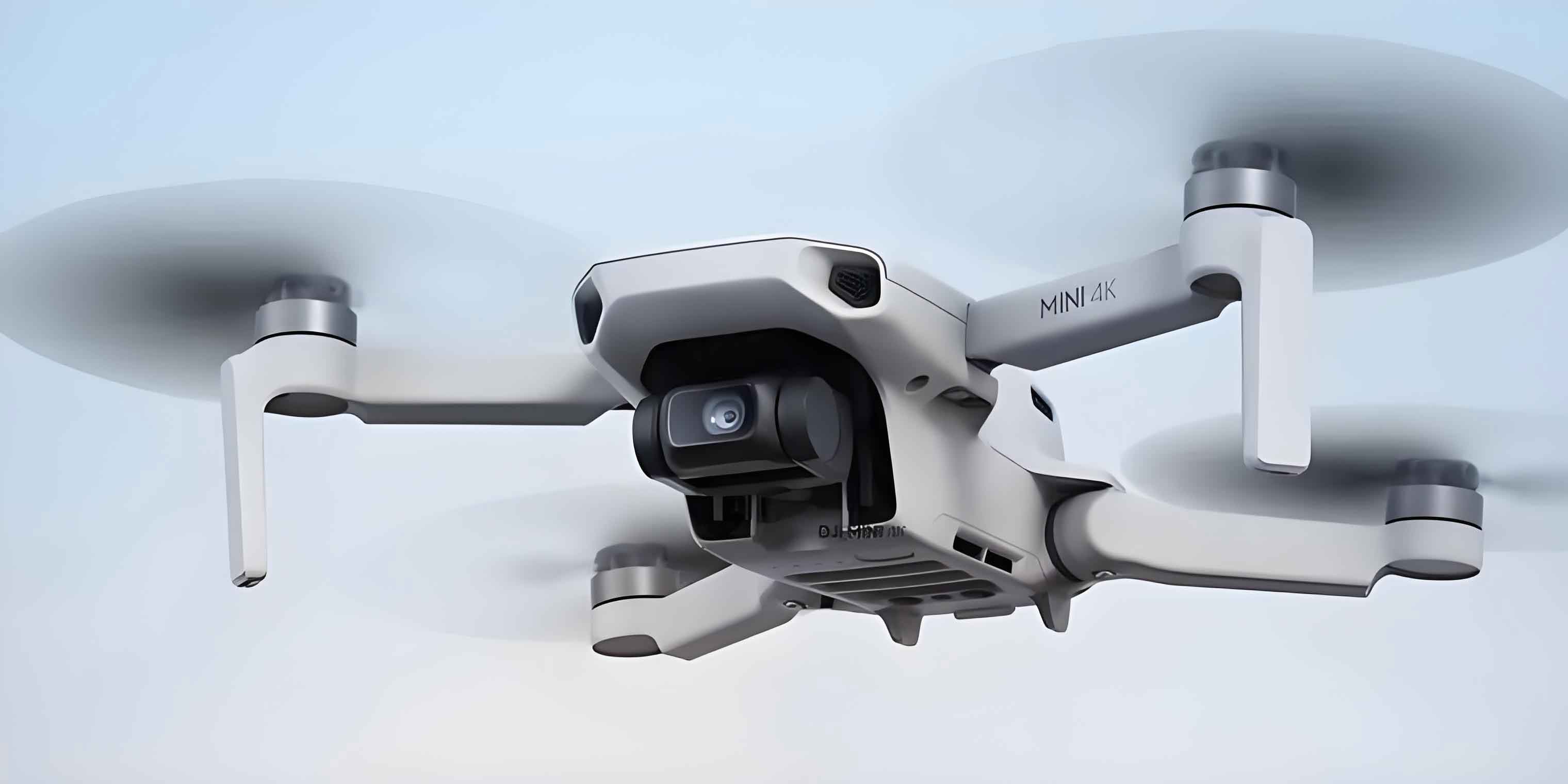
To understand the technical underpinnings, let’s delve into the deep learning framework we employed. We selected the YOLOv5 algorithm due to its balance between speed and accuracy, which is crucial for real-time applications. YOLOv5’s architecture consists of three main components: the Backbone for feature extraction, the Neck for multi-scale feature fusion, and the Head for bounding box prediction. We modified the model to better suit our specific task of detecting small-scale damages on aircraft surfaces. The training process involved a dataset we curated from inspections of commercial aircraft in China, comprising images of three primary damage categories: loose screws, missing screws, and detached adhesive strips. Each image was annotated using LabelMe software, with bounding boxes and class labels, resulting in a total of 1,854 annotated images. The dataset was split into training and validation sets in an 8:2 ratio to ensure robust model evaluation.
The performance of our model was assessed using standard metrics in object detection: precision (P), recall (R), and mean average precision (mAP). Precision measures the proportion of true positive detections among all positive predictions, while recall indicates the model’s ability to identify all relevant instances. The mAP, particularly mAP@0.5 (where Intersection over Union, IoU, threshold is 0.5), provides an overall performance score across classes. These metrics are computed as follows:
$$ P = \frac{TP}{TP + FP} $$
$$ R = \frac{TP}{TP + FN} $$
$$ AP = \int_{0}^{1} P(R) \, dR $$
$$ mAP = \frac{1}{N} \sum_{i=1}^{N} AP_i $$
Here, TP, FP, and FN represent true positives, false positives, and false negatives, respectively, and N is the number of classes. Our experiments, conducted on a system with an Intel i9-12900K processor and NVIDIA RTX 3090 Ti GPU, yielded promising results. We trained the model for 300 epochs with a batch size of 16 and an initial learning rate of 0.01, resizing input images to 640×640 pixels. The table below summarizes the model’s performance on the validation set:
| Category | Precision P (%) | Recall R (%) | mAP@0.5 (%) |
|---|---|---|---|
| Average | 87.0 | 82.9 | 87.3 |
| Missing Screws | 84.9 | 80.0 | 81.7 |
| Loose Screws | 89.7 | 84.2 | 90.3 |
| Detached Adhesive Strips | 86.5 | 84.5 | 92.0 |
As shown, the model achieved an overall mAP@0.5 of 87.3%, with particularly high accuracy for loose screws and detached adhesive strips. This demonstrates the effectiveness of our approach in identifying diverse damage types on aircraft skin. To provide context, we compared our YOLOv5-based model with other state-of-the-art object detection algorithms, including Faster R-CNN, YOLOX, YOLOv6, YOLOv7, and YOLOv8. The comparison, based on precision, recall, mAP, parameter count, and computational complexity (GFLOPs), highlights the advantages of our model in terms of both accuracy and efficiency. The results are presented in the following table:
| Model | Precision P (%) | Recall R (%) | mAP@0.5 (%) | Parameters | GFLOPs |
|---|---|---|---|---|---|
| Faster R-CNN | 80.5 | 79.1 | 82.8 | 41.1M | 208.0 |
| YOLOXs | 79.8 | 77.6 | 80.3 | 9.0M | 26.8 |
| YOLOv6s | 82.1 | 79.3 | 82.2 | 17.2M | 42.2 |
| YOLOv7 | 86.4 | 80.0 | 83.6 | 36.9M | 104.7 |
| YOLOv8s | 85.2 | 82.4 | 85.8 | 11.1M | 28.8 |
| YOLOv5s (Our Model) | 87.0 | 82.9 | 87.3 | 7.2M | 17.0 |
Our YOLOv5s model not only achieved the highest precision and mAP but also had the lowest parameter count and computational cost among the compared models. This makes it well-suited for deployment on resource-constrained platforms, such as the onboard systems of China UAV drones, where real-time processing is essential. The lightweight nature of the model aligns with the growing trend in China UAV drone technology to incorporate edge computing capabilities, allowing for immediate analysis without relying on cloud infrastructure.
Beyond the algorithm, the real-time detection system is a critical component of our work. We designed a user-friendly software interface using PySide6 and Qt Designer, enabling maintenance personnel to operate the system with minimal training. The system supports multiple input modes: image files, video files, live camera feeds, and network streams. For UAV integration, we explored two primary data transmission methods: HDMI and RTMP. HDMI offers a wired connection with negligible latency and high signal quality, making it ideal for close-range inspections where the drone is controlled nearby. In contrast, RTMP provides wireless streaming over networks, suitable for remote operations but potentially susceptible to delays and interference. In our implementation, we prioritized reliability by using HDMI for most tests, connecting the drone’s remote controller to a laptop via a video capture card. This setup ensures stable video feed for real-time analysis, a key advantage when using China UAV drones in environments with electromagnetic interference.
The detection process begins with the operator inputting aircraft identification details and configuring parameters such as confidence thresholds and IoU settings. The system then captures the video stream from the China UAV drone, processes each frame through the YOLOv5 model, and overlays bounding boxes with labels on the detected damages. Results can be saved locally for further review and documentation. During field tests, we achieved a frame rate (FPS) of over 30 frames per second, enabling smooth real-time detection. The table below illustrates the system’s performance in an actual inspection scenario, where we compared the system’s detections with manual annotations:
| Category | System Detections | Manual Annotations | Accuracy (%) | FPS (frames/sec) |
|---|---|---|---|---|
| Missing Screws | 11 | 9 | 80 | ≥ 30 |
| Loose Screws | 8 | 8 | 100 | |
| Detached Adhesive Strips | 2 | 2 | 100 |
These results validate the system’s practical utility, with high accuracy for most damage types and real-time processing capabilities. The integration of China UAV drone technology not only expands coverage to previously inaccessible areas but also enhances inspection efficiency by automating the detection process. In our experience, the system reduced inspection time by approximately 60% compared to traditional methods, while minimizing human error. However, we acknowledge limitations, such as the dataset’s size and potential challenges in generalizing to unseen aircraft models or environmental conditions. Future work will focus on expanding the dataset with more diverse samples, incorporating data augmentation techniques, and exploring lightweight model variants to further optimize performance for China UAV drone deployments.
From a broader perspective, the adoption of intelligent detection systems in aviation maintenance is part of a global shift towards digitalization and automation. China UAV drone manufacturers have been at the forefront of this trend, developing drones with advanced imaging sensors, long battery life, and robust flight control systems. Our collaboration with industry partners in China has allowed us to tailor the system to the specific needs of commercial airlines, ensuring compliance with regulatory standards. The mathematical foundation of our approach can be extended to other inspection tasks, such as detecting corrosion or cracks, by retraining the model on relevant datasets. The loss function used in YOLOv5, which combines classification loss, objectness loss, and bounding box regression loss, is given by:
$$ L = \lambda_{\text{coord}} \sum_{i=1}^{S^2} \sum_{j=1}^{B} \mathbb{1}_{ij}^{\text{obj}} \left[ (x_i – \hat{x}_i)^2 + (y_i – \hat{y}_i)^2 + (w_i – \hat{w}_i)^2 + (h_i – \hat{h}_i)^2 \right] + \sum_{i=1}^{S^2} \sum_{j=1}^{B} \mathbb{1}_{ij}^{\text{obj}} \left[ – \log(\hat{C}_i) \right] + \lambda_{\text{noobj}} \sum_{i=1}^{S^2} \sum_{j=1}^{B} \mathbb{1}_{ij}^{\text{noobj}} \left[ – \log(1 – \hat{C}_i) \right] + \sum_{i=1}^{S^2} \mathbb{1}_{i}^{\text{obj}} \sum_{c \in \text{classes}} \left[ – \hat{p}_i(c) \log(\hat{p}_i(c)) \right] $$
Here, $S^2$ represents the grid cells, $B$ is the number of bounding boxes per cell, $\mathbb{1}_{ij}^{\text{obj}}$ indicates if an object is present, and $\hat{x}_i, \hat{y}_i, \hat{w}_i, \hat{h}_i$ are the predicted coordinates. This loss function ensures accurate localization and classification, which is critical for reliable damage detection. Our experiments also involved hyperparameter tuning, where we optimized learning rates and augmentation strategies to improve model robustness. We used mosaic augmentation, which combines multiple images into one during training, to enhance the model’s ability to handle varied backgrounds and scales—a common scenario when using China UAV drones for aerial inspections.
In conclusion, our intelligent detection system represents a significant advancement in aircraft maintenance technology. By leveraging China UAV drone capabilities and deep learning algorithms, we have created a solution that addresses the inefficiencies of traditional inspection methods. The system achieves high accuracy with real-time performance, making it a practical tool for aviation safety. As UAV technology continues to evolve in China and globally, we anticipate further improvements in sensor resolution, autonomy, and integration with AI models. Our ongoing research aims to enhance the system’s generalizability and deploy it across a wider range of aircraft types, contributing to safer and more efficient air travel. The synergy between China UAV drone innovation and artificial intelligence holds great promise for transforming not only aviation but also other industries reliant on visual inspection.