
In recent years, the UAV (Unmanned Aerial Vehicle) industry has experienced rapid growth, particularly in China, where drones are widely deployed in logistics, agricultural plant protection, geographic surveying, and numerous other scenarios, demonstrating immense value. The market scale of China UAV drones continues to rise, and as a critical component of the low-altitude economy, the drone industry significantly propels its prosperity. However, the swift proliferation and application of drone technology have introduced a series of challenges. Unauthorized drones frequently intrude into sensitive areas such as airport clearance zones and military management districts, posing serious threats to aviation, public, and national security. Drones, characterized by low-altitude flight, strong concealment, and high mobility, are difficult to detect and counter effectively using traditional single-technology approaches. For instance, radar detection is susceptible to interference in complex electromagnetic environments, especially with limited accuracy for small or “low, slow, and small” drones; optical monitoring methods are constrained by weather and lighting conditions; and radio frequency interference countermeasures have limited range and may affect legitimate surrounding devices. Consequently, designing and developing an efficient and reliable UAV detection and countermeasure system is urgent. The integration of multimodal technology and AI (Artificial Intelligence) can fuse multi-source data from radar, electro-optical, RF, and other sensors, leveraging the advantages of each to compensate for the shortcomings of single technologies, thereby providing new pathways for precise drone monitoring, identification, and enhanced countermeasure efficacy, ultimately contributing to fortified security defenses.
Our work addresses these issues by proposing a multimodal fusion-based system. We analyze current problems, design a comprehensive architecture, develop core algorithm models, and validate the system through practical application. Throughout this paper, we emphasize the context of China UAV drone operations and low-altitude security, highlighting how our system tackles unique challenges in this rapidly evolving domain.
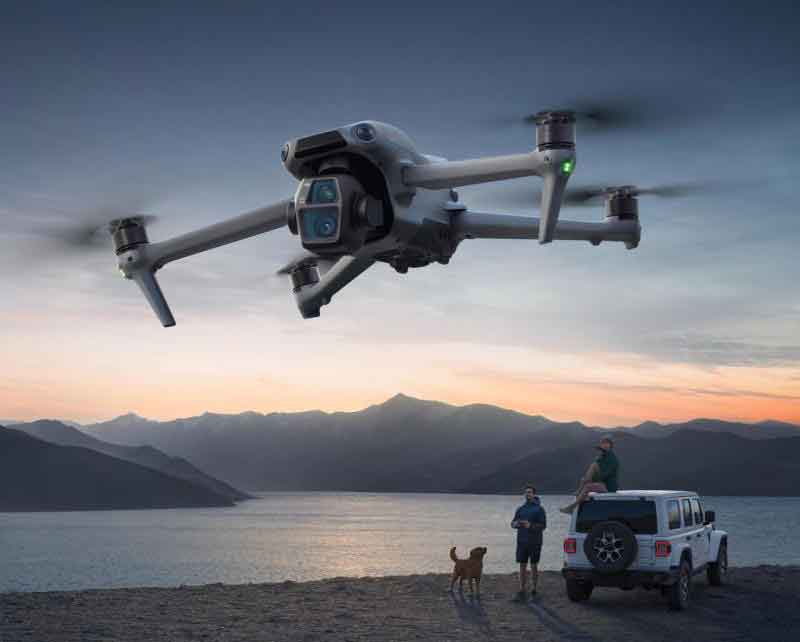
The proliferation of China UAV drones has underscored critical vulnerabilities in low-altitude security. Below, we analyze the现状问题分析 (current problem analysis) in detail, summarizing key issues in a table to clarify the limitations of existing approaches.
| Problem Area | Specific Issues | Impact on Security |
|---|---|---|
| Low-Altitude Security Gaps | Traditional manual patrols have limited视野范围 (field of view) and slow response; radar漏检率 (missed detection rate) is high for micro-drones with low radar cross-section; electro-optical devices suffer from reduced accuracy in fog, haze, or night conditions. | Drones easily breach traditional防御体系 (defense systems), threatening public safety and privacy. |
| Insufficient Single-Technology Countermeasures | 独立运行 (independent operation) of radar and electro-optical devices lacks多源数据时空对齐与特征融合 (spatio-temporal alignment and feature fusion of multi-source data), leading to high误报率或漏报率 (false alarm or missed detection rates);单一反制策略 (single countermeasure strategies), such as RF interference, risk disrupting合法无人机 (legitimate drones); physical interception is costly and complex with limited success for dynamic targets. | Reduced effectiveness in complex scenarios, inability to handle diverse threats, and potential collateral damage. |
| Inadequate Response to New Intelligent Modes | Traditional systems rely on静态防御模式 (static defense models) with preset rules, lacking实时学习能力 (real-time learning capability) for new threats like frequency-hopping communication and autonomous navigation;人工介入 (manual intervention) in threat assessment causes delays. | Failure to counter advanced China UAV drones with adaptive technologies, leading to security breaches. |
| Fragmented Data Flow | 垂直化架构 (vertical architecture) with manual data transfer between monitoring, identification, and countermeasure subsystems results in冗长链条 (long chains) and delayed responses; lack of历史数据深度挖掘 (historical data mining) hinders strategy optimization. | Lower overall效能 (efficiency), increased human error, and inability to automate detection-to-countermeasure processes. |
To address these challenges, we design a multimodal UAV detection and countermeasure system. The system follows an “I-D-P-S” architecture—IaaS (Infrastructure as a Service), DaaS (Data as a Service), PaaS (Platform as a Service), and SaaS (Software as a Service)—to meet requirements for reusability, extensibility, and maintainability. The overall architecture integrates multiple sensors and countermeasure devices, with a focus on interoperability and intelligent decision-making. Below, we summarize the layers and their functions in a table.
| Architecture Layer | Components | Functions |
|---|---|---|
| IaaS (Infrastructure) | UAV monitoring devices (radar, electro-optical, acoustic, RF sensors), countermeasure devices (jammers, navigational spoofers), pilot perception devices, communication equipment, application servers. | Provides physical hardware support for data acquisition and countermeasure execution. |
| DaaS (Data) | Data采集, 清洗, 存储, 处理 (acquisition, cleaning, storage, processing) from monitoring, countermeasure, pilot perception, and关联数据 (associated data). | Offers standardized data services for upper layers, enabling fusion and analysis. |
| PaaS (Platform) | Microservices for登录注册 (login/registration),基本信息管理 (basic information management),数据导入 (data import),认证服务 (authentication),权限管理 (permission management),消息服务 (messaging),日志服务 (logging). | Supports core platform functionalities and ensures modular, scalable service delivery. |
| SaaS (Software) | Front-end对接系统 (interface systems),协同指挥及分析系统 (collaborative command and analysis systems) for monitoring, countermeasures, pilot perception, and command analysis. | Delivers end-user applications for real-time drone detection, threat assessment, and countermeasure deployment. |
The technical architecture emphasizes efficient collaboration among heterogeneous devices. Through unified planning, we build a network system compatible with diverse equipment, relying on通用接口协议与数据交互规范 (universal interface protocols and data exchange standards) to achieve cross-device data fusion. A配置策略库与智能数据中心 (configuration strategy library and intelligent data center) empowers the system with智能决策 (intelligent decision-making) and自动响应 (automatic response) capabilities, enabling dynamic策略触发 (strategy triggering) based on real-time data. Modular design allows customers to select devices and functions as needed, adapting to fixed, vehicular, or portable deployment scenarios. The architecture also enhances scalability to accommodate device迭代更替 (iteration and replacement) and ensures secure external connectivity, forming a comprehensive technical framework with compatibility, intelligence, flexibility, and extensibility.
Core functional modules include the front-end对接系统 (interface system),智能指挥决策系统 (intelligent command decision system), and hardware systems. The front-end system manages connections with third-party devices like radar, spectrum analyzers, infrared sensors, and cameras, performing data cleaning and storage while generating device异常告警 (anomaly alerts). The command system features地理信息可视化 (geographic information visualization) with 2D/3D maps, dynamic防御圈 (defense circles) for预警区, 拦截区, 核心区 (warning, interception, and core zones),全域目标管控 (global target control) for drones and pilots,智能指挥调度 (intelligent command调度) with AOA (Angle of Arrival) and TDOA (Time Difference of Arrival) positioning,预案模型配置 (preplan model configuration),历史回溯 (historical backtracking),综合研判 (comprehensive analysis), and系统管理 (system management). Hardware systems comprise无人机高负重结构模块 (high-load UAV structural modules),手机测向定位模块 (mobile phone direction-finding and positioning modules),飞手特征采集模块 (pilot feature collection modules),机载数据通信传输模块 (onboard data communication transmission modules), and机载通信天馈系统模块 (onboard communication antenna馈电系统 modules) to detect and locate pilots.
At the heart of our system are core algorithm models for detection and定位 (positioning). We design algorithms based on TDOA and AOA for wireless signal detection and定位, as well as多源数据融合 (multi-source data fusion) approaches. For TDOA/AOA, we collect and preprocess wireless signal data, then apply models that combine time differences and arrival angles to estimate 3D coordinates. The TDOA algorithm uses multiple stations to measure time differences, forming initial 2D coordinates via hyperbolic equations, while AOA provides height estimation. Fusion optimizes precision through iterative updates. The mathematical formulation for TDOA positioning can be expressed as follows, where $c$ is the speed of light, $(x, y, z)$ is the drone position, and $(x_i, y_i, z_i)$ are station coordinates:
$$ \Delta t_{ij} = \frac{1}{c} \left( \sqrt{(x_i – x)^2 + (y_i – y)^2 + (z_i – z)^2} – \sqrt{(x_j – x)^2 + (y_j – y)^2 + (z_j – z)^2} \right) $$
For AOA, the azimuth $\theta$ and elevation $\phi$ angles relate to position as:
$$ \theta = \arctan\left(\frac{y – y_i}{x – x_i}\right), \quad \phi = \arctan\left(\frac{z – z_i}{\sqrt{(x – x_i)^2 + (y – y_i)^2}}\right) $$
We optimize these using least squares and Newton iteration methods. The multi-source data fusion algorithm integrates radar, RF, and electro-optical sensor data. After data采集与预处理 (acquisition and preprocessing), the model learns representations from each sensor, extracts key features, and makes decisions on drone identification and positioning. We employ fusion techniques like Bayesian fusion, variance-based fusion, optimal fusion, and extended Kalman filtering. The fusion process can be summarized as:
$$ \hat{X} = \sum_{k=1}^{N} w_k \cdot X_k, \quad \text{where } w_k = \frac{1}{\sigma_k^2} \left/ \sum_{j=1}^{N} \frac{1}{\sigma_j^2} \right. $$
Here, $\hat{X}$ is the fused state estimate, $X_k$ are individual sensor estimates, $w_k$ are weights based on error variances $\sigma_k^2$. This enhances accuracy in complex environments. Below, we compare the algorithms in a table.
| Algorithm Type | Key Techniques | Advantages | Applications in China UAV Drone Context |
|---|---|---|---|
| TDOA/AOA-Based | Hyperbolic positioning, trigonometric calculations, least squares, Newton iteration. | Accurate 3D localization, effective for wireless signal tracking. | Detecting and定位 unauthorized China UAV drones in urban or sensitive areas. |
| Multi-Source Data Fusion | Bayesian fusion, variance-based fusion, extended Kalman filtering, feature extraction. | Robust against sensor limitations, improves detection reliability. | Integrating radar, RF, and optical data for comprehensive monitoring of低慢小 (low, slow, small) drones. |
Model training involves using collected signal features to classify无人机与非无人机信号 (drone and non-drone signals) and perform spatial定位训练 (positioning training). We evaluate models on test datasets, focusing on metrics like precision and recall to ensure accurate signal discrimination and定位. This process is crucial for adapting to evolving threats from advanced China UAV drones.
To validate our system, we deployed it in a practical scenario at S City International Airport, a major aviation hub in China facing persistent low-altitude security pressures from illegal drone incursions. For instance, in 2024, a runway clearance zone intrusion caused flight diversions and delays, resulting in significant economic losses. Our deployment构建了 “空天地一体化” 反制体系 (built an “air-space-ground integrated” countermeasure system) to achieve全流程智能化 (full-process intelligence) in monitoring, identification, and处置 (disposal). Infrastructure included 4 sets of multimodal monitoring设备组合 (equipment combinations) with millimeter-wave radar, high-definition electro-optical cameras, acoustic sensors, and RF signal detectors deployed on terminal roofs and runway ends. Additionally, 6 portable countermeasure terminals were allocated for mobile patrols in key areas like aprons and cargo zones, enabling real-time联动 (linkage) with fixed monitoring alerts.
The system uses三维数字地图 (3D digital maps) for real-time空域态势 (airspace situational awareness), color-coding targets (e.g., blue for registered legal drones, red for unknown非法目标 (illegal targets)), and自动生成分级预警 (automatically generating graded warnings) via threat assessment models. Three-level处置策略 (disposal strategies) are预设 (preconfigured): for registered drones,自动匹配飞行计划 (automatic flight plan matching) allows operations in designated zones; for illegal drones,禁飞区诱导信号 (no-fly zone诱导 signals) trigger automatic return; for高危目标 (high-risk targets) refusing to leave,低功率定向干扰 (low-power directional interference) guides safe landing to指定回收区 (designated recovery areas). We summarize the deployment and outcomes in a table below.
| Aspect | Details | Performance Metrics |
|---|---|---|
| Deployment Infrastructure | 4 multimodal monitoring stations, 6 portable countermeasure terminals, integrated with existing airport systems. | Coverage of critical zones, real-time data fusion within ≤5 seconds. |
| Operational Workflow | Automatic detection → threat assessment → strategy selection → countermeasure execution; supports manual override. | Reduced误报率 (false alarm rate) from 25% to 3.1%; achieved “zero accident”精准拦截 (accurate interception). |
| Case Example (Nov 2024) | Detected 2 unregistered consumer drones hovering near runway; optical identification and signal matching confirmed illegal status; triggered virtual fence signals. | Drones returned to launch point within 1 minute, avoiding flight diversions. |
| Efficiency Gains | End-to-end processing time from data acquisition to countermeasure command ≤5 seconds;跨部门协同处置 (cross-department collaborative disposal) with ATC and police. | 80% improvement over traditional manual handling; average incident处置时间 (disposal time) reduced from 45 minutes to ≤10 minutes. |
| Overall Impact | Enhanced low-altitude security, minimal disruption to合法无人机 (legitimate drones), no frequency interference complaints. | Demonstrated scalability and effectiveness for China UAV drone threats in critical infrastructure. |
The system operated continuously for 18 months, showing显著提升 (significant improvements) in low-altitude security效能 (efficacy). Beyond the metrics above, it facilitated proactive threat management through历史数据深度挖掘 (historical data mining), enabling策略优化 (strategy optimization) based on past incidents. For example, by analyzing patterns of unauthorized China UAV drone flights, the system could predict potential intrusion zones and pre-deploy resources. This case study underscores the practicality of our multimodal approach in real-world environments, particularly for safeguarding vital assets against evolving drone threats.
In conclusion, our integration of multimodal perception and intelligent decision-making algorithms into a UAV detection and countermeasure system addresses the探测盲区 (detection blind spots), high false alarm rates, and other limitations of traditional technologies. By leveraging an “air-space-ground integrated” network, the system achieves precise identification and rapid disposal of illegal drones, fortifying defenses for关键区域 (key areas). The application at S City Airport验证了 (validates) the feasibility and effectiveness of our system, offering a replicable engineering solution for low-altitude security in类似场景 (similar scenarios).
Low-altitude security protection is a dynamic endeavor, with new challenges emerging as drone technology advances. Our multimodal fusion framework not only provides an implementable solution for current防护 (protection) but also lays groundwork for future跨域协同防御 (cross-domain collaborative defense). Looking ahead, we envision enhancing the system with数字孪生虚实协同体系 (digital twin virtual-real协同 systems), where airspace digital modeling enables入侵预判 (intrusion prediction) and策略仿真 (strategy simulation) to improve前瞻性 (proactiveness). Additionally, incorporating advanced AI techniques like deep reinforcement learning could further refine adaptive countermeasures against intelligent China UAV drones. We also recommend exploring standardized protocols for interoperability between different countermeasure systems across regions, fostering a cohesive defense ecosystem. As the China UAV drone industry continues to expand, such innovations will be crucial for maintaining security and harnessing the benefits of low-altitude economies. Our work contributes to this ongoing effort, demonstrating that through technological integration and intelligent design, robust drone detection and countermeasure systems can effectively mitigate risks while supporting合法应用 (legitimate applications).