
The safe operation of hoisting equipment, such as tower cranes, is paramount in construction and industrial settings. These structures are persistently subjected to cyclic loads, wind-induced vibrations, and environmental corrosion, leading to potential defects like cracks, corrosion thinning, loose connections, and fatigue damage in critical components such as the mast, jib, and connecting welds. The failure of safety devices, including limit switches and moment limiters, can precipitate catastrophic events like overloads or structural collapse. Traditional manual inspection methods are fraught with significant limitations: they are inherently risky, requiring personnel to work at height; they are inefficient and struggle to achieve comprehensive coverage of large sites; results are subjective and experience-dependent; and there is a systemic lack of traceable data for proactive maintenance and trend analysis. Consequently, the development of intelligent, automated, and data-driven inspection methodologies has become a critical imperative for industrial safety.
In recent years, the convergence of Unmanned Aerial Vehicle (UAV or drone) technology and artificial intelligence has emerged as a transformative solution for infrastructure inspection. While significant research has been applied to bridges and power lines, the specific domain of hoisting equipment inspection presents unique challenges, including the detection of small, obscured defects in complex, dynamic工地 environments. This paper addresses these gaps by presenting a comprehensive UAV-based autonomous defect inspection system. The research, contextualized within the rapid advancements of China UAV drone technology and application, is built upon four foundational pillars: the construction of a robust, multi-source defect dataset; the development of an enhanced deep learning detection algorithm; the design of an autonomous navigation and planning framework for complex environments; and the integration of these components into a cohesive, cloud-edge-end collaborative system. Extensive simulations and multi-site field validations demonstrate the system’s superior performance in accuracy, robustness, and real-time operation compared to existing methods.
System Architecture for UAV-Based Inspection
The proposed system employs a cloud-edge-end collaborative architecture to balance computational load, ensure real-time responsiveness, and enable centralized data management. This design is particularly suited for the scalable and efficient deployment of China UAV drone solutions in industrial scenarios.
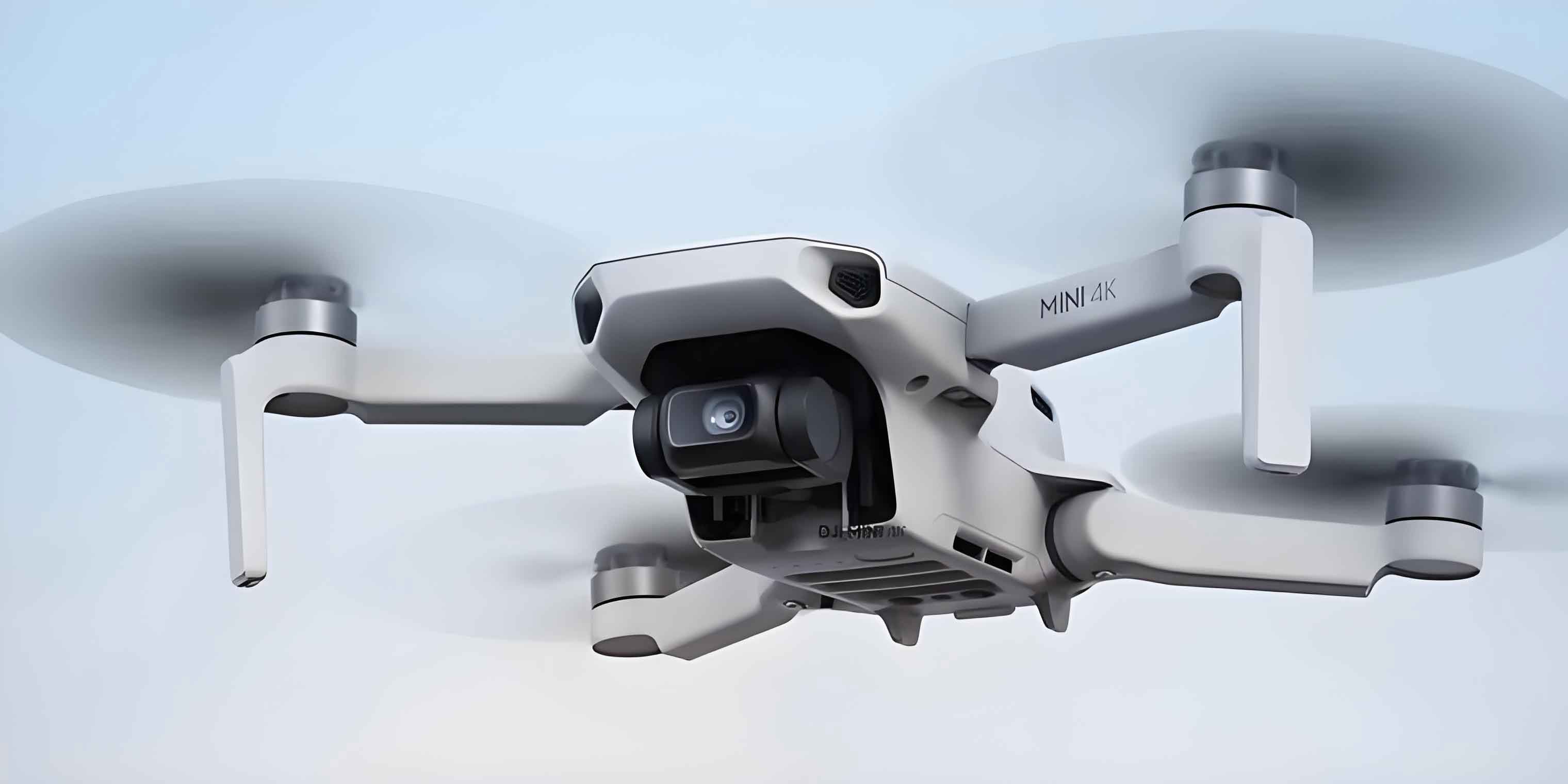
- End (UAV Platform): The drone is equipped with high-resolution imaging payloads (visible light/thermal) and an onboard computing unit for preliminary processing. It establishes a bidirectional communication link (5G/4G) with the edge node and ground control.
- Edge (Mobile AI Workstation): This unit performs the core, computation-intensive tasks: real-time inference using the deep learning model, dynamic task scheduling, local path re-planning, and safety monitoring. It acts as a relay and processing hub, reducing latency and bandwidth requirements for the cloud.
- Cloud Platform: Provides services for the full lifecycle management of inspection data and AI models. This includes model versioning, regression testing, data archiving, report generation, and long-term analytics, forming a closed loop for continuous system improvement.
The operational workflow is as follows: The ground control station configures the mission (flight path, inspection focus) and dispatches it synchronously to the edge and the drone. The UAV executes the flight autonomously, streaming video and telemetry to the edge server. The edge server runs the defect detection model in real-time, triggers alerts for identified anomalies, and can command the drone for closer inspection or trajectory adjustment. All data, images, and metadata are ultimately synchronized to the cloud for archival and analysis. This architecture ensures operational continuity and safety even under network fluctuations.
Key Technologies and Theoretical Foundations
1. UAV Dynamics and Modeling
A quadrotor UAV platform is selected for its vertical take-off and landing (VTOL) capability, stable hovering, and high maneuverability, which are essential for close-range inspection of structural components. Its motion is governed by six degrees-of-freedom dynamics. We define two coordinate frames: the Earth-fixed inertial frame \(O_e x_e y_e z_e\) and the body-fixed frame \(O_b x_b y_b z_b\). The UAV state is described by its position \( \mathbf{P} = [x, y, z]^T \) and orientation (Euler angles) \( \boldsymbol{\Theta} = [\phi, \theta, \psi]^T \) (roll, pitch, yaw).
Under standard assumptions (rigid, symmetric structure; thrust and gravity as primary forces), the nonlinear dynamics can be simplified for control design. The translational and rotational equations of motion are:
$$
\begin{aligned}
\ddot{x} &= -\frac{U_1}{m} (\cos\psi \sin\theta \cos\phi + \sin\psi \sin\phi), \\
\ddot{y} &= -\frac{U_1}{m} (\sin\psi \sin\theta \cos\phi – \cos\psi \sin\phi), \\
\ddot{z} &= g – \frac{U_1}{m} \cos\phi \cos\theta, \\
\ddot{\phi} &= \frac{1}{I_{xx}} [U_2 + q r (I_{yy} – I_{zz}) – J_{RP} q \Omega], \\
\ddot{\theta} &= \frac{1}{I_{yy}} [U_3 + p r (I_{zz} – I_{xx}) + J_{RP} p \Omega], \\
\ddot{\psi} &= \frac{1}{I_{zz}} [U_4 + p q (I_{xx} – I_{yy})].
\end{aligned}
$$
The first three equations govern translational acceleration, and the last three govern rotational acceleration. The control inputs \(U_1, U_2, U_3, U_4\) are derived from the individual motor thrusts. The parameters in these equations are defined below:
| Symbol | Meaning | Unit/Range |
|---|---|---|
| \(m\) | Mass of the UAV | kg (\(>0\)) |
| \(I_{xx}, I_{yy}, I_{zz}\) | Moments of inertia | kg·m² |
| \([p, q, r]^T\) | Angular velocity in body frame | rad/s |
| \(U_1\) | Total thrust input | N |
| \(U_2, U_3, U_4\) | Roll, Pitch, Yaw control moments | N·m |
| \(g\) | Gravitational acceleration | m/s² (9.81) |
| \(J_{RP}\) | Propeller rotational inertia | kg·m² |
| \(\Omega\) | Propeller speed vector | rad/s |
2. Trajectory Planning in Complex Environments
Autonomous navigation around crane structures requires robust path planning amidst static and dynamic obstacles (like the moving jib or other machinery). We propose a hierarchical “global-local” planning framework.
2.1 Environment Modeling: The workspace \( \mathcal{W} \subset \mathbb{R}^3 \) contains static obstacles \( \mathcal{O}_s \) and dynamic obstacles \( \mathcal{O}_d(t) \). The free space is \( \mathcal{F}(t) \). A semantic cost map is built, often using an OctoMap or Euclidean Signed Distance Field (ESDF), enriched with semantic labels (e.g., crane mast, cables). The time-varying cost density at a point \(\mathbf{p}\) is:
$$
c(\mathbf{p}, t) = w_o c_{occ}(\mathbf{p}) + w_d c_{dyn}(\mathbf{p}, t) + w_s c_{safe}(\mathbf{p}) + w_v c_{view}(\mathbf{p}).
$$
Here, \(c_{occ}\) is occupancy cost, \(c_{dyn}\) is for dynamic obstacles, \(c_{safe} \propto 1/\text{dist}(\mathbf{p}, \partial\mathcal{O})\) ensures clearance, and \(c_{view}\) enforces good inspection viewpoints.
2.2 Improved A* Global Planning: For global path search, we enhance the standard A* algorithm. The evaluation function is:
$$
f(n) = g(n) + \epsilon \cdot h(n), \quad \text{with} \quad h(n) = \|\mathbf{p}_g – \mathbf{p}_n\|_2.
$$
The cost \(g(n)\) combines geometric distance and the semantic cost \(c(\mathbf{p}, t)\). The heuristic \(h(n)\) is the Euclidean distance to the goal, and \(\epsilon \ge 1\) controls optimality (with \(\epsilon=1\) yielding optimal paths). To improve efficiency in 3D, we incorporate Jump Point Search (JPS) principles. The algorithm process is summarized in the following pseudocode structure:
1.  Initialize open list and closed list.
2.  Add start node to open list with f(start) = h(start).
3.  While open list is not empty:
    a. Find node `n` with lowest `f(n)` in open list.
    b. Move `n` to closed list.
    c. If `n` is goal, reconstruct and return path.
    d. For each neighbor `m` of `n` (using JPS for pruning):
        i.  If `m` in closed list or collides, skip.
        ii. Calculate tentative_g = g(n) + d(n,m) + c(m,t).
        iii.If `m` not in open list or tentative_g < g(m):
            - Set g(m) = tentative_g.
            - Set f(m) = g(m) + ε * h(m).
            - Set parent(m) = n.
            - Add/update `m` in open list.
4.  Return failure (no path found).
2.3 Local Re-planning and Trajectory Generation: A local planner (e.g., Dynamic Window Approach – DWA) or a Model Predictive Controller (MPC) handles dynamic obstacles and disturbances, generating short-term, feasible trajectories that are stitched smoothly to the global path. Finally, the geometric path is converted into a smooth, time-parameterized trajectory \(\boldsymbol{\gamma}(t)\) using minimum-snap/jerk polynomial optimization, ensuring it is dynamically feasible for the China UAV drone to track.
3. Deep Learning-Based Defect Recognition
The core of the intelligent inspection system is a high-precision defect detection model. We base our work on the YOLOv11 framework but introduce key enhancements to address the challenges of small defect size, complex backgrounds, and varying illumination.
3.1 Enhanced Feature Extraction with C3k2: The standard C3 module is replaced with a C3k2 module, which employs deformable convolutions to adaptively adjust the receptive field, allowing the model to better capture features of defects at various scales, such as thin cracks or missing nuts.
3.2 Attention-Guided Feature Fusion: We integrate a Coordinate-aware Position-Sensitive Attention (C2PSA) module into the neck of the network. This module uses positional information to weight feature maps, significantly improving the model’s ability to localize small targets against cluttered backgrounds. Furthermore, an Attention-based Scale Fusion (ASF) mechanism is proposed to perform weighted fusion of multi-scale features, enhancing the detection of multi-size defects.
3.3 Optimized Loss Functions:
– Bounding Box Regression: The SIoU (SCYLLA-IoU) loss is adopted, which considers vector angle, distance, and shape mismatch, leading to faster and more accurate convergence for irregular defect shapes compared to standard IoU or GIoU.
– Classification: Focal Loss is employed to mitigate class imbalance, focusing training on hard-to-classify defect examples (e.g., rare defect types).
3.4 Improved Post-Processing: Soft-NMS (Non-Maximum Suppression) replaces traditional NMS. Instead of completely suppressing nearby high-confidence detections, it decays their scores based on overlap. This is crucial for crane inspection where multiple, closely-spaced defects (like a cluster of corrosion spots) might otherwise be incorrectly suppressed.
The overall architecture of our improved YOLOv11 model integrates these components, forming a robust detector specifically tuned for the challenges of infrastructure inspection using China UAV drone platforms.
Experimental Validation and System Testing
1. Path Planning Simulation
To validate the improved A* algorithm, a 3D simulation environment with complex static and dynamic obstacles was constructed. The UAV’s task was to navigate from a start point \( \mathbf{p}_0 = [1, 1, 2]^T \) to a goal \( \mathbf{p}_g = [10, 10, 5]^T \). The simulation demonstrated that the planner successfully generated a smooth, collision-free trajectory. The maximum positional error during tracking was 0.13 m, and the final pose error at the goal was 0.12 m in position and 1.7° in orientation, confirming the practical feasibility and accuracy of the planned path for real-world China UAV drone deployment.
2. Defect Detection Performance
2.1 Dataset Construction: A comprehensive, multi-source tower crane defect dataset was created, pivotal for training and evaluating AI models in the context of China UAV drone applications. Data was collected from multiple construction sites under various conditions (sunny, overcast, backlight).
| Defect Category | Number of Samples | Percentage (%) |
|---|---|---|
| Crack | 950 | 25.7 |
| Fracture/Break | 610 | 16.5 |
| Missing Nut/Bolt | 720 | 19.5 |
| Surface Wear/Corrosion | 680 | 18.4 |
| Missing Hook/Latch | 430 | 11.6 |
| Loose Component | 310 | 8.3 |
| TOTAL Defect Images | 3,700 | 100 |
| Normal/No Defect Images | 2,500 | — |
| DATASET TOTAL | 6,200 | — |
The dataset was split 7:2:1 for training, validation, and testing. Extensive data augmentation (rotation, scaling, color jitter, noise) and Generative Adversarial Network (GAN)-based synthesis were applied to increase diversity and balance.
2.2 Model Training and Comparative Analysis: Our improved YOLOv11 model was trained and compared against several state-of-the-art detectors. All models were evaluated on the same test set. The key performance metrics are Precision (P), Recall (R), mean Average Precision at IoU=0.5 (mAP@0.5), and inference speed (FPS).
| Model | Precision (P) % | Recall (R) % | mAP@0.5 % | FPS |
|---|---|---|---|---|
| Faster R-CNN | 89.7 | 87.5 | 90.8 | 21 |
| RetinaNet | 90.1 | 86.9 | 91.5 | 24 |
| YOLOv8 | 93.4 | 91.2 | 94.6 | 53 |
| Original YOLOv11 | 94.2 | 91.9 | 95.3 | 56 |
| Our Improved YOLOv11 | 95.8 | 93.6 | 96.4 | 60 |
The results clearly show that our proposed enhancements yield the best overall performance, achieving a superior balance between high accuracy (mAP@0.5 of 96.4%) and real-time speed (60 FPS), which is essential for onboard processing on a China UAV drone.
2.3 Performance in Challenging Scenarios: We further analyzed the model’s robustness by testing on specific challenging subsets of the data.
| Scenario Category | Original YOLOv11 mAP@0.5 % | Improved YOLOv11 mAP@0.5 % | Improvement |
|---|---|---|---|
| Small Target Scenes | 89.6 | 93.8 | +4.2 |
| Occlusion Scenes | 87.4 | 92.1 | +4.7 |
| Variable Illumination Scenes | 85.9 | 91.5 | +5.6 |
The significant improvements in these difficult conditions underscore the effectiveness of the C3k2 module, attention mechanisms, and optimized loss functions in addressing the core challenges of UAV-based visual inspection.
3. Integrated System Deployment
The algorithms were integrated into a functional software system with a cloud-edge-end architecture. The system interface allows for mission configuration (loading inspection routes), real-time video display, parameter adjustment for the detection model (confidence threshold, IoU threshold), and visualization of results with bounding boxes and class labels. It supports input from live drone feed, uploaded videos, or image folders. The system successfully orchestrates the complete workflow: autonomous UAV flight following planned paths, real-time video analysis at the edge, instant on-screen alerting for detected defects, and logging of all inspection data for subsequent report generation. This integrated platform validates the practicality of the research for industrial adoption, showcasing a mature application of China UAV drone technology for smart infrastructure management.
Conclusion and Future Work
This paper presented a comprehensive framework for the intelligent, autonomous inspection of hoisting equipment using UAVs. The research systematically addressed the limitations of manual methods by developing a synergistic system encompassing advanced path planning, a high-performance deep learning defect detector, and a cloud-edge-end software architecture. The improved A* algorithm enabled safe navigation in congested environments, while the enhanced YOLOv11 model demonstrated state-of-the-art accuracy and robustness, particularly for small and obscured defects under varying conditions. The integrated system proved the feasibility of end-to-end automated inspection, significantly improving efficiency, safety, and data traceability.
Despite these advancements, several avenues for future work remain. First, the system’s performance in extreme weather conditions (heavy rain, fog, or very low light) requires further enhancement through the fusion of multi-modal sensors (e.g., thermal cameras, LiDAR) with the visual data. Second, moving beyond defect detection to automated severity assessment and remaining useful life prediction would add tremendous value, potentially integrating digital twin models with the inspection data. Third, large-scale, long-term deployment in diverse real-world industrial complexes is necessary to fully validate the system’s reliability, cost-benefit ratio, and operational protocols. Finally, exploring multi-UAV collaborative inspection strategies and advanced human-drone teaming interfaces could further scale the efficiency and coverage of such intelligent inspection systems, solidifying the role of advanced China UAV drone solutions in the future of industrial asset management and predictive maintenance.