
The rapid advancement of China UAV drone technology has positioned it at the forefront of modern military strategy and civilian applications. In dynamic and complex battlefield environments, planning precise and efficient flight paths for multiple unmanned aerial vehicles (UAVs) is a critical challenge that directly impacts mission success and operational survivability. The core of this challenge lies in developing algorithms capable of navigating multi-objective, multi-constraint optimization landscapes defined by threats, terrain, and the physical limitations of the drones themselves.
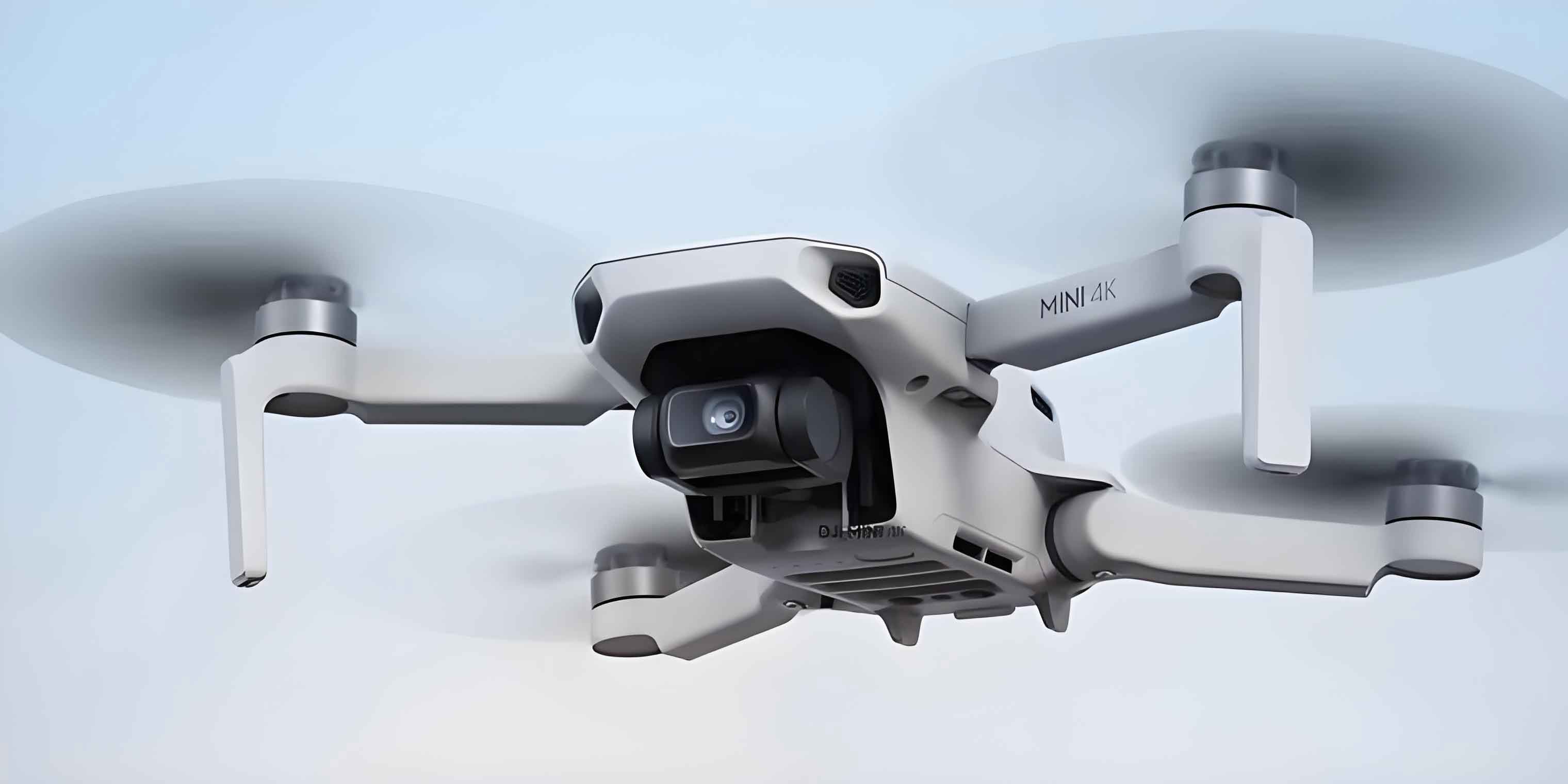
This paper addresses the intricate problem of 3D path planning for a swarm of China UAV drones operating in a simulated combat zone. The environment is modeled with realistic threats, including radar detection zones, anti-aircraft artillery (AAA) sites, and no-fly zones, superimposed on digital elevation model (DEM) terrain. The planning objective is to generate, for each drone, a safe and optimal trajectory from its unique start point to its designated target, while simultaneously ensuring collision avoidance within the swarm and adhering to stringent kinematic constraints.
To tackle this high-dimensional, non-linear optimization problem, we propose an Adaptive Multi-strategy Improved Snake Optimizer (AMISO) algorithm. The original Snake Optimizer (SO), inspired by the foraging and reproductive behaviors of snakes, offers a simple framework but suffers from limitations like premature convergence and suboptimal exploitation. Our AMISO algorithm introduces four key enhancements: a Multi-strategy Chaotic System for superior population initialization; a Rime Optimization Strategy integrated into the exploration phase to broaden search scope; a Roulette-wheel Adaptive Iteration Strategy during the combat phase to enhance robustness; and a Population Stacking Evolution Mechanism in the mating phase to balance global exploration and local exploitation. Comprehensive simulations, including tests on benchmark functions and two distinct complex battlefield terrains, demonstrate that AMISO significantly outperforms several state-of-the-art metaheuristic algorithms in terms of convergence speed, solution quality, and reliability, effectively planning superior cooperative paths for China UAV drone swarms.
1. Problem Formulation and Modeling
The 3D path planning problem for multiple China UAV drones is defined within a bounded Cartesian coordinate space containing static threats and terrain obstacles. The goal is to find a set of waypoints for each drone that forms a feasible and optimal flight path.
1.1 Path Representation and Smoothing
For a China UAV drone \( i \) in a swarm of \( I \) drones, its path \( P_i \) is represented as a sequence of \( N \) points connecting the start point \( S_i \) and the goal point \( G_i \):
$$ P_i = (p_{i,0}, p_{i,1}, …, p_{i,j}, …, p_{i,N-1}) $$
where \( p_{i,j} = (x_{i,j}, y_{i,j}, z_{i,j}) \) is the \( j \)-th waypoint. To ensure the path is flyable considering the China UAV drone’s minimum turning radius and climb rate, a B-spline curve is used for smoothing. The B-spline curve \( C_i(u) \) of degree \( k \) is defined as:
$$ C_i(u) = \sum_{j=0}^{N-1} p_{i,j} \cdot N_{j,k}(u) $$
where \( N_{j,k}(u) \) are the B-spline basis functions defined on a knot vector \( U \), calculated recursively by the Cox-de Boor formula:
$$ N_{j,0}(u) = \begin{cases} 1 & \text{if } u_j \leq u < u_{j+1} \\ 0 & \text{otherwise} \end{cases} $$
$$ N_{j,k}(u) = \frac{u – u_j}{u_{j+k} – u_j} N_{j,k-1}(u) + \frac{u_{j+k+1} – u}{u_{j+k+1} – u_{j+1}} N_{j+1,k-1}(u) $$
1.2 Spherical Coordinate Encoding
To facilitate the generation of feasible paths, the optimization variables are encoded in a spherical coordinate system relative to the previous waypoint. For waypoint \( p_{i,j} \), its position is determined by a radial distance \( r_{i,j} \), an elevation angle \( \theta_{i,j} \), and an azimuth angle \( \phi_{i,j} \). The conversion to Cartesian coordinates is:
$$ x_{i,j} = x_{i,j-1} + r_{i,j} \cdot \sin(\theta_{i,j}) \cdot \cos(\phi_{i,j}) $$
$$ y_{i,j} = y_{i,j-1} + r_{i,j} \cdot \sin(\theta_{i,j}) \cdot \sin(\phi_{i,j}) $$
$$ z_{i,j} = z_{i,j-1} + r_{i,j} \cdot \cos(\theta_{i,j}) $$
This encoding inherently enforces connectivity between consecutive waypoints.
1.3 Cost Function Formulation
The overall cost function \( F_{total} \) to be minimized is a weighted sum of multiple penalty terms, each representing a specific constraint or objective for the China UAV drone mission.
1.3.1 Threat Cost: Penalizes proximity to enemy radar \( (R) \) and anti-aircraft artillery \( (A) \). The threat cost decreases with distance.
$$ F_R = \sum_{q=1}^{N_R} \sum_{j=1}^{N-2} k_R \cdot \exp(-\alpha_R \cdot d_{j,q}^R) $$
$$ F_A = \sum_{q=1}^{N_A} \sum_{j=1}^{N-2} k_A \cdot \exp(-\alpha_A \cdot d_{j,q}^A) $$
where \( d_{j,q}^R = \|p_{i,j} – R_q\| \), \( d_{j,q}^A = \|p_{i,j} – A_q\| \), \( k_{R}, k_{A} \) are threat coefficients, and \( \alpha_R, \alpha_A \) are decay factors.
1.3.2 Path Length Cost: Encourages shorter trajectories to conserve energy.
$$ F_L = \frac{\sum_{j=0}^{N-2} \| p_{i,j+1} – p_{i,j} \|}{ \| G_i – S_i \| } $$
1.3.3 Altitude Cost: Penalizes flight outside a safe altitude corridor \( [h_{min}, h_{max}] \).
$$ F_H = \sum_{j=1}^{N-2} \begin{cases} \left( \frac{h_{min} – z_{i,j}}{h_{min}} \right)^2 & \text{if } z_{i,j} < h_{min} \\ \left( \frac{z_{i,j} – h_{max}}{h_{max}} \right)^2 & \text{if } z_{i,j} > h_{max} \\ 0 & \text{otherwise} \end{cases} $$
1.3.4 Kinematic Constraint Costs: Enforce maximum yaw angle \( (\alpha_{max}) \), pitch angle \( (\beta_{max}) \), and minimum segment length \( (L_{min}) \).
$$ F_\alpha = \sum_{j=1}^{N-3} f_{penalty}(|\alpha_j|, \alpha_{max}), \quad \alpha_j = \text{atan2}(y_{j+1}-y_j, x_{j+1}-x_j) – \text{atan2}(y_j-y_{j-1}, x_j-x_{j-1}) $$
$$ F_\beta = \sum_{j=1}^{N-2} f_{penalty}(|\beta_j|, \beta_{max}), \quad \beta_j = \arcsin\left(\frac{z_{j+1}-z_j}{\|p_{j+1}-p_j\|}\right) $$
$$ F_{Tr} = \sum_{j=0}^{N-2} f_{penalty}(L_{min} – \|p_{j+1}-p_j\|, 0) $$
where \( f_{penalty}(a, b) \) is a function that returns a high value if \( a > 0 \) (constraint violated).
1.3.5 No-Fly Zone Cost: Prevents entry into designated prohibited areas.
$$ F_N = \sum_{q=1}^{N_N} \sum_{j=1}^{N-2} \begin{cases} M_{NFZ} & \text{if } p_{i,j} \in \text{NFZ}_q \\ 0 & \text{otherwise} \end{cases} $$
1.3.6 Multi-UAV Collaboration Costs: Ensures spatial and temporal coordination for the China UAV drone swarm.
– Spatial (Collision Avoidance): Penalizes distance between any two drones \( i \) and \( k \) at corresponding waypoints \( j \) being less than a safety distance \( d_{safe} \).
$$ F_S = \sum_{j} \sum_{i=1}^{I} \sum_{k=i+1}^{I} f_{penalty}(d_{safe} – \|p_{i,j} – p_{k,j}\|, 0) $$
– Temporal (Synchronization): Encourages all drones to arrive at their targets within a specified time window \( [t_{min}, t_{max}] \).
$$ F_T = \sum_{i=1}^{I} f_{penalty}(t_{min} – t_i, 0) + f_{penalty}(t_i – t_{max}, 0) $$
The aggregated cost function for the entire swarm is:
$$ F_{total} = \mathbf{w}^T \cdot \mathbf{F} = w_R F_R + w_A F_A + w_L F_L + w_H F_H + w_\alpha F_\alpha + w_\beta F_\beta + w_{Tr} F_{Tr} + w_N F_N + w_S F_S + w_T F_T $$
where \( \mathbf{w} \) is a vector of user-defined weighting coefficients that prioritize different mission objectives for the China UAV drone fleet.
2. Adaptive Multi-Strategy Improved Snake Optimizer (AMISO)
The original Snake Optimizer (SO) algorithm divides its population into male and female groups and models behavior based on food quantity \( Q \) and environmental temperature \( Temp \). While effective, it has limitations. Our AMISO introduces several strategic enhancements.
2.1 Multi-Strategy Chaotic System for Population Initialization
To avoid poor initial population distribution, we replace random initialization with a chaotic map hybrid. The initial position of an individual \( X_{i,j}^0 \) is generated as:
$$ X_{i,j}^0 = X_{min} + \Phi(\delta, z_i) \cdot (X_{max} – X_{min}) $$
where \( \Phi(\delta, z_i) \) is a composite chaotic function:
$$ \Phi(\delta, z_i) = \sin\left( \pi \cdot [ \delta \cdot f_{logistic}(\mu, z_i) + (1-\delta) \cdot f_{sine}(a, z_i) ] \right) $$
The logistic map \( f_{logistic}(\mu, z_i) = \mu z_i (1-z_i) \) and the sine map \( f_{sine}(a, z_i) = \sin(\frac{\pi}{a} z_i) \) are combined. The control parameter \( \delta \in [0,1] \) balances the two maps, ensuring diverse and uniform initial spread of potential China UAV drone paths.
2.2 Rime Optimization Strategy in the Exploration Phase
When food is scarce \( (Q < 0.25) \), the original SO explores randomly. AMISO enhances this by integrating the condensation mechanism from the Rime Optimization Algorithm. The position update becomes:
$$ X_{i,j}^{t+1} = X_{best,j}^t + r_1 \cdot \cos(\theta) \cdot \beta \cdot \left( (X_{max} – X_{min}) \cdot rand + X_{min} \right) \cdot (E) $$
$$ \theta = \frac{10 \cdot \pi \cdot t}{T}, \quad \beta = 1 – \frac{\left\lfloor \frac{w \cdot t}{T} \right\rfloor}{w}, \quad E = \frac{t}{T} $$
where \( \theta \) controls the periodicity, \( \beta \) is a step function, \( E \) is the adhesion factor increasing over iterations, and \( w=5 \). This strategy helps the algorithm, when planning for China UAV drones, explore the search space more thoroughly in early iterations.
2.3 Roulette-Wheel Adaptive Iteration in the Combat Phase
When temperature is low and food is present \( (Temp < 0.6, Q > 0.25, rand < 0.6) \), snakes engage in combat. Instead of a fixed update rule, AMISO employs a strategy pool \( \mathbb{S} = \{S_1, S_2, S_3\} \) selected via adaptive roulette-wheel selection.
– Strategy 1 (DE/rand/1): \( S_1: X_{new} = X_{R1} + F \cdot (X_{R2} – X_{R3}) \)
– Strategy 2 (DE/best/1): \( S_2: X_{new} = X_{best} + F \cdot (X_{R1} – X_{R2}) \)
– Strategy 3 (Composite): \( S_3: X_{new} = X_{i} + L \cdot (X_{R1} – X_{R2}) + F \cdot (X_{R1} – X_{R3}) \)
where \( X_{R1}, X_{R2}, X_{R3} \) are distinct random individuals, \( F \) is a scale factor, and \( L \) is a random number in [0,1].
The probability \( p_k^{t+1} \) of selecting strategy \( k \) at iteration \( t+1 \) is updated based on its success count \( c_k^t \) in the previous iteration:
$$ p_k^{t+1} = \frac{c_k^t}{\sum_{m=1}^{|\mathbb{S}|} c_m^t} $$
This adaptive mechanism allows the China UAV drone path planner to dynamically favor the most effective search strategy.
2.4 Population Stacking Evolution Mechanism in the Mating Phase
During mating \( (Temp < 0.6, rand \geq 0.6) \), the population is ranked and split. The top 20% (elite group) undergo a guided mutation:
$$ X_{top} = X_q + w \cdot (X_{best} – X_k) \cdot \varphi $$
$$ w = \frac{ \sin\left( \frac{\pi \cdot t}{T} + \pi \right) \cdot \left( \frac{\text{Dim}}{2} \right) + \frac{\text{Dim}}{2} }{T} $$
where \( X_q, X_k \) are two distinct elite individuals, \( \varphi \) is a random vector, \( w \) is a mutation factor, and Dim is the problem dimension. If \( X_{top} \) is better, it replaces the current individual.
The remaining 80% are randomly divided. Half perform a local search around the best solution, while the other half undergo a random walk to maintain diversity:
$$ X_{bad,1}^{t+1} = X_{best}^t + \text{sign}(rand-0.5) \cdot (X_{max} – X_{min}) \cdot rand $$
$$ X_{bad,2}^{t+1} = X_{bad}^t – \text{sign}(rand-0.5) \cdot \left( X_{bad}^t – (X_{max} – X_{min}) \cdot rand \right) $$
This mechanism ensures continuous refinement of good China UAV drone paths while persistently exploring new regions of the solution space.
3. Simulation Experiments and Results Analysis
The proposed AMISO algorithm was rigorously tested. First, its general optimization capability was validated on six standard benchmark functions (F1-F3: unimodal, F4-F6: multimodal). It was compared against seven other algorithms: PSO, GWO, HHO, DBO, original SO, MCSSO, and BEESO. Parameters: population size=50, max iterations=500, 30 independent runs.
| Function | Metric | PSO | GWO | HHO | DBO | SO | MCSSO | BEESO | AMISO |
|---|---|---|---|---|---|---|---|---|---|
| F1 (Sphere) | Best | 4.01e-18 | 3.59e-75 | 5.78e-100 | 7.01e-204 | 7.06e-117 | 1.97e-171 | 1.06e-124 | 0.00e+00 |
| Mean | 4.39e-16 | 2.72e-70 | 8.95e-87 | 3.28e-144 | 1.06e-102 | 7.95e-101 | 1.92e-116 | 0.00e+00 | |
| Std | 5.22e-16 | 6.01e-70 | 3.49e-86 | 1.66e-143 | 5.58e-102 | 4.35e-100 | 1.01e-115 | 0.00e+00 | |
| F4 (Schwefel) | Best | -2115.5 | -3477.3 | -4189.8 | -4071.4 | -4189.8 | -4182.3 | -4189.8 | -4189.8 |
| Mean | -1701.4 | -2777.5 | -3406.2 | -3373.7 | -4143.7 | -3594.4 | -4165.2 | -4188.7 | |
| Std | 209.33 | 387.41 | 568.41 | 330.95 | 215.02 | 352.26 | 43.77 | 3.68 |
The results show AMISO achieves the best or competitive accuracy with the smallest standard deviation, proving superior convergence and stability.
3.1 Multi-UAV Path Planning in Complex Battlefield Terrains
Two distinct 3D scenarios were created to simulate real-world challenges for China UAV drones.
Scenario 1 (Open Area): Terrain: 1.045km x 0.879km. Threats: 3 Radar, 3 AAA, 1 No-Fly Zone.
Scenario 2 (Mountainous Area): Terrain: 0.45km x 0.45km. Threats: 5 Radar, 5 AAA, 2 No-Fly Zones.
| Threat Type | Center (x, y, z) [m] | Radius [m] |
|---|---|---|
| Radar 1 | (100, 100, 120) | 40 |
| AAA 1 | (200, 190, 150) | 50 |
| No-Fly Zone 1 | (130, 280, 150) | 100 |
| Radar 2 | (180, 370, 300) | 60 |
| AAA 2 | (300, 80, 170) | 50 |
| … (etc.) | … | … |
Three China UAV drones were tasked with flying from separate start points to distinct goals. Algorithm parameters: Population=200, Iterations=200, Weight vector \( \mathbf{w} \) tuned empirically.
3.2 Results and Discussion
The planned paths were evaluated visually and quantitatively. In both scenarios, paths generated by PSO, GWO, and DBO appeared more tortuous with unnecessary turns near obstacles. In contrast, paths planned by AMISO were significantly smoother, adhered closely to terrain contours, and maintained safer distances from all threat zones. Most importantly, AMISO successfully generated deconflicted paths for the three drones, whereas some other algorithms produced intersecting trajectories posing collision risks.
The convergence curves of the best total cost \( F_{total} \) over iterations clearly demonstrate AMISO’s superiority. In both scenarios, AMISO converged faster to lower final costs and exhibited the ability to escape local minima mid-iteration, thanks to its adaptive strategies.
| Algorithm | Planning Time (s) | Total Path Length (m) | Best Fitness |
|---|---|---|---|
| PSO | 85.03 | 3676.00 | 6.4199 |
| GWO | 78.29 | 3838.17 | 4.1048 |
| HHO | 88.43 | 3623.09 | 5.0967 |
| DBO | 88.77 | 3929.15 | 4.3350 |
| SO | 85.28 | 3454.21 | 4.7938 |
| MCSSO | 200.12 | 3648.18 | 4.6552 |
| BEESO | 129.14 | 3405.43 | 4.4367 |
| AMISO | 78.83 | 3154.32 | 2.3479 |
| Algorithm | Planning Time (s) | Total Path Length (m) | Best Fitness |
|---|---|---|---|
| PSO | 86.44 | 1826.63 | 9.1910 |
| GWO | 191.20 | 1653.54 | 5.9460 |
| HHO | 92.82 | 1545.38 | 7.4353 |
| DBO | 180.21 | 1943.17 | 11.7868 |
| SO | 153.78 | 1662.16 | 6.2113 |
| MCSSO | 132.83 | 1622.39 | 5.9970 |
| BEESO | 121.65 | 1659.44 | 5.1349 |
| AMISO | 83.08 | 1575.53 | 4.7189 |
The quantitative results solidify the advantages of AMISO for China UAV drone swarm path planning. In Scenario 1, AMISO found the shortest collective path (3154.32m, 19.7% shorter than the longest from DBO) and achieved the lowest fitness value (2.3479, 63.4% better than PSO) with near-optimal planning time. In the more complex and confined Scenario 2, AMISO’s superiority is even more pronounced, achieving the best performance across all three metrics: fastest planning (83.08s, 56.5% faster than GWO), shortest path (1575.53m, 18.9% shorter than DBO), and lowest cost (4.7189, 48.7% lower than PSO). These results confirm that the integrated adaptive multi-strategy framework effectively balances exploration and exploitation, leading to efficient, safe, and cooperative path planning solutions.
4. Conclusion
This paper presented a novel Adaptive Multi-strategy Improved Snake Optimizer (AMISO) algorithm to address the complex multi-constraint, multi-objective path planning problem for cooperative China UAV drone swarms in adversarial environments. A comprehensive cost function was formulated, incorporating threat avoidance, path length, flight envelope constraints, and critical multi-UAV collaboration requirements like collision avoidance and synchronization.
The core contribution lies in the strategic enhancements made to the base SO algorithm: (1) Chaotic initialization for better population diversity, (2) Rime-based exploration for wider global search, (3) Adaptive strategy selection during combat for robust local search, and (4) A population stacking evolution mechanism during mating to preserve elites while exploring new areas. The synergy of these strategies allows AMISO to effectively navigate the complex solution space associated with planning for multiple China UAV drones.
Extensive simulations on benchmark functions and two realistically modeled 3D battlefield terrains demonstrate that AMISO consistently outperforms several prominent metaheuristic algorithms. It converges faster, finds paths with lower overall cost (shorter, safer, more cooperative), and exhibits greater robustness and stability. The proposed method provides an effective and reliable solution for autonomous cooperative path planning, enhancing the operational capability and survivability of China UAV drone fleets in modern combat and surveillance scenarios. Future work will focus on extending the framework to handle dynamic threats and real-time replanning.