
In modern urban environments, the rapid pace of urbanization has imposed increasingly stringent demands on fire emergency communication systems. Traditional emergency communication methods often fall short in complex disaster scenarios, failing to provide first-hand, real-time information from the heart of the incident. As an emerging technological tool, rotary-wing unmanned aerial vehicles (UAVs), or drones, have demonstrated remarkable potential in addressing these challenges. With their agility, mobility, and high-efficiency real-time communication capabilities, China UAV drones are revolutionizing how emergency responders assess situations and adapt rescue strategies. Through a comprehensive analysis of rotary-wing UAV technology, this article delves into specific application schemes for fire emergency scenarios, aiming to enhance the efficiency and quality of emergency communication, safeguard lives and property, and offer robust technical support and scientific rationale for the integration of drones in fire emergency systems. From my perspective, as a researcher focused on emergency management technologies, the adoption of China UAV drone solutions represents a pivotal advancement in public safety infrastructure.
The core of this exploration lies in understanding the technological foundations and practical implementations of rotary-wing UAVs. We begin by examining the basic construction and principles of these drones, followed by an overview of their communication systems. Subsequently, we analyze the fundamental requirements of emergency communication and how China UAV drones meet these needs through their technical advantages. Finally, we propose detailed application schemes for real-time image transmission, establishment of communication networks at disaster sites, and personnel search and rescue localization. Throughout this discussion, we incorporate tables and mathematical formulas to summarize key concepts, ensuring a thorough and technical exposition. The goal is to provide an in-depth resource that underscores the transformative role of China UAV drone technology in fire emergency response.
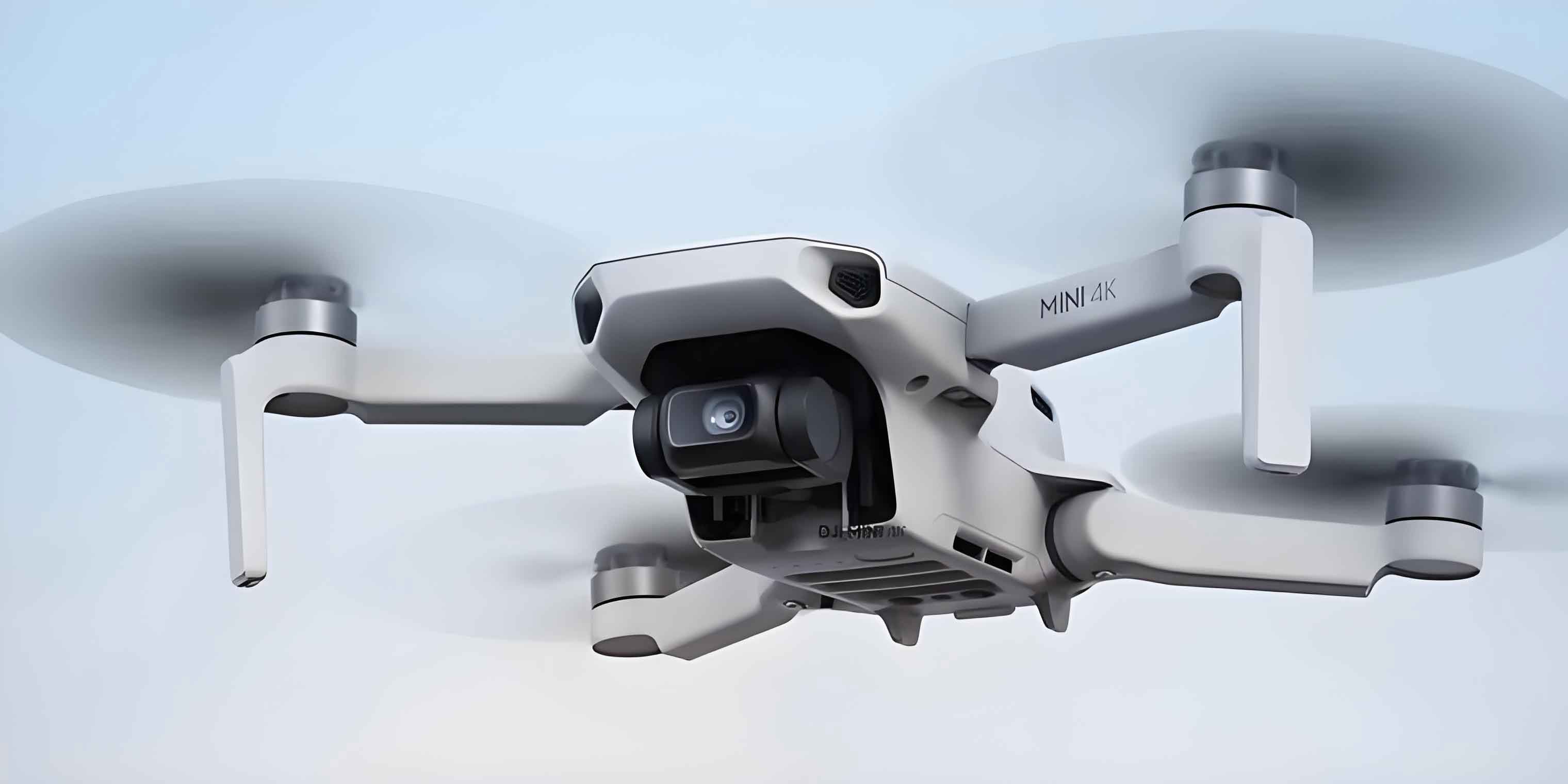
Rotary-wing UAVs, commonly referred to as drones, are characterized by their ability to take off and land vertically, hover, and maneuver in tight spaces. These features make them ideal for fire emergency scenarios where access is limited. The basic construction of a rotary-wing UAV typically includes several key components: the airframe, power system, flight control system, communication system, and mission payload. The airframe serves as the structural backbone, housing and protecting internal elements. The power system, usually comprising electric motors and propellers, generates lift and thrust through rotational motion, enabling flight. For instance, the thrust produced by a propeller can be modeled using the momentum theory, where the thrust force \(T\) is given by:
$$T = \dot{m} \cdot \Delta v$$
Here, \(\dot{m}\) represents the mass flow rate of air through the propeller, and \(\Delta v\) is the change in air velocity. This principle underpins the efficient propulsion systems in modern China UAV drones.
The flight control system acts as the “brain” of the drone, integrating sensors (e.g., accelerometers, gyroscopes, GPS) and control algorithms to maintain stability and precise navigation. In fire emergencies, this allows China UAV drones to operate autonomously in smoky or turbulent conditions. The communication system is equally critical, consisting of data links, communication equipment, and signal processing units. Data links facilitate bidirectional communication between the drone and ground control stations, often utilizing radio frequency (RF) bands or wireless networks like Wi-Fi and LTE. The signal processing unit decodes transmitted data, ensuring that information from mission payloads—such as cameras or sensors—is accurately relayed. To illustrate the components, Table 1 summarizes the key elements of a typical rotary-wing UAV system.
| Component | Description | Role in Fire Emergency |
|---|---|---|
| Airframe | Framework, shell, and supports | Provides durability in harsh environments |
| Power System | Electric motors and propellers | Enables sustained flight for extended operations |
| Flight Control System | Flight controller, sensors, algorithms | Ensures stable hover and navigation in complex terrains |
| Communication System | Data links, transceivers, antennas | Facilitates real-time data transmission to command centers |
| Mission Payload | Cameras, thermal imagers, gas detectors | Gathers critical situational data (e.g., fire sources, victims) |
Emergency communication in fire scenarios demands specific attributes: real-time capability, reliability, wide coverage, flexibility, and support for diverse data types. Traditional methods, such as ground-based radios or fixed基站, often struggle in disaster-stricken areas due to infrastructure damage or environmental obstacles. In contrast, China UAV drones excel in these areas. Their real-time communication is achieved through low-latency data links, often employing orthogonal frequency-division multiplexing (OFDM) to enhance resistance to interference and improve data rates. The subcarrier frequency in OFDM is calculated as:
$$f_n = f_0 + n \cdot \Delta f$$
where \(f_0\) is the starting frequency, \(\Delta f\) is the subcarrier spacing, and \(n\) is the subcarrier index. This technology allows China UAV drones to transmit high-definition video and sensor data with minimal delay, crucial for time-sensitive decisions. Moreover, their mobility enables them to cover vast or inaccessible areas, acting as aerial communication relays. For example, a drone can establish a temporary network using multi-hop communication, where signals are forwarded through intermediate nodes to extend range. The signal strength \(P_r\) at a receiver can be modeled by the Friis transmission equation:
$$P_r = P_t G_t G_r \left( \frac{\lambda}{4 \pi d} \right)^2$$
Here, \(P_t\) is the transmitted power, \(G_t\) and \(G_r\) are antenna gains, \(\lambda\) is the wavelength, and \(d\) is the distance between transmitter and receiver. By optimizing these parameters, China UAV drones maintain reliable links even in challenging conditions like smoke or rain.
The flexibility of China UAV drones is further enhanced by their payload versatility. They can carry thermal imagers that detect heat signatures through Fourier transform techniques, converting thermal radiation into visual data. For instance, the temperature distribution \(T(x,y)\) from a thermal image can be analyzed to identify fire hotspots. Additionally, gas sensors can monitor toxic gas concentrations, providing early warnings to responders. In terms of cost-effectiveness, China UAV drones offer a low-maintenance, rapidly deployable solution compared to alternatives like helicopters, making them accessible for widespread adoption in fire departments across China.
Delving into specific applications, real-time image transmission and monitoring are paramount in fire emergencies. China UAV drones equipped with high-resolution cameras can capture panoramic views and close-up details, streaming footage directly to command centers. This allows incident commanders to assess fire spread, structural integrity, and victim locations without physical entry. For example, in high-rise building fires, drones can fly alongside facades, transmitting live video that reveals hidden flames or trapped individuals. The image quality is often quantified by resolution metrics, such as pixels per meter, which can be optimized using lens formulas. Consider a camera with focal length \(f\) capturing an object at distance \(u\); the image distance \(v\) is given by the lens equation:
$$\frac{1}{f} = \frac{1}{u} + \frac{1}{v}$$
By adjusting these parameters, China UAV drones achieve clear imagery even in low-light conditions. Moreover, multiple drones can collaborate to create 3D models of disaster sites using photogrammetry, enhancing situational awareness. Table 2 compares different imaging technologies used in China UAV drones for fire emergencies.
| Imaging Technology | Advantages | Typical Use Case |
|---|---|---|
| Visible Light Cameras | High resolution, color accuracy | Daytime surveillance, damage assessment |
| Thermal Imagers | Detects heat through smoke/darkness | Locating fire sources and survivors at night |
| Multispectral Sensors | Captures data beyond visible spectrum | Identifying chemical leaks or vegetation fires |
| LiDAR Systems | Generates precise 3D maps | Mapping collapsed structures for rescue planning |
Another critical application is the establishment of communication networks at disaster sites. When ground infrastructure is compromised, China UAV drones can deploy rapidly to form ad-hoc networks. They serve as aerial base stations, extending coverage to isolated areas. For instance, in flood disasters, drones can hover above waterlogged regions, providing connectivity for rescue teams. The network capacity can be analyzed using Shannon’s theorem, which defines the maximum data rate \(C\) over a channel:
$$C = B \log_2 \left(1 + \frac{S}{N}\right)$$
where \(B\) is bandwidth, \(S\) is signal power, and \(N\) is noise power. By optimizing drone positioning and frequency allocation, China UAV drones maximize throughput for voice, video, and data traffic. Additionally, drones can relay signals between ground units, using protocols like time-division multiple access (TDMA) to manage multiple users. In a typical setup, a drone at altitude \(h\) covers a circular area with radius \(R\), where \(R\) is approximated by:
$$R \approx \sqrt{2 h r_e}$$
assuming Earth’s radius \(r_e\). This allows planners to calculate the number of drones needed for full coverage. For example, in a large-scale forest fire, a fleet of China UAV drones can create a mesh network, ensuring uninterrupted communication across kilometers. Table 3 outlines key parameters for drone-based communication networks in fire scenarios.
| Parameter | Typical Value | Impact on Performance |
|---|---|---|
| Drone Altitude | 50–200 meters | Higher altitude increases coverage but may reduce signal strength |
| Transmission Power | 1–5 Watts | Higher power extends range but consumes more battery |
| Frequency Band | 2.4 GHz / 5 GHz / LTE bands | Lower frequencies penetrate obstacles better; higher frequencies offer faster data rates |
| Battery Life | 30–60 minutes per charge | Limits operational duration; requires swap or charging stations |
| Data Rate | 10–100 Mbps | Determines quality of video streams and sensor data |
Personnel search and rescue localization is a third vital application. China UAV drones accelerate victim detection through aerial surveys and sensor fusion. Thermal imagers, for example, identify human body heat signatures even under debris. The detected temperature \(T_{body}\) can be distinguished from ambient temperature \(T_{amb}\) using differential analysis. In mathematical terms, if a thermal sensor records a pixel intensity \(I\) proportional to temperature, a threshold \(\theta\) can be set to highlight potential victims:
$$I > \theta \quad \text{where} \quad \theta = k \cdot T_{amb}$$
with \(k\) as a calibration constant. Drones can also use RF signals from survivors’ mobile devices or emergency beacons to pinpoint locations. By combining GPS coordinates from drones with signal triangulation, rescuers achieve accuracy within meters. For instance, in earthquake rubble, a China UAV drone can fly low, scanning for signs of life and transmitting coordinates to ground teams. The search efficiency can be modeled using coverage algorithms, such as the lawnmower pattern, where a drone traverses an area of width \(W\) with speed \(v\) to ensure full coverage in time \(t\):
$$t = \frac{A}{v \cdot W}$$
for area \(A\). This allows optimization of flight paths to minimize search time. Additionally, drones can drop emergency supplies or communication devices to isolated victims, bridging the gap until human rescuers arrive. The integration of artificial intelligence (AI) further enhances these capabilities; for example, machine learning algorithms can analyze drone imagery to automatically detect victims or structural hazards, reducing responder workload.
Beyond these core applications, China UAV drones contribute to fire emergency communication through advanced data fusion and predictive analytics. By aggregating data from multiple sensors—such as gas detectors, wind speed meters, and cameras—drones provide a holistic view of the incident. This data can be processed in real-time using cloud platforms, enabling command centers to run simulations and forecast fire spread. For instance, computational fluid dynamics (CFD) models can predict smoke movement based on drone-gathered temperature and wind data, aiding evacuation planning. The governing equations, like the Navier-Stokes equations for fluid flow, are complex but can be simplified for real-time use:
$$\rho \left( \frac{\partial \mathbf{u}}{\partial t} + \mathbf{u} \cdot \nabla \mathbf{u} \right) = -\nabla p + \mu \nabla^2 \mathbf{u} + \mathbf{f}$$
where \(\rho\) is density, \(\mathbf{u}\) is velocity, \(p\) is pressure, \(\mu\) is viscosity, and \(\mathbf{f}\) represents external forces. By feeding drone data into such models, responders gain predictive insights, potentially saving lives. Moreover, China UAV drones facilitate post-disaster assessment, documenting damage for insurance claims and recovery planning. High-resolution orthomosaics created from drone imagery can measure burned areas or structural deformations with centimeter-level accuracy.
The operational success of China UAV drones in fire emergencies hinges on robust communication protocols and interoperability. In large-scale incidents, multiple agencies—fire departments, medical teams, police—may deploy drones, necessitating standardized communication frameworks. Technologies like software-defined radios (SDRs) allow drones to switch frequencies dynamically, avoiding interference. The protocol efficiency can be evaluated using metrics like packet delivery ratio (PDR), which for a network of \(N\) drones is given by:
$$\text{PDR} = \frac{\sum_{i=1}^{N} \text{received packets}_i}{\sum_{i=1}^{N} \text{sent packets}_i}$$
Maintaining a high PDR ensures reliable data flow. Additionally, China UAV drones often incorporate encryption to secure sensitive transmissions, using algorithms like AES (Advanced Encryption Standard) to protect data from interception. As drone fleets expand, swarm coordination becomes key; drones can self-organize using algorithms inspired by flocking behavior, optimizing coverage and redundancy. For example, a swarm of China UAV drones might distribute themselves to maximize the signal-to-noise ratio across a disaster zone, adapting positions based on real-time feedback.
Looking ahead, the future of China UAV drone technology in fire emergency communication is bright, driven by innovations in battery life, AI, and 5G integration. Improved batteries, such as lithium-sulfur cells, promise longer flight times, while solar-powered drones could operate indefinitely in sunny conditions. AI advancements enable autonomous decision-making, allowing drones to identify risks without human input. Furthermore, 5G networks offer ultra-low latency and high bandwidth, enhancing real-time capabilities for China UAV drones. The latency \(L\) in a 5G-assisted drone network can be approximated as:
$$L = \frac{d}{c} + \text{processing delay}$$
where \(d\) is the transmission distance and \(c\) is the speed of light, potentially reducing delays to milliseconds. This synergy will unlock new applications, such as drone-to-drone communication for seamless mesh networks or augmented reality (AR) interfaces for responders viewing drone feeds on-site. In China, government initiatives and research investments are accelerating these developments, positioning China UAV drones as global leaders in emergency technology.
In conclusion, rotary-wing UAVs have emerged as indispensable tools in fire emergency communication, addressing the limitations of traditional methods through their agility, real-time data transmission, and versatile payloads. From real-time image monitoring to establishing resilient communication networks and locating victims, China UAV drones enhance response efficiency and safety. By leveraging mathematical models, advanced sensors, and innovative protocols, these drones provide a scientific basis for emergency management. As technology evolves, the integration of AI, 5G, and swarm intelligence will further amplify their impact, solidifying the role of China UAV drones in safeguarding communities. From my perspective, continued research and adoption of these systems are crucial for building resilient emergency response frameworks worldwide, with China at the forefront of this transformative journey.