
Natural disasters have become an increasingly severe global challenge, often leading to the simultaneous failure of terrestrial communication, power, and road infrastructure—a scenario known as the “Triple Disruption.” This creates critical “communication black holes,” severely hampering rescue coordination and life-saving efforts during the golden 72-hour window. Traditional emergency communication methods, such as communication vehicles and portable base stations, rely on intact roads and manual deployment, proving ineffective in these extreme conditions. This is where the unique capabilities of UAVs, or drones, become indispensable. UAVs offer rapid response, high-altitude persistence, exceptional mobility, and terrain-agnostic operation. In China, significant advancements have been made in integrating airborne communication base stations with high-throughput satellites and robust unmanned aerial platforms. These China UAV drone systems have been field-tested in numerous disaster responses, demonstrating their role as a core breakthrough technology for next-generation air-space-ground integrated emergency communication networks.
System Architecture for Emergency UAV Networking
The proposed emergency UAV network employs a robust three-tier “Airborne Base + Satellite Backhaul + Ground Command” architecture, designed for rapid deployment and resilient operation. A key component of this system is the unmanned aerial platform itself, which serves as the critical node in the sky.
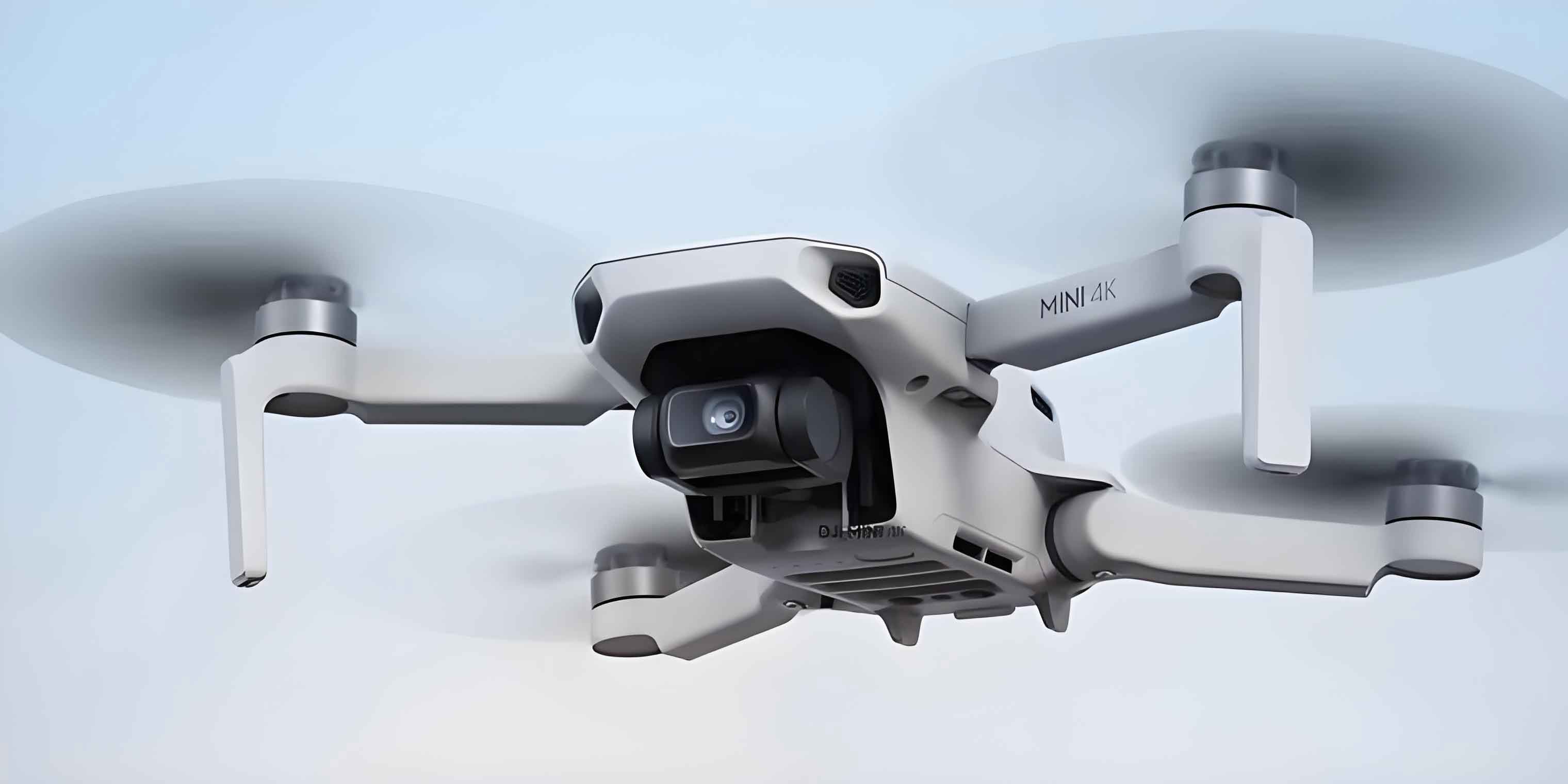
The architecture comprises the following core subsystems:
1. Aerial Platforms
The UAV platform is the cornerstone, determining coverage and endurance. We employ a two-tier approach using large unmanned helicopters and medium compound-wing UAVs.
| Platform Type | Typical Take-off Weight | Payload Capacity | Endurance (Cruise) | Coverage Radius | Primary Use Case |
|---|---|---|---|---|---|
| Large Unmanned Helicopter | > 200 kg | ~50 kg | 5-6 hours | 3-6 km | Severe disasters, long-term persistent coverage over large areas. |
| Medium Compound-Wing UAV | 40-60 kg | ~25 kg | ~3 hours | 3-6 km | Rapid response, medium-area coverage, mobile relay. |
The synergy between these platforms creates a “heavy-persistent + light-agile” echelon, managed through unified flight control and network management interfaces to provide layered, seamless, and elastic aerial communication backbones.
2. Communication Payload
The communication system is designed for compact, lightweight, and robust airborne operation. It typically features an integrated LTE base station operating in key bands like 1.8 GHz or 900 MHz. A pivotal innovation is the Multi-Operator Shared Carrier technology. Instead of carrying separate base stations for each mobile network operator (MNO), a single airborne base station broadcasts multiple Public Land Mobile Network (PLMN) identifiers (e.g., for China Mobile, China Telecom, China Unicom). User equipment from any of these networks can automatically camp on and access this shared cell. This dramatically improves spectrum and payload efficiency. The base station’s performance can be summarized by its key radio parameters and capacity.
| Parameter | Value (High-Power Version) | Value (Lightweight Version) |
|---|---|---|
| Operating Band | 1.8 GHz (Band 3) | 900 MHz (Band 8) |
| Output Power | 2 x 80 W | 2 x 10 W |
| Configuration | 2T4R | 2T2R |
| Max Concurrent Users (RRC) | 1200 | 800 |
| Payload Weight | ~19.8 kg | ~12.6 kg |
3. Backhaul Link
With terrestrial backhaul destroyed, the airborne cell relies on satellite links. The system utilizes High-Throughput Satellites (HTS) in Ku/Ka bands. The critical metric for user experience, especially for voice, is the end-to-end latency. The total delay \( D_{total} \) can be modeled as:
$$
D_{total} = D_{prop} + D_{proc} + D_{queue}
$$
Where \( D_{prop} \) is the propagation delay (dominant for GEO satellites, ~250 ms one-way), \( D_{proc} \) is processing delay at various nodes, and \( D_{queue} \) is buffering delay. Our system employs two backhaul modes optimized for different needs:
- Mode 1 (L2 VPN): Provides a transparent Ethernet link via the satellite gateway directly to the operator’s core, minimizing NAT and processing delay. Measured Round-Trip Time (RTT) is approximately 560 ms.
- Mode 2 (L3 + IPSec): Offers flexible internet-based routing with secure tunneling, suitable for multi-operator shared scenarios.
4. Ground System
The ground segment integrates command and user equipment. The Emergency Command Center connects to MNO core networks. Forward-deployed command vehicles act as mobile hubs. A critical technology is the Cross-Protocol Converged Dispatch System. It interconnects LTE, Professional Digital Trunking (PDT), and broadband Mesh networks through signaling gateways (SIP-T, DIAMETER, P25), enabling unified numbering, mixed-group calls, and priority preemption. Rescue personnel carry multi-mode terminals that can seamlessly access these different networks.
In-Depth Analysis of Key Technologies
1. Multi-Operator Shared Carrier (MOSC) Technology
This technology is fundamental for efficient use of the limited payload on a China UAV drone. The core principle involves configuring a single eNodeB to broadcast multiple PLMN IDs. Resource allocation is dynamic based on real-time traffic from subscribers of different operators. The effective spectral efficiency gain \( G_{SE} \) can be approximated by comparing it to a non-shared, multi-carrier approach:
$$
G_{SE} \approx \frac{\sum_{i=1}^{N} B_i \cdot \eta_i}{B_{shared} \cdot \eta_{shared}}
$$
Where \( N \) is the number of operators, \( B_i \) is the bandwidth per operator carrier, \( \eta_i \) is its utilization, and \( B_{shared} \) and \( \eta_{shared} \) are the bandwidth and utilization of the shared carrier. Field tests show \( G_{SE} \) can approach 1.8. The payload and power savings are substantial, as shown in the comparison below.
| Configuration | Estimated Weight | Estimated Power Consumption | Payload Efficiency |
|---|---|---|---|
| Three Independent Carrier Units | ~36 kg | ~900 W | Baseline (1x) |
| Single Shared Carrier Unit | ~19.8 kg | ~560 W | ~1.8x |
2. Miniaturization and Ruggedization of Airborne Base Stations
To withstand the harsh aerial environment (vibration, shock, wide temperature ranges), the base station employs an integrated BBU+RRU design with robust engineering. Key measures include:
- Structural Design: Aluminum-magnesium alloy chassis with heat dissipation fins for passive cooling.
- Component Fortification: Potting and glue-filling of critical components on the mainboard.
- Electromagnetic Compatibility (EMC): Advanced filtering on power ports (π-filters, TVS arrays) to suppress noise from UAV motors and servos.
The design complies with stringent environmental testing standards like RTCA DO-160G, ensuring reliable operation from -40°C to +55°C.
3. Satellite Link Adaptation and Optimization
Maintaining a stable satellite link from a moving or hovering drone is critical. Modern systems use electronically steered phased-array antennas. The beam steering is controlled based on real-time attitude and position data from an onboard IMU/GNSS system. The link budget must account for additional path loss and pointing errors. The simplified link equation for the uplink is:
$$
\frac{C}{N_0} = EIRP_{uav} – L_{fs} – L_{atm} – L_{pointing} + \frac{G}{T}_{sat} – k
$$
Where:
- \( EIRP_{uav} \): Effective Isotropic Radiated Power from the UAV terminal.
- \( L_{fs} \): Free-space path loss.
- \( L_{atm} \): Atmospheric attenuation.
- \( L_{pointing} \): Loss due to antenna pointing inaccuracy.
- \( G/T_{sat} \): Figure of merit of the satellite receiver.
- \( k \): Boltzmann’s constant.
Advanced systems implement OpenAMIP for fast beam switching (< 1s handover) and adaptive coding and modulation to combat signal fading, ensuring the link remains stable even during UAV maneuvers.
4. Converged Command and Dispatch System
This system is the “brain” that unifies disparate communication streams. It employs a microservices architecture for scalability. A key function is dynamic bandwidth allocation for video streams using H.265/SVC encoding, which can maintain a usable video feed even when backhaul bandwidth drops below 10 Mbps. The dispatch console provides a unified GIS interface showing user locations (from LTE or GNSS data), network status, and live video, enabling efficient command and control.
Application Scenarios and Performance Validation
The China UAV drone emergency communication system has been deployed in various real-world scenarios, validating its operational effectiveness.
- Earthquake Response: Large unmanned helicopters are deployed to provide wide-area coverage over the epicenter region. They establish initial communication for rescue teams and affected populations within the first critical hours.
- Flood and Landslide Relief: Medium compound-wing UAVs provide coverage over submerged or isolated areas, acting as a relay between rescue boats and the command center.
- Forest Fire Monitoring: UAVs serve as communication relays for firefighting teams in rugged terrain and as platforms for live video feed via thermal imaging cameras.
- Large-Scale Public Events: UAVs provide temporary, high-capacity cellular coverage to alleviate congestion on terrestrial networks during major gatherings.
The performance metrics from field tests are summarized below, demonstrating the system’s capability to provide essential services under duress.
| Performance Indicator | Measured Value / Capability | Service Impact |
|---|---|---|
| Network Setup Time | < 60 minutes (from arrival) | Rapid response within golden rescue window. |
| Stable Link Duration | > 72 hours (with refueling/replacement) | Sustains operations through critical phase. |
| Typical User Data Rate | Uplink: 64-128 kbps, Downlink: 512-1024 kbps | Supports VoLTE, messaging, GPS location, low-rate video. |
| VoLTE Call Quality (MOS) | ≥ 3.2 (over satellite backhaul) | Acceptable voice clarity for crisis communication. |
| Maximum Concurrent Users | 1200 RRC connections per cell | Sufficient capacity for initial rescue coordination. |
System Advantages and Qualitative Analysis
The integrated air-space-ground system offers distinct advantages over traditional methods:
- Rapid Response & Terrain Independence: The China UAV drone can bypass destroyed infrastructure, reaching the target area in minutes to hours, unlike ground vehicles.
- Wide & Flexible Coverage: By adjusting altitude and position, a single node can cover tens of square kilometers, a feat impossible for ground-based portable cells.
- High Capacity on Demand: The airborne base station can serve thousands of users, prioritizing critical communication for rescue workers.
- Network Convergence: The ability to integrate public LTE, private PDT, and ad-hoc Mesh networks into a single managed system is a transformative capability for joint rescue operations.
- Resilience and Persistence: With redundant systems and the potential for multi-drone rotation, communication services can be maintained continuously.
Current Challenges and Future Development Pathways
Despite the progress, several challenges must be addressed to unlock the full potential of China UAV drone networks for emergency communications.
1. Satellite Bandwidth Limitation
Current GEO-HTS links offer limited uplink bandwidth (8-10 Mbps), creating a bottleneck for high-data applications like multi-stream HD video from disaster sites. The future lies in integrating Non-Terrestrial Networks (NTN), particularly Low Earth Orbit (LEO) constellations. LEO satellites offer much lower latency and the potential for higher data rates. The path loss to a LEO satellite at altitude \( h_{LEO} \) (~1000 km) is significantly less than to a GEO satellite at \( h_{GEO} \) (~36,000 km):
$$
L_{fs-LEO} \propto 20 \log_{10}(h_{LEO}) \quad \text{vs.} \quad L_{fs-GEO} \propto 20 \log_{10}(h_{GEO})
$$
This reduction in path loss can be leveraged for higher data rates or smaller, lower-power terminal antennas on the drone.
2. Airspace Management and Regulatory Approval
The process for obtaining emergency flight clearances can still be slow, conflicting with the need for immediate response. A national “Emergency Green Channel” framework is needed, where pre-authorized China UAV drone operators and flight plans are activated instantly upon disaster declaration, with automated coordination between civil and military authorities.
3. Energy Endurance and Logistics
Extending mission time beyond 6 hours is crucial. Promising solutions include:
- Hydrogen Fuel Cell Platforms: Offering specific energies around 600 Wh/kg, they can potentially extend flight times to 8-10 hours, even in low temperatures.
- Automated Ground Support: Developing robotic systems for rapid battery swapping or hydrogen refueling at forward operating bases to enable 24/7 operations.
- Aerial Wireless Charging: Exploring laser or resonant wireless power transfer from ground stations or other aircraft to keep drones aloft indefinitely.
Conclusion
The development and deployment of air-space-ground collaborative emergency communication networks based on UAVs represent a significant leap forward in disaster response capabilities. The technological framework presented here—centered on versatile China UAV drone platforms, multi-operator shared carrier technology, robust satellite backhaul, and intelligent convergence—has proven effective in real-world “triple disruption” scenarios. It provides a viable paradigm for rapidly re-establishing essential communication links. Continued innovation in satellite connectivity, airspace integration, and platform endurance will further solidify the role of these systems as a critical, resilient component of national and global emergency preparedness infrastructure. The integration of AI for autonomous network optimization and multi-drone swarm coordination is the next frontier, promising to create even more adaptive and powerful aerial communication networks for saving lives and mitigating disaster impact.