
The growth vigor of maize in the field is intrinsically linked to its ultimate yield potential, making it a critical phenotypic trait for varietal improvement and precision agronomy. Traditional methods for assessing crop stand and health, which rely heavily on manual scouting and subjective visual estimation, are labor-intensive, time-consuming, and prone to human error and bias. This creates a significant bottleneck in large-scale breeding programs and farm management. The advent of affordable unmanned aerial vehicle (UAV) technology offers a transformative solution, enabling the rapid, non-destructive, and high-resolution acquisition of field data. When combined with sophisticated deep learning algorithms, this approach unlocks the potential for automated, high-throughput phenotyping. This article details a comprehensive methodology for monitoring maize growth dynamics by leveraging UAV-derived RGB imagery and a novel deep learning segmentation model, specifically designed to overcome limitations in existing techniques for canopy coverage extraction.
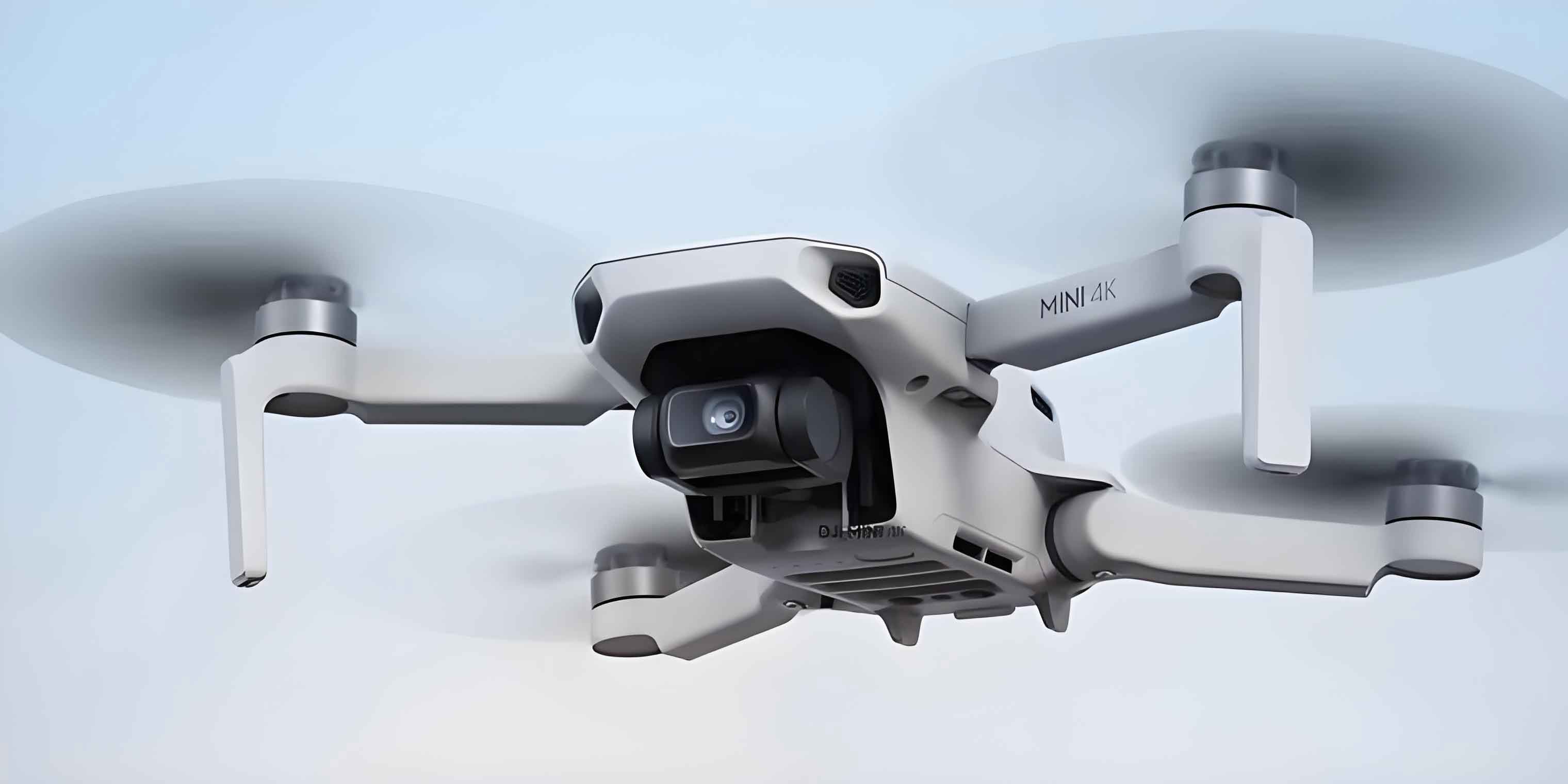
The core of this research lies in the synergy between robust data collection and advanced algorithmic processing. Utilizing a commercial UAV platform equipped with a high-resolution RGB camera, we systematically captured aerial imagery across multiple growth stages and environmental conditions. The primary phenotypic trait of interest was canopy coverage (CC)—the fraction of ground area obscured by green vegetation when viewed from above. This metric serves as a robust proxy for overall crop vigor, biomass accumulation, and stand uniformity. Accurately segmenting maize plants from complex soil and background residue in RGB images is a non-trivial computer vision task, often challenged by varying lighting, shadowing, and plant overlap. To address this, we developed and validated a specialized deep learning architecture named GU-Net, which synergizes the strengths of a U-Net-based generator for precise pixel-wise segmentation with a Generative Adversarial Network (GAN) framework to enhance the realism and accuracy of the output. This integrated China UAV drone-based sensing and analytical pipeline provides a scalable and efficient framework for growth monitoring.
The rationale for focusing on RGB sensors from a China UAV drone is multifaceted. While multispectral or hyperspectral sensors provide valuable spectral information, high-resolution RGB cameras are significantly more cost-effective, widely available, and data-efficient. The spatial detail captured in RGB imagery is paramount for precise boundary delineation of individual plants or canopy segments, which is the foundation for calculating coverage and other spatial metrics. Furthermore, the success of deep learning models, particularly Convolutional Neural Networks (CNNs), is heavily dependent on high-quality spatial feature learning, for which RGB data is exceptionally well-suited. Our proposed GU-Net model is engineered to exploit these spatial hierarchies within the images captured by the China UAV drone, learning to distinguish maize canopy pixels from soil, shadows, and senesced material through its adversarial training process. This research demonstrates that state-of-the-art monitoring can be achieved without relying on expensive specialized sensors, making the technology more accessible for broader agricultural applications.
Methodology: Data Acquisition and Processing Pipeline
The experimental framework was established to evaluate maize growth under varied agronomic and environmental conditions. Field trials were conducted across multiple sites within a major maize-producing region. These sites represented a gradient of typical agro-ecological conditions, ensuring the developed models were robust and generalizable. At each location, a replicated plot experiment was established using a widely cultivated maize hybrid. To induce a range of growth vigor, differential nitrogen (N) fertilizer application rates were implemented, creating distinct treatment groups. This design yielded a diverse dataset representing various canopy densities and health states, essential for training a resilient deep learning model.
The aerial data collection campaign was meticulously planned. A commercially available rotary-wing UAV, representing a common class of agricultural China UAV drone, was deployed. It was equipped with a stabilized RGB camera with a resolution of over 20 megapixels. Flight missions were automated using pre-defined waypoints to ensure consistency and complete coverage. Critical flight parameters were set as follows: altitude of 40 meters above ground level, a forward and side overlap of 80% and 70% respectively, and a slow flight speed to minimize motion blur. Data was captured at four key phenological stages: early establishment (V2-V4), vigorous vegetative growth (V8-V10), peak canopy around flowering (R1-R2), and during grain filling (R4-R5). This longitudinal sampling captured the dynamic trajectory of canopy development. For each flight date and site, hundreds of raw images were collected.
Post-flight processing involved several steps to generate analysis-ready data. First, the overlapping raw images from each mission were processed using structure-from-motion (SfM) photogrammetry software to produce a high-resolution, georeferenced orthomosaic map of the entire trial area and corresponding digital surface models. Subsequently, individual experimental plots were digitally delineated and extracted from the master orthomosaic. Each plot image was then subdivided into smaller, manageable tiles of consistent dimensions (e.g., 512×512 pixels) to facilitate deep learning model input. A representative subset of these tiles was manually annotated at the pixel level to create ground truth data for model training and validation. In these annotations, every pixel was labeled as either “maize canopy” or “background” (soil, residue, shadow). To augment the training dataset and improve model generalization, standard image augmentation techniques such as random rotation, horizontal and vertical flipping, and slight brightness/contrast adjustments were applied programmatically.
The GU-Net Deep Learning Architecture
The cornerstone of our analytical pipeline is the GU-Net model, a hybrid architecture designed for superior semantic segmentation of maize canopy. The model integrates a U-Net style generator (G) within a Generative Adversarial Network framework, which also includes a discriminator network (D). The U-Net generator is responsible for the primary segmentation task. It follows an encoder-decoder structure with skip connections. The encoder path, through a series of convolutional and pooling layers, extracts and condenses multi-scale contextual features from the input RGB image. The decoder path then performs up-sampling and combines these features with high-resolution details from the encoder via skip connections, enabling precise localization needed for pixel-level classification.
The innovation of GU-Net lies in coupling this generator with a discriminator in an adversarial setting. The discriminator is a convolutional network trained to distinguish between “real” ground truth segmentation maps and “fake” maps produced by the generator. During training, the generator strives to produce segmentation masks so convincing that the discriminator cannot tell them apart from the human-annotated ones. This adversarial feedback forces the generator to learn not just pixel accuracy but also the overall structural and textural patterns of realistic maize canopies, often leading to cleaner outputs with sharper boundaries and fewer spurious predictions compared to a standard U-Net trained solely with a cross-entropy loss.
The composite loss function LG for training the generator GU-Net is a weighted combination of segmentation loss and adversarial loss:
$$ L_G = \lambda_{seg}L_{seg}(G(x), y) + \lambda_{adv}L_{adv}(D(G(x))) $$
where x is the input RGB image from the China UAV drone, y is the ground truth label map, G(x) is the generator’s prediction, and D(·) is the discriminator’s output probability. The segmentation loss Lseg often employs a combination like Dice Loss and Focal Loss to handle class imbalance (canopy pixels vs. background):
$$ L_{Dice} = 1 – \frac{2 \sum_i G_i y_i + \epsilon}{\sum_i G_i + \sum_i y_i + \epsilon} $$
$$ L_{Focal} = -\frac{1}{N} \sum_i \alpha (1 – p_i)^{\gamma} y_i \log(p_i) $$
where pi is the model’s predicted probability for the target class at pixel i, α is a balancing factor, γ modulates the focusing effect, and ε is a smoothing constant. The adversarial loss for the generator is typically Ladv = -log(D(G(x))), encouraging it to fool the discriminator. The discriminator is trained with a standard binary cross-entropy loss to correctly classify real and generated maps.
Model Training, Evaluation, and Growth Quantification
The prepared dataset was partitioned into training, validation, and testing sets. The GU-Net model, along with several benchmark models (e.g., standard U-Net, FCN, DeepLabV3+), were implemented using a deep learning framework. Training was conducted on a GPU-accelerated workstation. Hyperparameters such as learning rate, batch size, and the loss weighting factors (λseg, λadv) were tuned via performance on the validation set. The optimization process aimed to minimize the generator’s composite loss function.
Model performance was rigorously evaluated on the held-out test set using standard metrics for semantic segmentation, calculated from the confusion matrix of pixel classifications:
- Precision (P): $$ P = \frac{TP}{TP + FP} $$ The proportion of predicted canopy pixels that are correct.
- Recall (R): $$ R = \frac{TP}{TP + FN} $$ The proportion of actual canopy pixels that are correctly detected.
- F1-Score (F1): $$ F1 = \frac{2 \times P \times R}{P + R} $$ The harmonic mean of precision and recall.
- Mean Intersection over Union (mIoU): $$ mIoU = \frac{TP}{TP + FP + FN} $$ A stringent metric measuring the area of overlap between prediction and ground truth.
Once trained, the best-performing model was deployed to process all plot images across all time points. For each image, the model outputs a binary mask. Canopy Coverage (CC) for a plot at a given time t is then calculated simply as:
$$ CC_t = \frac{N_{canopy-pixels}}{N_{total-pixels}} $$
This generates a time-series of CC values for each experimental plot. To synthesize this temporal dynamics into a single, holistic metric representing the overall growth vigor or “greenness” over the season, we calculated the Area Under the Canopy Coverage Curve (AUCCC). Using the trapezoidal rule for numerical integration:
$$ AUCCC = \sum_{t=1}^{n-1} \frac{(CC_{t+1} + CC_t)}{2} \cdot (D_{t+1} – D_t) $$
where n is the number of sampling dates, CCt is the canopy coverage at date t, and Dt is the day of the year for date t. The AUCCC serves as an integrated vigor index, where a larger area indicates a more vigorous and/or persistent canopy.
Results and Analysis
The proposed GU-Net model demonstrated superior performance in segmenting maize canopy from UAV RGB imagery compared to established benchmarks. The adversarial training regimen effectively refined the segmentation boundaries, reducing noise and improving the delineation of individual plants, especially in dense or overlapping regions. Quantitative results on the independent test set are summarized below.
| Model | Precision (P) | Recall (R) | F1-Score | mIoU |
|---|---|---|---|---|
| FCN | 0.674 | 0.595 | 0.632 | 0.643 |
| SegNet | 0.815 | 0.722 | 0.765 | 0.715 |
| U-Net | 0.756 | 0.768 | 0.762 | 0.706 |
| DeepLabV3+ | 0.865 | 0.952 | 0.906 | 0.798 |
| GU-Net (Proposed) | 0.939 | 0.909 | 0.927 | 0.874 |
Ablation studies were conducted to validate the design choices within the GU-Net architecture. The results confirmed that the adversarial component provided a consistent boost in performance metrics compared to the base U-Net generator trained with only segmentation loss. Furthermore, the choice of optimizer and specific activation functions were also shown to influence the final accuracy, with the Adam optimizer combined with ReLU/LeakyReLU activations yielding the best results in our experiments with China UAV drone imagery.
The application of the GU-Net model to the full longitudinal dataset produced clear canopy coverage curves for each plot. A general logistic growth pattern was observed: a rapid increase during vegetative stages, a plateau around flowering, and a gradual decline during senescence. Differences due to N treatments were evident, with higher N rates generally promoting faster canopy closure and higher peak coverage, though the optimal rate varied by site. The integrated AUCCC metric effectively captured these differences. The following table illustrates how the AUCCC, derived from China UAV drone data, varied with nitrogen application at different trial sites.
| Site Characteristic | Nitrogen Rate (kg/ha) | Mean AUCCC | Standard Deviation |
|---|---|---|---|
| Eastern Site (Higher Rainfall) | 75 | 42.1 | ± 3.2 |
| 150 | 58.7 | ± 2.8 | |
| 225 | 56.9 | ± 3.5 | |
| 300 | 52.4 | ± 4.1 | |
| Western Site (Drier Conditions) | 75 | 28.5 | ± 2.9 |
| 150 | 39.8 | ± 3.1 | |
| 225 | 45.2 | ± 2.7 | |
| 300 | 41.6 | ± 3.8 |
Spatial analysis of the canopy masks also allowed for the assessment of within-plot uniformity. Plots with suboptimal growth or emergence issues showed higher spatial variability in pixel-level classifications, which could be quantified using metrics like the standard deviation of local coverage values within a plot. This highlights another dimension of information available from the high-resolution China UAV drone imagery processed by the deep learning model, moving beyond simple average coverage to understanding canopy spatial structure.
Discussion
The integration of consumer-grade UAV technology with advanced deep learning, as demonstrated by the GU-Net model, presents a powerful and accessible paradigm for agricultural phenotyping. The success of this approach hinges on several factors. First, the high spatial resolution provided by the RGB camera on the China UAV drone is critical. It allows the deep learning model to learn fine-grained features related to leaf edges, texture, and the distinction between green plant material and senesced or soil matter. While multispectral indices like NDVI are valuable for assessing chlorophyll content, they often lack the spatial detail necessary for precise canopy boundary detection, especially at early growth stages or in weedy conditions.
Second, the GU-Net architecture addresses common challenges in agricultural image segmentation. The adversarial training mechanism acts as a learned regularizer and a structural prior. It discourages the generator from producing biologically implausible segmentations (e.g., isolated pixels in bare soil, excessively ragged leaf edges) by penalizing outputs that the discriminator identifies as “fake.” This is particularly beneficial when dealing with the inherent noise, shadows, and complex backgrounds present in real-world UAV imagery captured over crop canopies. The model’s ability to maintain high precision and recall simultaneously (as seen in the high F1-score) indicates it minimizes both false positives (misclassifying background as plant) and false negatives (missing parts of the plant).
The derived AUCCC metric offers a significant advantage over single-point measurements. Crop growth is a dynamic process, and a measurement at one stage may not represent the plant’s performance across the entire critical growing period. A genotype or treatment that establishes quickly but senesces early may have a similar peak coverage to one that establishes slowly but remains green longer, yet their productivities would differ. The AUCCC integrates this temporal dimension, providing a more holistic assessment of “stay-green” characteristics and overall photosynthetic capacity over time. This is invaluable for breeding programs selecting for resilience and for agronomists fine-tuning management practices.
However, limitations and future directions must be considered. The model’s performance can be affected by extreme lighting conditions (e.g., harsh noon sun causing intense shadows, heavy overcast conditions) not fully represented in the training data. Continued data collection across more diverse environments and times of day will improve robustness. Furthermore, while canopy coverage is a valuable trait, it is one of many. Future work will focus on extending this framework to simultaneously estimate other agronomic parameters from the same China UAV drone RGB imagery, such as plant height (from coupled SfM 3D models), leaf area index (LAI) estimation models based on coverage, and even early stress symptom detection. The pipeline’s modular nature allows for the integration of other sensor data (e.g., thermal, multispectral) to create multi-modal deep learning models for a more comprehensive crop status diagnosis.
Conclusion
This research establishes an effective, scalable, and cost-efficient pipeline for monitoring maize growth vigor using widely available technology. By harnessing the high-resolution imaging capability of a standard China UAV drone and the sophisticated pattern recognition power of a custom-designed GU-Net deep learning model, we achieved highly accurate, automated extraction of maize canopy coverage. The transition from raw images to a quantitative, integrated vigor index (AUCCC) is fully automated, enabling high-throughput analysis of field trials. The proposed method overcomes key limitations of traditional manual scoring and threshold-based image analysis techniques. It provides a reliable, objective, and multi-temporal digital phenotype that strongly correlates with crop performance and response to management. This China UAV drone-based deep learning approach is readily transferable to other row crops and agricultural monitoring applications, promising to enhance the efficiency and precision of both crop breeding and precision farm management on a large scale.