
The strategic elevation of the low-altitude economy to a national priority marks a pivotal moment for economic transformation. Within this paradigm, the China UAV drone industry emerges as a quintessential component of new quality productive forces. High-quality development of this sector is not merely an industrial goal but a critical pathway to cultivating advanced intelligent manufacturing, enhancing the efficiency and quality of low-altitude production activities, and ultimately serving as the core engine for low-altitude economic growth. This analysis, from the perspective of industry research, delves into the profound impacts, fundamental elements, prevailing challenges, and strategic countermeasures necessary to propel the China UAV drone industry forward.
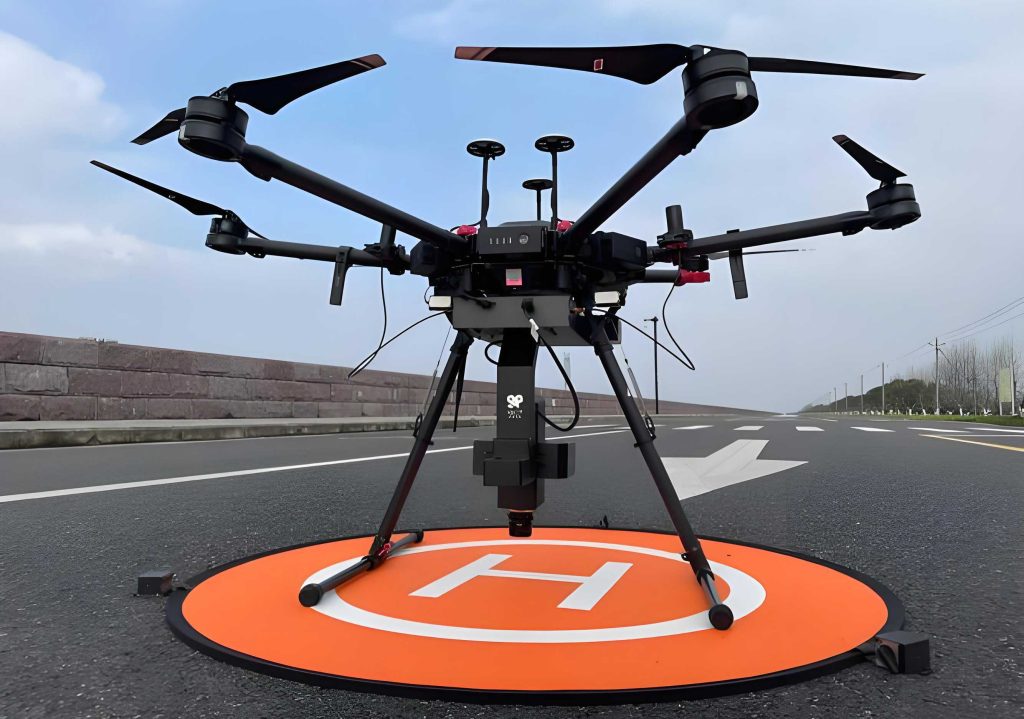
The disruptive influence of the China UAV drone industry extends across economic and security domains. As an “aerial robot,” the UAV synthesizes advancements in aeronautics and information technology. Its proliferation catalyzes the emergence of “UAV+” application models, fundamentally altering traditional production, service delivery, and operational methodologies. Economically, it fosters a new frontier in advanced manufacturing, demanding and integrating breakthroughs in composite materials, propulsion, intelligent control, and sensors. Beyond manufacturing, it spawns novel low-altitude service models—from precision agriculture and instant logistics to urban management and emergency response—effectively opening a new developmental axis beyond land and marine economies. Conversely, this rapid expansion introduces significant challenges: platform safety, dense and heterogeneous airspace operations, privacy concerns, and environmental footprint necessitate robust, forward-looking governance frameworks.
The ecosystem for China UAV drone industry development is underpinned by six interrelated core elements, as summarized below:
| Core Element | Description | Key Components |
|---|---|---|
| Technology Drive | The fundamental engine for advancement, integrating aviation and IT. | Platform (materials, propulsion, navigation); Low-altitude Network (communication, navigation, surveillance); Data-Driven Tech (digital airspace, AI, swarm intelligence); Payloads; Operation & Maintenance. |
| Scenario Innovation | The demand-pull mechanism that translates technology into economic value. | Low-altitude Transport; Agricultural & Forestry; Emergency Response; Remote Sensing; Urban-Rural Governance; Entertainment; Military Applications. |
| Airspace Governance | The foundational framework enabling safe and efficient large-scale operations. | Airspace Classification; Dynamic Allocation; Traffic Management; Coordination between Military, Civil Aviation, and Low-Altitude Users. |
| Resource Configuration | The physical and digital infrastructure required for industry operations. | Vertiports, Charging/Storage; Low-altitude Intelligent Network (LAIN); “Four-Networks-in-One” Integration (Facility, Air-Connectivity, Route, Service). |
| Safety & Security | The non-negotiable prerequisite for public trust and sustainable growth. | Product Quality & Certification; Flight Operation Safety; Airspace Security; Public Safety & Privacy; Counter-UAS Measures. |
| Policy & Regulation | The enabling and constraining framework guiding the entire ecosystem. | Innovation Incentives; Market Access Rules; Airspace Management Laws; Infrastructure Standards; Safety Regulations; Data Governance. |
A critical examination reveals persistent challenges that must be overcome to achieve the high-quality development of the China UAV drone industry.
Key Challenges in Technology and Market Development
The path to maturity for the China UAV drone industry is fraught with multifaceted hurdles. Technologically, while progress is rapid, critical gaps remain. Core platform technologies—such as high-energy-density propulsion systems for extended endurance, robust and fail-operational flight control systems, and specialized application-specific payloads—require accelerated breakthroughs. The envisioned Low-altitude Intelligent Network (LAIN), essential for networked operations, lacks unified standards and mature integration of “space-air-ground” communication, navigation, and sensing resources. Furthermore, managing the massive, dynamic data generated by millions of potential flights demands novel spatiotemporal computing models for efficient airspace allocation and traffic deconfliction, represented conceptually by the challenge of optimizing dynamic resource allocation over a complex grid $G$:
$$ \text{Maximize } U(G) = \sum_{i=1}^{N} \sum_{t=1}^{T} w_i \cdot f(r_i(t), d_i(t), \text{Traffic}_i(t)) $$
$$ \text{Subject to: } \sum_{i \in S} r_i(t) \leq R_S(t), \quad \text{Safety\_Constraint}(d_i(t), d_j(t)) > \delta \quad \forall t, \forall i \neq j $$
where $U(G)$ is the total utility of the grid system, $N$ is the number of airspace cells, $T$ is the time horizon, $w_i$ is the priority weight, $f(\cdot)$ is a utility function depending on allocated resources $r_i(t)$, demand $d_i(t)$, and traffic density, subject to resource capacity $R_S(t)$ and stringent safety separation constraints $\delta$.
Market-wise, the “last-mile” of application remains problematic. Many business models struggle with high operational costs and uncertain returns on investment. For instance, the unit economic viability of drone delivery, a key application for the China UAV drone industry, can be modeled as:
$$ \text{Profit}_{\text{delivery}} = P_{\text{fee}} – (C_{\text{energy}} + C_{\text{maintenance}} + C_{\text{network}} + C_{\text{launch/land}} + C_{\text{insurance}}) $$
Currently, $C_{\text{energy}} + C_{\text{network}} + C_{\text{launch/land}}$ often exceeds $P_{\text{fee}}$ without significant scale or subsidy. Consumer acceptance is also nascent, constrained by perceived noise, privacy issues, and cost. The table below contrasts key application challenges:
| Application Area | Primary Technological Challenge | Primary Market/Economic Challenge |
|---|---|---|
| Logistics & Delivery | BVLOS navigation in complex environments, safe package delivery/release. | High per-unit cost vs. ground alternatives; limited network density. |
| Advanced Air Mobility (Passenger) | Ultra-high safety certification, noise reduction, vertiport integration. | Massive infrastructure investment; regulatory certification timeline; public acceptance of autonomy. |
| Precision Agriculture | AI for real-time crop/pest identification, ultra-precise spraying mechanisms. | High upfront cost for smallholder farmers; need for agronomic service integration. |
| Infrastructure Inspection | Automated defect detection algorithms, long-range high-resolution sensing. | Transition from manned, periodic inspections to continuous drone-based monitoring services. |
Systemic Hurdles in Governance and Infrastructure
Beyond technology and markets, systemic barriers in governance and infrastructure are equally constraining. Airspace governance remains in transition. While progress has been made with trial regulations and classification methods, the system is not yet agile enough to support high-density, heterogeneous traffic at scale. The coordination mechanisms between military, civil aviation, and burgeoning low-altitude operators require further streamlining and digital integration to enable real-time, efficient airspace utilization.
Infrastructure development is fragmented and lags behind ambition. Physical infrastructure—a network of vertiports, charging hubs, and maintenance facilities—lacks a cohesive national plan and standardized codes, leading to potential incompatibility. The digital infrastructure backbone, the LAIN, is still in its conceptual and early pilot stages. Achieving the seamless “Four-Networks-in-One” integration is a colossal undertaking requiring synchronized investment and cross-sector collaboration.
Safety and security frameworks, though evolving, contain blind spots. A comprehensive, lifecycle-oriented product quality and certification regime for the diverse range of China UAV drone products is still under development. The regulatory oversight for operations, especially concerning the vast number of small UAS, relies heavily on digital platforms like UOM, but full interoperability and data sharing among all stakeholders (government, enterprise, air traffic management) is not yet realized. Security against malicious use (“non-cooperative targets”) poses a continuous technical and operational challenge.
Finally, the policy and regulatory landscape, while increasingly supportive, requires further refinement and stability. Long-term, clear policies are needed to de-risk large-scale investments in infrastructure and service operations. Cross-regional coordination is essential to avoid siloed development and foster a unified national market for the China UAV drone industry.
Strategic Countermeasures for High-Quality Development
To address these challenges and steer the China UAV drone industry toward high-quality development, a multi-pronged, systemic strategy is imperative. The following countermeasures are proposed based on the preceding analysis.
1. Holistic Industry Chain Orchestration: A top-level, national strategic plan for the entire China UAV drone industry chain is essential. This plan should map the ecosystem from R&D and core component manufacturing to application services and recycling, identifying and reinforcing weak links. Policy levers—such as specialized innovation funds, tax incentives for R&D, and support for talent cultivation—must be aligned to foster deep integration of innovation, capital, talent, and industrial chains. The goal is to cultivate world-class manufacturing clusters and robust application service providers, thereby enhancing the industry’s contribution to the real economy.
2. Dual-Pronged Advancement in Scenarios and Technology: Development must be driven by both application pull and technology push. The government should lead in creating “regulatory sandboxes” and demonstration projects for key scenarios like urban logistics, emergency medical delivery, and agricultural services. This de-risks market entry for companies and accelerates the validation of business models. Concurrently, state-coordinated research initiatives should target critical technological bottlenecks. This includes not only platform technologies but also the foundational technologies for LAIN and AI-driven airspace management ($\text{AI}_\text{ATM}$), which can be conceptualized as a large-scale optimization engine:
$$ \text{AI}_\text{ATM}: \{ \text{Demand}_t, \text{Weather}_t, \text{Asset\_Status}_t, \text{Regulatory\_Rules} \} \rightarrow \{ \text{Route\_Plans}_{t+1}, \text{Conflict\_Alerts}, \text{Dynamic\_Restrictions} \} $$
Public-private partnerships in research consortia, national key laboratories, and innovation centers can bridge the gap between basic research and commercial application.
3. Pioneering New Airspace Governance Models: Airspace reform must accelerate, moving from sector-based management to integrated, digital system governance. This involves refining and implementing more granular, dynamic airspace classification schemes. A new governance model should be piloted, featuring state oversight, local government implementation responsibility, and market-operated services. This model should leverage digital tools—geographic information systems (GIS), automatic dependent surveillance, and AI-based flow management—to create a unified low-altitude traffic management (LATM) information platform. This platform would enable true integration of military, civil, and low-altitude needs, allowing for efficient dynamic airspace resource allocation.
4. Coordinated Infrastructure Development Centered on LAIN: The construction of the Low-altitude Intelligent Network must be treated as critical national digital infrastructure. Investment should be prioritized to integrate 5G/6G, BeiDou navigation, satellite internet, and IoT sensing into a resilient, ubiquitous network fabric. This digital infrastructure must be planned in tandem with physical infrastructure. A “Four-Networks-in-One” master plan should guide local governments and enterprises to co-invest in and build compatible vertiport networks, energy supply grids, and data service platforms, ensuring interoperability across regions.
5. Building a “Management + Technology” Safety Ecosystem: Safety and security require a holistic, lifecycle approach. A clear liability and responsibility matrix across the industry chain must be established. On the management side, this includes完善ing mandatory product certification based on risk categories, implementing a unique digital identity (similar to a “flying smartphone”) for each UAV linked to its operator, and promoting comprehensive insurance products. On the technology side, safety must be baked into the LAIN architecture, featuring built-in network security, reliable command and control links, and automated monitoring for compliance and anomaly detection (e.g., geofencing). The capability to detect, identify, and mitigate non-cooperative drones, especially around sensitive areas, is a non-negotiable component of the public safety framework for the China UAV drone industry.
Future Trajectory: The Four Pillars of Next-Generation Development
The successful implementation of these strategies will propel the China UAV drone industry into a mature phase characterized by four defining, interconnected pillars:
| Pillar | Core Characteristic | Enabling Technologies & Outcome |
|---|---|---|
| Networked Information Transmission | The UAV as a ubiquitous, connected node. | LAIN provides seamless, reliable, low-latency connectivity. UAVs become “flying smartphones,” enabling real-time telemetry, remote management, and cloud-based data processing, forming the backbone for “Internet of Intelligences + UAV” integration. |
| Digitalized Flight Space | The airspace as a computable, structured digital twin. | Airspace is digitized using geospatial grid models (e.g., S2, GeoSOT). Every location and its properties (static and dynamic) are digitally encoded, allowing precise navigation, conflict-free 4D trajectory planning $(x, y, z, t)$, and intelligent airspace resource scheduling. |
| Intelligent Operational Control | Autonomous, adaptive, and collaborative mission execution. | Leveraging the digital airspace and network, AI enables advanced capabilities: perception and cognition ($s_t = \text{AI}_{\text{perc}}(O_t)$), intelligent decision-making ($a_t = \pi(s_t; \theta)$), and multi-agent collaboration. Operations shift from remote piloting to supervisory control and full autonomy in structured environments. |
| Service-Oriented Industry Applications | Outcome-as-a-service business models. | Moving beyond selling hardware or flight hours. The industry provides complete, integrated service solutions (e.g., “crop health monitoring as a service,” “linear infrastructure inspection as a service”). This maximizes value extraction and deeply embeds the China UAV drone industry into the digital economy. |
The convergence of these four pillars will redefine the industry. The foundational equation for a service-oriented drone application can be modeled as a value-generation function:
$$ V_{\text{Service}} = \int_{t_0}^{t_{\text{end}}} \left( \alpha \cdot D_{\text{Network}}(t) + \beta \cdot I_{\text{DigitalSpace}}(t) + \gamma \cdot A_{\text{Intelligence}}(t) \right) \cdot L_{\text{Payload}}(t) \, dt $$
where $V_{\text{Service}}$ is the total value delivered, integrated over the mission time. It depends on the degree of Network connectivity $(D_{\text{Network}})$, the richness and accuracy of Digital Space information $(I_{\text{DigitalSpace}})$, the level of autonomous Intelligence $(A_{\text{Intelligence}})$, all modulated by the specific payload function $(L_{\text{Payload}})$. Coefficients $\alpha, \beta, \gamma$ represent the relative weight of each pillar in the specific application.
In conclusion, the high-quality development of the China UAV drone industry is a complex but imperative national undertaking. It requires synchronized progress across technology, market, governance, infrastructure, and safety fronts. By adopting a systemic strategy that emphasizes holistic planning, dual innovation drivers, reformed governance, smart infrastructure, and a robust safety culture, China can solidify its leadership in this transformative field. The future of the industry lies in its evolution from isolated flying machines to an integral, intelligent, and service-oriented layer of the national digital and economic infrastructure, fully embodying the principles of networked, digital, intelligent, and service-driven development. This trajectory will not only ensure the sustainable growth of the low-altitude economy but also contribute significantly to the modernization of the national industrial system and societal governance.