
In recent years, the rapid advancement of unmanned aerial vehicle (UAV) technology, particularly in China, has transformed modern warfare and civilian applications. China UAV drones are increasingly deployed for reconnaissance, surveillance, and swarm operations, posing significant challenges for defense and countermeasures. High-power microwave (HPM) systems have emerged as a promising anti-UAV solution, capable of disrupting or damaging electronic systems through electromagnetic coupling. This study focuses on the backdoor coupling effects of HPM irradiation on a typical micro-UAV, with emphasis on modeling and simulation to understand the electromagnetic response and damage mechanisms. I will present a comprehensive analysis using a dual-coordinate system model integrated with flight dynamics, simulated via COMSOL Multiphysics, to evaluate frequency and incidence angle dependencies from 1 to 18 GHz. The goal is to provide insights for optimizing HPM-based anti-UAV strategies, highlighting the vulnerabilities of China UAV drones in electromagnetic environments.
The proliferation of China UAV drones in global conflicts underscores the need for effective countermeasures. Traditional methods like missile interception are costly and inefficient against drone swarms, driving research into directed-energy weapons such as HPM systems. HPM pulses, characterized by high peak power (e.g., >100 MW) and frequencies ranging from 300 MHz to 300 GHz, can couple into UAVs via front-door (e.g., antennas) or back-door (e.g., apertures, seams) pathways. Backdoor coupling is particularly critical for micro-UAVs with non-hermetic enclosures, where openings serve as entry points for electromagnetic energy. In this work, I investigate a representative China UAV drone model to simulate HPM backdoor coupling, aiming to reveal how external irradiation translates into internal field perturbations and potential component failure. This research contributes to the broader field of electromagnetic protection and counters the growing threat posed by China UAV drones.
To simulate the dynamic nature of UAV operations, I established a dual-coordinate system model incorporating Earth-fixed and UAV-body coordinates. This approach accounts for flight attitude variations, such as roll, pitch, and yaw angles, which influence HPM coupling. The UAV motion is discretized into static snapshots, approximating real-time dynamics. The model assumes an HPM source at a fixed location, with the UAV moving at constant velocity. The electric field intensity at a distance R from the HPM source is given by:
$$E = \sqrt{\frac{30P_t G_t}{R}}$$
where \(P_t\) is the peak transmit power (5 GW), \(G_t\) is the antenna gain (40 dB), and R is set to 3 km, yielding an ambient field strength of approximately 13 kV/m. For far-field conditions, the plane wave approximation is valid when \(R \geq 2D^2/\lambda\), with D as the antenna aperture (3 m²). The UAV’s velocity vector in body coordinates is expressed as:
$$\mathbf{v} = \begin{bmatrix} v_x \\ v_y \\ v_z \end{bmatrix} = \begin{bmatrix} -v \cos \phi \sin \psi \\ -v \cos \phi \cos \psi \\ v \sin \phi \end{bmatrix}$$
where \(v\) is speed, \(\phi\) is pitch, and \(\psi\) is yaw. Attitude changes are modeled using Euler rotation matrices:
$$\mathbf{R}_{zxy} = \mathbf{R}_x \mathbf{R}_y \mathbf{R}_z = \begin{bmatrix} \cos \psi’ \cos \theta’ + \sin \theta’ \sin \phi’ \sin \psi’ & \cos \phi’ \sin \psi’ & \cos \theta’ \sin \phi’ \sin \psi’ – \sin \theta’ \sin \psi’ \\ -\cos \theta’ \sin \psi’ + \cos \psi’ \sin \phi’ \sin \theta’ & \cos \phi’ \cos \psi’ & \cos \psi’ \cos \theta’ \sin \phi’ + \sin \theta’ \sin \psi’ \\ \cos \phi’ \sin \theta’ & -\sin \phi’ & \cos \theta’ \cos \phi’ \end{bmatrix}$$
The wave vector for HPM incidence angle \(\alpha’\) is:
$$\mathbf{k} = \begin{bmatrix} \sin \alpha’ \sin \psi” \\ \sin \alpha’ \cos \psi” \\ \cos \alpha’ \end{bmatrix}$$
This framework enables analysis of HPM coupling under varying flight scenarios, relevant for assessing threats to China UAV drones.
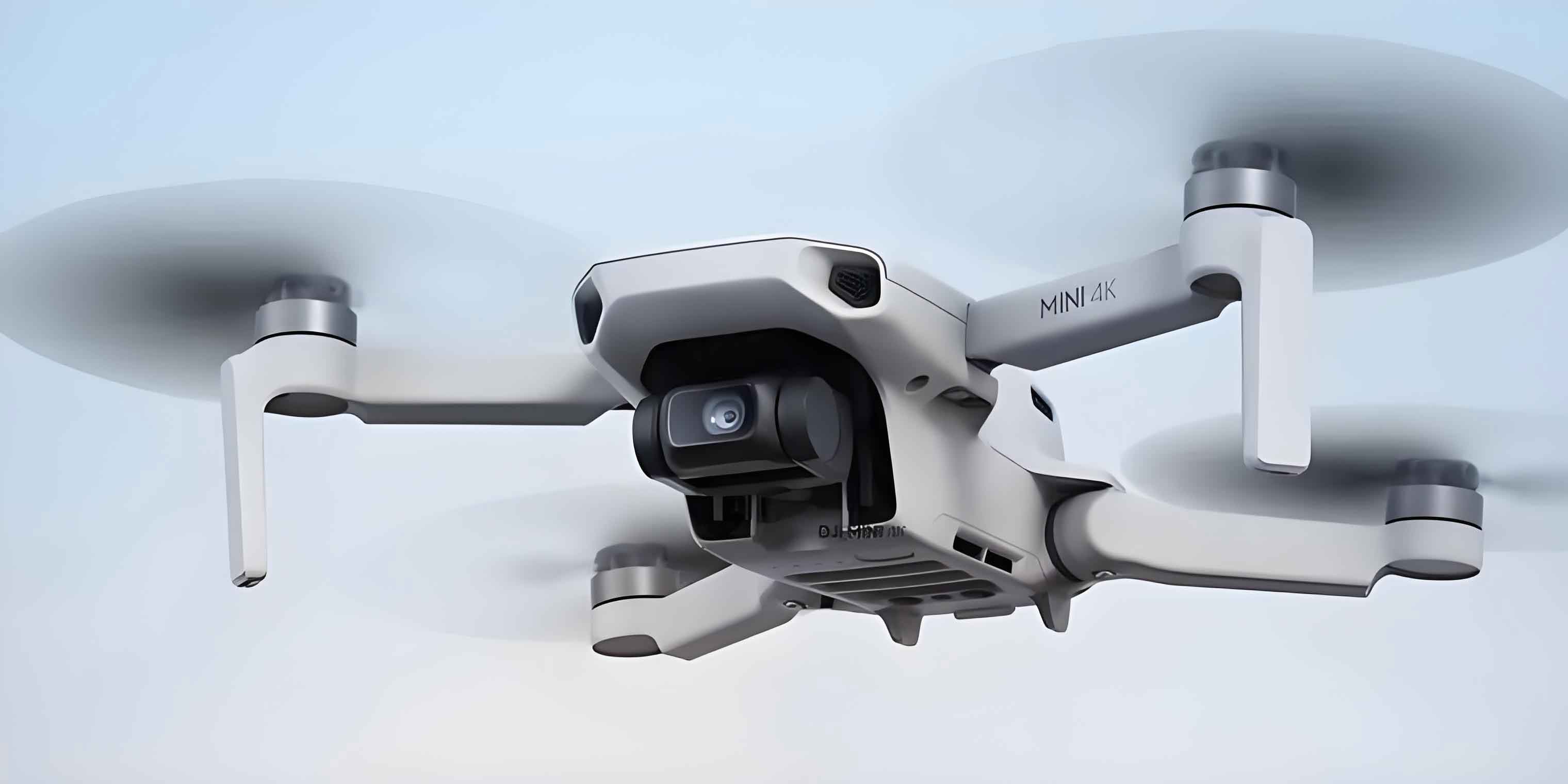
The UAV geometry is based on a micro-UAV with a carbon fiber fuselage, length 185 mm, wingspan 300 mm. Key backdoor coupling pathways are the side openings (16 mm × 8 mm) used for parachute deployment. The flight control motherboard, containing critical components like the FM25V05 chip, is modeled inside the fuselage. Simulations in COMSOL Multiphysics solve Maxwell’s equations to compute electric field and current distributions. The frequency range is 1–18 GHz, with incidence angles from 0° to 90° in 10° increments. The material properties include carbon fiber conductivity \(\sigma = 10^4\) S/m and permittivity for FR-4 substrate on the motherboard. The skin depth, dictating current penetration, is:
$$\delta = \sqrt{\frac{2}{\omega \mu \sigma}}$$
where \(\omega = 2\pi f\), \(\mu\) is permeability, and \(\sigma\) is conductivity. This parameter influences surface current density variations with frequency.
The simulation results reveal significant frequency and angle dependencies for electromagnetic coupling. First, the spatial electric field around the UAV shows scattering and diffraction effects. At lower frequencies (e.g., 1–6 GHz), longer wavelengths enable greater diffraction, reducing field perturbations near the UAV. As frequency increases, the field becomes more concentrated, enhancing coupling. Table 1 summarizes the maximum surface electric field on the fuselage for selected frequencies and incidence angles, based on simulation data.
| Frequency (GHz) | Incidence Angle 0° (kV/m) | Incidence Angle 20° (kV/m) | Incidence Angle 60° (kV/m) | Incidence Angle 90° (kV/m) |
|---|---|---|---|---|
| 1 | 3.88 | 3.61 | 3.23 | 4.02 |
| 8 | 20.19 | 19.49 | 48.86 | 35.81 |
| 14 | 23.41 | 29.98 | 46.90 | 40.63 |
| 18 | 44.29 | 40.63 | 44.29 | 35.81 |
Table 1: Maximum surface electric field on UAV fuselage under HPM irradiation. Values indicate strong increases with angle and frequency, particularly near 14 GHz for China UAV drones.
The current density on the fuselage surface follows a similar trend, with peaks near the side openings due to aperture resonance. At 14 GHz, the opening dimensions match Ku-band waveguide sizes, causing resonant enhancement. The maximum surface current density \(J_{\text{max}}\) (in A/cm²) can be approximated by:
$$J_{\text{max}} \propto \frac{E_{\text{inc}}}{\delta} \cdot f(\alpha)$$
where \(E_{\text{inc}}\) is incident field strength and \(f(\alpha)\) is an angle-dependent factor. Simulation data for current density across frequencies and angles are condensed in Table 2.
| Frequency (GHz) | Incidence Angle 0° (A/cm²) | Incidence Angle 20° (A/cm²) | Incidence Angle 60° (A/cm²) | Incidence Angle 90° (A/cm²) |
|---|---|---|---|---|
| 1 | 1.8e7 | 2.0e7 | 2.5e7 | 3.0e7 |
| 8 | 4.5e7 | 5.0e7 | 6.5e7 | 7.0e7 |
| 14 | 1.2e8 | 1.5e8 | 1.8e8 | 2.0e8 |
| 18 | 9.0e7 | 1.0e8 | 1.2e8 | 1.4e8 |
Table 2: Maximum surface current density on UAV fuselage. The 14 GHz resonance is evident, highlighting a vulnerability for China UAV drones.
For the flight control motherboard, the internal field distribution is largely independent of incidence angle, as the side openings act as dominant coupling channels. The maximum electric field on the motherboard surface peaks at specific frequencies, with critical overvoltage at chip pins. The FM25V05 chip, with Vdd (pin 1) operating range 2–3.6 V and SI (pin 2) transient limit <2 V, shows vulnerability. The induced voltage \(V_{\text{pin}}\) at a pin can be estimated from the internal field \(E_{\text{int}}\):
$$V_{\text{pin}} = \int_{\text{path}} \mathbf{E}_{\text{int}} \cdot d\mathbf{l}$$
Simulation results for pin voltages across frequencies at 20° incidence are summarized in Table 3.
| Frequency (GHz) | Vdd Voltage (V) | SI Voltage (V) | Functional Status |
|---|---|---|---|
| 12 | 2.5 | 1.2 | Normal |
| 14 | 5.8 | 6.98 | Failure (overvoltage) |
| 15 | 4.2 | 3.5 | Failure |
| 16 | 4.5 | 1.8 | Failure |
| 18 | 21.87 | 2.1 | Failure |
Table 3: FM25V05 chip pin voltages under HPM irradiation. Failures occur at 14, 15, 16, and 18 GHz, with severe overvoltage at 18 GHz for China UAV drones.
The resonance at 14 GHz is a key finding. The aperture size \(a \times b = 16 \, \text{mm} \times 8 \, \text{mm}\) corresponds to a cutoff frequency for TE10 mode in a rectangular waveguide:
$$f_c = \frac{c}{2a} \approx 9.375 \, \text{GHz}$$
but coupling peaks near 14 GHz due to impedance matching and UAV geometry. This resonance amplifies current density, leading to enhanced internal fields. For China UAV drones with similar openings, this frequency poses a high risk. The angle dependency shows that oblique incidence (e.g., 60°–90°) increases surface fields due to larger projected areas, but internal motherboard responses are mitigated by the aperture dominance.
In terms of electromagnetic energy flow, the pathway can be described as: HPM source → plane wave propagation → fuselage coupling (via openings) → internal field reconstruction → motherboard response → chip overvoltage. The power density \(S\) incident on the UAV is:
$$S = \frac{E^2}{120\pi} \, \text{W/m}^2$$
and the coupled power \(P_c\) through an opening of area \(A\) is approximately:
$$P_c \approx S \cdot A \cdot \tau$$
where \(\tau\) is transmission coefficient, dependent on frequency and polarization. For the side openings, \(\tau\) peaks around 14 GHz, explaining the resonant behavior.
The implications for anti-UAV systems are significant. HPM weapons targeting China UAV drones should prioritize frequencies like 14–18 GHz for maximum efficacy, especially when drones exhibit similar aperture designs. Incidence angles above 60° enhance coupling, suggesting tactical positioning for HPM emitters. However, the insensitivity of internal fields to angle simplifies prediction models. Future work could explore broadband HPM pulses or multi-frequency attacks to disrupt drone swarms, considering the diverse designs of China UAV drones.
Furthermore, the simulation methodology here—using COMSOL with a dual-coordinate system—provides a scalable framework for assessing other UAV models. Extensions could include nonlinear effects in semiconductor components or thermal analysis for prolonged irradiation. Experimental validation is needed, but simulations offer cost-effective insights. As China UAV drones evolve with better shielding, backdoor coupling may reduce, but apertures for sensors or cooling will remain vulnerabilities.
In conclusion, this study demonstrates the importance of backdoor coupling in HPM interactions with China UAV drones. Through detailed modeling and simulation, I identified resonant frequencies (notably 14 GHz) and incidence angle effects that drive electromagnetic vulnerabilities. The FM25V05 chip on the flight control motherboard is prone to overvoltage at multiple frequencies, potentially causing UAV failure. These findings support the optimization of HPM-based countermeasures, emphasizing frequency selection and attack geometries. Continued research in this area will enhance electromagnetic defense capabilities against emerging threats from China UAV drones and contribute to global security efforts. The integration of dynamic flight models with electromagnetic simulation represents a step forward in realistic threat assessment.
To encapsulate, the key formulas and relationships are summarized below for quick reference. The electric field intensity for HPM propagation:
$$E = \sqrt{\frac{30P_t G_t}{R}}$$
The skin depth for current penetration in conductive materials:
$$\delta = \sqrt{\frac{2}{\omega \mu \sigma}}$$
The resonant condition for aperture coupling, approximated by:
$$f_{\text{res}} \approx \frac{c}{2\sqrt{a^2 + b^2}}$$
where \(a\) and \(b\) are opening dimensions. For the China UAV drone studied, \(f_{\text{res}} \sim 14 \, \text{GHz}\). The induced voltage on chip pins, critical for damage assessment:
$$V_{\text{pin}} = \int \mathbf{E} \cdot d\mathbf{l} \approx E_{\text{int}} \cdot l_{\text{eff}}$$
where \(l_{\text{eff}}\) is effective path length. These mathematical tools, combined with tabulated simulation data, provide a comprehensive basis for analyzing HPM effects on China UAV drones and informing anti-UAV strategies.