
The propulsion system stands as the core determinant of an Unmanned Aerial Vehicle’s (UAV’s) mission capabilities, range, and overall operational envelope. As the global drone market, particularly within the burgeoning sector of China’s UAV industry, expands rapidly across military, commercial, and civilian applications, the demand for more efficient, reliable, and adaptable power solutions has intensified. This paper provides a comparative analysis of the three dominant technical pathways for UAV power systems: fossil fuel-based, all-electric, and hybrid-electric propulsion. By constructing a multi-dimensional evaluation framework that considers energy density, endurance, payload capacity, operational cost, environmental impact, and technological maturity, this study aims to elucidate the distinct advantages, inherent limitations, and optimal application scenarios for each solution. The analysis reveals a clear trend towards diversification and scenario-specific optimization in China UAV drone development, with hybrid systems emerging as a pivotal technology for bridging current performance gaps and unlocking new operational paradigms in low-altitude economies.
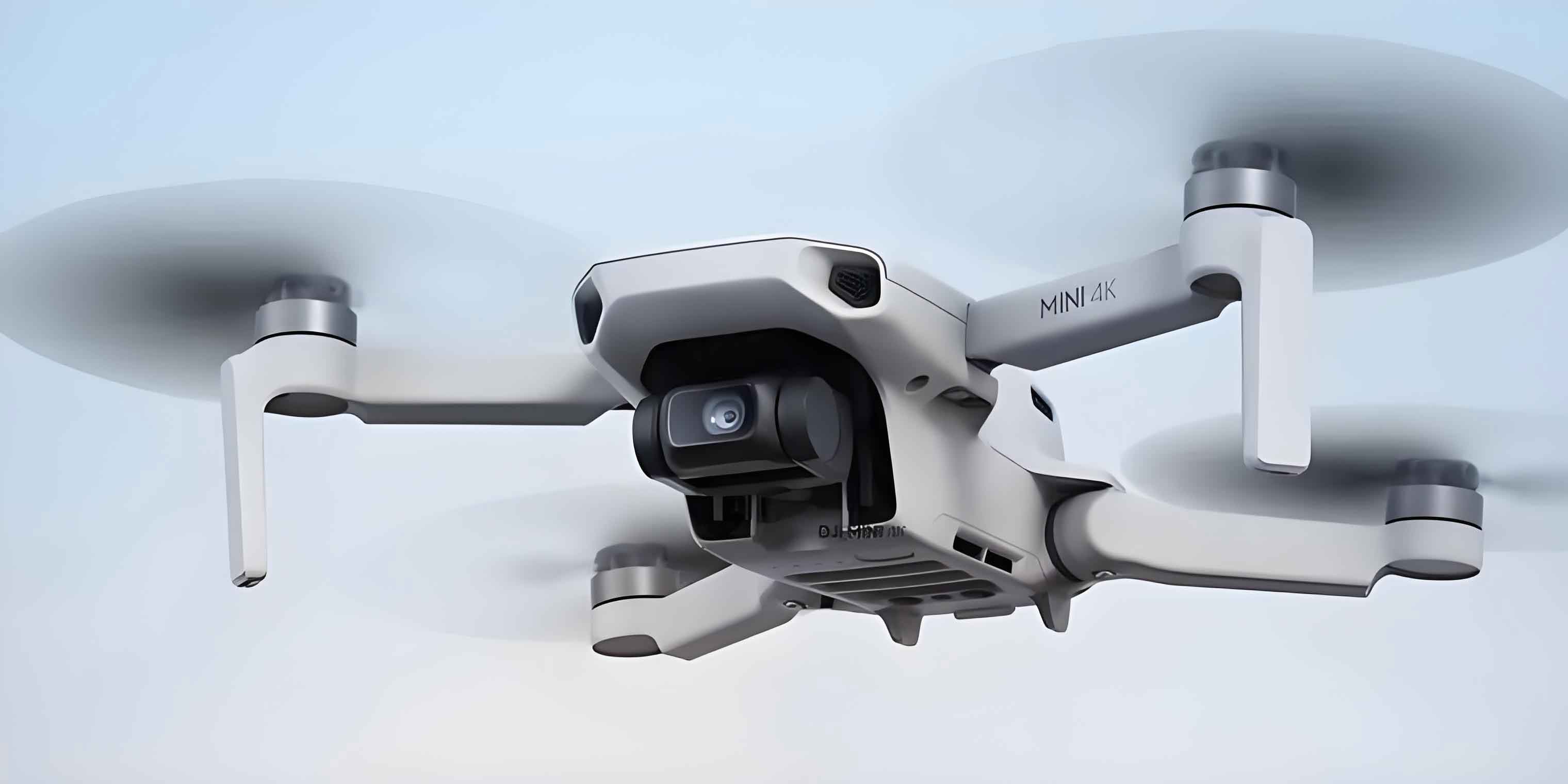
The evolution of UAV technology spans over a century, transitioning from early military experiments to widespread civilian adoption. Initially developed for target practice and reconnaissance, drones have undergone a radical transformation. The modern era, especially in the past two decades, has seen an explosion in capabilities driven by advancements in materials, sensors, computing, and crucially, propulsion. The rise of the China UAV drone market, exemplified by companies like DJI, has democratized access and spurred innovation in consumer and industrial platforms. Concurrently, military requirements continue to push the boundaries of endurance, altitude, and payload. This dual-track development—military pulling technology forward and civilian applications driving scale and cost reduction—has created a dynamic landscape where the choice of powerplant is increasingly critical. This paper posits that no single propulsion technology is universally superior; rather, the optimal solution is contingent upon a precise alignment with mission profiles, which include parameters such as flight duration, required speed, payload mass, acoustic signature, logistical footprint, and total cost of ownership.
1. Development of UAV Power System Technologies
UAV power systems are fundamentally categorized into thermal (fuel-based) and electric propulsion. The primary technical solutions in use or under development include Internal Combustion Engine (ICE)-based systems, all-electric battery-powered systems, hybrid-electric systems, and emerging solutions like hydrogen fuel cells. Each pathway represents a different trade-off between the critical parameters of specific energy (energy per unit mass) and specific power (power per unit mass).
- Fossil Fuel Systems: Leveraging mature aviation engine technology (piston, turbojet, turbofan, turboprop, turboshaft), these systems offer high specific energy, granting superior endurance and payload capacity, making them indispensable for long-range, heavy-lift military and industrial missions. However, they suffer from lower efficiency at partial loads, significant acoustic and thermal signatures, mechanical complexity, and emissions.
- All-Electric Systems: Powered by battery packs (typically Lithium-Polymer or Lithium-Ion) driving brushless DC motors, these systems provide simplicity, high reliability, near-silent operation, instant torque response, and zero local emissions. They are the dominant solution for small to medium-sized consumer and commercial China UAV drones. Their principal limitation is the low specific energy of current battery technology, which severely constrains flight endurance and useful payload.
- Hybrid-Electric Systems: These architectures seek to merge the high specific energy of fuel with the efficiency and flexibility of electric drive. By using a fuel-based engine (often a small, optimized piston or gas turbine) to run a generator at its most efficient point, they provide electricity to charge batteries and drive motors. This decouples engine operation from thrust demand, potentially offering endurance closer to fuel systems with the multi-rotor control simplicity and partial quiet operation of electric systems.
- Hydrogen-Based Systems: Utilizing hydrogen fuel cells or combusted in adapted engines, this pathway promises high specific energy and zero carbon emissions. However, it remains in early stages due to challenges with hydrogen production, storage, onboard fuel cell system integration, and overall system cost and durability.
The trajectory of China UAV drone power system development is heavily influenced by application-driven needs. The military sector, with its extreme demands, remains a stronghold for advanced thermal propulsion. In contrast, the civilian and commercial sectors, prioritizing operational cost, noise, and environmental factors, are rapidly adopting all-electric and hybrid solutions, fueling innovation and scale in these areas.
2. Comparative Analysis of UAV Power System Solutions
2.1 Fossil Fuel Propulsion Systems
Fossil fuel systems, powered by gasoline, heavy fuel, or jet fuel, represent the traditional and most mature technology for UAVs, especially in medium-to-large categories. The core component is the internal combustion engine, with several types employed based on the mission profile. The performance characteristics of common UAV engine types are summarized in Table 1.
| Engine Type | Typical Power Range (kW) | Specific Power (kW/kg) | Optimal Altitude (m) | Endurance (h) | Key Applications |
|---|---|---|---|---|---|
| Piston Engine | < 2000 | < 1.5 | 3,000 – 8,000 | 1 – 6+ | Target drones, MALE (Medium Altitude Long Endurance) UAVs |
| Turbojet | < 15,000 | 2.7 – 10.0 | High, > 10,000 | 0.2 – 2.5 | Target drones, high-speed high-altitude vehicles |
| Turbofan | < 50,000 | 3 – 12 | 14,000 – 20,500 | 8 – 42+ | HALE (High Altitude Long Endurance), strategic reconnaissance |
| Turboprop | < 10,000 | 5 – 6 | 13,000 – 16,000 | 8 – 42+ | MALE/HALE, maritime patrol |
| Turboshaft | < 7,500 | 5 – 10 | 300 – 7,600 | 3 – 24 | Unmanned helicopters, VTOL platforms |
The choice of engine involves fundamental trade-offs. Piston engines are cost-effective and fuel-efficient at lower altitudes but are heavy and power-limited. Gas turbines (turboprop, turbofan, turbojet) offer much higher specific power and excellent high-altitude performance but at a higher acquisition and maintenance cost. The trend in advanced military China UAV drones is toward more efficient turbofan and turboprop engines to maximize range and payload. The future development of fossil fuel systems focuses on improving efficiency through technologies like adaptive cycles, better thermal management, and the use of sustainable aviation fuels (SAFs). The specific fuel consumption (SFC), a key metric, is given by:
$$SFC = \frac{\dot{m}_f}{T}$$
where $\dot{m}_f$ is the fuel mass flow rate and $T$ is thrust. Lower SFC directly translates to longer endurance.
2.2 All-Electric Propulsion Systems
All-electric systems dominate the small UAV sector globally, a trend strongly exemplified by the proliferation of China UAV drone products for photography, surveying, and light logistics. The system comprises a battery (energy source), an Electronic Speed Controller (ESC), a brushless DC motor (actuator), and a propeller. Its simplicity is a major advantage. The primary constraint is battery energy density. The maximum flight time $t_{max}$ for a multi-rotor drone can be approximated by:
$$t_{max} = \frac{E_{batt} \cdot \eta_{sys}}{P_{hover}} = \frac{C_{batt} \cdot V \cdot \eta_{sys}}{(m \cdot g)^{3/2} \cdot \sqrt{ \frac{1}{2 \rho A} } \cdot \frac{1}{\eta_{prop}}}$$
where $E_{batt}$ is battery energy, $\eta_{sys}$ is total system efficiency, $P_{hover}$ is hover power, $C_{batt}$ is battery capacity, $V$ is voltage, $m$ is total mass, $g$ is gravity, $\rho$ is air density, $A$ is total propeller disk area, and $\eta_{prop}$ is propeller efficiency. This shows the inverse cubic relationship between flight time and aircraft mass. Current lithium polymer batteries offer specific energy of 180-250 Wh/kg, which limits practical multi-rotor flight times to typically under 1 hour for meaningful payloads. Two main airframe configurations have evolved to optimize electric performance, as compared in Table 2.
| Configuration | Example Models | Max Speed (km/h) | Max Range/Endurance* | Max Takeoff Mass (kg) | Primary Application |
|---|---|---|---|---|---|
| Multi-Rotor | DJI Mavic, DJI Agras | 30 – 85 | 20-50 km / 20-50 min | 5 – 100 | Aerial photography, precision agriculture, inspection |
| VTOL Fixed-Wing | WingtraOne, Chinese models (e.g., Zero Zero V-Coptr Falcon concept) | 70 – 130 | 50-200 km / 1-4 h | 5 – 25 | Large-area mapping, linear inspection, surveying |
*Note: Range/Endurance are configuration and battery-dependent estimates.
Multi-rotors excel in hover stability and VTOL simplicity but are inefficient for forward flight. VTOL fixed-wing hybrids use rotors for takeoff/landing and a fixed wing for efficient cruise, significantly extending range. The future of all-electric China UAV drones hinges on battery breakthroughs (e.g., solid-state batteries promising >400 Wh/kg) and improvements in motor/propeller efficiency, power electronics, and aerodynamic design.
2.3 Hybrid-Electric Propulsion Systems
Hybrid systems are the most actively researched area for overcoming the endurance limitation of all-electric drones while retaining some of their benefits. They are particularly promising for medium-sized cargo, long-endurance surveillance, and advanced air mobility (AAM) applications. The three main architectural paradigms are:
- Series Hybrid: The fuel engine is mechanically coupled only to a generator. It operates at a constant, optimal speed to generate electricity, which charges a battery and/or directly powers electric motors driving propellers. This offers great flexibility in packaging and allows the engine to always run at peak efficiency. The total power at the propeller is:
$$P_{prop} = P_{gen} \cdot \eta_{gen} \cdot \eta_{motor} + P_{batt} \cdot \eta_{batt} \cdot \eta_{motor}$$
where $P_{gen}$ is generator power, $P_{batt}$ is battery discharge power, and $\eta$ represents respective efficiencies. - Parallel Hybrid: Both the engine and an electric motor are mechanically connected to the propeller(s) via a transmission or clutch. Both can provide thrust simultaneously or independently. This architecture can be more efficient at high cruise power as it avoids the double energy conversion (mechanical->electrical->mechanical) of a series system. The power balance is: $$P_{prop} = P_{engine} + P_{motor}$$
- Series-Parallel (Power-Split) Hybrid: A more complex architecture using planetary gear sets to allow the engine power to be split between mechanical drive to the propeller and electrical generation. This offers superior mode optimization but at the cost of complexity and weight.
Hybrid systems enable intelligent energy management strategies. For instance, the battery can supply peak power for takeoff and climb, while the engine handles steady cruise and simultaneously recharges the battery. This can significantly reduce fuel consumption compared to a pure fuel system sized for peak power. A simplified rule-based strategy might be: Use electric power only when $P_{req} < P_{threshold}$ or State of Charge (SOC) is high; use engine + generator when $P_{req} \geq P_{threshold}$; and use engine to recharge battery when SOC is low and $P_{req}$ is less than the engine’s optimal power. Modern approaches use optimization algorithms (e.g., Equivalent Consumption Minimization Strategy – ECMS) for real-time control.
2.4 Cross-Technology Performance Comparison
The fundamental trade-offs are best illustrated by comparing key performance indicators across technologies. Table 3 provides a high-level qualitative comparison, while the following discussion delves into quantitative relationships.
| Technology | Specific Energy | Specific Power | Endurance | Acoustic Signature | Local Emissions | System Complexity | Operational Cost |
|---|---|---|---|---|---|---|---|
| Fossil Fuel | Very High (12,000 Wh/kg for fuel) | High | Very High | High | High | Medium-High | Medium (fuel, maint.) |
| All-Electric | Low (200-300 Wh/kg for system) | Very High | Low-Medium | Very Low | Zero | Low | Low (electricity) |
| Hybrid-Electric | Medium-High | High | High | Medium (engine-on) | Medium | Very High | Medium |
The endurance $E$ for a fuel-based system is roughly proportional to the fuel mass fraction: $$E \propto \frac{m_{fuel}}{m_{total}} \cdot \frac{1}{SFC}$$. For an electric system, $E \propto \frac{E_{batt}}{P_{avg}}$. The hybrid system attempts to maximize the effective “fuel” mass fraction by combining a high-energy-density fuel with a battery for power smoothing, leading to: $$E_{hybrid} \propto f\left(\frac{m_{fuel}}{m_{total}}, \frac{E_{batt}}{P_{avg}}, \eta_{management}\right)$$ where $\eta_{management}$ represents the efficiency of the hybrid energy management strategy.
For a China UAV drone designed for a 200 km range with a 10 kg payload, a fossil fuel system might weigh 30 kg and fly for 4+ hours. An all-electric VTOL fixed-wing might weigh 20 kg but only achieve 1.5 hours. A well-designed series hybrid could weigh 25 kg and achieve 3+ hours, offering a compelling middle ground. The development of the China UAV drone industry, with its massive market and manufacturing prowess, is accelerating the prototyping and cost reduction of hybrid systems, making them increasingly viable for commercial logistics and extended public safety missions.
3. Conclusion and Future Perspectives
The landscape of UAV power systems is characterized by a co-evolution of multiple technologies, each finding its niche. Fossil fuel propulsion remains unchallenged for missions demanding the ultimate in range, altitude, and heavy payload, particularly in the defense sector. All-electric systems reign supreme in the small-scale, low-noise, and low-complexity domains that constitute the vast majority of the commercial and consumer China UAV drone market. Hybrid-electric propulsion emerges as the critical transitional and potentially enduring solution for the “middle ground”—applications requiring several hours of endurance, meaningful payload capacity, and operational flexibility beyond the reach of current batteries, yet where pure fuel systems are logistically or environmentally undesirable.
The future trajectory will be shaped by advancements in core technologies. For electric and hybrid systems, progress in battery specific energy and specific power is paramount. Innovations in motor design (e.g., high-temperature superconductors), lightweight power electronics, and more efficient aerodynamic configurations (like distributed electric propulsion) will further enhance performance. For fuel-based systems, the integration of sustainable fuels and the development of ultra-high-efficiency small gas turbines are key. Digitalization and AI will play a growing role through intelligent energy and thermal management systems that dynamically optimize performance across changing flight conditions.
For the China UAV drone ecosystem, strategic investment in hybrid-electric and next-generation electric propulsion R&D is essential to maintain competitiveness and capture value in the emerging medium-to-heavy lift cargo and advanced air mobility markets. The convergence of strong policy support for low-altitude economies, a robust manufacturing base, and intense market demand positions the China UAV drone industry to be a leading force in defining the next generation of aerial vehicle power systems, driving them towards greater efficiency, sustainability, and intelligence.