
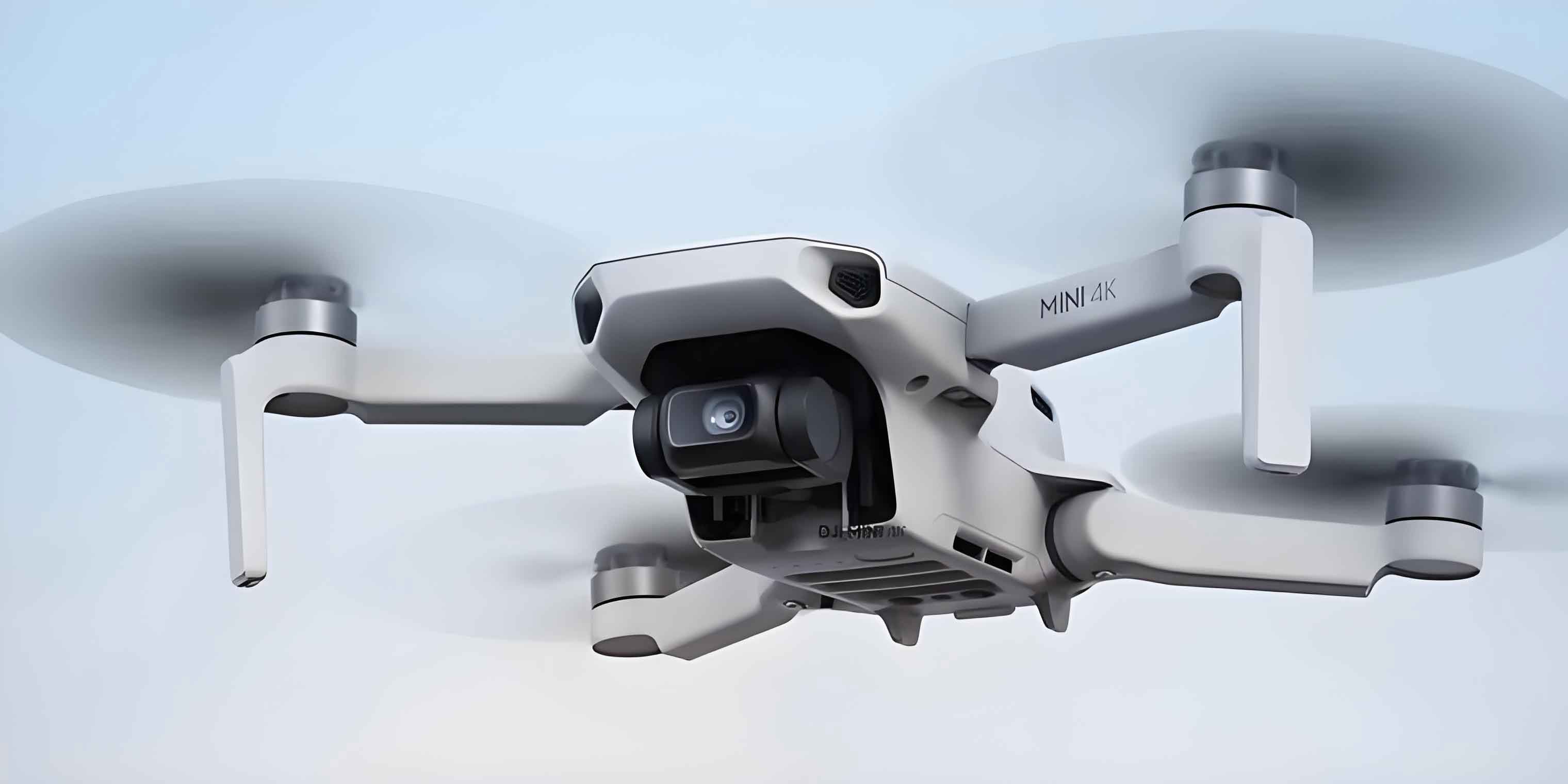
In the rapidly evolving domain of unmanned systems, the electromagnetic (EM) spectrum is both a conduit for operation and a domain of vulnerability. As a researcher deeply invested in the resilience of autonomous systems, I observe that the advancement of China UAV drone technology is inextricably linked to its ability to survive and function within increasingly contested and complex electromagnetic environments (EME). Traditional EM protection, often treated as an additive “hardening” process, is reaching its limits. We must evolve towards a more intrinsic, adaptive, and intelligent paradigm. This journey, I believe, is powerfully guided by principles observed in biology. The concept of biomimetic electromagnetic protection—translating the inherent resilience, adaptability, and intelligence of biological systems into engineering designs—offers a transformative pathway. Specifically, the framework for mapping biological intelligence to general artificial intelligence across four levels—data intelligence, perceptual intelligence, cognitive intelligence, and autonomous intelligence—provides a perfect blueprint for evolving the electromagnetic protection of modern China UAV drone systems from simple shielding towards embodied wisdom.
The core philosophy is integration, not addition. EM resilience should be an innate property, designed into the very fabric of a China UAV drone’s communication, navigation, sensing, and control systems from their inception. Biomimetic mapping guides this integration. At the data intelligence level, the system primarily collects and processes raw EM signals. Perceptual intelligence involves understanding and characterizing the EM environment—identifying friends, foes, and noise. Cognitive intelligence entails reasoning, planning, and making informed decisions based on that perception and mission goals. Finally, autonomous intelligence represents the culmination: a system capable of self-governance, learning, and evolution in the face of novel EM threats, much like a biological organism. The progression of a China UAV drone’s capabilities must follow this hierarchy, with each level building upon the last to create a truly robust system. The following table summarizes this biomimetic mapping framework:
| Intelligence Level | Core Capability | Biomimetic Mapping Example | EM Protection Technology Manifestation |
|---|---|---|---|
| Data Intelligence | Collection, storage, basic processing of signal data. | Sensory neurons firing in response to stimuli. | High-speed ADCs, wideband RF front-ends, data logging of EMI events. |
| Perceptual Intelligence | Recognizing patterns, identifying threats/jamming, situational awareness. | Auditory/visual cortex processing; immune system pathogen recognition. | Real-time spectrum sensing, signal fingerprinting, Direction-of-Arrival (DOA) estimation. |
| Cognitive Intelligence | Decision-making, planning, resource allocation under constraints. | Pre-frontal cortex executive function; hive-mind collective decision-making. | Adaptive waveform selection, intelligent jamming avoidance, dynamic resource management for comms/nav. |
| Autonomous Intelligence | Learning, adaptation, self-repair, and evolution of strategies. | Neural plasticity; wound healing; evolutionary adaptation. | Neuromorphic circuits for control, GAN-based signal/image recovery, self-healing hardware architectures. |
Guided by this framework, the electromagnetic protection design for a China UAV drone must be dissected across its key functional pillars: Communication, Navigation, Detection, and Control (CNDC). Each pillar advances through these intelligence levels, integrating protective measures that are biomimetically inspired.
1. Intelligent Communication Data Link: From Adaptation to Cognition
The data link is the lifeline of any China UAV drone. Moving beyond static, pre-programmed channels is the first step. A biomimetically inspired data link mimics the adaptive communication found in nature, such as birds altering their calls in noisy environments. The initial stage is the adaptive data link, operating at the perceptual intelligence level. It employs Software-Defined Radio (SDR) technology to sense the RF spectrum. A fundamental operation at this stage is spectrum sensing, often formulated as a binary hypothesis test:
$$
H_0: x[n] = w[n] \quad \text{(Noise only)}
$$
$$
H_1: x[n] = s[n] + w[n] \quad \text{(Signal plus Noise)}
$$
where \(x[n]\) is the received sample, \(s[n]\) is the potential useful signal (or interfering signal), and \(w[n]\) is additive white Gaussian noise. The system computes a test statistic, like the energy \(T = \sum_{n=1}^{N} |x[n]|^2\), and compares it to a threshold \(\gamma\) to decide between \(H_0\) and \(H_1\). This allows the China UAV drone to identify “spectrum holes” or detect the presence of jamming.
The leap to cognitive intelligence transforms it into a primary intelligent data link. Here, the system doesn’t just perceive but reasons. It builds a knowledge base containing profiles of friendly signals, historical jamming patterns, mission priorities, and regulatory constraints. Upon detecting interference, it doesn’t just jump to a pre-set alternate frequency; it evaluates multiple options. It might choose to implement a null-steering beamforming algorithm. If we have an \(M\)-element antenna array, the received signal vector is \(\mathbf{x}(t) = \mathbf{a}(\theta_s)s(t) + \sum_{j=1}^{J} \mathbf{a}(\theta_j)j_j(t) + \mathbf{n}(t)\), where \(\mathbf{a}(\theta)\) is the steering vector. The optimal beamformer weights \(\mathbf{w}\) are found by solving a constrained optimization problem, such as maximizing Signal-to-Interference-plus-Noise Ratio (SINR) or placing nulls in the directions of interferers \(\theta_j\):
$$
\min_{\mathbf{w}} \mathbf{w}^H \mathbf{R}_j \mathbf{w} \quad \text{subject to} \quad \mathbf{w}^H \mathbf{a}(\theta_s) = 1
$$
where \(\mathbf{R}_j\) is the interference-plus-noise covariance matrix. Alternatively, the system may decide to switch from a Direct Sequence Spread Spectrum (DSSS) mode to a Frequency Hopping Spread Spectrum (FHSS) mode, or even adapt its modulation and coding scheme (MCS) in real-time. This decision-making loop—Sense → Analyze → Decide → Act—is the hallmark of cognitive intelligence, making the China UAV drone’s communication robust and elusive.
2. Navigation System Fortification: Multi-Layer Immunity
Global Navigation Satellite System (GNSS) signals are notoriously weak and vulnerable. Protecting a China UAV drone’s navigation requires a biomimetic “multi-layer immune” approach, spanning from the physical signal layer to the information layer. The first line of defense is at the data intelligence and perceptual intelligence boundary, involving hardware hardening. This includes redesigning receiver enclosures with integrated shielding, implementing filtered feedthroughs for all I/O and power lines, and using strategic grounding to minimize coupling paths. This is analogous to the skin and physical barriers of an organism.
The next layer involves perceptual intelligence through multi-element anti-jamming antennas. Inspired by the directional hearing of animals like owls, these antenna arrays can spatially nullify interferers. Using algorithms like the Minimum Variance Distortionless Response (MVDR) beamformer, the system continuously adapts its antenna pattern. The weight update can be part of an adaptive process. If we denote the received signal at time \(k\) as \(\mathbf{x}(k)\), the output is \(y(k) = \mathbf{w}^H(k)\mathbf{x}(k)\). The weights can be updated using the Least Mean Squares (LMS) algorithm to minimize the output power subject to a constraint on the gain in the satellite direction:
$$
\mathbf{w}(k+1) = \mathbf{w}(k) – \mu y(k)^* \mathbf{x}(k)
$$
where \(\mu\) is the step size. Furthermore, to protect against high-power microwave threats that could cause permanent damage (akin to a physical injury), the RF front-end can incorporate limiter circuits with fast recovery times. A well-designed front-end for a resilient China UAV drone navigation system might follow this signal chain: Antenna Array → Limiters → Low-Noise Amplifier (LNA) → Filter → Adaptive Digital Beamformer. This combines brute-force signal-layer protection with intelligent spatial filtering.
At the cognitive intelligence level, the China UAV drone employs sensor fusion. It doesn’t rely on GNSS alone. By tightly coupling inertial measurement units (IMUs), visual odometry, and terrain-reference navigation, the system can reason about its position even during GNSS denial. It uses probabilistic models (e.g., Kalman Filters) to fuse these heterogeneous data streams:
$$
\hat{\mathbf{x}}_{k|k} = \hat{\mathbf{x}}_{k|k-1} + \mathbf{K}_k (\mathbf{z}_k – \mathbf{H}_k \hat{\mathbf{x}}_{k|k-1})
$$
where \(\hat{\mathbf{x}}\) is the state estimate (position, velocity), \(\mathbf{z}_k\) is the measurement from a sensor, \(\mathbf{H}_k\) is the observation matrix, and \(\mathbf{K}_k\) is the optimal Kalman gain. This creates a navigation solution that is far more robust than any single source, embodying the biological principle of redundancy and multi-modal sensing.
3. Sensing and Image Recovery: Cognitive Self-Healing
Electro-optical/infrared (EO/IR) and radar sensors on a China UAV drone are the “eyes” of the system. Intense EM interference, such as from high-power microwaves, can induce blinding noise, saturation, or structured artifacts in these sensors. At the perceptual intelligence level, the system must detect this corruption. At the cognitive intelligence level, it must attempt to repair it. This is inspired by the brain’s ability to fill in missing visual information (like the blind spot) or the body’s healing processes.
A powerful approach is using Generative Adversarial Networks (GANs) for image inpainting or denoising. Let \(I_{corrupted}\) be the noisy image received by the China UAV drone. A generator network \(G\), trained on vast datasets of clean and corrupted images, attempts to reconstruct a clean image \(I_{reconstructed} = G(I_{corrupted}; \theta_G)\). A discriminator network \(D\) tries to distinguish between real clean images and the generator’s output. Their contest is formalized as a minimax game:
$$
\min_G \max_D V(D, G) = \mathbb{E}_{x \sim p_{data}(x)}[\log D(x)] + \mathbb{E}_{z \sim p_z(z)}[\log(1 – D(G(z)))]
$$
For image restoration, the loss function is often augmented. A complete loss \(L_{total}\) for training the generator might combine adversarial loss \(L_{adv}\), perceptual loss \(L_{per}\) (based on features from a pre-trained network like VGG), and pixel-wise L1 loss \(L_{L1}\):
$$
L_{total} = \lambda_{adv}L_{adv} + \lambda_{per}L_{per} + \lambda_{L1}L_{L1}
$$
where \(\lambda\) terms are weighting coefficients. By incorporating hybrid attention mechanisms, the generator can focus on repairing the most semantically important or severely damaged parts of the image first, much like biological attention. This allows a China UAV drone to maintain situational awareness even after suffering an EM “glitch” in its visual sensors, recovering critical information about targets or terrain.
4. The Control Core: Towards Neuromorphic Resilience
The flight control system (FCS) is the “brainstem and cerebellum” of the China UAV drone. Its protection is paramount. Traditional digital control circuits are susceptible to bit-flips and latch-ups from EM pulses. The biomimetic frontier here lies in autonomous intelligence, achieved through neuromorphic engineering. Instead of von Neumann architecture, neuromorphic circuits mimic the brain’s analog, parallel, and event-driven computation, offering inherent noise tolerance and graceful degradation.
Imagine a control circuit built from artificial neurons and synapses. A key element is the memristor, a device whose resistance depends on the history of applied voltage/current, mimicking synaptic plasticity. The update rule for a synaptic weight \(w_{ij}\) connecting neuron \(j\) to neuron \(i\) could be governed by a spike-timing-dependent plasticity (STDP) rule:
$$
\Delta w_{ij} =
\begin{cases}
A_+ e^{-\Delta t / \tau_+} & \text{if } \Delta t > 0 \text{ (pre-before-post)}\\
-A_- e^{\Delta t / \tau_-} & \text{if } \Delta t < 0 \text{ (post-before-pre)}
\end{cases}
$$
where \(\Delta t = t_{post} – t_{pre}\). Such a network can learn stable flight patterns. When subjected to an EM disturbance, the disturbance is treated as just another spatiotemporal pattern. The network’s distributed, redundant representation means no single “bit” is critical; functionality degrades smoothly and can relearn or reconfigure around damaged pathways, emulating neural plasticity. This is the ultimate goal for a China UAV drone: a control system that is not just hardened, but alive in its ability to adapt and survive.
5. Integrated Design and Application Mapping
The true strength of biomimetic mapping is revealed when these intelligent protection strategies are integrated across the entire China UAV drone platform. The following table outlines how the CNDC pillars map to the intelligence hierarchy, forming a cohesive defense-in-depth strategy.
| UAV System Pillar | Data Intelligence | Perceptual Intelligence | Cognitive Intelligence | Autonomous Intelligence |
|---|---|---|---|---|
| Communication | Wideband IQ data sampling. | Real-time spectrum sensing; jamming detection. | Adaptive waveform/mode selection; dynamic frequency hopping plan. | Learning optimal comms strategies in specific threat environments. |
| Navigation | Raw GNSS/IMU/Visual data streams. | DOA estimation of interferers; integrity monitoring. | Multi-sensor fusion; optimal filtering; path re-planning under GNSS denial. | Calibrating sensors and building adaptive error models over time. |
| Detection (Sensing) | Capturing corrupted image/radar frames. | Identifying image noise patterns/sensor saturation. | Selecting & applying appropriate image修复 algorithm; data fusion. | Improving修复 models based on new types of observed corruption. |
| Control | Sampling actuator/sensor feedback. | Detecting abnormal control surface feedback or motor currents. | Switching to robust/backup control law; re-allocating control authority. | Neuromorphic circuit reconfiguration & learning for fault tolerance. |
6. Challenges and Future Trajectory
The path to fully autonomous, biomimetically intelligent EM protection for China UAV drones is fraught with challenges. First, the mapping methodology itself needs refinement. Translating qualitative biological principles (e.g., “immune response”) into quantifiable, implementable algorithms for dynamic EM spectra is non-trivial. Second, we are bottlenecked by hardware. True neuromorphic control systems, self-healing RF substrates, and ultra-wideband adaptive antennas with low Size, Weight, and Power (SWaP) are still in developmental stages. The computational demand of real-time cognitive algorithms (like the GAN-based修复) requires efficient, possibly neuromorphic, processing units onboard the China UAV drone. Finally, the aspect of collective intelligence—inspired by swarms of insects or birds—offers a grand vision. A swarm of China UAV drones could share EM environmental perceptions, collaboratively map threat fields, and execute coordinated evasion or suppression maneuvers, exhibiting a level of group intelligence and resilience far beyond any single platform.
In conclusion, the biomimetic mapping from biological intelligence levels to electromagnetic protection design is not merely a theoretical exercise; it is an essential roadmap for the next generation of resilient unmanned systems. By progressing from data to autonomous intelligence, and by integrating protective measures intrinsically into the communication, navigation, detection, and control loops, we can develop China UAV drones that are not just shielded against known threats, but are adaptable, cognitive, and ultimately, survivable in the unpredictable electromagnetic battlespace of the future. The goal is to create systems that don’t just resist interference, but understand it and evolve because of it.