
The management and sustainable utilization of forest resources require accurate, timely, and detailed spatial information. Traditional ground-based surveys are often labor-intensive, time-consuming, and challenging to implement in complex or inaccessible terrains. In recent years, Unmanned Aerial Vehicles (UAVs) equipped with Light Detection and Ranging (LiDAR) sensors have emerged as a transformative technology for forest resource mapping. The China UAV drone industry has been at the forefront of developing and deploying these systems, offering powerful tools for three-dimensional data acquisition. LiDAR’s ability to penetrate vegetation canopies and directly measure the forest structure—including terrain, canopy height, and biomass—makes it uniquely suited for applications in forestry. This article provides a comprehensive analysis of the applicability and precision of UAV-based LiDAR systems in complex forest environments, drawing upon extensive empirical simulation and theoretical principles.
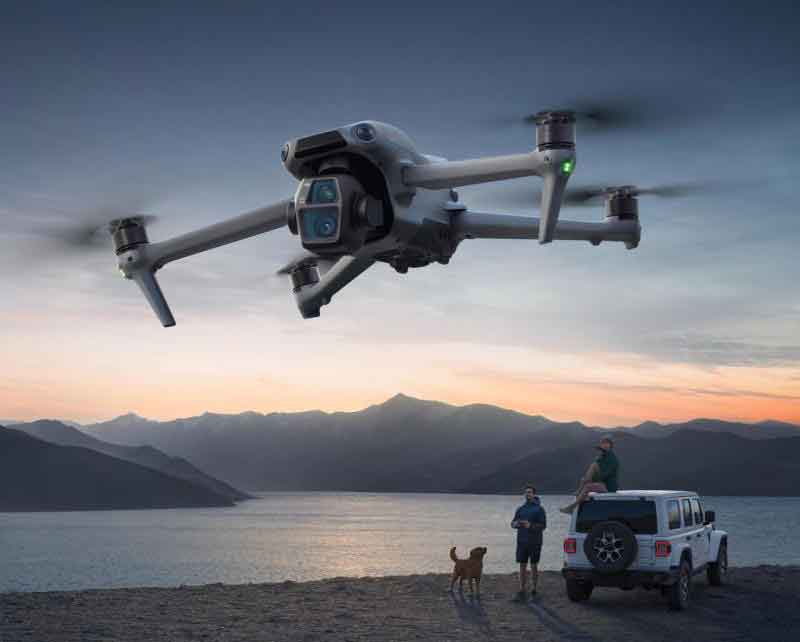
The proliferation of advanced China UAV drone platforms has significantly lowered the entry barrier for high-density LiDAR data collection. These systems combine agility, cost-effectiveness, and the capability to operate under cloud cover, unlike some satellite-based methods. However, the precision of UAV-LiDAR-derived metrics in forestry is influenced by a complex interplay of sensor parameters, flight mission planning, and environmental conditions, particularly vegetation density and terrain complexity. A thorough understanding of these factors is essential for optimizing survey protocols and ensuring data quality for critical forestry applications such as carbon stock estimation, biodiversity assessment, and harvest planning.
Theoretical Foundations and Principles of LiDAR Measurement
Fundamental Working Principle of LiDAR
At its core, a LiDAR system measures distance by calculating the time interval between the emission of a laser pulse and the reception of its reflection from a target. The fundamental formula for this time-of-flight (ToF) measurement is:
$$D = \frac{c \times T_{flight}}{2}$$
where \(D\) is the distance from the sensor to the target, \(c\) is the speed of light (approximately \(3 \times 10^8 \, m/s\)), and \(T_{flight}\) is the measured round-trip time of the pulse. Modern UAV-LiDAR systems, including those prevalent in the China UAV drone market, employ a scanning mechanism (e.g., oscillating mirror, rotating polygon) to direct laser pulses across a swath beneath the flight path, generating a dense “point cloud” of millions of geo-referenced XYZ coordinates.
Each laser pulse can interact with multiple elements within its footprint. In a forest environment, a single pulse may generate several returns: first from the top of the canopy, subsequent ones from branches and leaves at different heights, and ideally, a last return from the ground surface. This multi-return capability is what allows UAV-LiDAR to “see through” gaps in the foliage and model both the canopy surface and the underlying terrain (Digital Terrain Model – DTM). The intensity of the returned signal can also provide information about the reflective properties of the target.
Mathematical Framework for Precision Assessment
Evaluating the precision of UAV-LiDAR data involves assessing both its accuracy (closeness to true value) and its precision (repeatability). Key formulas are employed. The ranging error for a single measurement can be modeled considering systemic and random errors. A primary metric for assessing accuracy against ground truth data is the Root Mean Square Error (RMSE):
$$RMSE = \sqrt{\frac{1}{N} \sum_{i=1}^{N} (D_{measured_i} – D_{true_i})^2}$$
where \(N\) is the number of check points, \(D_{measured_i}\) is the LiDAR-derived value (e.g., elevation, tree height), and \(D_{true_i}\) is the corresponding reference value from high-accuracy ground survey.
For forestry parameters like mean canopy height or biomass, regression models are built, and their quality is evaluated using the Coefficient of Determination (\(R^2\)) and the RMSE of the estimate:
$$R^2 = 1 – \frac{SS_{res}}{SS_{tot}}$$
where \(SS_{res}\) is the sum of squares of residuals and \(SS_{tot}\) is the total sum of squares. Point cloud density, a critical factor for detail resolution, is simply calculated as the number of points per unit area (\(points/m^2\)). The ground point ratio, indicating penetration capability, is:
$$Ground\, Point\, Ratio = \frac{N_{ground}}{N_{total}} \times 100\%$$
where \(N_{ground}\) is the number of points classified as ground and \(N_{total}\) is the total number of points in the dataset.
Simulation Experiment Design for Complex Forest Environments
Defining Experimental Scenarios and Conditions
To systematically evaluate performance, we designed simulated experiments across a gradient of forest structural complexity. These scenarios are defined by canopy cover, stand density, and understory presence, reflecting typical conditions where China UAV drone LiDAR surveys are deployed.
| Scenario Name | Canopy Cover (%) | Stem Density (trees/ha) | Understory Description | Typical Complexity |
|---|---|---|---|---|
| Dense Closed-Canopy Forest | >85% | >1200 | Sparse to moderate, shaded | Very High |
| Mixed-Density Mosaic Forest | 50-85% | 400-1200 | Variable, with gaps and thickets | High |
| Sparse/Open Woodland | 20-50% | 100-400 | Often dense, sun-exposed | Moderate |
| Recently Harvested/Young Plantation | <20% | Varies | Abundant ground vegetation | Low (but high ground noise) |
The simulated UAV platform is based on common vertical take-off and landing (VTOL) or multi-rotor China UAV drone specifications, carrying a lightweight, high-repetition-rate LiDAR sensor (e.g., 550 kHz). The key variable flight parameters are altitude above ground level (AGL) and flight speed.
Measurement Methodology and Procedural Steps
The simulated survey follows a standardized workflow:
- Mission Planning: Flight lines are planned with 70% side overlap to ensure point cloud uniformity. The flight altitude (30m, 50m, 70m AGL) and speed (3 m/s, 5 m/s, 8 m/s) are varied per scenario.
- Data Acquisition Simulation: A radiative transfer model simulates laser pulse interaction with 3D tree models and terrain, generating raw LiDAR return data, integrated with simulated positional data from an onboard GNSS/IMU system.
- Data Processing: The raw data undergoes trajectory computation, point cloud generation, and geo-referencing. Noise filtering (e.g., statistical outlier removal) is applied. A ground classification algorithm (e.g., Progressive Morphological Filter) is used to separate terrain from vegetation points.
- Derived Metric Calculation: From the classified point cloud, Digital Elevation Models (DEM and DTM), Canopy Height Models (CHM), and metrics like canopy cover, gap fraction, and vertical distribution profiles are extracted.
Data Comparison and Analytical Framework
The simulated LiDAR-derived products are compared against a “ground truth” model with perfect knowledge of tree locations, heights, and terrain. The analysis focuses on five core dimensions of performance, assessed through the mathematical frameworks described earlier. Multiple replicates are run for each parameter combination to account for stochastic variability in pulse return distribution.
Analysis of Simulation Results
Comprehensive Measurement Error Analysis
The accuracy of terrain and canopy height retrieval is fundamental. The table below summarizes the RMSE for Digital Terrain Model (DTM) elevation and mean plot-level canopy height across scenarios and flight settings.
| Forest Scenario | Flight Config. (AGL, Speed) | DTM RMSE (m) | Canopy Height RMSE (m) | Primary Error Source |
|---|---|---|---|---|
| Dense Closed-Canopy | 30m, 3 m/s | 0.28 | 1.15 | Limited ground penetration, crown saturation |
| 50m, 5 m/s | 0.35 | 1.45 | Increased footprint, fewer ground returns | |
| Mixed-Density Mosaic | 50m, 5 m/s | 0.12 | 0.65 | Mixed signal from edges/gaps |
| 70m, 8 m/s | 0.18 | 0.82 | Lower point density in gaps | |
| Sparse Open Woodland | 50m, 8 m/s | 0.08 | 0.45 | Minimal; dominated by sensor noise |
| 70m, 8 m/s | 0.10 | 0.55 | Slight decrease in point density |
The results clearly show that the China UAV drone LiDAR system achieves high DTM accuracy (<0.15m RMSE) in sparse to mixed forests, even at moderate speeds and altitudes. However, in dense forests, DTM error increases significantly due to a lack of ground-reaching pulses. Canopy height accuracy is consistently lower than terrain accuracy because it is a compound metric subject to errors in both the canopy surface and ground models. The optimal configuration balances altitude for coverage and speed for efficiency, with lower/slower flights beneficial in highly complex stands.
Point Cloud Density and Effective Resolution
Point density is a primary driver of the level of detail attainable. It is inversely related to flight altitude and speed. The effective spatial resolution for feature detection (e.g., small tree crowns, branches) is a function of both point density and laser footprint size. The footprint diameter \(F\) at the ground can be approximated by:
$$F = AGL \times \tan(\beta) + d$$
where \(\beta\) is the beam divergence angle and \(d\) is the aperture diameter. For a typical miniaturized LiDAR on a China UAV drone, \(\beta\) might be 0.5-1 mrad.
| Flight Altitude (m AGL) | Flight Speed (m/s) | Avg. Point Density (pts/m²) | Laser Footprint Diameter (cm) | Effective Resolution |
|---|---|---|---|---|
| 30 | 3 | 450 | ~4 | Very High (Twig-level) |
| 50 | 5 | 180 | ~6.5 | High (Branch/Crown-level) |
| 70 | 8 | 90 | ~9 | Medium (Tree-level) |
High-density point clouds (>200 pts/m²) from low-altitude China UAV drone flights enable the application of individual tree detection and segmentation algorithms with high fidelity. As density drops, the ability to correctly delineate and measure understory trees or complex crowns diminishes rapidly.
Vegetation Penetration and Ground Point Ratio Analysis
This metric is crucial for terrain modeling. The ground point ratio (GPR) is highly scenario-dependent. In dense forests, even with multiple returns per pulse, the probability of a last return originating from the ground is low. Penetration is better at nadir and worsens with scan angle. The simulated GPR demonstrates this stark contrast:
| Forest Scenario | Avg. Ground Point Ratio (%) | Implied DTM Quality | Notes |
|---|---|---|---|
| Dense Closed-Canopy | 8-15% | Poor to Fair | DTM is an interpolation over few points, risky in steep terrain. |
| Mixed-Density Mosaic | 25-40% | Good | Sufficient ground points in gaps allow reliable DTM generation. |
| Sparse Open Woodland | 50-70% | Excellent | Ground is well-sampled, DTM accuracy approaches sensor limit. |
This analysis underscores a key limitation: UAV-LiDAR is not a panacea for terrain mapping under very dense tropical or boreal canopies. Complementary techniques or seasonal surveys (e.g., leaf-off conditions in deciduous forests) may be necessary. Advanced China UAV drone systems sometimes integrate multispectral or RGB cameras to aid in ground point identification through data fusion.
Data Integrity and Gap Analysis
Data integrity refers to the completeness and reliability of the captured point cloud. “Gaps” or data voids can occur due to signal absorption (e.g., by very dark or wet leaves), extreme off-nadir angles, or system occlusions. The integrity is quantified as the percentage of planned sampling cells (e.g., 10cm x 10cm grid) that contain at least one LiDAR return.
| Scenario | Data Integrity (%) | Nature of Data Gaps | Impact on Products |
|---|---|---|---|
| Dense Forest | ~99.5 | Micro-gaps within lower canopy layers; ground layer largely missing. | Minimal impact on CHM; major impact on understory and DTM. |
| Mixed Forest | ~99.8 | Small, scattered gaps related to specific dense foliage clusters. | Negligible impact on overall canopy and terrain models. |
| Sparse Forest | >99.9 | Virtually none related to vegetation; only at extreme scan edges. | No practical impact. |
Overall, UAV-LiDAR data integrity is exceptionally high for the upper canopy surface across all but the most attenuating conditions. The primary data “completeness” challenge is not in the X-Y plane but in the vertical (Z) dimension, specifically the lack of returns from obscured layers, which is captured by the Ground Point Ratio metric rather than planar integrity.
Computational Processing Time and System Efficiency
The workflow from raw data to actionable forestry products involves significant computation. Processing time is a function of data volume (linked to point density and area), algorithmic complexity, and hardware. The table below estimates relative processing times for a standard 1 km² block using high-performance computing.
| Processing Stage | Key Algorithm/Task | Relative Time Cost (Sparse vs. Dense) | Notes for China UAV drone Operations |
|---|---|---|---|
| Trajectory & Point Cloud Gen. | GNSS/IMU Kalman Filtering, Georeferencing | ~1x (Data volume dependent) | Standardized software, often automated on drone vendor platforms. |
| Classification & Filtering | Ground/Vegetation Separation, Noise Removal | 1x (Sparse) to 2.5x (Dense) | Denser clouds require more iterations for reliable ground filtering. |
| Derived Product Generation | DEM/DTM/CHM Interpolation, Normalization | 1x (Sparse) to 1.5x (Dense) | Scales with area and raster resolution. |
| Individual Tree Analysis (ITA) | Detection, Segmentation, Metric Extraction | 1x (Sparse) to 4x (Dense) | Most computationally intensive; complex crowns in dense forest are challenging. |
For large-area mapping with a China UAV drone fleet, the bottleneck often shifts from data acquisition to data processing. Efficient pipeline automation and the use of cloud-based processing services are critical for operational scalability. The choice to perform detailed ITA versus area-based statistical metrics represents a major decision point balancing information gain against processing time and cost.
Optimization Strategies and Future Outlook
Based on the simulation analysis, several optimization pathways emerge for deploying UAV-LiDAR in complex forests. First, adaptive flight planning is key. Instead of a uniform altitude/speed, missions could use lower altitudes over dense, high-priority stands and higher altitudes over open areas, maximizing efficiency and detail where needed. Second, sensor parameter optimization, such as using a higher repetition rate in sparse areas to increase point density and a lower rate with higher energy per pulse in dense areas to improve penetration, can be beneficial if the sensor allows dynamic control.
Third, advanced data processing techniques are crucial. Machine learning algorithms for point cloud classification (e.g., Deep Learning for ground point identification) are showing superior performance over traditional rule-based methods in complex vegetation. Data fusion is another powerful strategy; integrating photogrammetric point clouds from a co-mounted RGB camera on the China UAV drone can fill spectral information gaps and improve the accuracy of tree species classification when combined with LiDAR’s structural data.
The future of this field, particularly within the innovative China UAV drone ecosystem, points towards greater integration and intelligence. We are moving towards multi-sensor payloads (LiDAR, hyperspectral, thermal) on single UAV platforms, providing a comprehensive “forest health scan.” Real-time or onboard processing capabilities will reduce data turnaround times significantly. Furthermore, the development of swarm technologies, where multiple China UAV drone units coordinate to map large areas simultaneously, will revolutionize the scalability of high-resolution forest inventories. Continued algorithm development for extracting ecological parameters (e.g., leaf area index, coarse woody debris volume) from dense point clouds will further deepen the value proposition of UAV-LiDAR for sustainable forest management and global carbon monitoring initiatives.