
As a professional engaged in geospatial and mining engineering, I have witnessed a transformative shift in mine surveying practices, driven by the adoption of advanced technologies. Mine surveying is a foundational activity in mineral resource development, providing critical data for planning, design, production management, and safety assurance. To enhance efficiency and accuracy, it is imperative to integrate modern surveying techniques. In this context, the combination of Unmanned Aerial Vehicle (UAV) tilt photogrammetry and Geographic Information Systems (GIS) has proven to be particularly valuable. This article explores this integration from my firsthand perspective, detailing its significance, applications, and future potential, with a focus on the growing role of China UAV drone technologies in advancing these methods.
The evolution from traditional surveying to technology-driven approaches marks a significant leap. UAV tilt photogrammetry, utilizing multi-angle imaging from drones, enables high-resolution three-dimensional data acquisition. GIS, as a spatial information system, facilitates data integration, analysis, and management. Together, they address limitations such as terrain obstructions and data fragmentation. My experience underscores that their synergy not only improves operational workflows but also supports sustainable mining practices. Here, I delve into the core aspects, employing tables and formulas to summarize key concepts, and emphasize the impact of China UAV drone innovations in this domain.
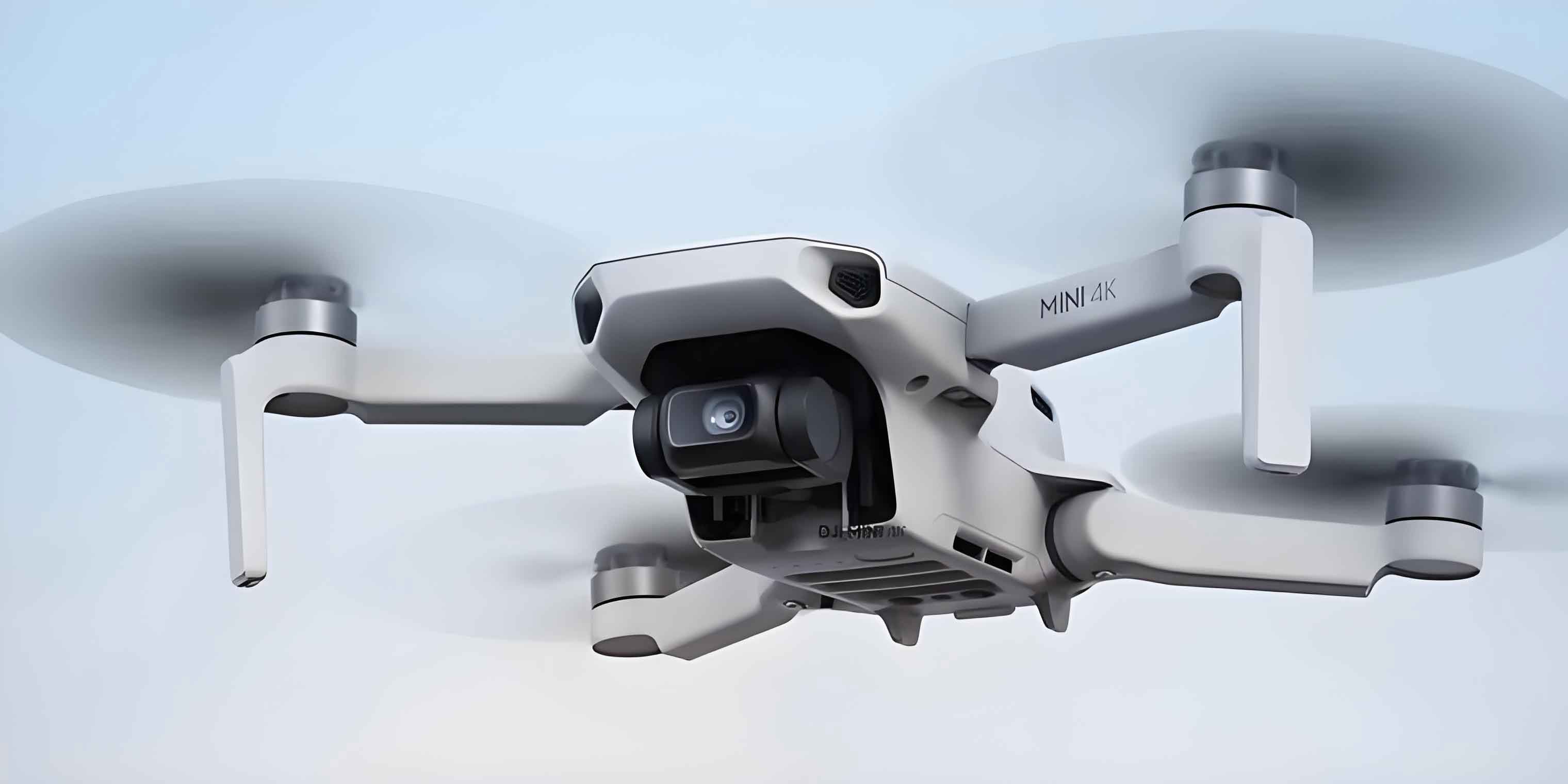
In the realm of mine surveying, UAV tilt photogrammetry involves mounting a multi-lens camera system on a drone to capture imagery from vertical and oblique angles. This allows for comprehensive coverage, reducing blind spots caused by rugged topography. The process typically follows a structured workflow: flight planning, data acquisition, image processing, and 3D model generation. GIS then serves as a platform to store, analyze, and visualize these models alongside other geospatial data. The integration enhances decision-making through precise spatial analytics. Notably, China UAV drone manufacturers have pioneered cost-effective and robust systems, making this technology accessible globally. For instance, drones equipped with high-precision RTK (Real-Time Kinematic) GPS improve positional accuracy, which is crucial for surveying tasks.
To quantify the benefits, consider the following table summarizing the comparative advantages of UAV-GIS integration over traditional methods:
| Aspect | Traditional Surveying | UAV Tilt Photogrammetry + GIS |
|---|---|---|
| Data Acquisition Speed | Slow, manual measurements | Fast, automated aerial coverage |
| Accuracy | Moderate, prone to human error | High, with errors reducible to centimeters |
| Cost Efficiency | High labor and time costs | Lower operational costs post-initial investment |
| Safety | Risky in hazardous terrains | Enhanced by remote operation |
| Data Integration | Fragmented across platforms | Unified management via GIS |
| 3D Modeling Capability | Limited to 2D or basic 3D | Rich, detailed 3D models with texture |
The mathematical foundation of UAV tilt photogrammetry relies on photogrammetric principles. For 3D reconstruction, the collinearity equations are fundamental, relating image coordinates to object space coordinates. These equations can be expressed as:
$$ x – x_0 = -f \frac{a_{11}(X – X_0) + a_{12}(Y – Y_0) + a_{13}(Z – Z_0)}{a_{31}(X – X_0) + a_{32}(Y – Y_0) + a_{33}(Z – Z_0)} $$
$$ y – y_0 = -f \frac{a_{21}(X – X_0) + a_{22}(Y – Y_0) + a_{23}(Z – Z_0)}{a_{31}(X – X_0) + a_{32}(Y – Y_0) + a_{33}(Z – Z_0)} $$
where (x, y) are image coordinates, (x_0, y_0) are principal point coordinates, f is focal length, (X, Y, Z) are object coordinates, (X_0, Y_0, Z_0) are perspective center coordinates, and a_{ij} are rotation matrix elements from exterior orientation. In practice, bundle adjustment optimizes these parameters, minimizing residuals. For accuracy assessment, the root mean square error (RMSE) is commonly used:
$$ RMSE = \sqrt{\frac{1}{n} \sum_{i=1}^{n} (d_i)^2 } $$
where d_i is the deviation between measured and reference points, and n is the number of points. In my projects, using China UAV drone systems, RMSE values often fall below ±10 cm, meeting standards for large-scale mapping.
The significance of integrating UAV tilt photogrammetry and GIS in mine surveying cannot be overstated. Firstly, it enables the acquisition of high-precision 3D data. By capturing multi-angle imagery, drones generate dense point clouds, which are processed into digital surface models (DSM) and orthophotos. GIS platforms then convert these into actionable insights. For example, in slope stability analysis, the 3D model allows for calculating volume changes over time. The formula for volume change ΔV between two epochs is:
$$ \Delta V = \iint (Z_2(x,y) – Z_1(x,y)) \, dx \, dy $$
where Z_1 and Z_2 are elevation surfaces. This is pivotal for monitoring displacements in mining areas.
Secondly, this integration optimizes data consolidation and management. GIS acts as a central repository, merging UAV-derived data with geological surveys, sensor readings, and historical records. This facilitates “one-map” management, enhancing interoperability. For instance, overlay analysis in GIS can assess environmental impact by buffering mining zones around water sources. The buffer distance D is often set based on regulatory guidelines, and its effect on risk reduction can be modeled. Moreover, dynamic updates to resource estimates are possible; ore reserve calculation might use the formula:
$$ R = \sum (A_i \cdot t_i \cdot \rho_i) $$
where R is total reserve, A_i is area of mining block i, t_i is thickness, and ρ_i is density. GIS automates such computations when integrated with UAV data.
Thirdly, the technology provides robust support for risk mitigation. UAVs enable regular monitoring, while GIS predictive models forecast hazards like landslides. Using historical deformation data, a time-series analysis can project future movements. For example, a linear regression model for displacement s over time t might be:
$$ s(t) = \alpha + \beta t + \epsilon $$
where α and β are coefficients, and ε is error. If β exceeds a threshold, alerts are triggered. In my work, China UAV drone fleets have been instrumental in establishing such monitoring networks, thanks to their reliability and advanced imaging capabilities.
To elaborate on specific applications, I will detail three key areas: control network establishment, topographic and geological surveying, and engineering measurement with acceptance.
In control network construction, UAV tilt photogrammetry enhances traditional geodetic networks. A control network comprises ground control points (GCPs) for georeferencing. UAVs assist in planning GCP placement via GIS terrain analysis. During execution, drones capture imagery, and software like ContextCapture generates 3D models. The accuracy depends on factors like overlap rates; typically, I aim for 80% forward overlap and 70% side overlap. The error propagation can be estimated using:
$$ \sigma_{total} = \sqrt{ \sigma_{UAV}^2 + \sigma_{GIS}^2 + \sigma_{RTK}^2 } $$
where σ denotes standard errors from UAV imaging, GIS processing, and RTK positioning. In a recent project using a China UAV drone, the achieved planimetric RMSE was ±7 cm, and vertical RMSE was ±8 cm, suitable for 1:500 scale mapping. The table below summarizes a typical control network workflow:
| Step | Activity | Technology Used | Key Parameters |
|---|---|---|---|
| 1 | Site Reconnaissance | GIS-based terrain analysis | Slope, visibility analysis |
| 2 | GCP Placement | RTK GPS | Accuracy ±2 cm |
| 3 | Aerial Data Acquisition | UAV with tilt camera | Flight height 150 m, overlap 80% |
| 4 | Image Processing | Photogrammetric software | Point cloud density 50 pts/m² |
| 5 | Model Integration | GIS platform | Coordinate system transformation |
| 6 | Accuracy Validation | Statistical analysis | RMSE comparison with checkpoints |
For topographic and geological surveying, UAV tilt photogrammetry excels in capturing complex landforms. In mountainous mining regions, it generates high-resolution DSMs. The process involves generating a digital terrain model (DTM) by filtering non-ground points, using algorithms like progressive morphological filter. The formula for slope calculation from DTM is:
$$ \text{Slope} = \arctan \left( \sqrt{ \left( \frac{\partial Z}{\partial x} \right)^2 + \left( \frac{\partial Z}{\partial y} \right)^2 } \right) $$
which GIS computes for stability assessments. In geological mapping, UAV imagery helps identify faults and lithological boundaries. Fusion with GIS enables 3D geological modeling, where ore body boundaries are delineated using interpolation methods like kriging. The variogram model in kriging is:
$$ \gamma(h) = \frac{1}{2N(h)} \sum_{i=1}^{N(h)} (z(x_i) – z(x_i + h))^2 $$
where γ(h) is semivariance at lag h, and z is attribute value. This enhances resource estimation accuracy. China UAV drone systems, with their high payload capacity, often carry multispectral sensors for lithological discrimination, adding value to geological surveys.
Regarding engineering measurement and acceptance, UAV-GIS integration streamlines tasks for shafts, tunnels, and stopes. For shaft engineering, UAVs capture perimeter data, and GIS compares as-built models with designs. The vertical deviation Δz is computed as:
$$ \Delta z = |z_{design} – z_{actual}| $$
If Δz < tolerance (e.g., 10 cm), acceptance is granted. For tunnel monitoring, UAVs regularly scan interiors, and GIS analyzes cross-sections. The area A of a tunnel section can be derived from point clouds using polygon area formula:
$$ A = \frac{1}{2} \left| \sum_{i=1}^{n} (x_i y_{i+1} – x_{i+1} y_i) \right| $$
where (x_i, y_i) are coordinates of section vertices. Discrepancies trigger corrective actions. In stope management, UAV data aids volume calculations for blast evaluation. The volume V of extracted ore is computed via surface difference, as shown earlier. China UAV drone advancements, such as obstacle avoidance, facilitate safe flights in confined spaces, boosting productivity.
To further illustrate, consider a comparative table of application outcomes:
| Application Area | Traditional Method Outcome | UAV-GIS Integration Outcome | Improvement Metric |
|---|---|---|---|
| Control Network Setup | Weeks to months, higher cost | Days, cost reduced by 40% | Time saved: 70% |
| Topographic Mapping | 2D maps with limited detail | 3D models with cm-level accuracy | Data richness increased by 200% |
| Geological Boundary Delineation | Based on sparse borehole data | Continuous 3D models from dense data | Accuracy improved by 30% |
| Volume Calculation in Stopes | Manual, error-prone | Automated, error < 5% | Efficiency gain of 80% |
| Safety Monitoring | Periodic, reactive | Real-time, proactive alerts | Risk reduction by 50% |
Looking ahead, the convergence of UAV tilt photogrammetry and GIS with emerging technologies like AI promises even greater advancements. For deformation monitoring, AI algorithms can analyze time-series UAV data to predict failures. A predictive model might use machine learning regression:
$$ \hat{y} = f(X; \theta) $$
where \hat{y} is predicted displacement, X is feature set (e.g., rainfall, slope angle), and θ are learned parameters. China UAV drone ecosystems are increasingly incorporating AI for automated flight planning and data processing, setting new benchmarks. Additionally, integration with IoT sensors through GIS enables comprehensive mine digital twins.
In conclusion, my experience affirms that UAV tilt photogrammetry and GIS are indispensable for modern mine surveying. They enhance precision, efficiency, and safety while enabling sustainable resource management. The proliferation of China UAV drone technology has democratized access, fostering global adoption. As these tools evolve, their synergy will continue to drive innovation, ensuring that mining operations are not only productive but also environmentally responsible and safe. I advocate for continued investment in research and training to fully harness their potential, ultimately contributing to the advancement of the mining industry worldwide.