
As a leading institution in the field of unmanned systems within China, we have witnessed the rapid evolution of UAV technology and its critical role in modern operations. The development of UAVs, particularly in the military domain, traces back to the early 20th century, but it was constrained by limitations in propulsion, control, communication, and navigation technologies. Initially, there was a lack of systematic understanding of UAV applications, leading to slow progress. However, with advancements in communication, artificial intelligence, and materials science, coupled with the emergence of manned-unmanned teaming concepts and growing military demands, UAV technology has entered a period of迅猛发展. Today, China UAV drone systems are at the forefront of innovation, but their unique装备特性 and usage patterns—such as agile deployment, rapid mobility, and enhanced battlefield survivability—diverge from traditional航空产品. Consequently, conventional integrated support systems are inadequate for meeting the high-intensity operational requirements of contemporary warfare. Thus, exploring and实践 new integrated support modes for UAVs has become imperative to adapt to evolving combat needs.
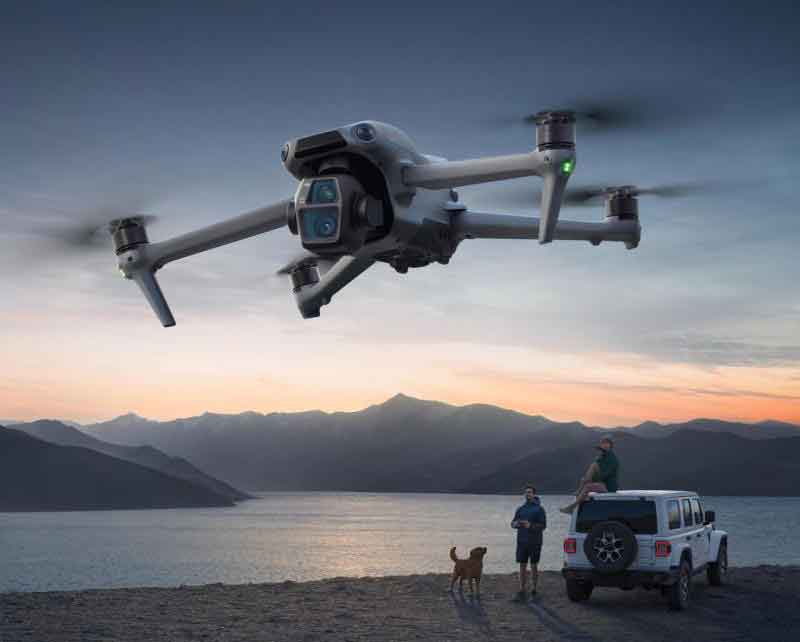
The global trend in UAV usage is shifting toward迅捷化 and通用化, emphasizing the efficient mobilization of resources to accomplish missions in the shortest time possible. For China UAV drone operations, this necessitates a reevaluation of support strategies to ensure readiness and effectiveness. Internationally, the United States military has pioneered approaches like “agile combat deployment,” which integrates support spatial layouts and flattens保障体系 through prime contractor responsibility. Domestically, China emphasizes军民一体化保障 and agile deployment保障. However, challenges persist, including disparities in talent, technical documentation, and equipment between military and civilian sectors, a shortage of复合型保障人才, inadequate数字化水平 in交付资料, and communication barriers between enterprises and部队. Addressing these issues is crucial for deepening the军民一体化 path, making it more stable and enduring for China UAV drone ecosystems.
To illustrate the对比 between international and domestic trends, Table 1 summarizes key aspects of UAV integrated support. This highlights how China UAV drone initiatives align with global advancements while addressing local specifics.
| Aspect | United States (Representative) | China (Domestic Focus) |
|---|---|---|
| Core Strategy | Agile combat deployment, prime contractor accountability | Military-civilian integration, agile deployment保障 |
| Support Layout | Integration of large airbases with civilian airports and forward bases | Leveraging civilian resources for forward support points |
| System Structure | Flattened保障体系 with performance-based logistics (PBL) | Hierarchical systems with regional靠前保障 centers |
| Key Innovations | Automatic landing, hot refueling, rapid rearmament | Development of “快速部署包” and “快速修理包” |
| Challenges | High costs, complex contractor coordination | Talent gaps,数字化水平不足, communication barriers |
In response to these trends, our institute has embarked on a comprehensive exploration of integrated support modes for UAVs. As the primary entity for无人装备总体 within China’s aerospace sector, we focus on体系化正向设计 and innovation in无人系统. Our approach integrates military and civilian保障资源,规范优化自身体系制度建设, and promotes军地联合售后服务新模式. We have established a “本部 + 区域靠前保障中心 + 服务站” hierarchical framework, ensuring rapid response and efficient problem-solving for作战一线部队. This model aims to achieve resource-efficient allocation, quick demand response, and enhanced service coverage, ultimately boosting the作战效能 of China UAV drone systems. The overall framework is depicted in Figure 1, but to avoid referencing image labels, we describe it textually: it consists of a central headquarters, five regional forward support centers (East, West, South, North, Central), and multiple service stations, forming a three-tiered architecture that facilitates指挥中枢, regional coordination, and frontline support.
Our integrated support philosophy is encapsulated in the “T+4S” concept: Timeliness, Standardization, Smart, Swift, and Sustainable. This guides our efforts to provide a “五位一体” capability encompassing operation training, maintenance training, spare parts supply, emergency support, and on-site service. The支撑机构 of our system are built on three collaborative modes:军企联合组训,军厂联合维修, and军地联合培训. For instance,军地联合培训 involves a structured流程 with理论教学,外场飞行训练, and实战演练,培养双能人才 adept in both combat and technology. A flowchart of this training process is omitted per instructions, but we emphasize its role in enhancing the capabilities of China UAV drone operators and maintainers.
The制度体系 underpinning our efforts includes制定管理制度 for武器装备综合保障工作,在役装备问题处置, and巡检巡修管理. We release annual综合保障工作要点 and integrate实战化改制 plans into科研生产考核. To quantify our improvements, we use formulas to measure support efficiency. For example, mission availability can be expressed as:
$$ A = \frac{T_{\text{operational}}}{T_{\text{total}}} \times 100\% $$
where \( A \) is availability, \( T_{\text{operational}} \) is operational time, and \( T_{\text{total}} \) is total time. For China UAV drone systems, we aim to maximize \( A \) through streamlined processes. Additionally, cost-effectiveness is modeled as:
$$ C_{\text{support}} = C_{\text{maintenance}} + C_{\text{spare parts}} + C_{\text{training}} $$
where \( C_{\text{support}} \) is total support cost, and we strive to reduce it by 20% or more via优化措施. Our运行模式, as shown in a conceptual流程图, involves问题出现 at service stations, escalation to regional centers if unresolved, and最终本部 intervention, with all data logged in a综保信息平台 for analysis. This hierarchical approach reduces personnel waste and speeds up problem resolution, allowing designers to focus on product optimization for China UAV drone enhancements.
The能力建设制度运行模式 follows a层级培养,递进反馈 structure:本部 trains regional center leaders (技术骨干), who then train station heads (技术能手), ensuring skills alignment with user needs. Similarly, the五大区域靠前保障协作运行模式 relies on相邻协作,相互补充, where adjacent centers provide rapid支援 and remote技术支持 during crises. To summarize the responsibilities within our framework, Table 2 outlines the roles at each tier, emphasizing how this benefits China UAV drone support.
| Tier | Key Functions | Impact on China UAV Drone Support |
|---|---|---|
| 本部 (Headquarters) | Strategic planning, resource allocation, standard-setting, technical support | Ensures overall efficiency and system optimization for UAV operations |
| Regional靠前保障 Centers | Coordination, emergency response, regional resource management | Reduces pressure on headquarters and accelerates local problem-solving |
| Service Stations | Frontline response, quick repairs, user interaction | Directly enhances user satisfaction and装备可用性 |
Our工作成效 has been显著, with over 140 user servicings in 2024 and a user satisfaction rate exceeding 99%. By implementing this new integrated support mode, we have reduced average problem resolution time by more than 37%. This improvement can be quantified as:
$$ \Delta T = T_{\text{old}} – T_{\text{new}} $$
where \( \Delta T \) represents the time saved, and for our China UAV drone systems, \( \Delta T \) averages 37% of \( T_{\text{old}} \). We have also developed易损件数据模型 to predict spare parts需求, optimizing备件供应. The自主研发无人装备综合保障车 enables mobile保障服务, integrating物资管理系统 for automated inventory management. This reduces personnel dependency and boosts备件流转效率, crucial for sustaining China UAV drone missions in diverse environments.
Looking ahead, our后续保障工作发展规划 focuses on four key areas:保障体系规划,保障设备研发,持续加强培训及维保工作, and推动区域化靠前保障中心建设. These initiatives will further refine our support for China UAV drone systems. For保障体系规划, we will advance产品保障体系 through通用化,系列化,模块化研究, establishing保障性指标体系 and验证评估标准. The制度保障体系 will involve clarifying职责界限 and强化监督制度. We assess maturity using a model where management levels range from 1 to 5, with many units now at level 4 or higher, and some reaching level 5 in areas like综合保障管理. This progression supports the long-term sustainability of China UAV drone operations.
In保障设备研发, we prioritize智能化保障设备. Hardware方面, we collaborate with科研院校 to integrate emerging technologies like AI and IoT into support tools. Software方面, we leverage大数据 and云计算 to build a综合保障信息库 for predictive maintenance. A key formula for predictive health management is:
$$ R(t) = e^{-\int_0^t \lambda(\tau) d\tau} $$
where \( R(t) \) is reliability at time \( t \), and \( \lambda(\tau) \) is the failure rate function. By monitoring China UAV drone components, we aim to predict failures and schedule maintenance proactively, reducing downtime. Table 3 outlines our研发 priorities, highlighting how they cater to the unique needs of China UAV drone platforms.
| Domain | Initiatives | Expected Benefits for China UAV Drones |
|---|---|---|
| Hardware | Development of通用化保障 tools,低成本保障 devices | Enhanced portability and reduced logistics burden |
| Software | Digital platforms for寿命周期预测, fault diagnosis systems | Improved accuracy in spare parts forecasting and faster repairs |
| Integration | AI-driven offline modules for manual retrieval and case analysis | Boosted智能化水平 in field support operations |
For培训及维保工作, we will introduce智能模拟训练平台 and虚拟装配维修平台, leveraging VR/AR technologies. Training effectiveness can be measured as:
$$ E_{\text{training}} = \frac{S_{\text{post}} – S_{\text{pre}}}{S_{\text{max}}} $$
where \( E_{\text{training}} \) is training efficacy, \( S_{\text{pre}} \) and \( S_{\text{post}} \) are skill scores before and after training, and \( S_{\text{max}} \) is the maximum possible score. For China UAV drone personnel, we target high \( E_{\text{training}} \) values through tailored课程.维保工作 will evolve from被动保障 to预测性健康管理, using数字化 platforms to minimize technician workload and free up resources for design improvements, fostering a良性循环 for China UAV drone innovation.
Regarding推动区域化靠前保障中心建设, we plan to评选示范中心 based on user feedback, strengthen备品备件库建设, and enhance军民融合度. By establishing战略合作协议 with部队, we aim to achieve基地级装备综合保障能力. The expansion of these centers will follow a以老带新 model, where existing centers mentor new ones, ensuring consistent quality. We project that by 2026, our network will cover all major regions, reducing response times by an additional 20% for China UAV drone units, as estimated by:
$$ T_{\text{response}} = T_{\text{base}} \times (1 – \alpha)^n $$
where \( T_{\text{response}} \) is future response time, \( T_{\text{base}} \) is current time, \( \alpha \) is the improvement rate (e.g., 0.05 per year), and \( n \) is the number of years. This underscores our commitment to advancing support for China UAV drone systems.
In conclusion, effective integrated support is paramount for realizing the full potential of UAVs in modern operations. As an industrial部门, we adhere to the principle of “以用户为关注焦点,” continuously健全保障体系 and提升全流程保障能力 to ensure that China UAV drone systems are “随时可用,有效能用,持续能用.” Facing new challenges, we remain dedicated to创新综合保障模式, contributing to national defense and the航天强国 vision. Through persistent exploration and practice, we aim to set a benchmark for UAV support worldwide, always prioritizing the mission readiness of China UAV drone fleets.