
The sustained development of China’s expressway network, now a critical artery supporting socio-economic growth, faces a persistent challenge: frequent emergencies that threaten public safety and disrupt traffic flow. Official statistics indicate over 200,000 incidents annually on Chinese expressways, with delayed responses contributing to 32% of secondary accidents. Traditional manual patrols, covering less than 15% of the network with an average event confirmation time exceeding 12 minutes, are demonstrably inadequate. This reality underscores an urgent need for rapid and precise incident detection and response systems.
National strategies like the “Outline for Building a Country with Strong Transportation Network” and the “Digital Transportation Development Plan” provide robust policy support, emphasizing enhanced emergency response capabilities and the construction of integrated sky-land information collection networks. Concurrently, technological foundations have matured. The nationwide ETC gantry coverage has reached 98%, establishing a pervasive infrastructure for data collection and transmission. In parallel, the China UAV drone industry has flourished, surpassing a market scale of 100 billion yuan in 2023, with significant advancements in performance and functionality creating fertile ground for synergistic applications.
This article expands the core concept of “Vehicle-Road Cooperation” from a theoretical perspective. While traditional frameworks focus on information exchange between vehicles and roadside infrastructure, we innovatively integrate China UAV drone technology, constructing a three-dimensional “Air-Road-Vehicle” perceptual theory. This framework facilitates comprehensive information acquisition and interaction from aerial, roadway, and vehicular dimensions, enriching the research scope of cooperative systems and offering a novel perspective for intelligent transportation theory.
In practical application, the dynamic “gap-filling” capability of China UAV drones upgrades the static information dissemination model of ETC systems into a dynamic emergency command architecture. Previously focused primarily on toll collection, ETC’s information utility was limited. The integration of drones enables more timely and comprehensive situational awareness. By synthesizing foundational ETC data with real-time aerial intelligence, a closed-loop management process of “discovery-disposal-service” is achieved, significantly enhancing the efficiency of emergency response and service quality on expressways, providing a viable solution for ensuring safety and mobility.
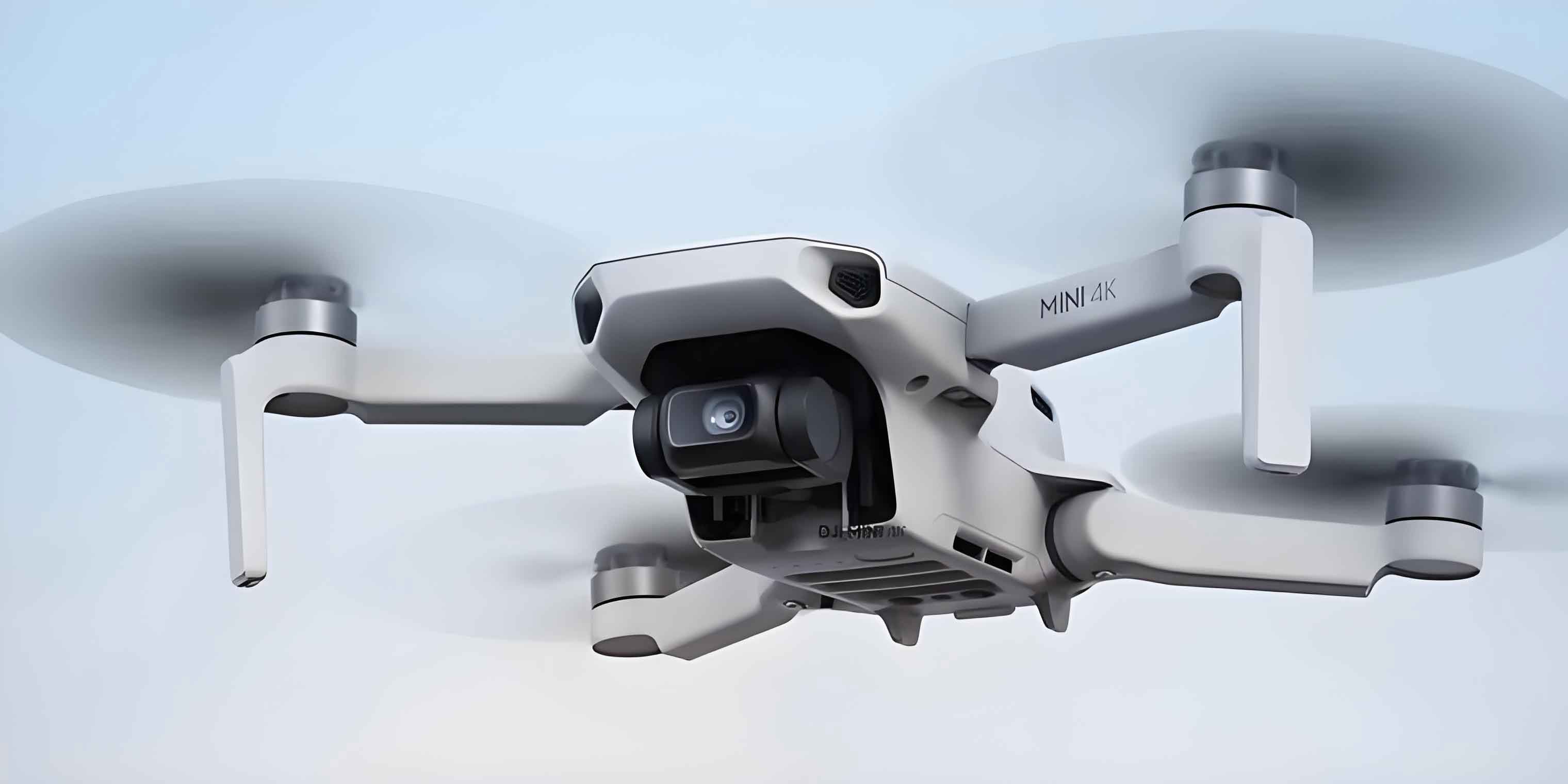
Current Technological Landscape and Limitations of “Traffic Sentinel” Systems
Existing Technological Solutions
The current expressway monitoring ecosystem in China relies on several established technologies, each with specific capabilities and roles, as summarized below:
| Technology Component | Key Specifications & Capabilities | Primary Function |
|---|---|---|
| ETC Gantry Network | ~100,000 units deployed; DSRC 5.8GHz communication; ~800m coverage radius per gantry. | Vehicle passage time/speed data collection; foundational traffic flow monitoring. |
| AI Video Analytics | Capable of identifying 12 common event types; average recognition time of 2.3 seconds. | High-speed, automated detection of traffic anomalies (e.g., congestion, stopped vehicles). |
| Cross-Province Information Platform | Average information coordination and dissemination time of 17 seconds. | Regional data integration and synchronized information release across jurisdictional boundaries. |
Analysis of Limitations
Despite these advancements, significant gaps remain, particularly for a robust nationwide emergency response system:
- Coverage Blind Spots: In complex terrains like mountain tunnels and long-span bridges, the coverage rate of existing fixed monitoring technologies is less than 60%. These areas are often high-risk zones, and the lack of surveillance leads to delayed incident detection.
- Dependency on Manual Verification: The process of human confirmation for AI-detected events consumes 58% of the total incident handling timeline, creating a critical bottleneck that severely hampers response speed.
- Limited Information Dimension from ETC: ETC-based information dissemination is predominantly textual or auditory, lacking multi-dimensional, real-scene visual data. This impedes accurate situational assessment for both command decision-makers and drivers.
Technical Pathway for UAV-Empowered “Traffic Sentinel” Systems
UAV-ETC Synergistic Architecture Design
The proposed synergistic architecture is structured into three layers: Perception, Transmission, and Application.
Perception Layer: This foundational layer employs a multi-sensor fusion strategy. China UAV drones are equipped with a suite of advanced sensors:
- A 4K visible-light camera (resolution: $3840 \times 2160$) for high-definition ground imaging.
- An infrared thermal imager (precision: $0.1^{\circ}C$) for operations in low-light or adverse weather, detecting heat signatures.
- A LiDAR sensor (point cloud density: $100\ \text{points}/m^2$) for precise distance measurement and 3D modeling, generating accurate spatial data represented as point clouds $P = \{p_i(x_i, y_i, z_i, I_i) | i=1,…,N\}$.
Simultaneously, ETC gantries are enhanced with integrated meteorological sensors (e.g., wind speed accuracy: $\pm0.3\ m/s$) and microwave radars (vehicle flow detection error: $<5\%$) to monitor ambient and traffic flow conditions.
Transmission Layer: This layer ensures robust data transfer. A 5G private network provides low-latency ($\leq10ms$) backhaul for 1080P video streams. Edge computing micro-servers deployed at gantries (computing power: $20\ TOPS$) perform local data preprocessing (e.g., preliminary video analysis), reducing bandwidth pressure and latency. The data flow $D_{transmit}$ from Perception to Application layers can be modeled as a function of bandwidth $B$, latency $L$, and preprocessing efficiency $\eta$: $$D_{transmit} = \eta \cdot \int_{t_0}^{t_1} B(t) \cdot \delta(L(t)) dt$$ where $\delta$ is a latency-dependent throughput factor.
Application Layer: Here, multi-source data is fused and analyzed. A core component is a multi-object tracking model based on YOLOv8, achieving an event recognition accuracy of 97.3% in tests. The model processes input image tensors $I \in \mathbb{R}^{H \times W \times C}$, extracting features through convolutional and pooling operations. The detection process involves predicting bounding boxes and class probabilities. Non-Maximum Suppression (NMS) is applied to eliminate redundant detections, finalizing the output of recognized events $E_{detected}$.
Key Technological Breakthroughs
1. Dynamic Path Planning Algorithm: Essential for efficient China UAV drone deployment, this algorithm plans optimal routes considering event severity $S_e$ and traffic flow density $\rho_t$. Based on an improved Dijkstra’s algorithm, it uses a priority function $P(e)$ to determine task order:
$$P(e) = \alpha \cdot S_e + \beta \cdot \rho_t(e)$$
where $\alpha$ and $\beta$ are weighting coefficients. The algorithm, via a `shortest_path_with_recharge` function, calculates the minimal-time path that includes necessary charging points, ensuring endurance for sustained operations.
2. UAV-to-OBU Mobile Interconnection: Drones equipped with DSRC modules can establish direct links with Vehicle On-Board Units (OBUs). This enables real-time推送 of situational alerts and dynamic rerouting suggestions $R_{dynamic}$ to drivers, enhancing in-vehicle navigation and safety.
3. High-Precision Digital Twin Road Network: Using UAV oblique photogrammetry, a 1:1000 scale digital twin is constructed. The process involves capturing multi-angle images, generating dense point clouds $P_{cloud}$, and converting them into a textured 3D mesh model $M_{twin}$. This model supports emergency scenario simulations, allowing for the evaluation of different response strategies $Q_{response}$ before real-world implementation, optimizing decision-making. The model’s accuracy can be assessed by the geometric error $E_g$ between the model and ground truth data:
$$E_g = \frac{1}{N} \sum_{i=1}^{N} || M_{twin}(p_i) – GT(p_i) ||$$
where $GT(p_i)$ is the ground truth coordinate for point $i$.
Typical Application Scenarios for UAVs in Emergencies
Accident Emergency Response
The workflow of a China UAV drone in a multi-vehicle collision scenario demonstrates the system’s efficacy.
| Response Phase | Action & Technical Performance |
|---|---|
| Event Trigger & Dispatch | AI detection or report triggers UAV launch from nearest depot or charging station. |
| Rapid Arrival | UAV arrives on scene in 3 minutes 15 seconds using dynamic path planning. |
| Precise Situational Assessment | • High-accuracy positioning ($\pm0.5\ m$). • Victim count via image recognition (error $\leq 1$ person). • Analysis of traffic density in a 5km downstream zone. |
| Dynamic Response & Guidance | Real-time rerouting plans $R_{dynamic}(t)$ are generated and pushed to approaching vehicles via ETC DSRC link, updating based on live congestion analysis. |
Extreme Weather Early Warning
China UAV drones act as mobile weather sentinels. The technical workflow is systematic:
| Step | Process |
|---|---|
| 1. Detection | UAV-mounted sensors detect threshold conditions (e.g., visibility $V < 50\ m$). |
| 2. Trigger | Automated trigger of a geofenced warning zone $Z_{warning}$ around the affected area. |
| 3. Dissemination | • OBU audio alerts broadcast to vehicles inside $Z_{warning}$. • Coordination with Variable Message Signs (VMS) to display warnings. |
Challenges and Countermeasures for Synergistic Application
The integration of China UAV drones into expressway systems faces distinct technical hurdles, their impacts and proposed solutions are outlined below:
| Challenge Category | Specific Manifestation | Impact Level | Proposed Countermeasure |
|---|---|---|---|
| Communication Stability | Signal interruption rate >30% in complex terrain (mountains). | High (★★★★★) | Hybrid Network Solution: 5G (80% coverage) + Tethered UAV (extends range 5km) + Satellite (emergency backup). |
| Data Security | Risk of sensitive video footage leakage. | High (★★★★☆) | Blockchain-Based Evidence Storage: Hash values $H(Video)$ of drone footage are recorded on-chain, ensuring immutability and traceability. |
| Energy Endurance | Operational time < 30 minutes under multi-task loads. | Medium (★★★☆☆) | Swarm Energy Management: “Master-Slave” UAV architecture with in-flight wireless charging接力. Endurance is extended as $T_{total} = T_{master} + \sum_{k=1}^{n} \gamma_k \cdot T_{slave_k}$, where $\gamma_k$ is the efficiency of the k-th recharge接力. |
Future Development Directions
The evolution of China UAV drone technology in expressway management points toward more advanced integrations:
- Three-Level Communication Protocol: Developing standardized protocols for seamless interaction between “UAV – Roadside Unit (RSU) – Vehicle Terminal.” This will enable drones to directly guide connected and autonomous vehicles (CAVs) along dynamically optimized paths $Path_{opt}$ calculated in real-time: $$Path_{opt} = \arg\min_{P} \left( \omega_1 \cdot T(P) + \omega_2 \cdot C(P) + \omega_3 \cdot R(P) \right)$$ where $T$ is travel time, $C$ is congestion cost, $R$ is risk, and $\omega$ are weights.
- Heavy-Lift Cargo Drones for Logistics: Deploying drones with payloads up to 50kg, cruise speed of 80 km/h, and delivery precision of $\pm0.3\ m$ for emergency supply delivery (medical kits, equipment) to isolated accident sites, drastically improving first-response effectiveness.
- Autonomous Operations: Breaking through bottlenecks in autonomous take-off/landing on mobile platforms and multi-drone swarm control, paving the way for fully intelligent, unmanned traffic emergency management systems.
Conclusion
The “Air-Road-Vehicle”协同 system constructed through the deep integration of dynamically感知 China UAV drones and static ETC infrastructure achieves transformative breakthroughs in expressway emergency response:
- Spatio-Temporal Dimension Expansion: Monitoring blind spots are reduced by 82%, and emergency response time is shortened to within 5 minutes, enabling effective full-network, all-weather surveillance.
- Disposal Capability Upgrade: Multi-dimensional information fusion increases decision-making accuracy to 92%, providing a scientific basis for precise rescue operations.
- Service Model Innovation: Information interaction volume via OBU terminals triples, achieving a user satisfaction rate of 91%, significantly enhancing the travel experience and safety perception for the public.
The continuous advancement of China UAV drone technology, coupled with evolving regulations and standards, promises to solidify the role of ETC-UAV synergy. It stands as a cornerstone for the future of intelligent, resilient expressway management in China, providing robust technical support for safeguarding national transportation arteries and ensuring public safety.