
The quantification of Aboveground Biomass (AGB) in alpine grasslands is critical for assessing ecosystem health, carbon sequestration potential, and sustainable grazing management. While the integration of ground surveys and satellite remote sensing provides a foundational approach, a persistent challenge is the spatial scale mismatch between field-measured quadrats (often 0.25–1 m²) and satellite pixels (e.g., 30×30 m for Landsat). This discrepancy can introduce significant uncertainty in AGB estimation models. In recent years, Unmanned Aerial Vehicle (UAV) technology, particularly China UAV drone platforms, has emerged as a powerful tool to bridge this scale gap. This study presents a robust upscaling framework that leverages China UAV drone aerial photography to seamlessly connect field measurements with satellite data for accurate, large-scale AGB mapping in the ecologically fragile Qilian Mountains.
Alpine grasslands on the Qinghai-Tibet Plateau, often termed the “Third Pole,” constitute a unique and vital ecosystem. They play an indispensable role in global carbon cycling, climate regulation, water conservation, and biodiversity maintenance. However, widespread degradation due to climate change and anthropogenic pressure threatens these functions. AGB, representing grassland productivity and carrying capacity, is a key indicator for monitoring ecosystem status. Traditional field methods, though accurate, are destructive, labor-intensive, and impractical for large areas. Satellite remote sensing enables broad-scale monitoring but suffers from mixed-pixel effects and coarse spatial resolution, limiting direct correlation with small-scale field plots.
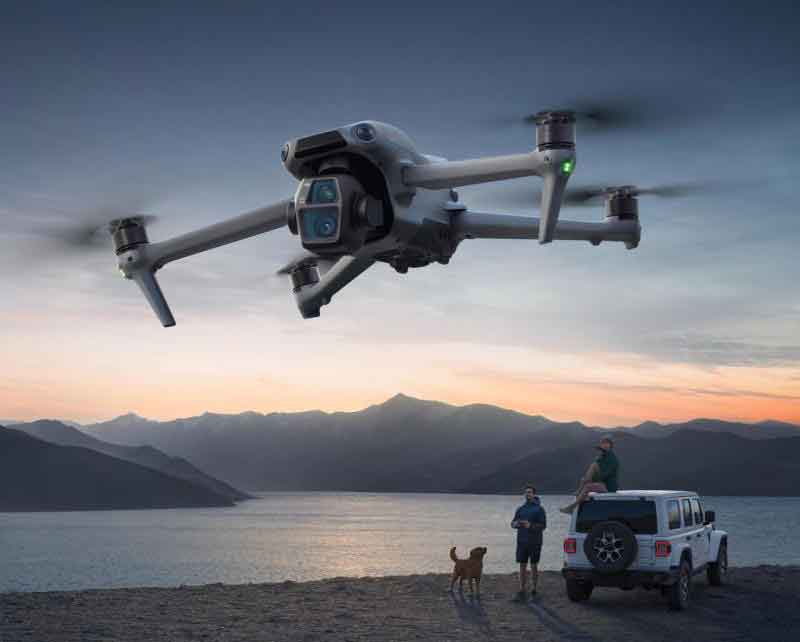
The advent of cost-effective China UAV drone systems equipped with high-resolution cameras offers a transformative solution. These drones can rapidly capture centimeter-scale imagery over hectare-sized plots, providing a critical intermediate scale. This aerial photo scale (e.g., 25×36 m) effectively mediates between the fine detail of field quadrats and the broad coverage of satellite pixels. This study hypothesizes that integrating vertical vegetation structure (height) with horizontal coverage, both obtainable via China UAV drone surveys and ground sampling, can correct for the saturation effect common in coverage-only biomass models and significantly enhance estimation accuracy across scales.
1. Materials and Methods
1.1 Study Area and Data Acquisition
The research was conducted in the Qilian Mountains, located on the northeastern edge of the Qinghai-Tibet Plateau in China. This region serves as a crucial ecological security barrier and water source area. The terrain elevates from southeast to northwest, with altitudes ranging from approximately 1,750 to 5,770 meters. Characterized by a continental plateau climate, the area exhibits significant zonation in temperature and precipitation. The diverse topography and climate support various grassland types, including Alpine Meadow, Alpine Steppe, and Temperate Steppe.
Field campaigns were executed during the peak growing seasons (July-August) of 2023 and 2024. We utilized 65 long-term monitoring plots (200×200 m each). At each plot, a China UAV drone platform, specifically a DJI Mavic 2 Pro, was deployed following predefined GRID flight paths using our FragMAP system. The drone was flown at a constant altitude of 20 m with a speed of 4 m/s, capturing overlapping RGB images. Each image covered approximately 25×36 m of ground area with a resolution of about 1 cm per pixel.
Synchronized with the China UAV drone flights, ground surveys were conducted. Within the area covered by a single drone image, six randomly placed 0.5×0.5 m quadrats were established. In each quadrat, we measured vegetation height (as the average height of reproductive shoots and leaf tips), took a nadir photograph for cover analysis, and then clipped all aboveground vegetation. The harvested biomass was oven-dried at 65°C to constant weight to determine dry AGB (g/m²).
Satellite data were acquired from the Google Earth Engine (GEE) platform. We extracted surface reflectance values from Landsat 8 Collection 2 Tier 1 (LANDSAT/LC08/C02/T1_L2) for the corresponding July-August periods. Key vegetation indices were calculated, including the Normalized Difference Vegetation Index (NDVI) and the Enhanced Vegetation Index (EVI):
$$ NDVI = \frac{NIR – Red}{NIR + Red} $$
$$ EVI = 2.5 \times \frac{NIR – Red}{NIR + 6 \times Red – 7.5 \times Blue + 1} $$
where \(NIR\), \(Red\), and \(Blue\) represent the top-of-atmosphere reflectance values for the near-infrared, red, and blue bands, respectively. We computed the mean (\(NDVI_{mean}\)), maximum (\(NDVI_{max}\)), and minimum (\(NDVI_{min}\)) NDVI values for the season. Additionally, a 30m resolution Digital Elevation Model (DEM) was used to derive topographic variables: elevation (\(DEM\)), slope (\(Slope\)), and aspect (\(Aspect\)).
1.2 Image Processing and Variable Extraction
Quadrant-Scale Vegetation Cover: The nadir photographs from the 0.5×0.5 m quadrats were processed using a thresholding method based on the Excess Green Index (\(ExG\)). The ExG was calculated for each pixel, and an optimal threshold was determined to separate green vegetation from soil/background. The vegetation cover (\(Cover_{quadrat}\)) was computed as the percentage of pixels classified as vegetation.
Aerial Photo-Scale Vegetation Cover: The high-resolution RGB images captured by the China UAV drone were processed using a semi-automated software tool (Pixel Classifier Manual). This involved initial segmentation using color space thresholds in the OpenCV library, followed by manual correction to ensure accuracy. The cover for each aerial photo (\(Cover_{photo}\)) was calculated as the proportion of the image area classified as vegetated.
Modeling Variables: The key predictive variables at different scales are summarized below.
| Scale | Predictor Variables | Source | Target Variable |
|---|---|---|---|
| Quadrat (0.25 m²) | \(Cover_{quadrat}\), Vegetation Height (\(H_{quadrat}\)) | Ground Survey & Quadrat Photo | Measured AGB (\(AGB_{quadrat}\)) |
| Aerial Photo (~900 m²) | \(Cover_{photo}\), Mean \(H_{quadrat}\) from linked quadrats | China UAV Drone Photo & Aggregated Ground Data | Estimated AGB (\(AGB_{photo}\)) |
| Satellite Pixel (900 m²) | \(NDVI_{mean}\), \(NDVI_{max}\), \(NDVI_{min}\), \(EVI\), \(DEM\), \(Slope\), \(Aspect\) | Landsat 8 & ASTER GDEM | Estimated \(AGB_{photo}\) (Upscaled target) |
1.3 Upscaling Estimation Framework and Modeling
The core of this study is a two-step upscaling framework powered by the Random Forest (RF) machine learning algorithm. RF is an ensemble method known for its high accuracy and resistance to overfitting, making it ideal for ecological modeling with multiple predictors.
Step 1: From Quadrat to Aerial Photo Scale. An RF model (\(RF_1\)) was trained using ground truth data to establish the relationship between vegetation structure and AGB at the finest scale:
$$ AGB_{quadrat} = RF_1(Cover_{quadrat}, H_{quadrat}) $$
This model was then applied to predict AGB for each China UAV drone aerial photo. The predictors for a photo were its extracted \(Cover_{photo}\) and the average vegetation height (\( \overline{H}_{photo} \)) calculated from all ground quadrats located within that specific photo’s footprint.
$$ AGB_{photo} = RF_1(Cover_{photo}, \overline{H}_{photo}) $$
Step 2: From Aerial Photo to Satellite Pixel Scale. The \(AGB_{photo}\) estimates, representing the ~900 m² scale, were used as the training target for a second RF model (\(RF_2\)). This model learned the relationship between satellite-derived metrics and the China UAV drone-based AGB:
$$ AGB_{photo} = RF_2(NDVI_{mean}, NDVI_{max}, NDVI_{min}, EVI, DEM, Slope, Aspect) $$
The trained \(RF_2\) model was subsequently applied to every Landsat pixel (30×30 m) across the study area to generate a wall-to-wall AGB map.
For both RF models, data were split into 70% for training and 30% for independent validation. Model performance was evaluated using the Coefficient of Determination (\(R^2\)) and the Root Mean Square Error (\(RMSE\)):
$$ R^2 = 1 – \frac{\sum_{i=1}^{n} (\hat{y_i} – y_i)^2}{\sum_{i=1}^{n} (\hat{y_i} – \bar{y})^2} $$
$$ RMSE = \sqrt{\frac{\sum_{i=1}^{n} (\hat{y_i} – y_i)^2}{n}} $$
where \(y_i\) is the measured value, \(\hat{y_i}\) is the predicted value, \(\bar{y}\) is the mean of measured values, and \(n\) is the number of samples. A permutation test was used to assess the statistical significance of the models.
2. Results
2.1 Data Characteristics and Bivariate Relationships
The measured AGB across all quadrats ranged from 0 to 275 g/m², with a mean of approximately 110 g/m². Vegetation cover showed a wide distribution, while vegetation height was strongly right-skewed, with most values below 7 cm. Initial analysis revealed a fundamental challenge. The relationship between AGB and vegetation cover alone followed a saturating, non-linear trend at both scales. For example, at the aerial photo scale, cover alone explained only 61% of the AGB variation, and the curve flattened at higher cover values, indicating a loss of sensitivity.
Introducing vegetation height as a multiplicative factor (\(Cover \times Height\)) transformed this relationship. The product showed a strong, linear correlation with AGB, significantly improving the explanatory power. This highlights the critical role of 3D structural information, which the China UAV drone survey context helps to integrate, in overcoming the saturation effect inherent in 2D cover-based models.
| Scale | Relationship | Best-Fit Model | \(R^2\) |
|---|---|---|---|
| Quadrat | AGB vs. Cover | Power Function | 0.39 |
| Quadrat | AGB vs. (Cover × Height) | Linear Function | 0.47 |
| Aerial Photo | AGB vs. Cover | Power Function | 0.61 |
| Aerial Photo | AGB vs. (Cover × Height) | Linear Function | 0.74 |
2.2 Model Performance at Different Scales
The Random Forest models performed robustly at both upscaling steps. The quadrat-scale model (\(RF_1\)) achieved a validation \(R^2\) of 0.72 and an \(RMSE\) of 38.77 g/m². When applied to generate China UAV drone photo-scale AGB, the model effectively transferred the local relationship to a larger spatial extent.
The aerial photo-scale model (\(RF_2\)), which linked China UAV drone-derived AGB to satellite data, performed even better. It yielded a high validation \(R^2\) of 0.78 and a lower \(RMSE\) of 25.41 g/m². The increase in sample size (from quadrats to photos) and the integration of multi-source data (UAV structure + satellite phenology/topography) contributed to this enhanced and stable performance. Both models were statistically significant (P < 0.001).
| Model (Scale) | Training Sample Size | Validation Sample Size | Validation \(R^2\) | Validation \(RMSE\) (g/m²) |
|---|---|---|---|---|
| RF₁ (Quadrat → Photo) | 283 | 122 | 0.72 | 38.77 |
| RF₂ (Photo → Pixel) | 646 | 278 | 0.78 | 25.41 |
2.3 Spatial Distribution of Aboveground Biomass
The final application of the upscaling framework produced a spatially continuous AGB map for the grassland areas of the Qilian Mountains at a 30m resolution. The predicted AGB values ranged from 0 to 250 g/m², with an average of 110 g/m², closely matching the range and mean of the field measurements. The map revealed a clear spatial pattern: higher AGB levels are predominantly concentrated in the southeastern parts of the mountain range, while the northwestern regions are characterized by lower biomass. This gradient aligns with known ecological zonation, reflecting changes in climate (precipitation and temperature) and dominant vegetation types from southeast to northwest.
3. Discussion
3.1 The Critical Role of Vegetation Height
Our results unequivocally demonstrate that incorporating vegetation height is paramount for accurate AGB estimation in dense alpine swards. The saturation effect observed when using only cover is a well-known limitation in remote sensing of productive vegetation. The China UAV drone-based framework allows for the efficient integration of this vertical dimension. The product \(Cover \times Height\) serves as a proxy for vegetation volume, a more direct correlate of biomass than area alone. This is particularly important in alpine grasslands dominated by low-stature, densely packed sedges and grasses, where high cover does not necessarily equate to high biomass if the sward is short. While advanced China UAV drone sensors like LiDAR can directly measure height, our study confirms that even using simple, ground-measured height within a China UAV drone spatial context brings substantial improvements. Future work with China UAV drone platforms should prioritize developing reliable photogrammetric or LiDAR-based height retrieval methods for low vegetation to fully automate the upscaling pipeline.
3.2 Bridging the Scale Gap with China UAV Drone Technology
The success of our upscaling framework hinges on the China UAV drone’s ability to provide a perfectly intermediate spatial scale. Satellite pixels often encapsulate high heterogeneity, making direct linkage to point-based field samples tenuous. The China UAV drone photo, covering nearly 1,000 m², aggregates this fine-scale heterogeneity into a unit that is far more representative of a Landsat pixel’s content. This solves the fundamental sample-to-pixel mismatch problem. The superior performance of the photo-to-pixel model (\(RF_2\)) compared to the quadrat model (\(RF_1\)) can be attributed to this scale congruence and the larger, more robust training dataset it enabled. By acting as this essential “bridge,” the China UAV drone technology significantly reduces the error propagated during the upscaling process, leading to a more reliable regional biomass map. This approach is far more efficient and less destructive than attempting to intensively sample at the satellite pixel scale on the ground.
3.3 Implications and Limitations
The generated AGB map, with an average of 110 g/m², is consistent with previous regional estimates, validating our methodology. The identified southeast-northwest biomass gradient provides a quantitative baseline for monitoring changes due to climate or land use. The framework is highly operational; once the RF models are trained, they can be periodically updated with new satellite imagery to monitor AGB dynamics, provided the structural relationships remain stable or are re-calibrated.
This study has limitations that point to future research directions. First, while ground-measured height was used, developing accurate China UAV drone-based height models for alpine grassland remains a technical challenge that needs addressing for full scalability. Second, the models were trained on peak-season data; their performance for estimating biomass in early growth or senescent stages requires verification. Third, we focused on the Random Forest algorithm. A comparative analysis with other advanced machine learning techniques (e.g., XGBoost, Deep Learning) could potentially further optimize accuracy. Finally, expanding the framework to incorporate multi-spectral or hyperspectral data from China UAV drone sensors could provide additional predictive power related to plant biochemical traits.
4. Conclusion
This study develops and validates a practical two-step upscaling framework for estimating alpine grassland aboveground biomass over large areas. The core innovation is the strategic use of China UAV drone aerial photography to seamlessly link high-precision ground measurements with broad-coverage satellite imagery. We conclusively show that integrating vegetation height with cover is essential to overcome model saturation and achieve high estimation accuracy. The Random Forest models performed excellently at both the quadrat-to-photo and photo-to-pixel transitions, ultimately producing a plausible and accurate 30m resolution AGB map for the Qilian Mountains that reflects the region’s eco-climatic gradient.
The research underscores the transformative role of China UAV drone technology in modern ecological remote sensing. By effectively filling the critical spatial scale gap between traditional field surveys and satellite observations, China UAV drones have become an indispensable tool for reliable, large-scale ecosystem monitoring. This upscaling framework provides a robust methodological foundation for the sustainable management of alpine grassland resources, offering a powerful means to assess productivity, monitor degradation, and inform climate adaptation strategies on the Qinghai-Tibet Plateau and in similar fragile ecosystems worldwide.