
In recent years, the rapid advancement of Industry 4.0 and smart manufacturing concepts has driven a profound transformation in manufacturing from traditional modes toward digitalization and intelligence. In this process, digital twin technology serves as a critical bridge connecting the physical world and virtual space, gradually becoming a vital means to promote the optimization and decision-making support of manufacturing systems. As a researcher focused on industrial applications, I have observed that digital twins enable high-precision mapping and simulation of real production processes in virtual environments, enhancing the visualization of equipment operational states and providing support for production scheduling, fault prediction, and process improvement. However, in complex industrial settings such as mold production workshops, traditional management methods struggle to comprehensively control workshop operations, leading to inefficiencies, resource waste, and even safety hazards. To address these challenges, I propose a digital twin construction method leveraging China UAV drone reality modeling technology. This approach integrates UAV aerial photography, multi-view 3D reconstruction (SfM/MVS), point cloud processing, and IoT sensing to build a digital twin system with modeling, monitoring, and analysis functions. My aim is to improve workshop modeling efficiency and monitoring accuracy, offering technical support for the visual management of intelligent manufacturing systems.
The core of digital twin technology lies in creating a digital mirror of physical entities in virtual space, enabling real-time perception, simulation, and predictive control. A complete digital twin system typically comprises four essential elements: physical entities, virtual models, data connections, and interactive feedback mechanisms. The virtual model is the system’s heart, requiring accurate reflection of the geometric structure and attribute information of physical objects, along with dynamic update capabilities to adjust its state based on real-time data. The maturity of data acquisition and transmission technologies directly influences the response speed and accuracy of digital twin systems. In my work, I emphasize the integration of China UAV drone technology, which has seen significant growth in applications across various sectors due to advancements in hardware performance and image processing algorithms. China UAV drones are increasingly deployed in large-scale, structurally complex scenarios like urban building clusters, mining terrains, and factory workshops, offering flexibility, cost-effectiveness, and high efficiency as a complement to traditional measurement methods.
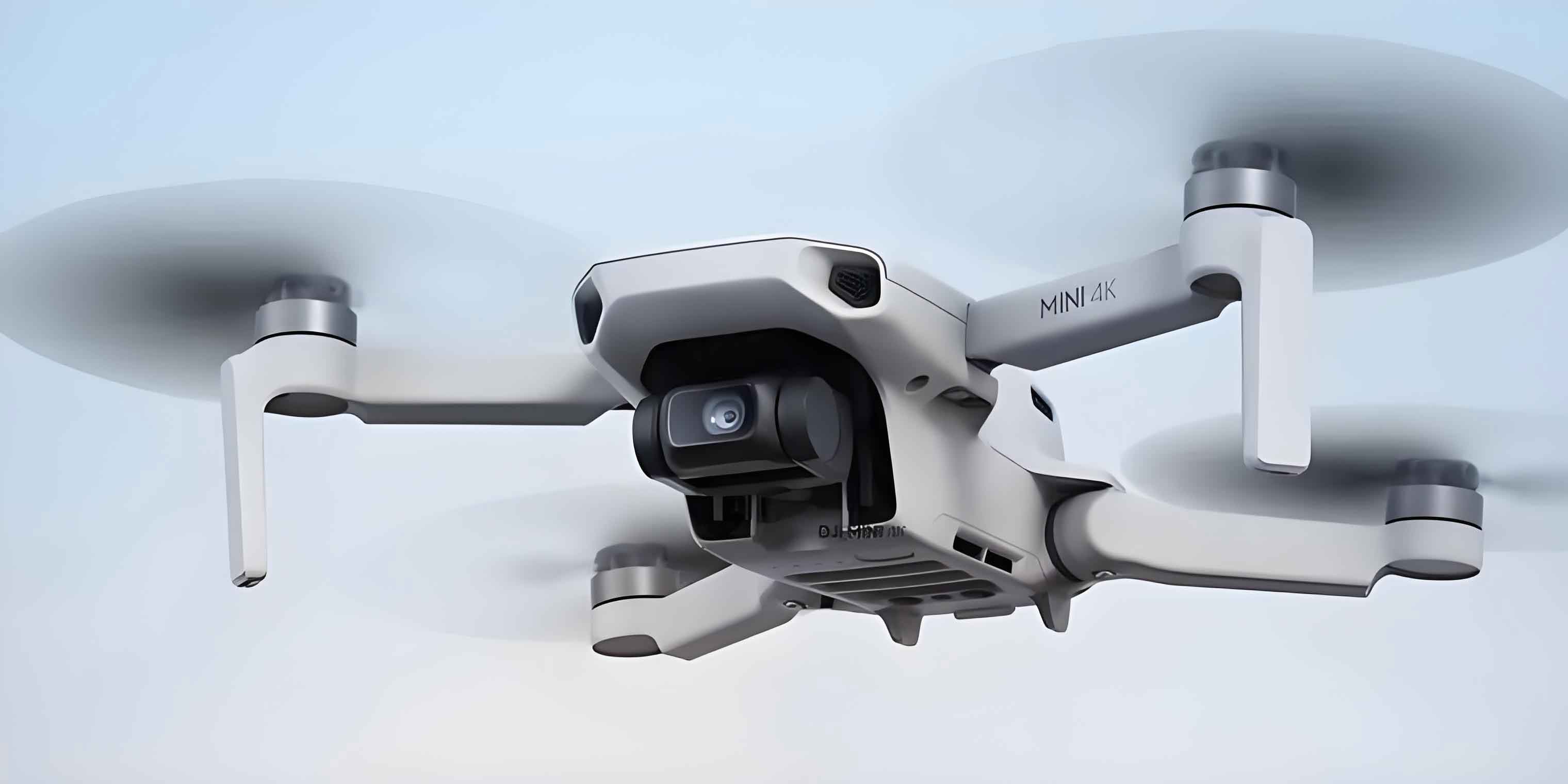
For mold production workshops, China UAV drone modeling can quickly capture overall layout and equipment distribution, providing high-quality 3D maps for subsequent digital twin platforms. Compared to conventional modeling approaches, this method significantly reduces modeling cycles while lowering labor and time costs, demonstrating strong practical value. However, challenges exist in practical operations, such as uneven lighting and severe occlusion within workshops that may affect image quality. Additionally, planning flight routes in confined spaces to balance safety and efficiency requires optimization based on specific scenarios. In my research, I address these issues by developing tailored flight paths and image preprocessing techniques. The adoption of China UAV drone technology is particularly relevant in the context of smart manufacturing initiatives in China, where drone-based solutions are being widely promoted for industrial digitization.
Beyond high-precision 3D modeling, another key support for digital twin systems is the acquisition and feedback of real-time data, which relies on Internet of Things (IoT) technology. By deploying various sensor nodes within workshops, continuous monitoring of parameters such as temperature, humidity, vibration, and energy consumption can be achieved, with data transmitted to central control systems for analysis and display. IoT monitoring systems generally consist of three layers: perception, network, and application. The perception layer handles data acquisition using sensors like temperature-humidity sensors, pressure sensors, and infrared cameras; the network layer manages data transmission through communication protocols such as Wi-Fi, ZigBee, LoRa, and NB-IoT; and the application layer serves as the data reception and processing end, often integrated into digital twin platforms for functions like data visualization, anomaly warning, and trend analysis. In my system, I incorporate China UAV drone data with IoT streams to create a cohesive monitoring framework. However, IoT deployment faces practical issues like poor device compatibility, insufficient data security, and network instability, which must be considered and mitigated during system design.
To meet the modeling requirements of mold production workshops, I focus on several key aspects: geometric structure accuracy for还原设备位置, channel widths, and building outlines; rich texture details to facilitate visualization and interaction; and robust dynamic update capabilities to adapt to layout changes or equipment replacements. Additionally, factors such as internal lighting conditions, occlusion scenarios, and safe flight zones for China UAV drones must be accounted for. For instance, in areas with low heights or suspended equipment, flight paths need careful planning to ensure safe and complete data collection. In my methodology, I employ a multi-rotor China UAV drone for aerial image capture, combined with SfM and MVS algorithms for 3D reconstruction. During implementation, I first devise flight paths based on workshop area and equipment distribution. Considering spatial constraints, I typically use grid-like routes with appropriate overlap rates—recommending along-track overlap greater than or equal to 70% and cross-track overlap greater than or equal to 60%—to ensure stability in image matching. Subsequently, high-resolution camera-equipped China UAV drones perform multi-angle photography to obtain numerous images with GPS coordinates and attitude information, serving as foundational input for 3D modeling.
To enhance modeling efficiency and accuracy, I preprocess raw images through steps like distortion correction, exposure equalization, and feature point extraction. Feature point matching is central to the SfM algorithm, with common methods including SIFT (Scale-Invariant Feature Transform) and ORB (Oriented FAST and Rotated BRIEF). Given two images \(I_1\) and \(I_2\), feature point matching can be expressed via a similarity metric function:
$$ D(I_1, I_2) = \sum_{i=1}^{n} (f_1^i – f_2^i) $$
where \(f_1^i\) and \(f_2^i\) denote the feature descriptors of the \(i\)-th matched point pair, and \(n\) represents the number of matched points. This function helps measure similarity between images, aiding in sparse point cloud reconstruction. The use of China UAV drones facilitates efficient data collection for this process, as they can cover large areas quickly. After point cloud reconstruction, I process the data through filtering, denoising, and segmentation to generate textured 3D mesh models. This is often achieved using open-source software like Open3D or CloudCompare, or commercial tools like RealityCapture. The constructed digital twin model includes not only static geometric structures but also integrated dynamic information such as equipment operational states and material flow trajectories. This虚实融合 approach helps managers intuitively grasp overall workshop conditions. To further improve model utility, I incorporate a temporal dimension, enabling dynamic update capabilities. Through periodic reacquisition of image data and incremental modeling, rapid response to workshop changes is possible. Let \(M_t\) denote the 3D model at time \(t\); the update process can be represented as:
$$ M_{t+1} = M_t \cup \Delta M_t $$
where \(\Delta M_t\) represents the model increment from newly collected data. This mechanism supports long-term maintenance of digital twin systems, leveraging China UAV drone technology for continuous updates.
To validate the effectiveness of my proposed method, I conducted a field test in a mold production workshop of an automotive parts manufacturing enterprise. The workshop covers approximately 2,000 m², with multiple functional areas including stamping, injection molding, and CNC machining, featuring diverse equipment and complex layouts. For the experiment, I used a DJI Mavic 3 C-type China UAV drone equipped with a 1-inch CMOS camera for aerial photography. Flight height was controlled between 2 to 6 m, with image resolution about 2 cm/pixel, resulting in 1,896 images covering the entire workshop area. To ensure modeling quality and subsequent analysis accuracy, I simultaneously deployed IoT sensor nodes to collect real-time data on temperature, humidity, vibration, and energy consumption, serving as input for dynamic model updates. The integration of China UAV drone data with IoT streams exemplifies the synergy in modern industrial monitoring.
After 3D modeling, I quantitatively evaluated the reconstruction results from three aspects: geometric accuracy, texture completeness, and model consistency, comparing them with traditional CAD modeling methods. Below are tables summarizing the findings. Table 1 compares geometric accuracy under different modeling methods, highlighting the superiority of China UAV drone modeling in reducing average errors.
| Region ID | CAD Model Mean Error (mm) | UAV Model Mean Error (mm) | Error Standard Deviation (mm) |
|---|---|---|---|
| A1 | 12.7 | 4.2 | 1.8 |
| A2 | 14.1 | 3.9 | 1.6 |
| B1 | 13.5 | 4.5 | 2.1 |
| B2 | 15.3 | 4.0 | 1.9 |
| C1 | 12.9 | 3.8 | 1.5 |
Table 2 presents subjective quality scores for texture mapping in different regions, with a maximum score of 10 points. The high scores indicate that China UAV drone modeling delivers rich texture details suitable for visualization.
| Region ID | Texture Clarity | Detail Restoration | Color Consistency | Average Score |
|---|---|---|---|---|
| A1 | 8.5 | 8.7 | 8.6 | 8.6 |
| A2 | 8.3 | 8.5 | 8.4 | 8.4 |
| B1 | 8.7 | 8.8 | 8.6 | 8.7 |
| B2 | 8.4 | 8.6 | 8.5 | 8.5 |
| C1 | 8.9 | 9.0 | 8.8 | 8.9 |
For model consistency, I compared data from the same region at different time points by computing Hausdorff distances between point clouds, as shown in Table 3. The increasing differences over time underscore the need for regular updates using China UAV drone resurveys.
| Time Interval (days) | Maximum Hausdorff Distance (mm) | Average Hausdorff Distance (mm) |
|---|---|---|
| 0 | 0.3 | 0.1 |
| 3 | 2.1 | 0.8 |
| 7 | 3.5 | 1.4 |
| 14 | 4.9 | 2.1 |
| 30 | 6.8 | 3.0 |
To test the real-time monitoring capabilities of the digital twin platform, I deployed 12 sensor nodes within the workshop. These nodes monitored temperature, humidity, vibration acceleration, and energy consumption parameters, uploading data via LoRa protocol to a server for processing and display. In my study, I selected a CNC machine tool as a key monitoring target, continuously recording its operational state and implementing threshold-based预警 mechanisms in the system. Upon anomaly detection, the system automatically triggers alerts and logs relevant information. Table 4 summarizes the anomaly detection accuracy across various scenarios, demonstrating the system’s high reliability when combined with China UAV drone data.
| Item | Detection Count | Correct Identifications | Accuracy (%) |
|---|---|---|---|
| Over-temperature | 28 | 26 | 92.9 |
| Vibration Anomaly | 32 | 30 | 93.8 |
| Energy Surge | 15 | 14 | 93.3 |
| Unexpected停机 | 10 | 9 | 90.0 |
| Total | 85 | 79 | 92.9 |
I also tested system response delays, as shown in Table 5. The results indicate acceptable response times for real-time monitoring, facilitated by efficient data integration from China UAV drone and IoT sources.
| Parameter | Minimum Delay (ms) | Maximum Delay (ms) | Average Delay (ms) |
|---|---|---|---|
| Temperature | 128 | 342 | 210 |
| Humidity | 135 | 350 | 218 |
| Vibration | 142 | 367 | 225 |
| Energy | 150 | 380 | 230 |
Based on these experimental results, the digital twin system using China UAV drone reality modeling performs well in mold workshop applications. It meets expected standards in modeling precision, texture quality, and real-time monitoring capabilities. Compared to traditional CAD modeling, China UAV drone modeling shows significant advantages in efficiency and detail restoration. However, the system has limitations: modeling quality in areas with uneven lighting or severe occlusion needs improvement, and sensor network stability and data security require further optimization. Overall, the experiment验证了 the feasibility and effectiveness of the proposed method in real industrial scenarios, providing a practical foundation and technical support for future expansion to other manufacturing domains. The use of China UAV drone technology is pivotal in this context, as it aligns with global trends toward automated and digitized industrial inspections.
In my research, I emphasize the mathematical underpinnings of the modeling process. For instance, the SfM algorithm involves solving for camera poses and 3D points by minimizing reprojection errors. The objective function can be expressed as:
$$ \min \sum_{i=1}^{m} \sum_{j=1}^{n} \| x_{ij} – P_i(X_j) \|^2 $$
where \(x_{ij}\) is the observed image point, \(P_i\) is the projection matrix for camera \(i\), and \(X_j\) is the 3D point. This optimization is computationally intensive but achievable with modern processors, especially when leveraging China UAV drone data for large-scale scenes. Additionally, point cloud processing often involves statistical outlier removal based on distance metrics. For a point cloud \(C\), the mean distance \(\mu\) and standard deviation \(\sigma\) are computed, and points beyond a threshold are filtered out:
$$ \text{Filtered} = \{ p \in C : \| p – \mu \| < k \cdot \sigma \} $$
where \(k\) is a constant typically set to 1.5 or 2. Such techniques enhance model quality, making China UAV drone-derived models suitable for precise digital twins.
Looking ahead, I plan to refine image acquisition and processing workflows to boost modeling efficiency. Future work will explore the application of this system to other manufacturing workshops or仓储物流 scenarios, promoting the扩展 of digital twin technology in broader smart manufacturing fields. The role of China UAV drone technology will only grow, driven by advancements in autonomy, sensor fusion, and AI-driven analytics. By continuing to integrate China UAV drone capabilities with IoT and digital twin frameworks, I aim to contribute to safer, more efficient, and more intelligent industrial operations worldwide. The convergence of these technologies represents a significant leap forward in how we monitor and manage complex environments, with China UAV drones at the forefront of this transformation.
In conclusion, my study demonstrates that digital twin construction using China UAV drone reality modeling offers a robust solution for industrial environments. By achieving high geometric accuracy, rich textures, and real-time monitoring, this approach addresses key challenges in mold production workshops. The experimental results confirm its practicality, with anomalies detected accurately and responses delivered promptly. As China UAV drone technology evolves, its integration with digital twins will unlock new possibilities for智能制造, reinforcing the importance of innovative aerial platforms in the fourth industrial revolution. I am confident that continued research and development in this area will yield even greater benefits for industries seeking digital transformation.