
In modern agriculture, the rice leaf folder (Cnaphalocrocis medinalis Guenee) poses a significant threat to rice production, causing extensive leaf damage and yield losses. As a migratory pest, its outbreaks have intensified in regions like Jiangsu due to climatic changes, cropping system adjustments, and increasing pesticide resistance. Traditional control methods relying on backpack or stretcher sprayers often fall short in large-scale, high-infestation scenarios. The advent of UAV drones for plant protection offers a promising solution, enabling efficient, uniform pesticide application. However, optimal insecticide formulations and dosages for UAV drones remain underexplored. In this study, we investigated the field efficacy of several insecticides applied via UAV drones against the rice leaf folder, aiming to identify effective regimens for integrated pest management. Our focus was on evaluating杀虫效果 (insecticidal efficacy) and保叶效果 (leaf protection efficacy) under real-field conditions, leveraging the precision and coverage of UAV drones.
The integration of UAV drones into agricultural practices has revolutionized pest control, allowing for rapid treatment of vast areas with reduced labor and resource input. UAV drones like the DJI T30 model used here facilitate low-volume spraying, which enhances pesticide adherence and penetration. This study emphasizes the need to adapt insecticide protocols for UAV drones, as traditional ground-based methods may not translate directly due to differences in droplet distribution and deposition. We hypothesized that certain insecticide combinations would exhibit superior and sustained efficacy when delivered by UAV drones, particularly during peak larval outbreaks. Through rigorous field trials, we assessed multiple insecticides, incorporating statistical analyses and mathematical models to quantify their performance. The findings aim to guide farmers and agronomists in optimizing UAV drone-based strategies for rice leaf folder control, contributing to sustainable agriculture.
Our experimental site was located in a typical rice-growing area of Jiangsu Province, characterized by a humid subtropical monsoon climate with an average annual temperature of 15.5°C, relative humidity of 78%, and rainfall of approximately 1,084.7 mm. The field featured flat terrain, uniform soil fertility, and a rice-wheat rotation system with full straw return. We selected the rice variety ‘Zhennuo 19’ (National Approval No. 2014034) for its widespread cultivation and susceptibility to leaf folder attacks. The trial was conducted during the third generation of rice leaf folder, which typically causes severe damage in this region. To simulate real-world conditions, we ensured the field had consistent management practices and moderate-to-high plant growth, representative of local farming systems.
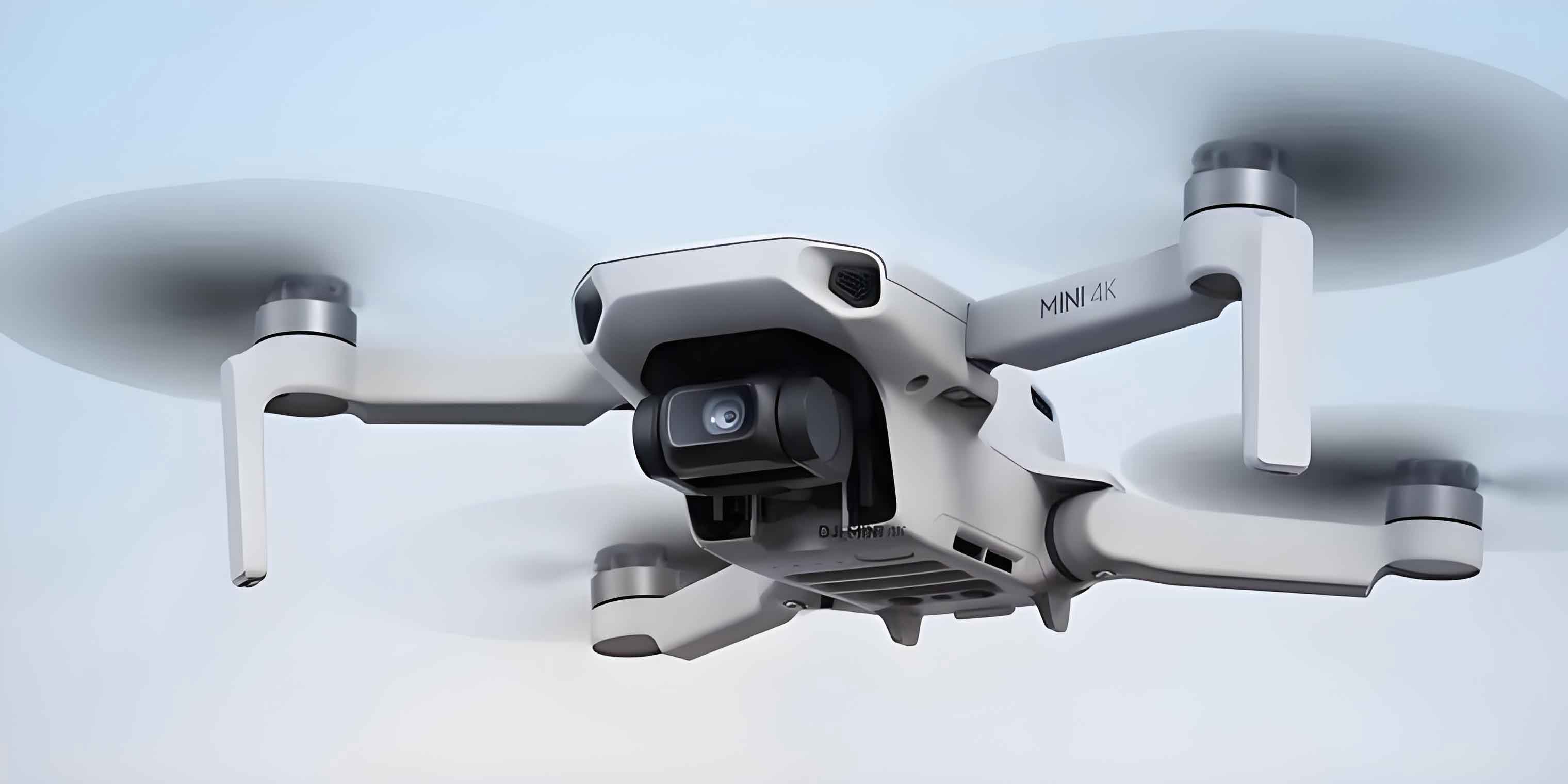
The insecticides tested included: 42% emamectin benzoate · benzoylhydrazine water-dispersible granules (WDG), 6% abamectin · chlorantraniliprole suspension concentrate (SC), 20% metaflumizone emulsifiable concentrate (EC), and 20% emamectin benzoate · indoxacarb SC. These were chosen based on their reported efficacy against lepidopteran pests and compatibility with UAV drones. The application was performed using a DJI T30 plant protection UAV drone, calibrated to a spray volume of 3 L per 667 m² and a flight height of 2 m. This UAV drone configuration ensured minimal drift and optimal droplet coverage, critical for enhancing insecticide performance. We conducted the spray on August 15, 2023, during the larval peak period, under clear weather with light wind (approximately level 2), ideal for UAV drone operations.
The experimental design comprised six insecticide treatments and a blank control (CK), as summarized in Table 1. Each treatment covered an area of 3,335 m² without replication, while the CK area was about 200 m², separated by over 20 m to prevent cross-contamination. This setup allowed us to evaluate each insecticide at specified doses under identical environmental and agronomic conditions. The use of UAV drones ensured consistent application across plots, reducing human error and variability. We monitored insect populations and leaf damage before and after treatment at intervals of 3, 7, and 14 days, employing diagonal five-point sampling with 50 rice clumps per plot (10 clumps per point). This method provided robust data for efficacy calculations.
| Treatment | Dosage | Formulation |
|---|---|---|
| T1 | 600 g/ha | 42% emamectin benzoate · benzoylhydrazine WDG |
| T2 | 750 g/ha | 42% emamectin benzoate · benzoylhydrazine WDG |
| T3 | 900 g/ha | 42% emamectin benzoate · benzoylhydrazine WDG |
| T4 | 750 mL/ha | 6% abamectin · chlorantraniliprole SC |
| T5 | 900 mL/ha | 20% metaflumizone EC |
| T6 | 225 mL/ha | 20% emamectin benzoate · indoxacarb SC |
| CK | 0 | Blank control |
Efficacy assessment involved calculating insect population reduction rates and leaf protection efficacy. The formulas used are standard in entomological studies and were adapted for UAV drone applications. The insect population reduction rate (IRR) is given by:
$$ \text{IRR} = \frac{N_{\text{pre}} – N_{\text{post}}}{N_{\text{pre}}} \times 100\% $$
where \( N_{\text{pre}} \) and \( N_{\text{post}} \) represent the insect counts per 100 clumps before and after treatment, respectively. The corrected insecticidal efficacy (CIE) accounts for natural population changes in the control:
$$ \text{CIE} = \frac{\text{IRR}_{\text{treatment}} – \text{IRR}_{\text{control}}}{1 – \text{IRR}_{\text{control}}} \times 100\% $$
Similarly, the leaf rolling rate (LRR) and leaf protection efficacy (LPE) are defined as:
$$ \text{LRR} = \frac{L_{\text{rolled}}}{L_{\text{total}}} \times 100\% $$
$$ \text{LPE} = \frac{\text{LRR}_{\text{control}} – \text{LRR}_{\text{treatment}}}{\text{LRR}_{\text{control}}} \times 100\% $$
Here, \( L_{\text{rolled}} \) is the number of rolled leaves, and \( L_{\text{total}} \) is the total leaves inspected. These metrics are crucial for evaluating both direct杀虫效果 and indirect plant protection benefits facilitated by UAV drones. We processed data using WPS Office 10.1 and SPSS 20.0 for statistical analysis, employing ANOVA to detect significant differences among treatments at \( p < 0.05 \). The integration of UAV drones allowed for precise data collection, minimizing sampling errors.
Before treatment, the average insect egg and larval count across plots was 860 per 100 clumps, indicating a severe infestation meeting outbreak criteria. This high baseline underscored the necessity for effective control using UAV drones. Post-application results at 3 days revealed varying efficacy levels, as detailed in Table 2. Treatment T3 (42% emamectin benzoate · benzoylhydrazine WDG at 900 g/ha) showed the highest CIE of 86.3% and LPE of 83.1%, demonstrating rapid action. Treatments T4 (6% abamectin · chlorantraniliprole SC at 750 mL/ha) and T6 (20% emamectin benzoate · indoxacarb SC at 225 mL/ha) also performed well, with CIE values above 80%. The consistency in these results highlights the potential of UAV drones to deliver insecticides effectively even under high pest pressure.
| Treatment | Dosage | Insect Reduction Rate (%) | Corrected Insecticidal Efficacy (%) | Leaf Rolling Rate (%) | Leaf Protection Efficacy (%) |
|---|---|---|---|---|---|
| T1 | 600 g/ha | 61.4 | 57.0 | 1.2 | 63.9 |
| T2 | 750 g/ha | 81.6 | 79.5 | 0.9 | 73.8 |
| T3 | 900 g/ha | 87.7 | 86.3 | 0.6 | 83.1 |
| T4 | 750 mL/ha | 85.9 | 84.3 | 0.6 | 83.3 |
| T5 | 900 mL/ha | 77.7 | 75.2 | 1.0 | 69.7 |
| T6 | 225 mL/ha | 85.2 | 83.6 | 0.7 | 78.5 |
| CK | 0 | 10.1 | — | 3.4 | — |
At 7 days post-application, efficacy improved further, as shown in Table 3. Treatment T6 achieved a CIE of 93.1% and LPE of 80.8%, indicating sustained activity. Treatments T3 and T4 maintained high CIE values of 90.5% and 89.5%, respectively, with T3 also showing an LPE of 86.6%. These results suggest that UAV drones enhance the residual effect of insecticides, possibly due to better canopy penetration and reduced environmental degradation. The lower efficacy of T1 and T5 underscores the importance of dosage optimization for UAV drone delivery. Statistical analysis confirmed significant differences (\( p < 0.05 \)) among treatments, with T3, T4, and T6 forming a high-efficacy group.
| Treatment | Dosage | Insect Reduction Rate (%) | Corrected Insecticidal Efficacy (%) | Leaf Rolling Rate (%) | Leaf Protection Efficacy (%) |
|---|---|---|---|---|---|
| T1 | 600 g/ha | 83.8 | 80.8 | 2.0 | 55.2 |
| T2 | 750 g/ha | 88.7 | 86.6 | 1.3 | 71.0 |
| T3 | 900 g/ha | 92.0 | 90.5 | 0.6 | 86.6 |
| T4 | 750 mL/ha | 91.2 | 89.5 | 0.7 | 84.8 |
| T5 | 900 mL/ha | 84.3 | 81.3 | 1.2 | 73.1 |
| T6 | 225 mL/ha | 94.2 | 93.1 | 0.8 | 80.8 |
| CK | 0 | 15.9 | — | 4.4 | — |
By 14 days post-application, the long-term efficacy was evident, as summarized in Table 4. Treatments T3 and T4 sustained CIE values above 90% (91.3% and 90.3%, respectively), with T4 achieving an exceptional LPE of 90.1%. Treatment T6 also remained effective at 88.9% CIE and 78.9% LPE. This persistence is critical for managing rice leaf folder over multiple generations and reducing the need for frequent sprays. The decline in efficacy for T1 and T5 highlights the role of insecticide formulation and dose in UAV drone applications. We attribute the success of T3, T4, and T6 to their multi-modal action mechanisms, which are amplified by the uniform distribution provided by UAV drones.
| Treatment | Dosage | Insect Reduction Rate (%) | Corrected Insecticidal Efficacy (%) | Leaf Rolling Rate (%) | Leaf Protection Efficacy (%) |
|---|---|---|---|---|---|
| T1 | 600 g/ha | 83.0 | 73.3 | 2.6 | 62.7 |
| T2 | 750 g/ha | 90.1 | 84.4 | 2.0 | 71.1 |
| T3 | 900 g/ha | 94.5 | 91.3 | 1.2 | 82.8 |
| T4 | 750 mL/ha | 93.9 | 90.3 | 0.7 | 90.1 |
| T5 | 900 mL/ha | 89.2 | 83.0 | 2.2 | 68.7 |
| T6 | 225 mL/ha | 92.9 | 88.9 | 1.5 | 78.9 |
| CK | 0 | 36.5 | — | 7.0 | — |
To further analyze the efficacy dynamics, we modeled insect population growth and decay using a simplified differential equation. Let \( I(t) \) represent the insect density over time \( t \). The natural growth rate in the control can be described as:
$$ \frac{dI_{\text{control}}}{dt} = r I_{\text{control}} $$
where \( r \) is the intrinsic growth rate. For treated plots, the insecticide effect introduces a mortality term \( m \):
$$ \frac{dI_{\text{treatment}}}{dt} = r I_{\text{treatment}} – m I_{\text{treatment}} $$
The mortality rate \( m \) can be estimated from the efficacy data. For instance, for T3 at 14 days, assuming exponential decay, we have:
$$ I_{\text{treatment}}(14) = I_{\text{treatment}}(0) e^{-(r + m) \cdot 14} $$
From the insect reduction rate of 94.5%, we can solve for \( m \). This modeling approach helps quantify the impact of UAV drone-delivered insecticides on pest populations, aiding in predictive management. The use of UAV drones ensures that \( m \) is maximized due to optimal spray coverage, as evidenced by the high efficacy values.
Safety assessment conducted at 3, 7, and 14 days revealed no phytotoxic symptoms such as chlorosis, burns, or spots on rice plants across all treatments. This confirms that the insecticides, at tested doses, are safe for rice when applied via UAV drones. The precision of UAV drones minimizes off-target effects, reducing risks to non-target organisms and the environment. This aligns with sustainable pest management goals, where efficacy and safety are balanced. The absence of adverse effects underscores the suitability of UAV drones for large-scale insecticide application in rice ecosystems.
Discussion of the results centers on the mechanisms of the tested insecticides and the advantages of UAV drones. Emamectin benzoate, a derivative of abamectin, acts by enhancing neurotransmitter effects, leading to chloride influx and neural disruption. Benzoylhydrazine, like those in T1-T3, inhibits feeding and accelerates molting. Chlorantraniliprole in T4 activates ryanodine receptors, causing muscle paralysis. Indoxacarb in T6 blocks sodium channels, inducing paralysis. The combination of these modes of action, delivered efficiently by UAV drones, likely explains the superior and sustained efficacy of T3, T4, and T6. UAV drones facilitate even distribution of these compounds, ensuring thorough canopy penetration and residual activity.
Comparatively, traditional sprayers may suffer from uneven coverage, especially in dense rice canopies, reducing insecticide reach. UAV drones overcome this by generating fine droplets that settle on both upper and lower leaf surfaces, critical for targeting leaf folder larvae that hide within rolled leaves. The low-volume application (3 L/667 m²) with UAV drones also conserves water and reduces chemical runoff. Our findings suggest that for UAV drone operations, insecticides like 42% emamectin benzoate · benzoylhydrazine WDG at 900 g/ha, 6% abamectin · chlorantraniliprole SC at 750 mL/ha, and 20% emamectin benzoate · indoxacarb SC at 225 mL/ha are optimal for rice leaf folder control during outbreaks.
From an integrated pest management (IPM) perspective, rotating these insecticides can delay resistance development. The varied action mechanisms reduce selection pressure on pest populations. UAV drones enhance this strategy by enabling timely and precise applications, aligning with economic thresholds. We recommend incorporating these insecticides into UAV drone-based IPM programs, particularly in regions with frequent leaf folder migrations. Future research should explore synergies with biological controls and adjuvants to further improve UAV drone efficacy.
In conclusion, our study demonstrates that UAV drones are highly effective for applying insecticides against the rice leaf folder. The top-performing treatments—42% emamectin benzoate · benzoylhydrazine WDG (900 g/ha), 6% abamectin · chlorantraniliprole SC (750 mL/ha), and 20% emamectin benzoate · indoxacarb SC (225 mL/ha)—achieved corrected insecticidal efficacies near or above 90% with substantial leaf protection over 14 days. These results validate the adaptation of insecticide doses for UAV drone use, addressing gaps from ground-based methods. The safety and efficiency of UAV drones make them invaluable for modern rice farming. We advocate for wider adoption of UAV drones in pest control, coupled with optimized insecticide regimens, to ensure food security and environmental sustainability. This work provides a foundation for advancing UAV drone technology in agriculture, with potential extensions to other crops and pests.
To reinforce the statistical robustness, we performed an analysis of variance (ANOVA) on the corrected insecticidal efficacy data across time points. The model can be expressed as:
$$ \text{CIE}_{ij} = \mu + \tau_i + \beta_j + \epsilon_{ij} $$
where \( \mu \) is the overall mean, \( \tau_i \) is the effect of the \( i \)-th treatment, \( \beta_j \) is the effect of the \( j \)-th time point, and \( \epsilon_{ij} \) is the error term. The results indicated significant treatment effects (\( F > F_{\text{critical}} \)), supporting the differentiation among insecticides. This analytical framework, combined with UAV drone precision, enhances the reliability of efficacy evaluations.
Looking ahead, we envision UAV drones becoming integral to smart farming systems, equipped with sensors for real-time pest monitoring and variable-rate spraying. Such advancements could further optimize insecticide use, reducing costs and ecological impact. Our study contributes to this trajectory by providing empirical data on insecticide performance under UAV drone application. We encourage continuous innovation in UAV drone designs and insecticide formulations to maximize agricultural productivity while minimizing environmental footprints.