
The threat posed by fire and explosion accidents at large-scale storage tanks, which serve as centralized facilities for hazardous chemicals, is immense. Such incidents are characterized by the intense combustion of flammable and explosive substances, high-intensity thermal radiation, and cascading secondary disasters such as toxic gas leaks and chain-reaction explosions. These events not only pose a catastrophic threat to the surrounding ecological environment and human life but can also result in direct economic losses amounting to hundreds of millions. Traditional rescue models face significant challenges when responding to such accidents, limited by factors such as smoke obscuration, excessive thermal radiation, and complex spatial structures. This often leads to lagging situational awareness, inefficient command coordination, and prohibitively high risks for personnel attempting close-proximity operations.
Currently, UAV drones, leveraging their high mobility, non-contact operation capability, and real-time data transmission, are rapidly expanding their role within the field of emergency response. In scenarios involving natural disasters like earthquakes and floods, UAV drones have already demonstrated their utility in disaster reconnaissance, material delivery, and communication support, effectively enhancing rescue efficiency. However, in the context of rescues for hazardous chemical accidents like large tank fires and explosions, systematic research on the tactical methodologies for UAV drones under extreme conditions—such as intense thermal radiation, toxic gas dispersion, and complex spatial environments—remains scarce. Existing studies are often confined to the development of singular functionalities, lacking in-depth exploration of collaborative mechanisms for heterogeneous UAV drones swarms, their adaptability to extreme environments, and comprehensive end-to-end coordination and risk response strategies.
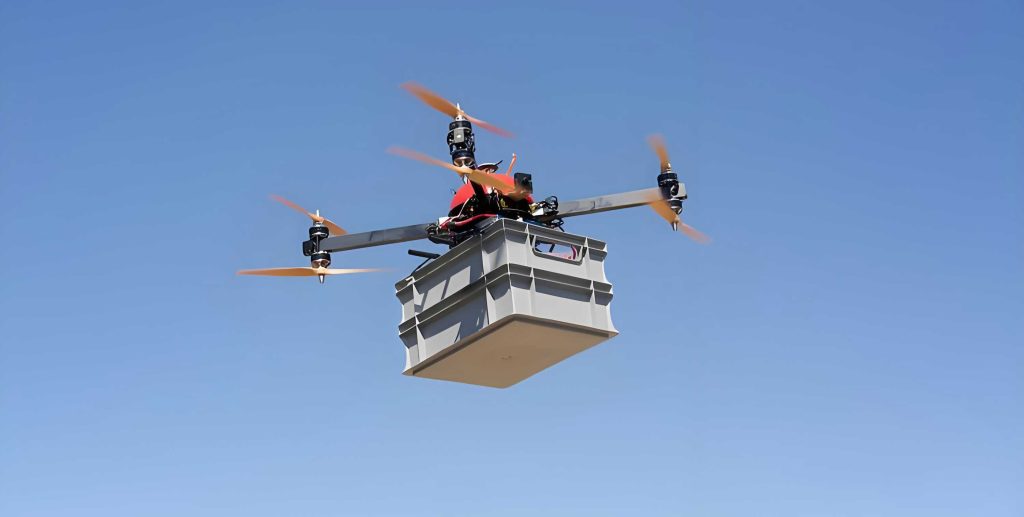
This article, based on a study of a major storage tank fire and explosion rescue exercise, explores innovative application pathways for collaborative UAV drones swarm operations in extreme environments. This exploration holds significant theoretical and practical importance for breaking through the limitations of traditional rescue technologies and promoting the intelligent transformation of emergency rescue systems. By discussing from the dimensions of technical application, equipment synergy, and practical effectiveness, this paper aims to provide a reference for the standardized application, technical optimization, and theoretical refinement of UAV drones in the field of emergency response to large-scale tank fire and explosion accidents.
Exercise Scenario Setting and Basic Workflow
The exercise scenario simulated a complex disaster chain at a large tank farm: the sinking of an external floating roof due to extreme weather, leading to oil spillage, intense vaporization, accumulation of flammable vapors, a lightning-induced flashover, and ultimately a full-surface tank fire coupled with secondary disasters like three-dimensional fires on adjacent chemical processing units. The entire exercise workflow was divided into four key phases: Emergency Response & Situational Control, Resource Assurance & Basic Protection, Specialized Disposal of Secondary Disasters, and General Attack & Fire Suppression with Risk Control. Nearly 70 UAV drones of various types—including communication support, detection & reconnaissance, and firefighting/rescue—were deployed. By virtue of their inherent attribute as “aerial intelligent nodes,” UAV drones were established as the core supporting force throughout the complete “reconnaissance-decision-making-disposal-protection” workflow. Constructing an integrated air-ground information network provided an innovative solution to the three major challenges in complex fireground rescue: “information blind spots, personnel safety, and precision operations.”
Application of UAV Drones Across Exercise Phases
1. Omni-directional Communication Support
Communication is an indispensable part of any rescue site, serving as the critical carrier for ensuring the implementation of on-site command orders and the real-time transmission of disaster data. In the simulated scenario, where explosions caused severe damage to fixed communication infrastructure, a rapid, “unmanned and multi-dimensional collaborative” communication support system was established. This system relied on a fleet of specialized UAV drones.
| Type / Core Function | Key Technical Parameters | Role in Network Architecture |
|---|---|---|
| Rotary-Wing Communication Relay UAV Drones | RTK positioning; Max speed: 25 m/s; Endurance: ~60 min; Weather resistance. | Rapid deployment to establish initial, wide-area, real-time communication coverage, providing visual data support for command decisions. |
| Loudspeaker UAV Drones | High-precision positioning; Integrated megaphone system; High mobility. | Precise dissemination of emergency evacuation orders and tactical adjustments across the operational area. |
| Tethered UAV Drones with Base Station | Integrated communication base station & lighting; Persistent operation via tether; Payload: 15 kg; Coverage: ~20 km. | Provided uninterrupted communication backhaul and broad-area illumination for the forward command post in degraded environments. |
These UAV drones, operating under a coordinated air-ground protocol, formed an efficient “Real-time Interconnection—Intelligent Relay—Omni-directional Coverage” emergency communication system. The information transmission capability was significantly enhanced compared to traditional, single-mode communication methods, providing a solid technical foundation for intelligent rescue command and decision-making.
2. Three-Dimensional On-Site Reconnaissance
Addressing the challenges of dense smoke and intense thermal radiation from a full-surface fire, an “unmanned, three-dimensional” air-ground collaborative tactical system was implemented. The UAV drones fleet constructed a layered reconnaissance and dynamic monitoring tactical architecture.
| Type | Key Technical Parameters | Reconnaissance Function & Tactical Role |
|---|---|---|
| Fixed-Wing UAV Drones | Long endurance (120+ min); Wide-area coverage; Equipped with visible-light & thermal imaging (FLIR) cameras. | Macro-situational awareness. Conducted persistent, wide-area surveillance from high altitude (~200m), monitoring fire spread, structural damage, and core temperature gradients. |
| Chemical Detection UAV Drones | Equipped with infrared remote sensing and multi-gas detectors; High-precision positioning. | Hazardous environment monitoring. Measured concentration gradients of multiple gas types within a 2km radius, predicting dispersion paths and enabling dynamic early warning. |
| Swarm-Controlled Reconnaissance UAV Drones (AI Model-Guided) | Capable of dynamic formation switching (e.g., line to 3×3 matrix to triangular subgroups); Distributed visual sensors. | Micro-detailed inspection. Performed high-precision, multi-angle, and cyclical scanning of hidden areas (e.g., tank seals) through coordinated subgroup maneuvers, ensuring continuous video feed. |
The data from these UAV drones was fused in real-time with inputs from ground-based monitoring systems, such as 3D scanning coherent Doppler lidar for wind field mapping and specialized tank fire radars. This fusion created a comprehensive立体侦察网 (stereoscopic reconnaissance network) covering macro-situational awareness, gaseous environmental threats, and micro-level hazards. For the three-dimensional chemical unit fire scenario, this data fusion was crucial for building a 3D combustion model to pinpoint hidden fire sources within complex structures.
The effectiveness of layered UAV drones reconnaissance can be modeled in terms of area coverage rate and data refresh rate. A simplified model for total effective coverage area $A_{total}$ per operational cycle is given by:
$$
A_{total} = \sum_{i=1}^{n} (v_i \cdot t_i \cdot w_i \cdot \eta_i)
$$
where for the i-th type of UAV drone, $v_i$ is its effective patrol speed, $t_i$ is its on-station time, $w_i$ is its sensor swath width, and $\eta_i$ is its operational efficiency factor accounting for coordination overlap. The integrated system aims to maximize $A_{total}$ while maintaining a high data refresh rate $R_{refresh}$ for critical zones, ensuring that $R_{refresh} > R_{fire\_spread}$, the rate of fire development.
3. Precision-Targeted Fire Suppression
Building upon the comprehensive situational picture provided by reconnaissance UAV drones, specialized fire suppression UAV drones were deployed using integrated “detect-strike” tactics.
| Suppression Method / UAV Type | Key Technical Parameters | Tactical Application & Synergy |
|---|---|---|
| Foam Bomb-Dispensing UAV Drones | High payload capacity (25kg foam bomb); Precision guided release; Tethered option for persistence. | Used against full-surface tank fires. After reconnaissance UAV drones identified the flame core via thermal imaging, these UAV drones executed precision ballistic drops to suppress fire spread, working in waves with ground forces. |
| Heavy-Lift Foam-Prospecting UAV Drones | Equipped with remote-controlled foam nozzles; AI-adjusted spray angle/flow based on real-time thermal/wind data. | Used against 3D structure fires. Established precise aerial agent delivery channels, performing layered or isolation firefighting to block vertical and horizontal fire spread within complex apparatus. |
The targeting accuracy for dispenser UAV drones is critical. The release point calculation must account for UAV drones velocity, wind drift, and ballistic drop. A basic governing equation for the impact point $(x_t, y_t)$ relative to the release point considers initial velocity $\vec{v}_{uav}$, wind vector $\vec{v}_{w}$, and gravitational acceleration $g$ over time $t$:
$$
\begin{aligned}
x_t &= (v_{uav,x} + v_{w,x}) \cdot t \\
y_t &= (v_{uav,y} + v_{w,y}) \cdot t \\
z_t &= v_{uav,z} \cdot t – \frac{1}{2} g t^2
\end{aligned}
$$
Advanced systems use real-time data from other UAV drones to refine $\vec{v}_{w}$ and solve for the optimal release parameters, minimizing the Circular Error Probable (CEP).
4. Intelligent Rescue Decision-Making Support
The integrated data from the multi-role UAV drones fleet served as the foundational input for an intelligent command and decision-support system. This system, often integrating AI big data platforms, created a closed-loop mechanism from data acquisition to dynamic feedback.
The core of this system is a data fusion and analysis engine that processes heterogeneous data streams from UAV drones and other sensors. Let $D(t)$ represent the multi-dimensional data state at time $t$, including thermal maps $T_{ij}$, gas concentrations $C_k$, visual imagery $I$, and geospatial data $G$. An AI model $M$ is trained to extract features and assess risk:
$$
\text{Risk\_Map}(t), \text{Scenario\_Projection}(t+\Delta t) = M(D(t), D(t-1), … ; \Theta)
$$
where $\Theta$ represents the model parameters trained on historical data. This enables the system to generate evolution图谱 (evolution maps) of the disaster situation and recommend optimal resource allocation $R^*$ from available assets $A$:
$$
R^* = \underset{R \in \mathcal{F}(A)}{\arg\max} \left[ \text{Efficiency}(R) – \lambda \cdot \text{Risk}(R) \right]
$$
where $\mathcal{F}(A)$ defines feasible allocations of assets (including UAV drones, ground teams, vehicles), and $\lambda$ is a risk aversion parameter. Digital twin technology is then used to simulate these allocations in a 3D geospatial platform before execution, verifying tactics and visualizing optimal attack positions and egress routes.
5. Synergistic Advantages and Efficacy of UAV Drones Swarm Operations
The swarm operation of diverse UAV drones, integrated with unmanned ground vehicles and centralized AI-driven command, represents a paradigm shift. The key advantages observed include:
- Enhanced Situational Awareness: The fusion of high-altitude persistent surveillance, detailed close-range inspection, and chemical detection from UAV drones created an unprecedented level of real-time understanding, eliminating traditional blind spots.
- Reduced Risk to Personnel: By performing reconnaissance and initial suppression in high-risk zones (high heat, toxic atmosphere, collapse risk), UAV drones kept human responders at a safer distance until conditions were stabilized.
- Increased Operational Tempo and Precision: The “observe-orient-decide-act” (OODA) loop was dramatically shortened. Decisions based on live data from UAV drones led to faster, more precise interventions, such as targeted foam bombing or focused cooling.
- Force Multiplication: A relatively small number of operators could manage a large fleet of UAV drones, each performing specialized tasks concurrently, creating a saturated, multi-dimensional response effect.
The overall system efficacy $E_{system}$ can be conceptualized as a function of the key performance parameters enhanced by UAV drones integration:
$$
E_{system} \propto \frac{\text{Situational Awareness Quality} \times \text{Decision Speed} \times \text{Intervention Precision}}{\text{Personnel Exposure Risk} \times \text{Response Time Delay}}
$$
The integration of UAV drones seeks to maximize the numerator and minimize the denominator.
Discussion and Future Development Pathways
Despite the demonstrated potential, the widespread, standardized adoption of UAV drones in complex emergency response faces several technical and operational hurdles that require focused attention.
1. Standardization of Systems and Interfaces
A core challenge impeding optimal multi-asset synergy is the lack of standardization among UAV drones from different manufacturers, particularly in data transmission interfaces and communication protocols. Future development must prioritize:
- Developing Full-Chain Standard Systems: Establishing comprehensive standards covering operational procedures, data interface specifications (e.g., common data link protocols like STANAG 4586 adaptation), and safety management protocols.
- Forming Standardized Tactical Units: Creating formalized groupings of UAV drones (e.g., Reconnaissance Squad, Strike Squad, Communication Squad) as integrated units within rescue force inventories, facilitating combined arms tactics.
- Building Unified Data Platforms: Implementing common data middlewares or platforms that can ingest, fuse, and disseminate data from diverse UAV drones, robotics, and command systems, enabling true cross-platform intelligent collaboration.
2. Spectrum Management and Communication Robustness
High-density operations of numerous UAV drones in a confined airspace lead to significant risks of spectrum congestion and electromagnetic interference, which can disrupt control and data links. While dedicated emergency service bands (e.g., 370 MHz in some regions) exist, the proliferation of devices using common ISM bands (2.4 GHz, 5.8 GHz) necessitates advanced solutions:
- Adoption of Robust Communication Technologies: Widespread implementation of Frequency Hopping Spread Spectrum (FHSS), Orthogonal Frequency-Division Multiplexing (OFDM), and other anti-jamming/anti-interference technologies in UAV drones design.
- Dynamic Spectrum Allocation: Research into AI-driven real-time spectrum management systems that can dynamically allocate channels to UAV drones in a swarm to minimize co-channel and adjacent-channel interference.
- Redundant Communication Links: Equipping critical UAV drones with multi-link capabilities (e.g., dual radio with cellular backup) to maintain connectivity if the primary link degrades.
3. Enhancing Practical Capabilities through Training and Simulation
To translate technological potential into reliable on-the-ground capability, a robust ecosystem for training and evaluation is essential.
- Integrated Training Curricula: Incorporating UAV drones operation, swarm tactics, and inter-asset coordination into the standard training curriculum for emergency responders, moving beyond basic piloting to tactical employment.
- Advanced Simulation Platforms: Leveraging digital twin technology to create high-fidelity virtual disaster environments. These platforms allow for the safe, cost-effective rehearsal of complex UAV drones-involved tactics, mission planning, and post-exercise analysis without real-world risks.
- Development of Standard Operating Procedures (SOPs): Formulating detailed, scenario-based SOPs that outline the end-to-end workflow for UAV drones deployment—from emergency activation and scene assessment to sustained operations and recovery—ensuring consistent and effective application across different teams and incidents.
4. Material and Sensor Development for Extreme Environments
Sustained operation in the extreme conditions of a major fire (high convective and radiative heat, corrosive atmospheres) pushes the limits of current UAV drones materials and sensor durability. Future research should focus on:
- Advanced Thermal Protection: Development and application of lightweight, reflective, and ablative coatings or passive cooling systems to extend the operational window of UAV drones near high-temperature zones. The heat flux $\dot{q}$ experienced by a UAV drone can be approximated by:
$$
\dot{q} = \epsilon \sigma (T_{fire}^4 – T_{uav}^4) + h (T_{fire} – T_{uav})
$$
where $\epsilon$ is emissivity, $\sigma$ is Stefan-Boltzmann constant, $T$ denotes temperature, and $h$ is the convective heat transfer coefficient. Materials must manage this influx. - Hardened Sensor Suites: Designing sensor packages (especially optical and chemical sensors) with protective housings, cooling, and self-cleaning mechanisms to maintain functionality in smoky, particulate-laden environments.
- Autonomous Resilience Behaviors: Programming UAV drones with autonomous protocols to recognize critical environmental limits (e.g., surface temperature, motor current) and execute pre-programmed avoidance maneuvers or safe retreat paths to prevent loss.
In conclusion, the integration of heterogeneous UAV drones swarms into the response framework for major industrial accidents like storage tank fires represents a transformative advance. By providing unparalleled situational awareness, enabling precision intervention, and forming the data backbone for intelligent decision-making, UAV drones are fundamentally reshaping rescue paradigms. The path forward requires a concerted effort to address standardization, communication resilience, and practical training challenges. Through continued technological innovation, rigorous operational testing, and the development of supportive doctrine and standards, UAV drones will undoubtedly solidify their role as a cornerstone of modern, effective, and safe emergency response to extreme technological disasters.