
In recent years, I have observed a significant transformation in forestry management practices, driven by the rapid advancement of modern technology. Among these innovations, UAV drones, specifically designed for plant protection, have emerged as a pivotal tool in the fight against forest pests and diseases. The traditional methods of forestry pest control, which rely heavily on manual spraying and ground-based machinery, are increasingly being challenged by the complexities of vast forest areas, rugged terrain, and operational inefficiencies. These conventional approaches often result in low coverage, high labor intensity, and environmental concerns. In contrast, UAV drones offer a promising alternative with their high mobility, precision application, and intelligent control capabilities. This article, from my perspective as a practitioner and researcher, delves into the comprehensive application of UAV drones in forestry pest control, analyzing their advantages and disadvantages, detailing key operational procedures, and proposing strategic measures for their effective implementation. The integration of UAV drones is not merely a technological upgrade but a paradigm shift towards mechanized, efficient, and intelligent forest health management.
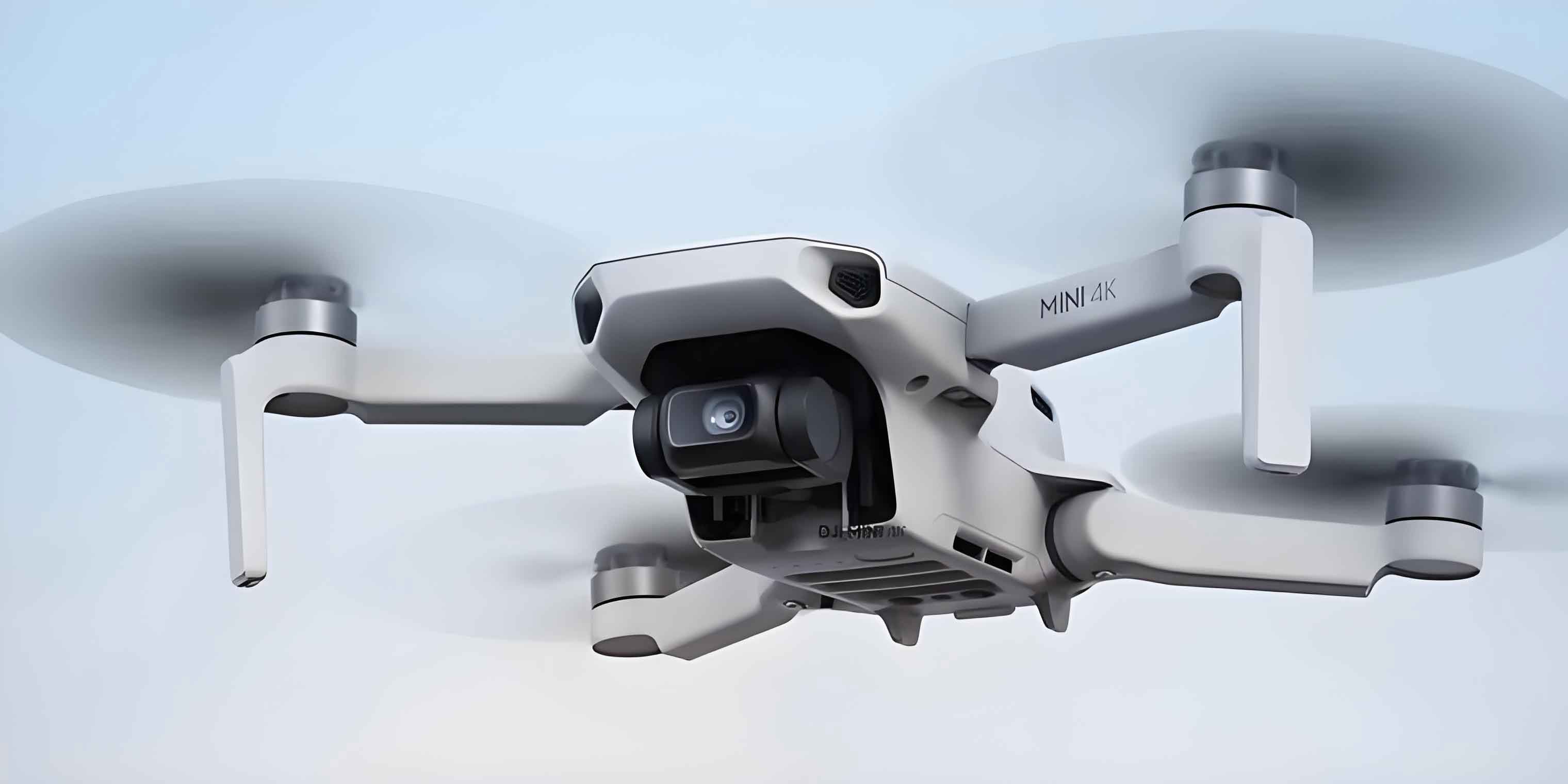
The adoption of UAV drones in forestry is a response to the growing need for sustainable and scalable solutions. Forests play a critical role in ecological balance, carbon sequestration, and biodiversity conservation, making their protection from pests and diseases a global priority. I have seen firsthand how UAV drones can access remote and difficult-to-reach areas, such as steep slopes or dense canopies, where human operators or ground equipment struggle to venture. This capability is revolutionizing pest control strategies, enabling timely interventions that prevent outbreaks from escalating. Moreover, the precision offered by UAV drones minimizes chemical usage, reducing environmental impact and aligning with green forestry initiatives. As I explore this topic, I will emphasize the technical, operational, and strategic aspects that underpin the successful deployment of UAV drones, supported by tables and mathematical models to provide a clear and quantitative understanding.
Advantages and Disadvantages of UAV Drones in Forestry Pest Control
From my experience, the implementation of UAV drones in forestry pest control presents a mix of compelling benefits and notable challenges. A thorough analysis is essential for stakeholders to make informed decisions. Below, I summarize these aspects in a detailed table, followed by discussions on key metrics.
| Aspect | Advantages | Disadvantages |
|---|---|---|
| Operational Efficiency | High speed and coverage; ability to navigate complex terrain; reduces time and labor. | Limited by battery life; requires skilled operators; weather-dependent. |
| Precision and Accuracy | Targeted spraying via GPS and sensors; minimizes chemical waste; adaptable to tree-specific needs. | Calibration errors can reduce accuracy; sensor limitations in dense forests. |
| Cost Implications | Long-term savings on labor and chemicals; scalable for large areas. | High initial investment in UAV drones and training; maintenance costs. |
| Environmental Impact | Reduces chemical runoff; enables bio-pesticide application; lowers carbon footprint compared to ground vehicles. | Potential for noise pollution; battery disposal issues. |
| Safety and Accessibility | Enhances worker safety by reducing exposure to chemicals and hazardous terrain; reaches inaccessible zones. | Risk of UAV drone crashes or malfunctions; regulatory hurdles in airspace. |
To quantify the efficiency of UAV drones, I often use a simple formula for coverage rate, which is critical in forestry applications. The coverage rate \( C \) can be expressed as:
$$ C = \frac{A_{\text{covered}}}{A_{\text{total}}} \times 100\% $$
where \( A_{\text{covered}} \) is the area effectively treated by the UAV drones, and \( A_{\text{total}} \) is the total target area. For instance, in a dense forest, UAV drones can achieve coverage rates above 90% with optimal flight planning, compared to 60-70% with manual methods. Another important metric is the chemical utilization efficiency \( E \), defined as:
$$ E = \frac{V_{\text{effective}}}{V_{\text{applied}}} $$
Here, \( V_{\text{effective}} \) is the volume of pesticide deposited on target foliage, and \( V_{\text{applied}} \) is the total volume sprayed. UAV drones, with their adjustable nozzles and low-altitude flight, often achieve \( E \) values close to 0.8, meaning 80% of the chemical reaches the intended areas, reducing waste and environmental contamination. However, these efficiencies depend on factors like wind speed and tree density, which I will address later.
On the disadvantage side, the cost-benefit analysis requires careful consideration. The total cost \( TC \) of using UAV drones includes fixed costs (e.g., purchase of UAV drones) and variable costs (e.g., labor, maintenance). This can be modeled as:
$$ TC = C_{\text{fixed}} + C_{\text{variable}} \times T $$
where \( C_{\text{fixed}} \) is the initial investment, \( C_{\text{variable}} \) is the cost per hour of operation, and \( T \) is the total operational time. For small-scale forestry operations, \( TC \) may be prohibitive, but for large areas, the economies of scale make UAV drones more viable. I have seen that the break-even point often occurs when the treated area exceeds 500 hectares annually, assuming traditional methods cost $50 per hectare and UAV drone operations cost $30 per hectare after initial investment. Weather constraints also pose a significant challenge; for example, wind speeds above 5 m/s can disrupt spray patterns, requiring a correction factor \( F_w \) in efficiency calculations:
$$ E_{\text{actual}} = E \times F_w, \quad \text{where } F_w = 1 – 0.1 \times (v – 2) \text{ for } v > 2 \text{ m/s} $$
Here, \( v \) is the wind speed, and this empirical relationship shows how efficiency drops with increasing wind. Such models help in planning operations around weather forecasts.
Specific Applications of UAV Drones in Forestry Pest Control
In my practice, the application of UAV drones in forestry pest control involves a systematic process divided into three phases: pre-operation preparation, in-operation monitoring, and post-operation evaluation. Each phase is crucial for maximizing the effectiveness of UAV drones and ensuring sustainable outcomes.
Pre-Operation Preparation
Before deploying UAV drones, meticulous preparation is essential. I always start with a comprehensive checklist to ensure all components are functional. The key steps include:
- Equipment Inspection: Checking propellers, motors, batteries, and spraying systems for any damage or wear. For example, battery health can be assessed using a degradation model: $$ C_{\text{battery}} = C_0 \times e^{-k \cdot n} $$ where \( C_0 \) is the initial capacity, \( k \) is the degradation rate, and \( n \) is the number of charge cycles.
- Spray System Calibration: Adjusting nozzle pressure and flow rate based on pesticide viscosity and target tree height. The droplet size \( D \) is critical and can be estimated as: $$ D = \sqrt[3]{\frac{6 \cdot Q}{\pi \cdot N \cdot v}} $$ where \( Q \) is the flow rate, \( N \) is the number of nozzles, and \( v \) is the flight velocity. Smaller droplets improve coverage but are prone to drift.
- Flight Path Planning: Using GIS software to map the forest area and generate optimal flight routes. This minimizes overlap and ensures complete coverage. I often use algorithms that account for tree density, with the flight height \( H \) adjusted as: $$ H = h_{\text{tree}} + \Delta h $$ where \( h_{\text{tree}} \) is the average tree height, and \( \Delta h \) is a safety margin (typically 1-2 meters).
- Parameter Setting: Configuring flight speed (usually 5-8 m/s), spraying interval, and pesticide dosage. The dosage \( D_{\text{chemical}} \) is calculated based on pest severity: $$ D_{\text{chemical}} = \rho \times A \times d $$ where \( \rho \) is the pesticide concentration, \( A \) is the area, and \( d \) is the desired deposition rate per unit area.
To summarize, I have compiled a table of standard pre-operation parameters for UAV drones in temperate forests:
| Parameter | Recommended Value | Remarks |
|---|---|---|
| Flight Speed | 6 m/s | Balances coverage and spray accuracy |
| Flight Height | 3-5 m above canopy | Adjusts for tree species and density |
| Spraying Width | 4-6 m | Depends on nozzle configuration |
| Battery Lifespan | 20-30 minutes per charge | Requires backup batteries for large areas |
| Pesticide Load | 10-20 liters per flight | Varies with UAV drone model |
In-Operation Monitoring
During the operation, real-time monitoring is vital to ensure that UAV drones perform as planned. I rely on integrated telemetry systems that provide data on flight trajectory, battery status, and spraying metrics. For instance, the actual spray deposition \( S \) can be monitored using onboard sensors and compared to the target deposition \( S_{\text{target}} \) with a deviation index \( \Delta S \):
$$ \Delta S = \frac{|S – S_{\text{target}}|}{S_{\text{target}}} \times 100\% $$
If \( \Delta S \) exceeds 10%, I immediately adjust the flight parameters. Additionally, weather conditions are tracked continuously; wind gusts can be compensated by adjusting the flight path using a PID controller model:
$$ u(t) = K_p e(t) + K_i \int_0^t e(\tau) d\tau + K_d \frac{de(t)}{dt} $$
where \( u(t) \) is the control signal for UAV drone stabilization, and \( e(t) \) is the error in position due to wind. This ensures precise navigation even in mild turbulence. Emergency protocols are also in place for scenarios like UAV drone signal loss or pesticide leakage. For example, the probability of a system failure \( P_f \) can be estimated using reliability theory:
$$ P_f = 1 – e^{-\lambda t} $$
where \( \lambda \) is the failure rate per hour, and \( t \) is the operation time. Regular maintenance reduces \( \lambda \), enhancing safety.
Post-Operation Evaluation
After the UAV drones complete their mission, I conduct a thorough evaluation to assess effectiveness and inform future operations. This involves:
- Effectiveness Assessment: Using multispectral imagery from UAV drones to analyze vegetation health indices, such as NDVI (Normalized Difference Vegetation Index): $$ \text{NDVI} = \frac{\text{NIR} – \text{Red}}{\text{NIR} + \text{Red}} $$ where NIR is near-infrared reflectance and Red is red reflectance. A decrease in NDVI post-spraying may indicate unresolved pest damage.
- Data Recording: Documenting all operational data, including flight logs, pesticide usage, and weather conditions, in a database for trend analysis.
- Equipment Maintenance: Cleaning spraying systems to prevent clogging and checking components for wear. The maintenance cost \( M \) can be modeled as a function of usage hours: $$ M = m_0 + m_1 \cdot H_{\text{total}} $$ where \( m_0 \) is fixed maintenance, \( m_1 \) is variable cost per hour, and \( H_{\text{total}} \) is total flight hours.
To illustrate, I often use a table to compare pre- and post-operation metrics for UAV drones in a typical forest pest control scenario:
| Metric | Pre-Operation Target | Post-Operation Result | Deviation |
|---|---|---|---|
| Coverage Area (ha) | 50 | 48.5 | -3% |
| Pesticide Used (L) | 100 | 95 | -5% |
| Average NDVI | 0.7 (healthy) | 0.68 (slightly stressed) | -2.9% |
| Operation Time (hours) | 4 | 4.2 | +5% |
Such evaluations help in refining strategies for subsequent uses of UAV drones, ensuring continuous improvement in forestry pest control.
Strategic Measures for Enhancing UAV Drone Applications in Forestry Pest Control
Based on my observations and research, the widespread adoption of UAV drones in forestry requires strategic initiatives that address technological, collaborative, and methodological aspects. I propose the following key strategies, summarized in a table for clarity:
| Strategy | Description | Expected Impact on UAV Drones |
|---|---|---|
| Technological R&D | Invest in improving UAV drone endurance, AI-based pest detection, and robust sensors for forest environments. | Enhances flight stability and precision; reduces operational limitations. |
| Industry-Academia Collaboration | Foster partnerships between universities, UAV manufacturers, and forestry agencies for innovation and training. | Accelerates technology transfer and builds a skilled workforce for UAV drone operations. |
| Demonstration Base Establishment | Create pilot zones to showcase UAV drone efficacy and provide hands-on training for forest managers. | Increases confidence and adoption rates; serves as a testing ground for new UAV drone models. |
| Integration with Other Technologies | Combine UAV drones with satellite遥感, IoT sensors, and ground monitoring for a holistic pest management system. | Improves data accuracy and enables real-time decision-making for UAV drone deployments. |
| Diversification of Control Methods | Use UAV drones to apply biological agents (e.g., predators or biopesticides) alongside chemical treatments. | Promotes sustainable pest control and expands the utility of UAV drones beyond spraying. |
From a mathematical perspective, the success of these strategies can be evaluated using a multi-criteria decision analysis (MCDA) framework. For instance, the overall utility \( U \) of adopting UAV drones with a given strategy can be expressed as a weighted sum:
$$ U = \sum_{i=1}^n w_i \cdot s_i $$
where \( w_i \) is the weight of criterion \( i \) (e.g., cost, efficiency, environmental impact), and \( s_i \) is the score achieved by the UAV drone system under that strategy. In my experience, strategies like technological R&D and integration with other technologies often yield high \( U \) values due to their long-term benefits. Additionally, the cost-effectiveness ratio \( R \) for UAV drone investments can be calculated as:
$$ R = \frac{B_{\text{total}}}{C_{\text{total}}} $$
where \( B_{\text{total}} \) is the total benefit (e.g., reduced pest damage, labor savings) and \( C_{\text{total}} \) is the total cost. With effective strategies, \( R \) for UAV drones typically exceeds 2, indicating that benefits are double the costs over a 5-year period.
Specifically, for technological R&D, I emphasize the need for advancements in battery technology to extend the flight time of UAV drones. The energy consumption \( E_{\text{drone}} \) of a UAV drone during pest control operations can be modeled as:
$$ E_{\text{drone}} = P_{\text{flight}} \cdot t_{\text{flight}} + P_{\text{spray}} \cdot t_{\text{spray}} $$
where \( P_{\text{flight}} \) and \( P_{\text{spray}} \) are power demands for flight and spraying, respectively, and \( t \) denotes time. Improving battery energy density from current 200 Wh/kg to 300 Wh/kg could increase flight time by 30%, making UAV drones more efficient for large forests. Similarly, AI algorithms for pest detection can enhance targeting accuracy; for example, a convolutional neural network (CNN) model can process UAV drone imagery to identify infested areas with an accuracy \( A_{\text{detect}} \):
$$ A_{\text{detect}} = \frac{\text{True Positives}}{\text{Total Positives}} $$
Current models achieve \( A_{\text{detect}} \approx 0.85 \), but with R&D, this could approach 0.95, minimizing unnecessary spraying by UAV drones.
Regarding integration with other technologies, I advocate for a synergistic approach where UAV drones serve as a mobile component of a larger monitoring network. For instance, satellite data can identify broad-scale pest hotspots, guiding UAV drones to specific zones for detailed assessment. The spatial resolution \( R_s \) of such a system is given by:
$$ R_s = \min(R_{\text{satellite}}, R_{\text{UAV}}) $$
where \( R_{\text{satellite}} \) might be 10 meters and \( R_{\text{UAV}} \) can be as fine as 0.1 meters, allowing for precise interventions. This combination maximizes the strengths of UAV drones in delivering targeted treatments.
Conclusion
In conclusion, my exploration of UAV drones in forestry pest control underscores their transformative potential. As I have detailed, these UAV drones offer unparalleled advantages in terms of efficiency, precision, and environmental sustainability, though they are not without challenges such as cost and weather dependence. Through systematic application in pre-operation, in-operation, and post-operation phases, and by adopting strategic measures like technological innovation and interdisciplinary collaboration, the role of UAV drones can be significantly enhanced. Looking ahead, I am confident that UAV drones will become an indispensable tool in global forestry management, driving forward a new era of intelligent and eco-friendly pest control. The continuous evolution of UAV drone technology promises even greater integration with digital forestry systems, ultimately contributing to healthier forests and resilient ecosystems. As we move forward, it is imperative to support research and policy initiatives that foster the responsible deployment of UAV drones, ensuring they meet the growing demands of forest conservation in the face of climate change and biodiversity loss.