
The reliable operation of high-voltage transmission networks is critically dependent on the condition of line insulators. Composite insulators, widely adopted for their superior mechanical strength and contamination flashover resistance, derive their performance from the hydrophobic (water-repellent) properties of their silicone rubber housing. However, these properties degrade over time due to environmental stressors such as UV radiation, acid rain, and electrical activity. This degradation compromises the insulator’s ability to suppress leakage current, increasing the risk of flashovers and line outages. Therefore, regular assessment of hydrophobicity is a mandatory, yet challenging, component of grid maintenance.
Traditional field assessment, primarily the spray method (HC1-HC7 classification), requires maintenance personnel to physically climb transmission towers to spray water on the insulator and visually judge the resulting water droplet patterns. This method is labor-intensive, time-consuming, and poses significant safety risks. Furthermore, the visual grading is subjective, leading to inconsistencies in assessment. Recent advancements propose using image analysis and deep learning to automate the classification from photographs. However, these approaches still face the fundamental bottleneck of safely and efficiently acquiring the requisite spray-conditioned images from often inaccessible tower locations.
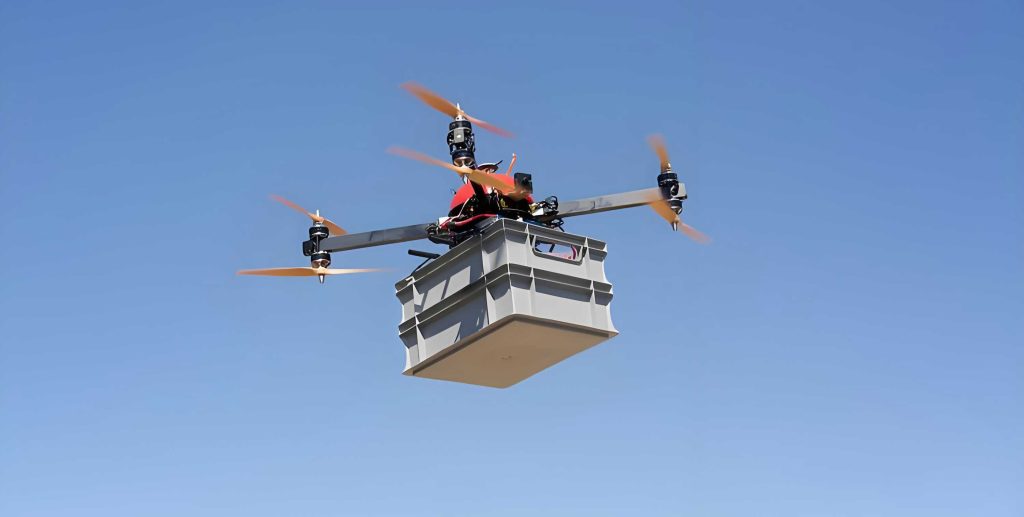
To overcome this systemic challenge, we present a novel, integrated inspection system that leverages UAV drones not merely as image capture platforms but as active participants in the assessment workflow. Our system synergizes a UAV drone-mounted spray mechanism, an imaging UAV drone, and an edge-deployed deep learning model to create a complete, efficient, and safe hydrophobicity detection pipeline. The core innovation lies in using one UAV drone to perform the standardized water spray and another to capture high-resolution images, all controlled and processed through a unified interface on the ground control station. This approach seamlessly integrates with existing UAV drone-based inspection routines.
The proposed deep learning model at the heart of the image analysis system is based on the Fasternet architecture, enhanced with an Efficient Channel Attention (ECA) module. This model is designed for high accuracy and computational efficiency, making it suitable for deployment on edge computing devices. Our contributions are validated through extensive dataset testing and field trials on operational power lines, demonstrating the system’s practicality and high performance.
1. System Architecture and Workflow
The designed insulator hydrophobicity detection system consists of two coordinated units: the Spray Unit and the Imaging & Detection Unit. The overall system architecture and data flow are illustrated in the conceptual diagram, showcasing the synergy between the airborne platforms and ground-based processing.
1.1 System Components and Interaction
The system’s operation is divided into two sequential phases, each handled by a specialized UAV drone:
- Spray Unit: This unit is based on a DJI Matrice 350 RTK UAV drone equipped with a custom-designed electric spray apparatus. The apparatus includes a water reservoir, a pump, a nozzle, and a control board. It is attached via the drone’s DJI Skyport V2 gimbal interface. Control signals from the pilot’s remote controller are relayed through the drone to the spray mechanism using the DJI Payload SDK, enabling precise control over spray duration.
- Imaging & Detection Unit: This unit comprises a second imaging UAV drone (e.g., DJI Mavic 3 Enterprise with optical zoom) and a ground-based edge computing device. The edge device, powered by an RK3588 SoC with a dedicated NPU, hosts the trained deep learning classification model. The pilot’s remote controller for this drone runs a custom application that handles image reception, communication with the edge device via Wi-Fi/UDP, and display of the final hydrophobicity classification result.
1.2 Operational Workflow
- Spraying: The operator positions the Spray Unit UAV drone 1-2 meters from the target insulator string. Through the controller interface, a spray command is issued. The UAV drone activates the pump for a predetermined period (e.g., 5-10 seconds), uniformly coating the insulator surface with fine water droplets as per standard HC test procedures.
- Imaging: Within 30 seconds post-spray, the operator deploys the Imaging Unit UAV drone. Positioned approximately 5 meters away, the drone uses its zoom camera to capture high-resolution images of the wetted insulator.
- Processing & Analysis: The captured image is sent from the drone’s remote controller to the edge computing device. The deployed FasterNet-ECA model processes the image, extracts features related to droplet shape and distribution, and outputs a hydrophobicity classification (HC1 to HC7).
- Result Delivery: The classification result is sent back to the application on the remote controller, displaying it to the operator in real-time. The interface allows for batch processing and generation of inspection reports.
This workflow effectively decouples the hazardous spraying operation from the safer imaging task, utilizes existing UAV drone control infrastructure, and provides instant, objective analysis, dramatically improving inspection safety and efficiency.
2. Spray Apparatus Design for UAV Drone Integration
The development of a lightweight, reliable, and controllable spray mechanism was crucial for the Spray Unit. The design prioritizes minimal weight, precise operation, and seamless integration with commercial UAV drone platforms.
The apparatus consists of the following key components mounted on a DJI M350 RTK:
- Payload SDK Interface Board: Facilitates communication between the UAV drone‘s flight controller and the custom spray controller.
- Microcontroller Unit (STM32): Acts as the spray controller. It receives commands from the UAV drone and generates corresponding Pulse-Width Modulation (PWM) signals.
- Electronic Speed Controller (ESC): Amplifies the low-power PWM signal from the MCU to drive the pump motor.
- DC Water Pump & Reservoir: A lightweight pump (12V) connected to a 1000ml water tank. The pump’s flow rate is controlled by the PWM duty cycle.
- Nozzle: Produces a fine mist spray to uniformly wet the insulator surface according to standard test guidelines.
The control logic is straightforward. A spray duration parameter \( t_{spray} \) is selected via the ground control software. The command is packaged and sent to the UAV drone, which relays it to the STM32 controller. The controller then generates a PWM signal with a fixed duty cycle \( D \) for the precise duration \( t_{spray} \).
$$ \text{PWM Signal} = \begin{cases} D & \text{for } 0 \leq t \leq t_{spray} \\ 0 & \text{for } t > t_{spray} \end{cases} $$
This signal, processed by the ESC, drives the pump motor at a constant speed for the required time, ensuring a consistent and repeatable spray application critical for standardized assessment.
3. Deep Learning Model for Hydrophobicity Classification
The image analysis core of our system is a deep convolutional neural network (CNN) optimized for accurate and fast classification of insulator hydrophobicity from spray-conditioned images.
3.1 Base Architecture: FasterNet
We selected FasterNet as our backbone due to its excellent trade-off between accuracy and computational efficiency, a prerequisite for edge device deployment. FasterNet introduces a novel Partial Convolution (PConv) operator. Instead of applying convolution to all input channels, PConv selectively performs spatial feature extraction on only a subset of channels, significantly reducing computational cost and memory access. A standard FasterNet block consists of a PConv layer followed by two pointwise (1×1) convolutions with Batch Normalization and ReLU activation, with a residual connection.
3.2 Enhanced Model: FasterNet with ECA (FasterNet-ECA)
While FasterNet is efficient, distinguishing between adjacent HC classes (e.g., HC6 vs. HC7) requires nuanced feature discrimination. To boost the model’s feature refinement capability, we integrated an Efficient Channel Attention (ECA) module after the final stage of the FasterNet backbone. The ECA module allows the model to focus on the most informative feature channels, suppressing less useful ones. It performs a lightweight, local cross-channel interaction without dimensionality reduction, making it highly efficient.
Given an input feature map \( \mathbf{X} \in \mathbb{R}^{H \times W \times C} \) from FasterNet, the ECA module computes a channel attention vector \( \mathbf{w} \in \mathbb{R}^{1 \times 1 \times C} \). This is achieved by first applying Global Average Pooling (GAP) to obtain channel-wise statistics \( \mathbf{z} \in \mathbb{R}^{C} \), where the \( c \)-th element is:
$$ z_c = \frac{1}{H \times W} \sum_{i=1}^{H} \sum_{j=1}^{W} X_c(i, j) $$
Subsequently, a 1D convolution with an adaptive kernel size \( k \) (where \( k \) is a function of \( C \)) is used to capture local cross-channel interaction and generate the attention weights:
$$ \mathbf{w} = \sigma(\text{Conv1D}_k(\mathbf{z})) $$
where \( \sigma \) is the Sigmoid activation function. The final enhanced feature map \( \mathbf{\tilde{X}} \) is obtained by channel-wise multiplication:
$$ \mathbf{\tilde{X}} = \mathbf{w} \cdot \mathbf{X} $$
This FasterNet-ECA architecture enables the model to emphasize critical droplet pattern features, improving classification accuracy for challenging cases while maintaining low computational overhead.
3.3 Model Training and Loss Function
The model was trained using a standard cross-entropy loss function for multi-class classification. For a batch of \( N \) samples, the loss \( \mathcal{L} \) is defined as:
$$ \mathcal{L} = -\frac{1}{N} \sum_{i=1}^{N} \sum_{c=1}^{7} y_{i,c} \log(\hat{y}_{i,c}) $$
where \( y_{i,c} \) is the binary indicator (0 or 1) if class label \( c \) is the correct classification for sample \( i \), and \( \hat{y}_{i,c} \) is the predicted probability for that class.
4. Experimental Validation and Performance Analysis
We conducted comprehensive evaluations, first on a public benchmark dataset to validate the model’s classification prowess, followed by a field trial to demonstrate the integrated system’s operational efficacy.
4.1 Dataset and Benchmark Results
The model was trained and tested on a publicly available dataset containing 4,536 high-quality insulator hydrophobicity images, evenly distributed across the seven HC classes. We compared our FasterNet-ECA model against several state-of-the-art CNNs: ResNet101, MobileNetV2, and the original FasterNet. Performance was measured by per-class accuracy (AC), mean accuracy (mAC), computational complexity in Giga-FLOPS (N), and inference speed (V) on the edge device.
| Model | HC1 AC | HC2 AC | HC3 AC | HC4 AC | HC5 AC | HC6 AC | HC7 AC | mAC | N (GFLOPs) | V (FPS) |
|---|---|---|---|---|---|---|---|---|---|---|
| ResNet101 | 97.6% | 100.0% | 97.1% | 98.7% | 96.2% | 91.4% | 100.0% | 97.2% | 4.1 | 77 |
| MobileNetV2 | 98.8% | 95.9% | 97.1% | 99.4% | 89.1% | 95.6% | 97.5% | 96.2% | 0.7 | 90 |
| FasterNet | 98.8% | 97.5% | 100.0% | 99.4% | 97.4% | 94.3% | 100.0% | 98.2% | 3.1 | 185 |
| FasterNet-ECA (Ours) | 98.8% | 98.2% | 100.0% | 99.5% | 97.4% | 94.8% | 100.0% | 98.4% | 3.4 | 182 |
The results clearly demonstrate the superiority of our proposed model. FasterNet-ECA achieved the highest mean accuracy of 98.4%, outperforming all other models. It maintained near-perfect or perfect accuracy for five of the seven classes. The most challenging distinction, between HC6 and HC7, saw an improvement over the base FasterNet model. While MobileNetV2 has lower complexity, its accuracy is significantly lower. Our model’s complexity (3.4 GFLOPs) is manageable for edge hardware, and its inference speed of 182 Frames Per Second ensures real-time analysis capability, far exceeding that of ResNet101.
4.2 Field Trial on Operational Transmission Line
A field test was conducted on a live 110 kV transmission line. The Spray Unit UAV drone successfully executed the spray operation on two insulator strings (A and B). The Imaging Unit UAV drone captured 65 images post-spray. All images showed well-formed water droplet patterns suitable for analysis. The edge processing system, operating at an average speed of 38 frames per second (including communication overhead), successfully classified all images.
The results for the two insulator strings were summarized as follows:
- String A: Predominantly HC1, with one insulator classified as HC3 and another as HC2.
- String B: Predominantly HC1, with one insulator classified as HC2.
The trial validated the entire system’s workflow—from UAV drone-based spray application and image acquisition to edge-computing analysis and result presentation. The system proved robust, efficient, and capable of integrating into routine UAV drone inspection missions.
5. Conclusion
This work presents a comprehensive, automated solution to the persistent challenge of in-service insulator hydrophobicity assessment. By integrating a UAV drone-mounted spray mechanism, a coordinated imaging UAV drone, and an edge-deployed optimized deep learning model (FasterNet-ECA), we have developed a system that enhances safety, efficiency, and objectivity in power line inspections.
The key achievements of this system are threefold: First, it eliminates the need for manual climbing and spraying, significantly reducing worker risk. Second, it provides an objective, consistent, and highly accurate (98.4% mAC) classification by leveraging advanced computer vision. Third, the entire process is designed for seamless integration with existing commercial UAV drone platforms and inspection protocols, requiring minimal adaptation from field crews.
The successful field trial confirms the system’s operational readiness. Future work may focus on further miniaturizing the spray apparatus, developing autonomous flight paths for repetitive inspection tasks, and expanding the system’s AI capabilities to concurrently assess other insulator defects like cracking or erosion, moving towards a fully autonomous, multi-purpose UAV drone inspection platform for electrical infrastructure.