
The safety and serviceability of transportation infrastructure, particularly bridges, are paramount for economic vitality and public safety. As these critical assets age and are subjected to increasing loads and environmental stressors, the need for efficient, accurate, and comprehensive structural health monitoring (SHM) becomes urgent. Traditional monitoring methods, often reliant on manual inspections or sparse networks of contact sensors, suffer from limitations in spatial coverage, data density, efficiency, and safety. In recent years, the convergence of Unmanned Aerial Vehicle (UAV) platforms with Light Detection and Ranging (LiDAR) technology has emerged as a transformative solution. This integrated approach, utilizing UAV drones, offers a paradigm shift in how we capture, analyze, and understand structural deformations.
This article delves into the application of UAV-borne LiDAR systems for monitoring bridge deformation. From my professional experience and research, I will elucidate the technical principles underpinning this technology, detail its operational advantages, and provide a comprehensive methodology for its application. Furthermore, I will explore its integration with other sensing technologies to form a robust, multi-faceted monitoring framework.
1. Technological Principles and Advantages of UAV LiDAR
1.1 Core Technical Principles
A UAV LiDAR system is a sophisticated integration of several key components: the UAV drones platform, a LiDAR sensor, an Inertial Navigation System (INS), a Global Navigation Satellite System (GNSS) receiver (often using Real-Time Kinematic – RTK for high accuracy), and dedicated processing software. The fundamental principle is based on measuring the time-of-flight of laser pulses.
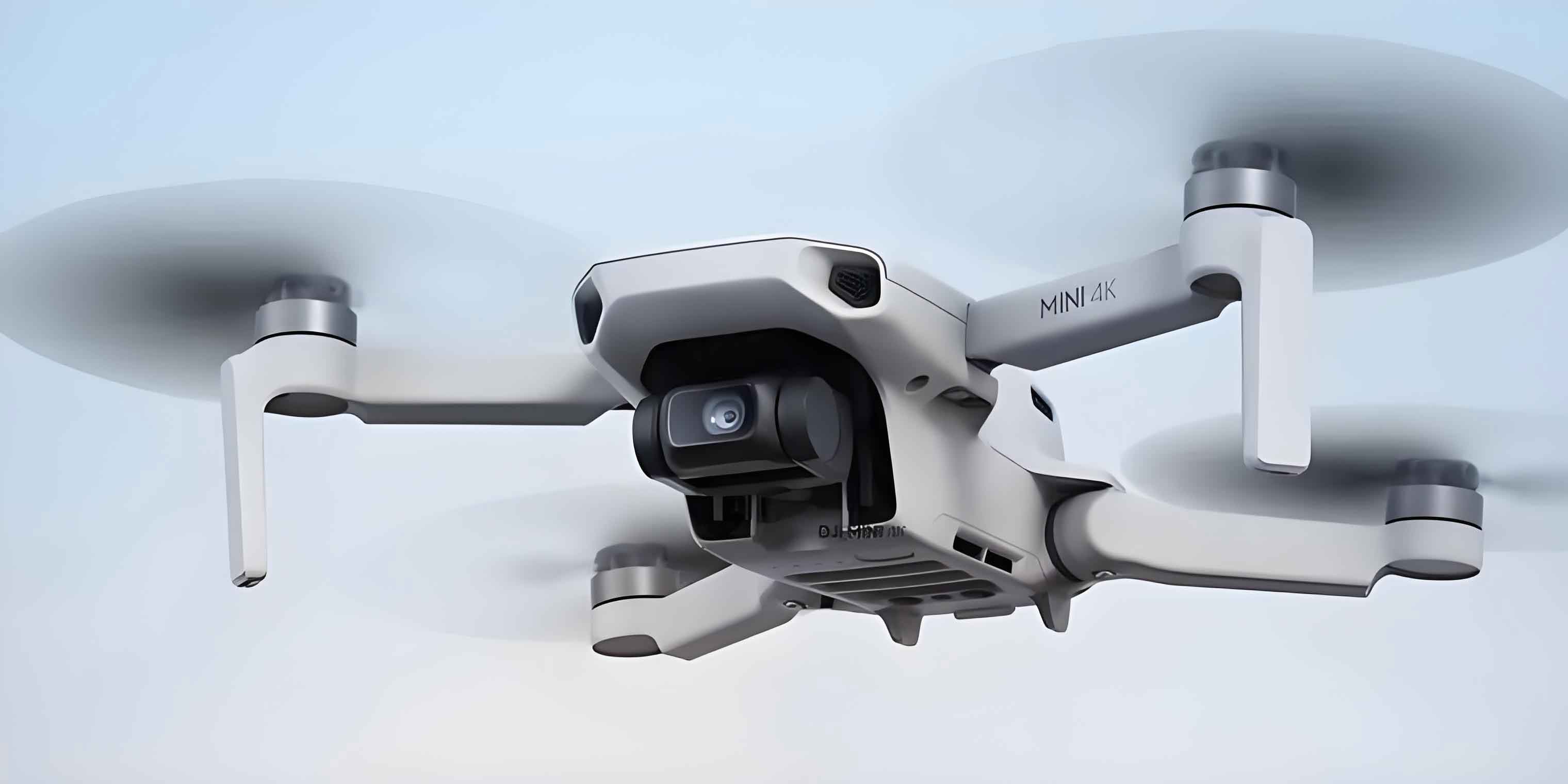
The LiDAR sensor, mounted on the UAV drones, emits rapid pulses of laser light towards the target (e.g., a bridge deck, piers, cables). Each pulse reflects off the surface and returns to the sensor’s receiver. The precise time interval ($$\Delta t$$) between emission and reception is measured. Knowing the speed of light ($$c$$), the slant range distance ($$d$$) from the sensor to the point on the surface is calculated as:
$$d = \frac{c \cdot \Delta t}{2}$$
However, this single distance measurement is meaningless without precise knowledge of the sensor’s position and orientation in space at the exact moment of measurement. This is where the INS and GNSS come into play. The GNSS provides the global coordinates (latitude, longitude, altitude) of the UAV drones, while the INS measures its attitude—roll ($$\phi$$), pitch ($$\theta$$), and yaw ($$\psi$$)—at a very high frequency.
By synchronizing the LiDAR range measurement with the corresponding INS/GNSS position and orientation data, the exact 3D coordinates ($$X, Y, Z$$) of each reflection point (or “point cloud”) in a global coordinate system can be computed. The process for a single laser return can be conceptualized by the following transformation:
$$
\begin{bmatrix}
X \\
Y \\
Z
\end{bmatrix}_{\text{global}} =
\begin{bmatrix}
X_{\text{GNSS}} \\
Y_{\text{GNSS}} \\
Z_{\text{GNSS}}
\end{bmatrix} +
\mathbf{R}_{\text{INS}}(\phi, \theta, \psi) \cdot
\begin{bmatrix}
\Delta X_{\text{LiDAR}} \\
\Delta Y_{\text{LiDAR}} \\
\Delta Z_{\text{LiDAR}}
\end{bmatrix}
$$
Where $$\mathbf{R}_{\text{INS}}$$ is the rotation matrix derived from the INS angles, and $$\Delta X_{\text{LiDAR}}, \Delta Y_{\text{LiDAR}}, \Delta Z_{\text{LiDAR}}$$ are the offsets from the UAV drones‘ center to the LiDAR sensor and the vector to the measured point based on the range and scan angle. Millions of such points are collected during a flight, generating a dense, accurate 3D digital representation of the bridge—the point cloud.
1.2 Inherent Advantages for Bridge Monitoring
The synergy between LiDAR and UAV drones creates a monitoring tool with unparalleled benefits, especially when compared to conventional techniques.
| Advantage | Description | Impact on Bridge Monitoring |
|---|---|---|
| High Efficiency & Coverage | UAV drones can rapidly survey large and complex structures from optimal angles, covering areas inaccessible or hazardous for ground crews. | Complete 3D data for an entire medium-span bridge can be acquired in minutes to hours, versus days for traditional topographic surveys. |
| High Precision & Density | Modern systems achieve ranging accuracy of 1-3 cm and can generate point densities exceeding 100 points/m², enabling detection of millimeter-level relative deformations. | Allows for precise measurement of deflection, settlement, and localized distortions of deck, piers, and abutments. |
| Non-Contact & Safe | The measurement is purely remote sensing. There is no need for physical access, scaffolding, or lane closures during data acquisition. | Eliminates risk to inspection personnel and minimizes disruption to traffic flow. Prevents potential damage from contact gauges. |
| Rich 3D Information & Flexibility | The output is a true 3D model, allowing measurement of any dimension (vertical deflection, horizontal displacement, cross-section deformation). Flight plans are easily adapted. | Enables holistic assessment. The same dataset can be used for deformation analysis, volumetric calculations, clash detection, and as-built verification. |
| Vegetation Penetration Capability | Some laser pulses can penetrate gaps in foliage, allowing partial mapping of surfaces obscured by ivy or light vegetation growing on bridge elements. | Facilitates inspection of abutments, piers, and lower sections of bridges that are often overgrown. |
2. Application Methodology for Bridge Deformation Monitoring
2.1 Pre-Monitoring Preparation
Success hinges on meticulous planning. The first step is a detailed Mission Design. This involves classifying the bridge type (e.g., girder, arch, cable-stayed) and identifying Critical Monitoring Zones (CMZs). For each CMZ, specific geometric features (edges, surfaces, centroids) are defined as analysis targets. A flight plan is then designed, specifying altitude, speed, overlap (frontlap and sidelap typically >70%), and flight path pattern (e.g., corridor, grid, or double grid). Lower altitude increases point density but reduces coverage per battery cycle. The plan must account for airspace regulations, obstacle clearance, and GNSS signal availability.
System Selection and Calibration are crucial. The choice of UAV drones (multi-rotor for complex, close-proximity work; fixed-wing for long linear corridors) and LiDAR sensor (scan frequency, range, number of returns) must match the project’s accuracy and coverage requirements. Prior to deployment, a rigorous system calibration (boresight and lever-arm calibration) is performed to minimize errors between the INS, LiDAR, and GNSS centers. Furthermore, a network of stable ground control points (GCPs) or check points is established on and around the bridge to validate and enhance the absolute accuracy of the final point cloud during processing.
2.2 Data Acquisition and Processing Pipeline
During the Acquisition Phase, the UAV drones autonomously follows the pre-planned route. Key parameters are logged and monitored in real-time. A typical setup for high-precision bridge work is summarized below:
| Parameter | Typical Setting / Target |
|---|---|
| Flight Altitude (AGL) | 30 – 70 m |
| Flight Speed | 3 – 8 m/s |
| LiDAR Scan Rate | > 200,000 points/second |
| Point Density on Target | 50 – 200 pts/m² |
| GNSS Positioning Mode | RTK or PPK (Post-Processed Kinematic) |
| Positional Accuracy Goal | < 2 cm (Horizontal & Vertical) |
Post-flight, the raw data undergoes a rigorous Processing Pipeline to transform it into an analysis-ready product. This multi-stage workflow is essential for ensuring data quality.
| Processing Stage | Key Algorithms & Objectives | Output |
|---|---|---|
| 1. Trajectory Solution | PPK processing fuses GNSS carrier-phase data with INS data to compute a highly accurate smoothed best estimate of trajectory (SBET). | Precise time-stamped position and orientation of the UAV drones. |
| 2. Point Cloud Generation | LiDAR ranges are combined with the SBET to georeference all laser returns into a single, massive 3D point cloud. | Raw, noisy georeferenced point cloud. |
| 3. Data Cleaning & Filtering | Statistical Outlier Removal (SOR), noise filters, and ground point classification (e.g., Cloth Simulation Filter) are applied to remove artifacts (birds, cars) and isolate the bridge structure. | “Clean” structural point cloud. |
| 4. Registration & Co-Registration | If multiple flights or scans are needed, Iterative Closest Point (ICP) algorithm aligns them into a unified coordinate system. Multi-epoch datasets for deformation analysis must be precisely co-registered using stable reference areas. | A single, consistent model of the bridge for a given epoch. |
| 5. Segmentation & Modeling | Algorithms (Region Growing, RANSAC) segment the cloud into structural components (deck, pier, girder, cable). Geometric primitives (planes, cylinders) are fitted to these segments. | Parametric models and classified point clusters for each bridge element. |
2.3 Deformation Analysis and Early Warning
Deformation is quantified by comparing 3D models from different epochs (e.g., $$t_1$$ and $$t_2$$). The most straightforward method is the Cloud-to-Cloud (C2C) Distance Computation. After precise co-registration of the two epoch clouds ($$C_{t1}$$ and $$C_{t2}$$) to a common stable reference frame, the shortest 3D distance for each point in $$C_{t1}$$ to $$C_{t2}$$ is calculated. This yields a distance map highlighting areas of movement. For a more robust analysis, the Cloud-to-Model (C2M) or Model-to-Model comparison is preferred. Here, the geometric primitives (e.g., a plane representing the deck soffit) fitted to the segmented point cloud of each epoch are compared.
For instance, the vertical deflection ($$\Delta_z$$) of the deck midline can be derived by comparing the fitted plane equations from two epochs. If the deck plane at time $$t_1$$ is defined by: $$A_1x + B_1y + C_1z + D_1 = 0$$, and at $$t_2$$ by: $$A_2x + B_2y + C_2z + D_2 = 0$$, the change at a specific (x,y) coordinate can be calculated. A more direct analysis involves comparing the extracted centroids or key points of structural elements. The 3D displacement vector $$\vec{D}_i$$ for a target point $$i$$ is:
$$\vec{D}_i = \begin{bmatrix} X_{i,t2} – X_{i,t1} \\ Y_{i,t2} – Y_{i,t1} \\ Z_{i,t2} – Z_{i,t1} \end{bmatrix}$$
and its magnitude is: $$|\vec{D}_i| = \sqrt{(X_{i,t2} – X_{i,t1})^2 + (Y_{i,t2} – Y_{i,t1})^2 + (Z_{i,t2} – Z_{i,t1})^2}$$.
Based on engineering thresholds (derived from design codes, finite element analysis, or historical performance), multi-level Early Warning Zones can be established: a Normal Zone ($$|\vec{D}| < \text{Threshold}_1$$), an Alert Zone ($$\text{Threshold}_1 \leq |\vec{D}| < \text{Threshold}_2$$), and an Alarm Zone ($$|\vec{D}| \geq \text{Threshold}_2$$). Automated systems can trigger notifications when data falls into the Alert or Alarm zones, enabling proactive maintenance.
2.4 Synergistic Fusion with Other Monitoring Technologies
While powerful, UAV LiDAR is not a panacea. Its true potential is unlocked when integrated into a multi-sensor SHM framework. UAV drones act as the flexible, high-density spatial data acquisition platform that complements other technologies.
| Complementary Technology | Synergy with UAV LiDAR | Combined Benefit |
|---|---|---|
| Fiber Optic Sensing (FOS) | FOS provides continuous, ultra-high precision (microstrain) point or distributed strain/temperature data at specific critical locations (e.g., within a pier, along a cable). | UAV LiDAR provides the overall 3D deformation context. FOS data validates and explains localized strain phenomena observed in the LiDAR displacement field (e.g., confirming high bending in a region showing deflection). |
| Global Navigation Satellite System (GNSS) Receivers | Permanent, high-rate GNSS stations installed on the bridge provide absolute, continuous time-series displacement data at a few key points. | GNSS provides the temporal benchmark and validates the absolute accuracy of periodic LiDAR surveys. LiDAR provides the spatial detail between GNSS receiver points, interpolating the full deformation shape. |
| Photogrammetry & Visual Inspections | High-resolution cameras on the same UAV drones can capture orthophotos and 3D textured models. Traditional visual inspection records surface defects (cracking, spalling). | Photogrammetric models offer visual context and high-resolution 2D analysis. LiDAR provides accurate geometric data unaffected by lighting/shadow. Together, they correlate visual defects with measurable geometric anomalies. |
| Ground-Based Radar/Total Station | These provide very high precision (sub-millimeter) line-of-sight displacement measurements or precise positioning of individual targets. | Used as an independent, high-accuracy system to validate the deformation measurements derived from the UAV LiDAR point cloud, especially for critical validation campaigns. |
The fusion strategy can be conceptualized as a hierarchical monitoring system: Level 1 (Continuous): GNSS and FOS for permanent, real-time monitoring of global behavior and critical spots. Level 2 (Periodic/Rapid): UAV LiDAR and photogrammetry for comprehensive geometric and visual surveys every 6-12 months or after extreme events. Level 3 (Targeted): Ground-based methods for detailed forensic investigation of areas identified as problematic by Levels 1 and 2. In this hierarchy, UAV drones are the workhorse for the essential Level 2 surveys, providing the crucial link between continuous point data and the complete structural system.
3. Conclusion and Perspective
UAV LiDAR technology has firmly established itself as a cornerstone of modern bridge structural health monitoring. The ability of UAV drones to carry high-precision LiDAR sensors safely and efficiently to all parts of a bridge structure enables the creation of accurate, dense, and information-rich 3D digital twins. The methodological workflow—from careful mission planning and calibrated data acquisition through sophisticated processing and deformation analysis—provides engineers with a quantitative, spatially exhaustive understanding of structural performance.
The future trajectory points towards greater automation and deeper integration. Advances in simultaneous localization and mapping (SLAM) for UAV drones operating in GNSS-denied environments (under bridges) will expand applicability. Onboard real-time processing and AI-driven anomaly detection during flight could enable immediate follow-up actions. Most significantly, the fusion of UAV LiDAR data with continuous sensor networks (FOS, GNSS) and physics-based finite element models will pave the way for predictive digital twins. These intelligent models will not only report current deformations but will also forecast future behavior under various load scenarios, transforming bridge management from reactive to genuinely predictive and prescriptive. The role of UAV drones as versatile, data-gathering platforms will be central to this intelligent infrastructure ecosystem, ensuring the longevity and safety of our critical transportation networks.