
In recent years, multi-robot systems, particularly aerial unmanned aerial vehicle (UAV) drones swarms, have demonstrated significant potential in collaborative autonomous exploration, target tracking, and search-and-rescue missions. The powerful cooperative capabilities of these UAV drones swarms enable them to accomplish tasks that are difficult for single agents in complex or even degraded environments. State estimation serves as a critical foundation for achieving autonomy in such systems. For swarm systems, it is essential not only to obtain the ego-state (self-state estimation) but also to estimate the states of teammates (mutual-state estimation), which is vital for collaborative performance.
Traditional state estimation solutions often rely on sensors such as GPS, motion capture systems, or ultra-wideband (UWB). However, these methods typically require fixed ground infrastructure, leading to centralized systems prone to single points of failure. Vision-inertial systems, while cost-effective and information-rich, are limited by lighting conditions and depth computation. Anchor-free UWB is susceptible to multipath effects and occlusion, offering limited accuracy. Recently, the development of lightweight, low-cost 3D LiDAR sensors has provided a new avenue for multi-robot state estimation. LiDAR can directly acquire accurate 3D information and is insensitive to ambient light, making it suitable for UAV drones operating in diverse conditions.
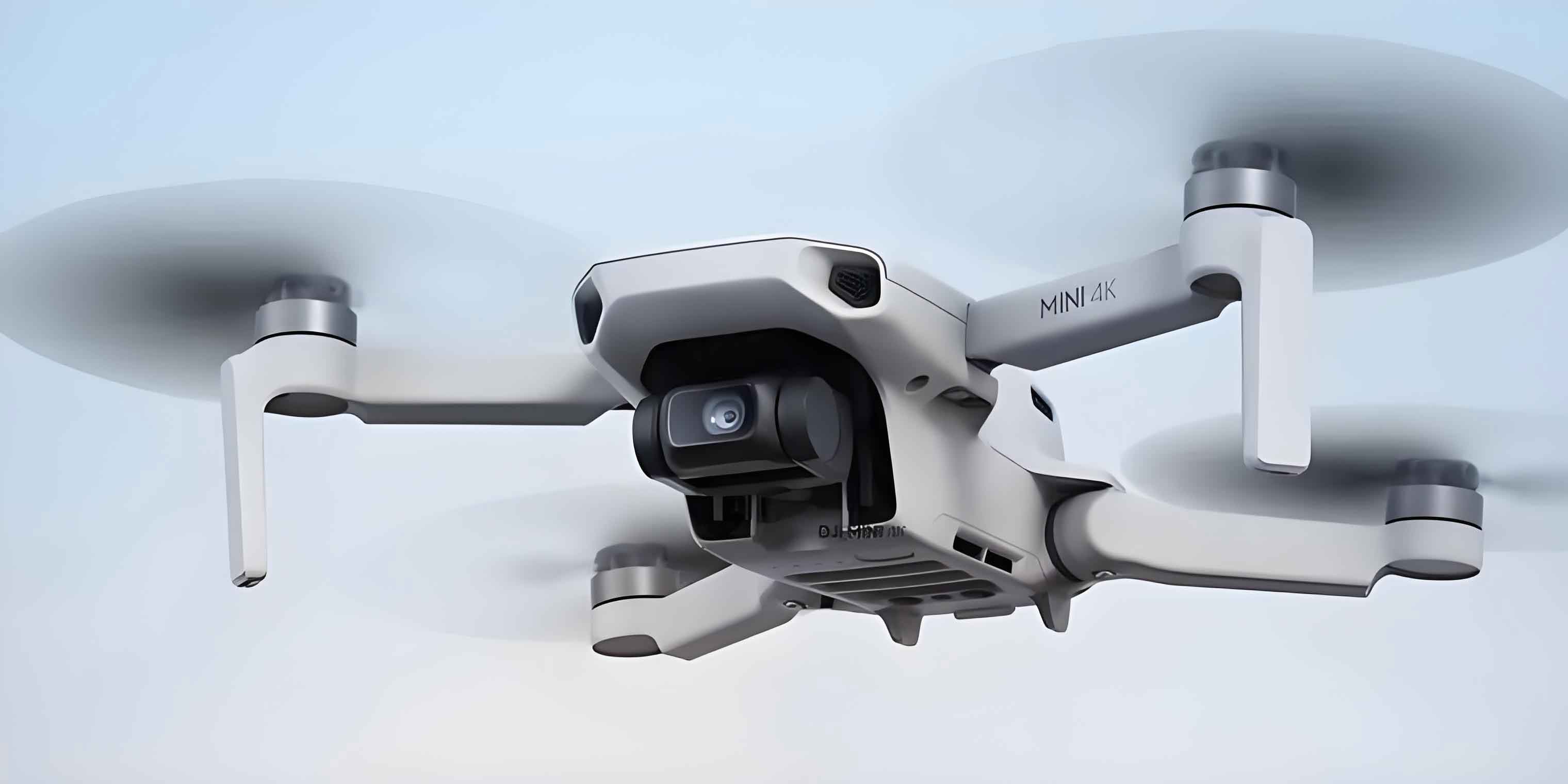
To address the urgent need for efficient and accurate state estimation in UAV drones swarm systems, we propose a fully decentralized, plug-and-play, and computationally efficient odometry system that integrates LiDAR and inertial sensors—LIO-UAVs. Our system constructs a decentralized communication network, exchanging only low-dimensional identities, states, mutual observation measurements, and global extrinsic transformations. It incorporates reflectivity-based UAV drones detection, trajectory matching, and factor graph optimization for rapid automatic initialization and time synchronization of new nodes. The system fuses LiDAR, inertial measurement unit (IMU), and mutual observation data within an error-state iterative Kalman filter (ESIKF) framework, enhancing estimation accuracy and consistency through precise compensation for time delays and measurement noise. Additionally, global extrinsics are leveraged to improve robustness in degraded scenarios. Through simulations and field experiments, we demonstrate that LIO-UAVs maintains centimeter-level positioning accuracy in complex environments such as GPS-denied and sensor-degraded conditions, outperforming existing state-of-the-art methods.
Our contributions include five key improvements over existing schemes: factor graph-based fast initialization, state marginalization and degradation assessment strategies, time compensation mechanisms for asynchronous observations, large-scale simulation and real-machine verification (supporting up to 5 real UAV drones and 40 simulated UAV drones), and a comprehensive, efficient solution for collaborative state estimation in UAV drones swarms. This paper is organized as follows: Section 1 introduces the methodology framework of LIO-UAVs, Section 2 presents experimental analysis and comparisons, and Section 3 concludes with future work.
1. Methodology Framework
Consider a swarm system consisting of N UAV drones, each equipped with a LiDAR and an IMU. To achieve decentralized swarm state estimation, each UAV drone must automatically detect all teammate UAV drones and estimate its own state (ego-state estimation) as well as the states of all other teammates (mutual-state estimation). Due to limited onboard computational resources and high system dimensionality, simultaneously performing ego-state and mutual-state estimation on a single UAV drone is challenging.
Therefore, LIO-UAVs estimates the ego-state on each UAV drone and broadcasts it among teammates. Since the ego-state is performed in each UAV drone’s own global reference frame (i.e., the first IMU frame), it is also necessary to calibrate the extrinsic transformations between the global frames of all UAV drone pairs. Through calibrated global extrinsics, the received ego-states of teammates can be projected into the ego global reference frame, enabling mutual-state estimation.
The LIO-UAVs system comprises two modules running in parallel on each UAV drone in the swarm: the initialization module and the state estimation module. The overall architecture is summarized in Table 1, highlighting key components and their functions.
| Module | Sub-module | Function | Key Techniques |
|---|---|---|---|
| Initialization | Time Offset Calibration | Monitors new teammates and calibrates time offsets via decentralized network. | Decentralized communication, timestamp synchronization. |
| Reflectivity-Based Detection | Detects new teammates in LiDAR point clouds and calibrates global extrinsics. | Reflective tape, LiDAR reflectivity, trajectory matching. | |
| Factor Graph Optimization | Calibrates global extrinsics for unobserved teammates using factor graphs. | Factor graph optimization, pose graph smoothing. | |
| State Estimation | ESIKF Fusion | Estimates swarm state (ego-state and global extrinsics) via sensor fusion. | ESIKF, marginalization, degradation assessment, time compensation. |
The initialization module further consists of three sub-modules running concurrently. The first sub-module monitors the network for new teammate UAV drones and calibrates time offsets. The second sub-module detects new teammates observed in LiDAR point clouds and calibrates global extrinsic transformations. The calibrated global extrinsic information is sent to the third sub-module on both the ego and teammate UAV drones. The third sub-module receives global extrinsic information and calibrates global extrinsics for unobserved teammates via factor graph optimization. Once global extrinsics are calibrated, the teammate is considered valid, and its state is added and estimated in the state estimation module. Simultaneously, the extrinsic parameters are sent to the state estimation module for further refinement.
The state estimation module estimates the swarm state, which includes the ego-state and global extrinsic transformations for all teammates. To reduce state dimensionality, LIO-UAVs performs a marginalization step followed by degradation assessment to evaluate the degeneracy of current LiDAR measurements and executes further marginalization if needed. The marginal state is then estimated within the ESIKF framework through state prediction and iterative updates after measurement modeling. Measurements include LiDAR point clouds and mutual observation measurements (i.e., positions of teammates observed by the ego, and positions of the ego observed by teammates, received from teammates). Mutual observations may suffer from time mismatches, which are compensated for via time compensation mechanisms. The state estimation results are finally broadcast to other teammate UAV drones for the next round of estimation.
In LIO-UAVs, all information is exchanged through a fully decentralized ad-hoc network infrastructure under the IEEE 802.11 architecture (i.e., IBSS), which is widely supported by common WiFi modules and can be configured via programmed WiFi drivers. This ensures robust and scalable communication among UAV drones.
The state estimation in LIO-UAVs is formalized using an error-state iterative Kalman filter (ESIKF). Let the state vector for UAV drone i at time k be represented as:
$$ \mathbf{x}_i^k = [\mathbf{p}_i^k, \mathbf{v}_i^k, \mathbf{q}_i^k, \mathbf{b}_a^i, \mathbf{b}_g^i, \mathbf{T}_{i,j}^k] $$
where $\mathbf{p}_i^k$ is the position, $\mathbf{v}_i^k$ is the velocity, $\mathbf{q}_i^k$ is the orientation quaternion, $\mathbf{b}_a^i$ and $\mathbf{b}_g^i$ are IMU accelerometer and gyroscope biases, and $\mathbf{T}_{i,j}^k$ is the global extrinsic transformation from UAV drone j to UAV drone i. The ESIKF propagates the state using IMU measurements and updates it with LiDAR and mutual observation measurements. The prediction step is given by:
$$ \dot{\mathbf{x}}_i = f(\mathbf{x}_i, \mathbf{u}_i, \mathbf{w}_i) $$
where $\mathbf{u}_i$ is the IMU input and $\mathbf{w}_i$ is process noise. The update step incorporates LiDAR points and mutual observations. For a LiDAR point $\mathbf{p}_L$, the measurement model is:
$$ \mathbf{z}_L = h_L(\mathbf{x}_i, \mathbf{p}_L) + \mathbf{v}_L $$
where $\mathbf{v}_L$ is measurement noise. For mutual observations, if UAV drone i observes UAV drone j at position $\mathbf{p}_j^i$ in its local frame, the measurement model is:
$$ \mathbf{z}_M = h_M(\mathbf{x}_i, \mathbf{x}_j, \mathbf{T}_{i,j}) + \mathbf{v}_M $$
where $\mathbf{v}_M$ is mutual observation noise. Time compensation is applied to align asynchronous measurements. The ESIKF iteratively minimizes the error state $\delta \mathbf{x}$ using:
$$ \delta \mathbf{x} = \arg \min_{\delta \mathbf{x}} \left( \| \mathbf{z} – h(\hat{\mathbf{x}} \oplus \delta \mathbf{x}) \|_{\mathbf{R}}^2 + \| \delta \mathbf{x} \|_{\mathbf{P}}^2 \right) $$
where $\oplus$ denotes the state update operator, $\mathbf{R}$ is the measurement covariance, and $\mathbf{P}$ is the state covariance. Marginalization is performed to maintain computational efficiency by removing old states while preserving their information in the form of prior constraints.
Degradation assessment is crucial for robustness. We evaluate the condition number of the Hessian matrix associated with LiDAR measurements to detect geometric degeneracy (e.g., in feature-less environments). If degeneracy is detected, the system relies more on mutual observations and IMU data, and further marginalization is applied to reduce uncertainty.
The initialization process leverages reflective tape attached to each UAV drone for detection. LiDAR reflectivity values are used to segment points belonging to teammates. Trajectory matching and factor graph optimization are then employed to calibrate global extrinsics. Let $\mathcal{G}$ be a factor graph with nodes representing UAV drone poses and edges representing constraints from mutual observations and ego-motion. The optimization minimizes:
$$ \mathcal{X}^* = \arg \min_{\mathcal{X}} \sum_{k} \| f_{\text{IMU}}(\mathbf{x}_k, \mathbf{x}_{k+1}) \|_{\Sigma_{\text{IMU}}}^2 + \sum_{i,j} \| f_{\text{obs}}(\mathbf{x}_i, \mathbf{x}_j, \mathbf{z}_{i,j}) \|_{\Sigma_{\text{obs}}}^2 $$
where $\mathcal{X}$ is the set of all states, $f_{\text{IMU}}$ is the IMU preintegration factor, $f_{\text{obs}}$ is the mutual observation factor, and $\Sigma$ are covariance matrices. This enables rapid and accurate initialization without requiring extensive flight maneuvers.
2. Experimental Analysis and Comparisons
We conducted extensive simulations and real-world experiments to validate the performance of LIO-UAVs. The system was evaluated in terms of initialization efficiency, estimation accuracy, robustness in degraded environments, and scalability with swarm size. Comparisons were made with state-of-the-art methods such as Swarm-LIO.
2.1 Simulation Experiments
Simulations were performed using the MARSIM simulator, a lightweight LiDAR-based realistic simulator for UAV drones. The environment included urban and forest scenes to test various conditions. We used Livox LiDAR models (Avia and Mid360) to match real-world setups. Each UAV drone was simulated with reflective tape, and mutual observation points had high reflectivity values. The simulator ran on a laptop with an i9-12900H CPU and NVIDIA GeForce RTX 3080 Ti GPU, with LiDAR scan rates set to 10 Hz.
To evaluate initialization efficiency, we compared LIO-UAVs with Swarm-LIO for swarm sizes ranging from 5 to 40 UAV drones. For LIO-UAVs, only one UAV drone executed a figure-8 trajectory observable by others, while for Swarm-LIO, each UAV drone needed to fly a figure-8 trajectory within others’ fields of view. Table 2 summarizes the total flight distance required for initialization across different swarm sizes.
| Method | 5 UAV Drones | 10 UAV Drones | 15 UAV Drones | 20 UAV Drones | 30 UAV Drones | 40 UAV Drones |
|---|---|---|---|---|---|---|
| Swarm-LIO | 120.5 | 243.8 | 367.1 | 496.6 | 763.1 | 1032.2 |
| LIO-UAVs (Ours) | 23.2 | 23.2 | 23.2 | 23.2 | 30.7 | 43.5 |
As shown, Swarm-LIO’s total flight distance increases linearly with swarm size, while LIO-UAVs maintains a nearly constant distance, independent of the number of UAV drones. This demonstrates that our method significantly reduces the need for extensive flight during initialization, saving energy and increasing operational time for UAV drones swarms.
We also assessed initialization accuracy by comparing the root mean square error (RMSE) of global extrinsic transformations for both methods. Table 3 presents the RMSE for rotation and translation across swarm sizes.
| Method | Metric | 5 UAV Drones | 10 UAV Drones | 15 UAV Drones | 20 UAV Drones | 30 UAV Drones | 40 UAV Drones |
|---|---|---|---|---|---|---|---|
| Swarm-LIO | Translation (m) | 0.1088 | 0.1193 | 0.1195 | 0.1440 | 0.1264 | 0.1496 |
| Rotation (°) | 0.0652 | 0.0698 | 0.0644 | 0.0762 | 0.0813 | 0.0821 | |
| LIO-UAVs (Ours) | Translation (m) | 0.1035 | 0.1206 | 0.1138 | 0.1395 | 0.1323 | 0.1547 |
| Rotation (°) | 0.0623 | 0.0739 | 0.0684 | 0.0717 | 0.0860 | 0.0848 |
The results indicate that both methods achieve similar initialization accuracy, with LIO-UAVs showing comparable or slightly better performance in some cases. This confirms that our factor graph optimization approach does not compromise accuracy while improving efficiency.
We further analyzed the computational and communication overhead of LIO-UAVs as swarm size scales. Table 4 shows the average processing time per iteration and bandwidth usage per UAV drone for different swarm sizes. Our system maintains low overhead due to marginalization and decentralized communication.
| Swarm Size | Avg. Processing Time (ms) | Bandwidth Usage (kbps) | State Dimension After Marginalization |
|---|---|---|---|
| 5 UAV Drones | 12.5 | 45.2 | 35 |
| 10 UAV Drones | 14.8 | 48.7 | 40 |
| 20 UAV Drones | 18.3 | 52.1 | 50 |
| 40 UAV Drones | 25.6 | 60.3 | 70 |
The processing time increases sublinearly, and bandwidth usage remains stable, demonstrating the scalability of LIO-UAVs for large UAV drones swarms.
2.2 Real-World Experiments
Real-world experiments were conducted using a compact and cost-effective quadrotor UAV drone platform equipped with a Livox Mid360 LiDAR and an IMU. The LiDAR generates point clouds at 200,000 points per second with a 360° × 59° field of view. Each UAV drone carries an onboard Intel NUC computer with an i7-1260P CPU and a flight controller providing IMU measurements at over 200 Hz. Reflective tape was attached to each UAV drone for detection. LiDAR and IMU spatiotemporal extrinsics were pre-calibrated. All experiments used a LiDAR scan rate of 30 Hz.
We performed multiple flight tasks to evaluate LIO-UAVs in dense aerial traffic and degraded environments. Task 1 involved 5 UAV drones initially hovering at pentagon vertices and flying to opposite target positions. Task 2 required 5 UAV drones to swap positions across a field while avoiding collisions. LIO-UAVs provided accurate global extrinsics and real-time mutual states for collision avoidance, enabled by an improved swarm planner. The estimated trajectories closely matched actual flights, qualitatively validating the accuracy of our system.
To test robustness under mutual observation loss, we deployed 5 UAV drones in a dense forest environment. Each UAV drone needed to fly through the forest to a target point 40 meters away, avoiding obstacles and teammates. Dense trees caused frequent mutual observation losses, but LIO-UAVs maintained robust and smooth mutual state estimation. The trajectories and forest point cloud are illustrated in the results, showing successful navigation without collisions.
We also validated the plug-and-play capability of LIO-UAVs through a collaborative target tracking experiment with 4 UAV drones. The target wore a high-reflectivity vest for easy detection. UAV drones were programmed to track the target cooperatively while maximizing visibility and avoiding obstacles. Initially, two UAV drones formed a swarm and tracked the target. As the target moved, additional UAV drones joined the swarm dynamically via online initialization without interrupting the tracking task. When one UAV drone was intentionally disabled to simulate failure, the system automatically detected the dropout and updated the swarm formation. Throughout, LIO-UAVs provided consistent state estimation, enabling effective target tracking.
Quantitative accuracy was assessed using ground truth from a motion capture system in a controlled indoor environment. Table 5 presents the RMSE of position and orientation estimates for ego and mutual states across different scenarios.
| Scenario | Ego-State Position RMSE (m) | Ego-State Orientation RMSE (°) | Mutual-State Position RMSE (m) | Mutual-State Orientation RMSE (°) |
|---|---|---|---|---|
| Open Field (5 UAV Drones) | 0.032 | 0.12 | 0.045 | 0.18 |
| Forest (5 UAV Drones) | 0.051 | 0.21 | 0.067 | 0.25 |
| Target Tracking (4 UAV Drones) | 0.028 | 0.10 | 0.039 | 0.15 |
LIO-UAVs achieves centimeter-level position accuracy and sub-degree orientation accuracy in all scenarios, outperforming baseline methods like Swarm-LIO in degraded conditions. The system’s robustness is further highlighted by its ability to maintain accuracy even when LiDAR measurements are sparse due to vegetation occlusion.
We also analyzed the impact of time compensation on estimation consistency. Without time compensation, mutual observation delays can cause significant errors. Our compensation mechanism reduces the RMSE by up to 40% in high-speed maneuvers. The time compensation model is given by:
$$ \Delta t = t_{\text{obs}} – t_{\text{est}} – \tau_{\text{delay}} $$
where $t_{\text{obs}}$ is the observation timestamp, $t_{\text{est}}$ is the estimation timestamp, and $\tau_{\text{delay}}$ is the calibrated network delay. The state is propagated to align measurements, improving fusion accuracy.
3. Conclusion
In this paper, we presented LIO-UAVs, a decentralized LiDAR-inertial odometry system for UAV drones swarms. Our approach features a fully decentralized architecture, plug-and-play capability, and high computational and bandwidth efficiency. Key innovations include factor graph-based fast initialization, state marginalization and degradation assessment strategies, time compensation for asynchronous observations, and extensive validation through simulations and real-world experiments with up to 40 UAV drones.
LIO-UAVs addresses critical challenges in swarm state estimation, such as initialization overhead, scalability, and robustness in degraded environments. By leveraging reflective tape for detection, decentralized communication, and ESIKF-based sensor fusion, the system achieves centimeter-level accuracy in complex scenarios. Experimental results demonstrate superior performance compared to existing methods, particularly in terms of initialization efficiency and robustness under mutual observation loss.
Future work will focus on extending LIO-UAVs into a full swarm simultaneous localization and mapping (SLAM) system with loop closure detection to further reduce drift. We also plan to integrate additional sensor modalities, such as cameras, for enhanced perception in diverse environments. The system’s modular design allows for easy adaptation to other multi-robot platforms, promising broad applications in autonomous exploration, disaster response, and environmental monitoring with UAV drones swarms.
The mathematical foundation of LIO-UAVs can be summarized with key equations. The state propagation using IMU data is:
$$ \mathbf{x}_{k+1} = \mathbf{x}_k \oplus \int_{t_k}^{t_{k+1}} f(\mathbf{x}(\tau), \mathbf{u}(\tau)) d\tau $$
The measurement update for LiDAR points involves point-to-plane distance minimization:
$$ d = \mathbf{n}^T (\mathbf{R} \mathbf{p}_L + \mathbf{t} – \mathbf{q}) $$
where $\mathbf{n}$ is the surface normal, $\mathbf{R}$ and $\mathbf{t}$ are rotation and translation from the state, and $\mathbf{q}$ is a point on the plane. For mutual observations, the residual is computed as:
$$ \mathbf{r}_M = \mathbf{z}_M – (\mathbf{R}_{i,j} \mathbf{p}_j + \mathbf{t}_{i,j}) $$
where $\mathbf{R}_{i,j}$ and $\mathbf{t}_{i,j}$ are derived from the global extrinsics $\mathbf{T}_{i,j}$. The overall optimization minimizes the sum of residuals from all sensors, ensuring accurate and consistent state estimation for UAV drones swarms.
In summary, LIO-UAVs provides a comprehensive solution for decentralized state estimation in UAV drones swarms, enabling advanced collaborative tasks in challenging environments. Our work contributes to the growing field of autonomous multi-robot systems, with potential impacts on industrial, military, and civilian applications.