
The reliable and precise operation of UAV drones hinges critically on their ability to accurately perceive their own motion and orientation in three-dimensional space. At the heart of this perception system lies the Inertial Measurement Unit (IMU), typically composed of tri-axial micro-electromechanical system (MEMS) accelerometers and gyroscopes. These micro-inertial sensors provide the fundamental data—linear accelerations and angular rates—from which the drone’s attitude, velocity, and position are estimated through sensor fusion algorithms. This estimation is paramount for stable flight control, autonomous navigation, and the execution of complex flight maneuvers.
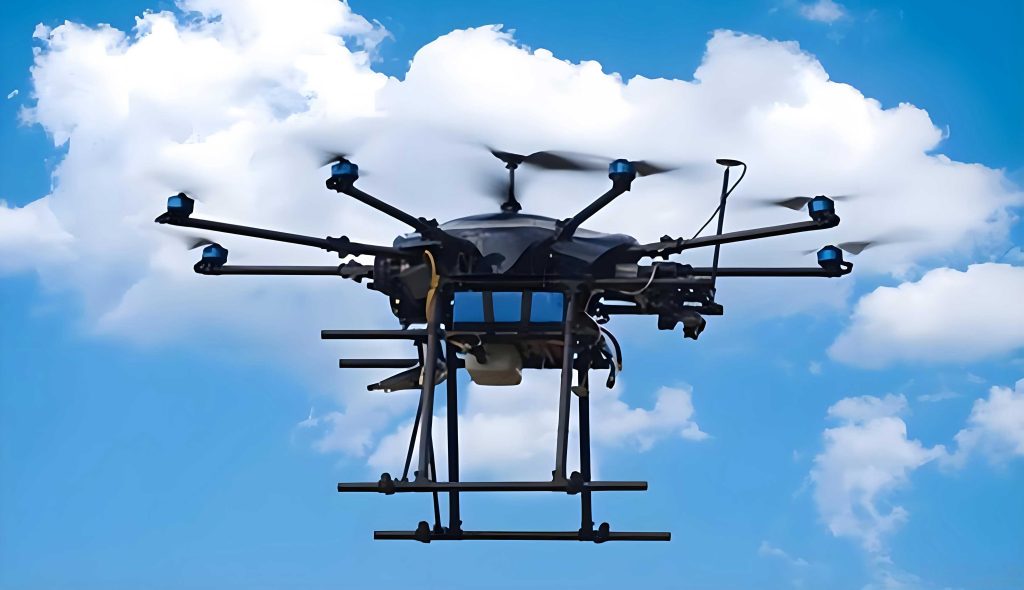
However, the measurements from these low-cost, mass-produced MEMS sensors are invariably corrupted by various deterministic and stochastic errors. Factors such as manufacturing imperfections, material properties, temperature variations, and time-dependent drifts introduce significant biases and scale factor inaccuracies. For UAV drones, these errors directly translate into drift in the estimated attitude and position, potentially leading to unstable flight, navigation inaccuracies, or even catastrophic failure. Therefore, calibrating these micro-inertial sensors to characterize and compensate for their inherent errors is a crucial prerequisite for enhancing the performance and reliability of UAV drones.
Traditional calibration methods often rely on sophisticated, multi-position static tests using precision turntables. These methods are not only cumbersome and time-consuming but may also fail to excite all observable error parameters of the sensor, particularly those related to non-orthogonality between the sensing axes. Furthermore, such lab-based calibration is impractical for routine use or for compensating errors that evolve over the operational life of the UAV drones. This necessitates the development of self-calibration algorithms that can estimate key error parameters using only the sensor data collected during the drone’s normal operation or a dedicated but simple calibration routine, without relying on external precision equipment.
This article, from a first-person research perspective, delves into the study and implementation of such a self-calibration algorithm for micro-inertial sensors used in UAV drones. We focus on compensating for two primary deterministic error sources: the zero-bias error and the non-orthogonal error. The proposed methodology is grounded in a rigorous error modeling of both the tri-axial accelerometer and gyroscope. For the accelerometer, we employ an ellipsoid fitting technique based on the least-squares principle. For the gyroscope, we leverage the kinematic relationship between gravitational field observations and angular rate measurements, solved again via least-squares fitting. The effectiveness of the proposed algorithms is validated through comprehensive numerical simulations, demonstrating significant error reduction and validating their suitability for application in UAV drones.
1. Error Analysis and Modeling for Micro-Inertial Sensors
The output of micro-inertial sensors in UAV drones deviates from the true specific force or angular rate due to a combination of intrinsic and extrinsic error sources. For the purpose of self-calibration, we primarily address deterministic errors that can be modeled mathematically. The two most significant among these for UAV drone applications are:
Zero-Bias Error: This is a constant or slowly varying offset present in the sensor output even when the input (acceleration or angular rate) is zero. In UAV drones, a gyroscope zero-bias directly causes an angular drift in the attitude estimate, while an accelerometer zero-bias is interpreted as a persistent linear acceleration, affecting velocity and position estimates.
Non-Orthogonal Error: Ideally, the three sensing axes of an IMU are perfectly orthogonal. Manufacturing limitations cause misalignment, meaning the axes are not at 90 degrees to each other. This causes a component of the input along one axis to be projected onto the other axes, corrupting their readings. For UAV drones, this cross-axis sensitivity degrades the purity of the measured accelerations and rotations.
Other errors like scale factor nonlinearity and cross-coupling are often absorbed into a more comprehensive error model. A generalized static error model for a tri-axial micro-inertial sensor (applicable to both accelerometers and gyroscopes) can be expressed as:
$$
\vec{S}_{out} = \mathbf{K} \cdot \vec{S}_{in} + \vec{b} + \vec{\nu}
$$
Where:
- $\vec{S}_{out}$ is the 3×1 vector of raw sensor outputs (in digital counts or volts).
- $\vec{S}_{in}$ is the 3×1 vector of true physical quantities (acceleration in m/s² or angular rate in rad/s).
- $\mathbf{K}$ is the 3×3 error matrix encompassing scale factors and non-orthogonal misalignments.
- $\vec{b}$ is the 3×1 zero-bias vector.
- $\vec{\nu}$ is the 3×1 vector of stochastic noise (e.g., white noise).
The goal of self-calibration for UAV drones is to estimate the parameters within $\mathbf{K}$ and $\vec{b}$ so that the true input can be recovered from the output:
$$
\vec{S}_{in} = \mathbf{K}^{-1} \cdot (\vec{S}_{out} – \vec{b})
$$
The specific forms of $\mathbf{K}$ for the accelerometer and gyroscope, and the methods to estimate them along with $\vec{b}$, form the core of the following sections.
2. Accelerometer Self-Calibration via Ellipsoid Fitting
2.1 Error Model and the Ellipsoid Constraint
For a tri-axial accelerometer in a stationary or slowly moving UAV drone, the primary measured input is the local gravitational field vector $\vec{g}$. In an ideal, error-free scenario at a given attitude, the measured output $\vec{a}_{out}$ would satisfy:
$$
\| \vec{a}_{out} \|^2 = g^2
$$
where $g$ is the magnitude of local gravity (approximately 9.78 m/s²). This means that as the UAV drone is rotated through various attitudes, the tip of the measured acceleration vector should trace out a perfect sphere of radius $g$.
Incorporating the error model from Equation (1), the actual output is:
$$
\vec{a}_{out} = \mathbf{K}_a \cdot \vec{g} + \vec{b}_a + \vec{\nu}_a
$$
Assuming the noise $\vec{\nu}_a$ is zero-mean, its effect can be averaged out over many samples. Neglecting noise and substituting into the sphere equation leads to:
$$
(\vec{a}_{out} – \vec{b}_a)^T (\mathbf{K}_a^{-1})^T \mathbf{K}_a^{-1} (\vec{a}_{out} – \vec{b}_a) = g^2
$$
Let us define $\mathbf{P} = (\mathbf{K}_a^{-1})^T \mathbf{K}_a^{-1}$. Since $\mathbf{K}_a$ is invertible, $\mathbf{P}$ is a symmetric positive definite matrix. The equation then becomes:
$$
(\vec{a}_{out} – \vec{b}_a)^T \mathbf{P} (\vec{a}_{out} – \vec{b}_a) = g^2
$$
This is the equation of an ellipsoid. The presence of errors $\mathbf{K}_a$ and $\vec{b}_a$ distorts the ideal sphere into an ellipsoid. The center of this ellipsoid is offset by $\vec{b}_a$, and its shape/orientation is defined by $\mathbf{P}$. Therefore, by collecting accelerometer data $\vec{a}_{out}^{(i)}$ from the UAV drone at multiple, sufficiently different static attitudes, we can fit an ellipsoid to this data cloud. The estimated ellipsoid parameters directly yield estimates for $\vec{b}_a$ and $\mathbf{P}$, from which $\mathbf{K}_a$ can be derived.
2.2 Least-Squares Ellipsoid Fitting Algorithm
The general quadratic form of an ellipsoid is:
$$
F(\vec{x}) = A x^2 + B y^2 + C z^2 + 2D xy + 2E xz + 2F yz + 2G x + 2H y + 2I z + J = 0
$$
We have $N$ data points $\vec{a}_{out}^{(i)} = [x_i, y_i, z_i]^T$. Our goal is to find the coefficient vector $\vec{\theta} = [A, B, C, D, E, F, G, H, I, J]^T$ that minimizes $\sum_{i=1}^{N} F(x_i, y_i, z_i)^2$ subject to the constraint that the fitted quadratic surface is an ellipsoid (not a hyperboloid or other shape).
This constrained least-squares problem can be solved efficiently. We form the design matrix $\mathbf{D}$ and the constraint matrix $\mathbf{C}$:
$$
\mathbf{D} = \begin{bmatrix}
x_1^2 & y_1^2 & z_1^2 & 2x_1y_1 & 2x_1z_1 & 2y_1z_1 & 2x_1 & 2y_1 & 2z_1 & 1 \\
x_2^2 & y_2^2 & z_2^2 & 2x_2y_2 & 2x_2z_2 & 2y_2z_2 & 2x_2 & 2y_2 & 2z_2 & 1 \\
\vdots & \vdots & \vdots & \vdots & \vdots & \vdots & \vdots & \vdots & \vdots & \vdots \\
x_N^2 & y_N^2 & z_N^2 & 2x_Ny_N & 2x_Nz_N & 2y_Nz_N & 2x_N & 2y_N & 2z_N & 1
\end{bmatrix}
$$
The solution involves solving a generalized eigenvalue problem of the form $\mathbf{S} \vec{\theta} = \lambda \mathbf{C} \vec{\theta}$, where $\mathbf{S} = \mathbf{D}^T \mathbf{D}$. The eigenvector corresponding to the single positive eigenvalue provides the desired coefficient vector $\vec{\theta}$.
2.3 Extracting Calibration Parameters
Once $\vec{\theta}$ is obtained, we convert the general quadratic form back to the canonical ellipsoid matrix form of Equation (5). This involves constructing matrices:
$$
\mathbf{Q} = \begin{bmatrix}
A & D & E \\
D & B & F \\
E & F & C
\end{bmatrix}, \quad \vec{R} = \begin{bmatrix} G \\ H \\ I \end{bmatrix}
$$
The center of the ellipsoid (the accelerometer bias) is given by:
$$
\vec{b}_a = -\mathbf{Q}^{-1} \vec{R}
$$
The matrix $\mathbf{P}$ is proportional to $\mathbf{Q}$:
$$
\mathbf{P} = \frac{\mathbf{Q}}{\vec{R}^T \mathbf{Q}^{-1} \vec{R} – J}
$$
Finally, to find the calibration matrix $\mathbf{K}_a$, we perform a Cholesky decomposition or a matrix square root operation on $\mathbf{P}^{-1}$, since $\mathbf{P}^{-1} = \mathbf{K}_a^T \mathbf{K}_a$. Taking the inverse of the resulting upper-triangular matrix gives $\mathbf{K}_a^{-1}$, which is the compensation matrix needed in Equation (2). The steps are summarized below:
| Step | Action | Output |
|---|---|---|
| 1 | Collect static accelerometer data at N diverse attitudes from the UAV drone. | Data cloud $\{ \vec{a}_{out}^{(i)} \}$. |
| 2 | Perform constrained least-squares ellipsoid fitting. | Coefficient vector $\vec{\theta}$. |
| 3 | Compute ellipsoid center $\vec{b}_a$ and matrix $\mathbf{P}$. | Bias estimate $\vec{b}_a$, shape matrix $\mathbf{P}$. |
| 4 | Decompose $\mathbf{P}^{-1}$ to find $\mathbf{K}_a$. | Error matrix estimate $\mathbf{K}_a$. |
| 5 | Apply calibration: $\vec{g}_{est} = \mathbf{K}_a^{-1} (\vec{a}_{out} – \vec{b}_a)$. | Calibrated gravity vector. |
3. Gyroscope Self-Calibration Using Gravity Vector Observations
3.1 Error Model and Kinematic Relationship
Calibrating the gyroscopes in UAV drones is more challenging because there is no constant physical reference analogous to gravity for angular rates. However, we can leverage the calibrated accelerometer’s output. In the inertial (non-rotating) frame, the gravity vector is constant. Its rate of change in the body frame (where the sensors are attached to the UAV drone) is given by the kinematic equation:
$$
\frac{d\vec{g}_b}{dt} = -\vec{\omega} \times \vec{g}_b = -\lfloor \vec{\omega} \times \rfloor \vec{g}_b
$$
where $\vec{g}_b$ is the gravity vector expressed in the body frame (measured by the calibrated accelerometer), $\vec{\omega}$ is the true angular velocity vector of the UAV drone, and $\lfloor \vec{\omega} \times \rfloor$ is the skew-symmetric cross-product matrix.
The gyroscope’s error model is similar to Equation (1):
$$
\vec{\omega}_{out} = \mathbf{K}_g \cdot \vec{\omega} + \vec{b}_g + \vec{\nu}_g
$$
Our objective is to estimate $\mathbf{K}_g$ and $\vec{b}_g$. Rearranging the model:
$$
\vec{\omega} = \mathbf{K}_g^{-1} (\vec{\omega}_{out} – \vec{b}_g) = \mathbf{L} \vec{\omega}_{out} – \vec{f}
$$
where $\mathbf{L} = \mathbf{K}_g^{-1}$ and $\vec{f} = \mathbf{L} \vec{b}_g$.
3.2 Least-Squares Formulation from Vector Cross-Product
Substituting the expression for $\vec{\omega}$ into the kinematic equation (8) yields:
$$
\dot{\vec{g}}_b = -\lfloor (\mathbf{L} \vec{\omega}_{out} – \vec{f}) \times \rfloor \vec{g}_b
$$
This equation is linear in the unknown parameters of $\mathbf{L}$ and $\vec{f}$. By collecting data over a time interval where the UAV drone is undergoing rotational motion, we can formulate a least-squares problem. A more robust form is obtained by integrating over a time window from $t_k$ to $t_{k+1}$:
$$
\vec{g}_b(t_{k+1}) – \vec{g}_b(t_k) = -\int_{t_k}^{t_{k+1}} \lfloor \vec{g}_b(t) \times \rfloor \mathbf{L} \vec{\omega}_{out}(t) \, dt + \int_{t_k}^{t_{k+1}} \lfloor \vec{g}_b(t) \times \rfloor \, dt \cdot \vec{f}
$$
Defining the integral terms:
$$
\Delta \vec{g}_k = \vec{g}_b(t_{k+1}) – \vec{g}_b(t_k)
$$
$$
\mathbf{A}_k = -\int_{t_k}^{t_{k+1}} \lfloor \vec{g}_b(t) \times \rfloor \otimes \vec{\omega}_{out}^T(t) \, dt
$$
$$
\vec{c}_k = \int_{t_k}^{t_{k+1}} \lfloor \vec{g}_b(t) \times \rfloor \, dt
$$
where $\otimes$ denotes a specific reshaping operation to map the matrix $\mathbf{L}$ into a column vector $\vec{l}$. The equation for the k-th interval becomes a linear measurement:
$$
\Delta \vec{g}_k = \mathbf{A}_k \vec{l} + \vec{c}_k \vec{f}
$$
Stacking measurements from $M$ time intervals, we form a large linear system:
$$
\begin{bmatrix} \Delta \vec{g}_1 \\ \Delta \vec{g}_2 \\ \vdots \\ \Delta \vec{g}_M \end{bmatrix} = \begin{bmatrix} \mathbf{A}_1 & \vec{c}_1 \\ \mathbf{A}_2 & \vec{c}_2 \\ \vdots & \vdots \\ \mathbf{A}_M & \vec{c}_M \end{bmatrix} \begin{bmatrix} \vec{l} \\ \vec{f} \end{bmatrix}
$$
This overdetermined system, $\vec{y} = \mathbf{H} \vec{\beta}$, is solved for the parameter vector $\vec{\beta} = [\vec{l}^T, \vec{f}^T]^T$ using standard least-squares:
$$
\vec{\beta} = (\mathbf{H}^T \mathbf{H})^{-1} \mathbf{H}^T \vec{y}
$$
From $\vec{\beta}$, we recover $\mathbf{L}$ and $\vec{f}$, and subsequently $\mathbf{K}_g = \mathbf{L}^{-1}$ and $\vec{b}_g = \mathbf{K}_g \vec{f}$. This method simultaneously calibrates the gyroscope errors and any residual misalignment between the accelerometer and gyroscope frames on the UAV drone, which is a critical practical advantage.
| Step | Action | Output |
|---|---|---|
| 1 | Perform a motion sequence with the UAV drone involving rotations about all axes. | Time-synced data $\{ \vec{g}_b(t), \vec{\omega}_{out}(t) \}$. |
| 2 | Divide data into M intervals, compute $\Delta \vec{g}_k$, $\mathbf{A}_k$, $\vec{c}_k$. | Linear measurement matrices. |
| 3 | Stack intervals to form the least-squares problem $\vec{y} = \mathbf{H}\vec{\beta}$. | Overdetermined system. |
| 4 | Solve for $\vec{\beta} = [\vec{l}^T, \vec{f}^T]^T$. | Parameter vector estimate. |
| 5 | Reconstruct $\mathbf{K}_g$ and $\vec{b}_g$ from $\vec{\beta}$. | Gyroscope error matrix and bias. |
| 6 | Apply calibration: $\vec{\omega}_{est} = \mathbf{K}_g^{-1} (\vec{\omega}_{out} – \vec{b}_g)$. | Calibrated angular rate vector. |
4. Simulation Results and Analysis
To validate the proposed self-calibration algorithms for UAV drone applications, comprehensive numerical simulations were conducted. The simulation environment introduced realistic errors into ideal sensor readings and then applied the calibration routines to recover the original signals and error parameters.
4.1 Accelerometer Calibration Simulation
Simulation Setup: A true error matrix $\mathbf{K}_a$ and bias vector $\vec{b}_a$ were defined. The UAV drone’s attitude was varied according to a programmed sequence to ensure sufficient excitation of all axes. Gaussian noise was added to simulate sensor noise.
$$
\mathbf{K}_a = \begin{bmatrix} 1.01 & -0.01 & 0.01 \\ 0.01 & 1.02 & -0.02 \\ -0.03 & 0.01 & 0.99 \end{bmatrix}, \quad \vec{b}_a = \begin{bmatrix} 0.05 \\ 0.05 \\ 0.05 \end{bmatrix} \text{ g}
$$
Results: The raw, uncalibrated accelerometer outputs formed a clearly offset and skewed ellipsoid. After applying the ellipsoid fitting algorithm, the estimated parameters $\hat{\mathbf{K}}_a$ and $\hat{\vec{b}}_a$ were extremely close to the true values. The calibrated data points were then tightly distributed on a sphere centered at the origin. Key performance metrics are summarized below:
| Metric | Before Calibration | After Calibration |
|---|---|---|
| Gravity Magnitude Mean | Varied with attitude (9.6 – 10.1 m/s²) | 9.780 m/s² |
| Gravity Magnitude Std. Dev. | ~0.15 m/s² | < 0.002 m/s² |
| Residual Fitting Error | N/A | Within ±2×10⁻³ g |
| Bias Estimation Error | N/A | < 1×10⁻⁴ g per axis |
The post-calibration gravity magnitude was stable at the true value of 9.78 m/s², demonstrating the effectiveness of the method for UAV drones where a stable vertical reference is essential.
4.2 Gyroscope Calibration Simulation
Simulation Setup: A similar approach was taken for the gyroscope. A known error matrix $\mathbf{K}_g$ and bias $\vec{b}_g$ were applied to a true angular rate profile generated from a defined UAV drone rotational maneuver. The calibrated accelerometer data provided the reference $\vec{g}_b(t)$.
$$
\mathbf{K}_g = \begin{bmatrix} 0.99 & -0.01 & 0.02 \\ 0.01 & 0.98 & -0.03 \\ -0.01 & 0.03 & 1.02 \end{bmatrix}, \quad \vec{b}_g = \begin{bmatrix} 0.1 \\ 0.15 \\ 0.2 \end{bmatrix} \text{ °/s}
$$
Convergence Analysis: The estimation of the 12 parameters (9 in $\mathbf{L}$ and 3 in $\vec{f}$) showed different convergence rates. Parameters corresponding to the actively excited axis converged rapidly (within seconds), while cross-axis parameters required longer observation periods during motions that made them observable. After approximately 140 seconds of the calibration maneuver, all parameters converged accurately to their true values. The zero-bias parameters $\vec{b}_g$, being directly linked to the integrated angle, converged consistently and quickly for all three axes within about 30 seconds. This characteristic is highly beneficial for field calibration of UAV drones.
Performance Summary: The following table quantifies the gyroscope calibration performance:
| Parameter Group | Estimation Error (RMS) | Convergence Time |
|---|---|---|
| Scale Factor & Misalignment ($\mathbf{K}_g$) | < 0.005 (per element) | ~140 s (for all) |
| Zero-Bias ($\vec{b}_g$) | < 0.003 °/s | ~30 s |
| Angular Rate RMSE | Reduced by > 95% | N/A |
5. Conclusion and Discussion
This study has presented and validated a comprehensive self-calibration framework for the micro-inertial sensors (tri-axial accelerometers and gyroscopes) essential for UAV drones. The proposed methods address the critical error sources of zero-bias and non-orthogonality through a model-based, least-squares fitting approach. For accelerometers, the invariance of the local gravity magnitude provides a natural constraint, leading to an ellipsoid fitting problem. For gyroscopes, the kinematic relationship between the observed gravity vector and the angular rate enables a linear least-squares formulation.
The simulation results conclusively demonstrate the efficacy of the algorithms. The accelerometer calibration successfully recovers the true gravity vector, centering the data and producing a stable magnitude. The gyroscope calibration accurately identifies all error matrix elements and biases, with the bias estimates showing particularly fast and consistent convergence. Implementing these algorithms can significantly enhance the accuracy of the raw inertial data, thereby improving the performance of subsequent attitude estimation and sensor fusion filters in UAV drones.
For practical deployment on UAV drones, several considerations follow. The accelerometer calibration requires the drone to be static or moving very slowly at multiple distinct attitudes. This can be achieved during a pre-flight initialization routine. The gyroscope calibration requires the drone to execute a specific sequence of rotations that excite all axes. Designing an automated, safe, and efficient in-field calibration maneuver is a key area for further work. Furthermore, while this work focuses on deterministic errors, compensating for temperature-dependent variations and stochastic noise in these micro-inertial sensors remains an ongoing challenge for long-duration missions of UAV drones. Future research will integrate these self-calibration routines with adaptive filtering and online parameter estimation to maintain sensor accuracy throughout the operational lifecycle of UAV drones.