
In the context of global climate change, the ambitious “dual carbon” goals of achieving carbon peak by 2030 and carbon neutrality by 2060 have been proposed. Forests, as the largest carbon pool in terrestrial ecosystems, play an irreplaceable role in the carbon cycle, with their carbon storage accounting for 77% of global vegetation carbon storage and 39% of soil carbon storage. Specifically, forest ecosystem carbon storage constitutes 57% of terrestrial ecosystem carbon storage. Studying changes in forest carbon storage and their carbon sequestration capacity is crucial for assessing regional carbon budgets and formulating climate policies. Traditional methods for measuring forest timber volume rely on ground-based surveys and sample plots, where parameters such as diameter at breast height (DBH) and tree height are measured and combined with volume tables for estimation. While applicable to plantation areas, these methods suffer from inefficiency, high costs, and limited representativeness. In contrast, UAV drones equipped with oblique photography technology offer a non-contact, high-precision, low-cost, and flexible alternative for forest resource monitoring. Compared to interferometric radar and airborne laser scanning, UAV drones-based oblique photogrammetry for 3D modeling, though slightly lower in accuracy, provides simpler data processing and controllable costs. It has been verified as reliable for calculating vegetation carbon storage, enabling the extraction of key parameters such as canopy area, height, and volume, thereby offering an efficient solution for deriving forest structural parameters.
Traditional sample plot survey methods are increasingly being replaced by remote sensing technologies due to their high labor and material costs and low efficiency. Current research primarily focuses on constructing empirical or semi-empirical models based on optical remote sensing data. Empirical models establish relationships between timber volume and remote sensing variables through statistical regression, but they often lack external adaptability. Semi-empirical models integrate physiological and ecological processes with remote sensing data, significantly improving model generality. Internationally, countries like Germany and France in Europe have incorporated high-precision remote sensing imagery into forest inventories, enhancing research on ecological service functions. The United States has established long-term dynamic monitoring networks, combining multiple models to predict changes in timber volume. Canada employs the National Forest Inventory (NFI) method, integrating ground sample plots with remote sensing data for refined resource management. Domestically, research emphasizes single-species model development, such as for eucalyptus forests in Guangxi, while international efforts focus on multi-source data integration and ecosystem service assessment. These differences arise from regional forest characteristics and varying national forestry management objectives. Overall, both domestic and international research exhibit technology-driven trends, with future directions leaning toward interdisciplinary integration and international cooperation to continuously optimize forest timber volume estimation models, providing scientific support for enhancing forest carbon sequestration capacity and sustainable management. With the advancement of global “dual carbon” goals, monitoring systems that integrate emerging technologies like UAV drones-based oblique photogrammetry and 3D modeling are becoming a shared focus worldwide.
This study aims to develop an efficient and accurate forest timber volume calculation system based on UAV drones oblique photogrammetry technology, combined with ground sample plot surveys and biomass modeling methods. By integrating multi-source data, we quantify the measurement accuracy and reliability of UAV drones-generated 3D models, providing technical support for dynamic monitoring of forest carbon storage and the implementation of “dual carbon” goals. Our approach leverages UAV drones to capture detailed forest parameters, enabling precise calculations that overcome the limitations of traditional methods in complex terrains like the karst landscapes prevalent in Guangxi.
The technical methodology of this research is grounded in industry standards such as “Technical Regulations for Modeling Sample Collection of Standing Tree Biomass” (LY/T2259—2014) and “Technical Regulations for Modeling Methods of Standing Tree Biomass” (LY/T2258—2014), which serve as normative documents in the forestry survey field. We reference these standards and existing literature on image data processing to estimate biomass and timber volume models by acquiring eucalyptus canopy data through UAV drones oblique photogrammetry. The detailed technical route is as follows: First, we use UAV drones oblique photogrammetry to obtain tilted image data of forest sample plots, followed by preprocessing to construct 3D models of the forest areas. Second, we establish a forest timber volume calculation model to determine the necessary parameters. Third, based on the 3D forest modeling and calculated parameters, we collect canopy and sub-canopy measurement data to compute the forest timber volume. This integrated approach ensures high accuracy and efficiency, leveraging the capabilities of UAV drones for comprehensive data acquisition.
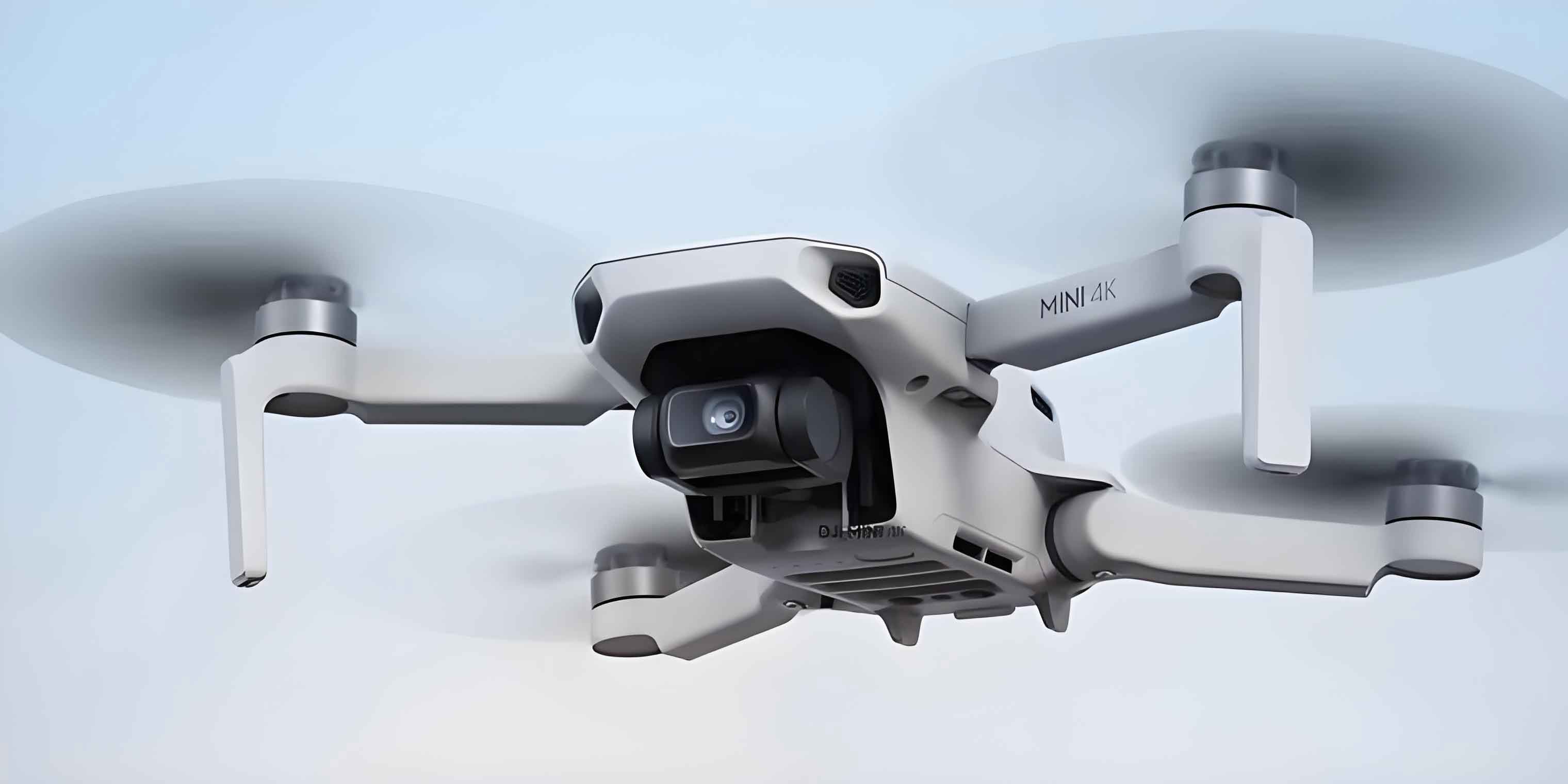
The study area is located in Guangxi Zhuang Autonomous Region, specifically in Qixing District, Guilin City (25°27’46″N, 110°35’92″E), covering an area of approximately 3686.61 m². This region is representative of Guangxi’s widespread eucalyptus plantations, which account for over 40% of China’s timber production. The karst topography of Guangxi poses challenges for traditional survey methods, making UAV drones-based techniques particularly advantageous. We selected 20 standing trees with complete trunk and canopy morphology as sample trees, evenly distributed across the research area. Data acquisition included field measurements of DBH, tree height, canopy density, and tilted images. The tools used comprised forestry DBH measuring tapes, rangefinders, and clinometers. Accurate and consistent data recording was emphasized, with each tree marked for position and morphology to minimize errors. The sample tree measurement scenario demonstrated the practicality of using UAV drones in conjunction with ground surveys. For image data acquisition, we employed a DJI Phantom 4 Pro V2.0 UAV drone, conducting flights on May 10, 2024. The flight plan involved setting an altitude of 50 meters after manual test flights to ensure safety, planning multiple routes (front, back, left, right, and nadir) for comprehensive coverage, and configuring parameters such as a photo ratio of 4:3, automatic white balance, sidelap of 70%, overlap of 80%, and a margin of over 16 meters to ensure model completeness and precision. Using DJI Terra software, we delineated the research area for route planning, ultimately capturing 308 images, with 290 usable after removing those with excessive angles, severe distortion, or duplicates.
The processing of UAV drones imagery involves three key steps: aerial triangulation, point cloud processing, and model reconstruction. We utilized the ContextCapture Center platform to perform aerial triangulation and point cloud recovery, reconstructing the forest scene to generate dense point clouds and digital 3D models. Aerial triangulation preprocessing applies algorithms to match homologous points across images, building a photogrammetric model and solving for each image’s exterior orientation elements (position and attitude parameters). This involves relative orientation and absolute orientation, with the latter using ground control points for adjustment to ensure accurate real-world positioning. Based on the aerial triangulation results, ContextCapture Center employs multi-view image matching to generate point cloud data for the research area, representing the model as a set of spatial points with X, Y, Z coordinates and color information. The platform then denoises the point cloud to remove artifacts from UAV drone flight jitters and environmental factors, followed by filtering to separate ground points from non-ground points (e.g., trees, buildings), yielding Digital Elevation Models (DEM) and Digital Surface Models (DSM). For 3D model construction, we used the processed point cloud data within ContextCapture Center, adopting a Triangulated Irregular Network (TIN) data structure to adapt to the complex terrain and tree morphology of the forest. The TIN model connects adjacent points into triangular facets, forming a continuous 3D surface model, while grid models offer a simpler approximation by dividing point clouds into regular grid cells with assigned elevation values. The resulting 3D model allows for precise area calculation and canopy volume extraction by selecting the target forest region, as demonstrated in the software outputs.
To facilitate timber volume calculations, we developed a software tool using MATLAB’s AppDesigner functionality. MATLAB integrates mathematical model construction, GUI design, and app development, making it ideal for this purpose. The calculation system is built on mathematical models derived from local standards in Guangxi. Forest stand volume refers to the bark-included timber volume of trees with a DBH of 5 cm or more, and it is computed using two models: a univariate model without DBH parameters and a bivariate model with DBH parameters. The equations are as follows:
Univariate model for stand mean height: $$ H_f = 129.99766 \times (1 – e^{-0.0037249 \times H})^{0.97832} $$
Bivariate model for stand mean height: $$ H_f = 0.57715 \times D^{-0.28581} \times H^{1.20331} $$
In these equations, \( e \) represents the natural exponent, \( H_f \) is the stand mean height in meters, \( D \) is the stand mean DBH in centimeters, and \( H \) is the tree height in meters. Additionally, the stand volume growth rate, which relates to DBH, stand age, and volume growth, is modeled with univariate and bivariate equations:
Univariate growth rate model: $$ y = 0.000015416 \times (1 – e^{-0.001 \times N})^{-2.5328} $$
Bivariate growth rate model: $$ y = (5846.2423 – 2602.1645 \div N) \times (D^{2.368} \times N)^{-0.798884} $$
Here, \( y \) denotes the growth rate, and \( N \) is the stand age in years. The AppDesigner software interface incorporates three input parameters—tree height, DBH, and stand age—and outputs four results: univariate and bivariate stand volume, and univariate and bivariate stand volume growth rate. The GUI design ensures user-friendly interaction, allowing for efficient data entry and computation. To validate accuracy, we randomly selected 10 data sets from local standards and compared the software-calculated results with measured data. The bivariate stand volume data showed an average accuracy of 83.5%, while the bivariate stand volume growth rate data achieved an average accuracy of 72.6%. These results underscore the reliability of our UAV drones-based approach when integrated with traditional models.
The sample tree data collected during field surveys are summarized in the table below, highlighting key parameters such as DBH, tree height, and canopy spread. This data forms the basis for subsequent modeling and accuracy assessments.
| Sample Tree ID | DBH (cm) | First Branch Height (m) | Canopy Spread EW (m) | Canopy Spread NS (m) | Tree Height (m) |
|---|---|---|---|---|---|
| 1 | 15.6 | 4.1 | 2.6 | 2.4 | 16.1 |
| 2 | 17.5 | 7.0 | 3.76 | 4.64 | 14.9 |
| 3 | 12.2 | 5.0 | 3.29 | 4.34 | 11.2 |
| 4 | 15.3 | 5.9 | 3.67 | 4.32 | 15.4 |
| 5 | 12.7 | 2.4 | 4.74 | 4.69 | 10.2 |
| 6 | 14.0 | 7.1 | 3.74 | 2.40 | 13.6 |
| 7 | 8.1 | 6.0 | 1.73 | 2.57 | 9.2 |
| 8 | 6.9 | 1.8 | 1.69 | 1.69 | 7.2 |
| 9 | 12.2 | 1.55 | 2.56 | 3.24 | 9.4 |
| 10 | 11.0 | 8.7 | 2.14 | 2.42 | 11.2 |
| 11 | 15.3 | 2.8 | 4.9 | 6.2 | 25.6 |
| 12 | 20.1 | 3.5 | 5.3 | 7.5 | 30.2 |
| 13 | 18.7 | 3.1 | 5.0 | 6.8 | 28.4 |
| 14 | 13.9 | 2.4 | 3.8 | 5.6 | 22.1 |
| 15 | 22.5 | 4.0 | 6.1 | 8.3 | 33.7 |
| 16 | 16.2 | 2.9 | 4.6 | 6.5 | 26.8 |
| 17 | 19.8 | 3.3 | 5.2 | 7.1 | 29.5 |
| 18 | 14.6 | 2.6 | 4.2 | 5.9 | 23.6 |
| 19 | 21.3 | 4.2 | 6.4 | 8.7 | 35.1 |
| 20 | 17.9 | 3.0 | 5.1 | 7.0 | 27.8 |
The accuracy comparison for bivariate stand volume calculations is presented in the following table, demonstrating the performance of our UAV drones-based method against measured data.
| Tree Height (m) | DBH (cm) | Measured Data | Calculated Data | Accuracy (%) |
|---|---|---|---|---|
| 5 | 4 | 2.693 | 2.288 | 84.96 |
| 6.5 | 8 | 3.029 | 2.549 | 84.15 |
| 10.3 | 6 | 5.723 | 4.835 | 84.48 |
| 16.8 | 8 | 9.497 | 7.992 | 84.31 |
| 18.8 | 12 | 9.684 | 8.103 | 83.67 |
| 19.3 | 8 | 11.222 | 9.444 | 84.15 |
| 21.7 | 10 | 12.124 | 10.170 | 83.88 |
| 31 | 16 | 16.282 | 13.570 | 83.34 |
| 31.9 | 14 | 17.508 | 14.044 | 80.21 |
| 36 | 40 | 15.000 | 12.342 | 82.28 |
Similarly, the accuracy for bivariate stand volume growth rate calculations is summarized below, showing consistent results across different stand ages and DBH values.
| Stand Age (years) | DBH (cm) | Measured Data | Calculated Data | Accuracy (%) |
|---|---|---|---|---|
| 1 | 5 | 154.46 | 128.97 | 83.49 |
| 2 | 6 | 88.10 | 70.35 | 79.85 |
| 3 | 9 | 32.42 | 24.42 | 75.32 |
| 4 | 11 | 18.39 | 13.41 | 72.92 |
| 5 | 12 | 13.38 | 9.58 | 71.56 |
| 6 | 13 | 10.10 | 7.12 | 70.49 |
| 7 | 14 | 7.85 | 5.45 | 69.42 |
| 8 | 15 | 6.25 | 4.28 | 68.48 |
| 9 | 16 | 5.07 | 3.43 | 67.65 |
| 10 | 17 | 4.17 | 2.80 | 67.14 |
In conclusion, this research on eucalyptus timber volume calculation using UAV drones oblique photogrammetry has yielded significant findings through theoretical analysis, experimental studies, and algorithm development. On one hand, UAV drones-based 3D modeling effectively captures forest topography, precisely defines forest boundaries, and illustrates tree spatial distribution. On the other hand, it extracts critical parameters like tree height and canopy spread, while high-resolution texture information aids in species identification, providing essential data for timber volume computation. By integrating with traditional calculation methods, UAV drones-generated 3D models optimize the computation process, enhance accuracy, and enable rapid coverage of large forest areas for efficient timber volume estimation. The rich texture and 3D spatial features offer a solid data foundation for subsequent timber volume calculations and forest research. However, challenges remain, such as UAV drones flight limitations due to weather and airspace restrictions, which can reduce operational range and efficiency. Additionally, complex forest environments with mixed species or multi-layered stands, where canopy density varies significantly, may involve issues like tree occlusion and spectral feature differences, impacting timber volume calculations. In future work, we aim to address these problems by refining data acquisition protocols and enhancing model adaptability, ultimately building a more robust and efficient low-altitude forest timber volume survey system leveraging UAV drones. The integration of UAV drones technology not only improves survey precision and efficiency but also reduces labor and material costs compared to traditional forestry methods, offering a scalable reference for timber volume calculations of other tree species. As UAV drones continue to evolve, their application in forestry monitoring will undoubtedly expand, supporting global efforts toward sustainable forest management and carbon neutrality goals.