
Maintaining the integrity and reliability of extensive power transmission networks is a critical task. Traditional manual inspection methods are often time-consuming, labor-intensive, and hazardous. In recent years, the deployment of Unmanned Aerial Vehicles (UAV drones) has revolutionized this field, offering a safe, efficient, and comprehensive platform for aerial surveillance. However, the visual data captured by these UAV drones is frequently compromised by complex environmental backgrounds—such as dense forests, urban structures, and varying lighting conditions—which introduce significant noise and obscure the target features of the transmission lines. This background interference severely degrades the performance of automated detection algorithms. Therefore, developing robust visual inspection methodologies for UAV drones that can effectively suppress background noise is paramount for accurate and reliable power line monitoring. This work presents a complete visual inspection pipeline designed specifically for UAV drones, focusing on sophisticated image preprocessing for noise immunity followed by optimized line extraction techniques to achieve precise detection of power transmission lines in challenging environments.
The core challenge addressed in this research stems from the inherent characteristics of UAV-based power line imagery. Firstly, transmission lines typically appear as straight or slightly curved linear features spanning the image. Secondly, their width is often just 1-2 pixels when captured from a standard operational altitude by UAV drones, making them susceptible to blending with the background. Thirdly, while physically parallel, perspective distortion from the UAV drones’ camera angle can cause them to appear convergent or even crossed in the image. Finally, and most critically, cluttered backgrounds like vegetation, buildings, and terrain edges create visual noise that can be mistakenly detected as lines or can fragment the actual power line segments. To overcome these challenges, our proposed methodology follows a structured four-stage pipeline: image acquisition via UAV drones, aggressive anti-background noise preprocessing, primary line detection using the Hough Transform, and a final optimization stage for accurate power line segment identification and reconstruction.
Visual Inspection Pipeline for UAV Drones
The efficacy of the entire system hinges on a meticulously designed sequence of operations. The workflow begins with the strategic acquisition of imagery using UAV drones, proceeds with enhancing image quality by suppressing irrelevant background information, then identifies candidate linear features, and finally refines these candidates to isolate the true power transmission lines. This logical progression is essential for translating raw, noisy data from UAV drones into actionable inspection intelligence.
$$ \text{Pipeline: Acquisition} \rightarrow \text{Preprocessing} \rightarrow \text{Line Detection} \rightarrow \text{Feature Optimization} $$
Image Acquisition via UAV Drones Platform
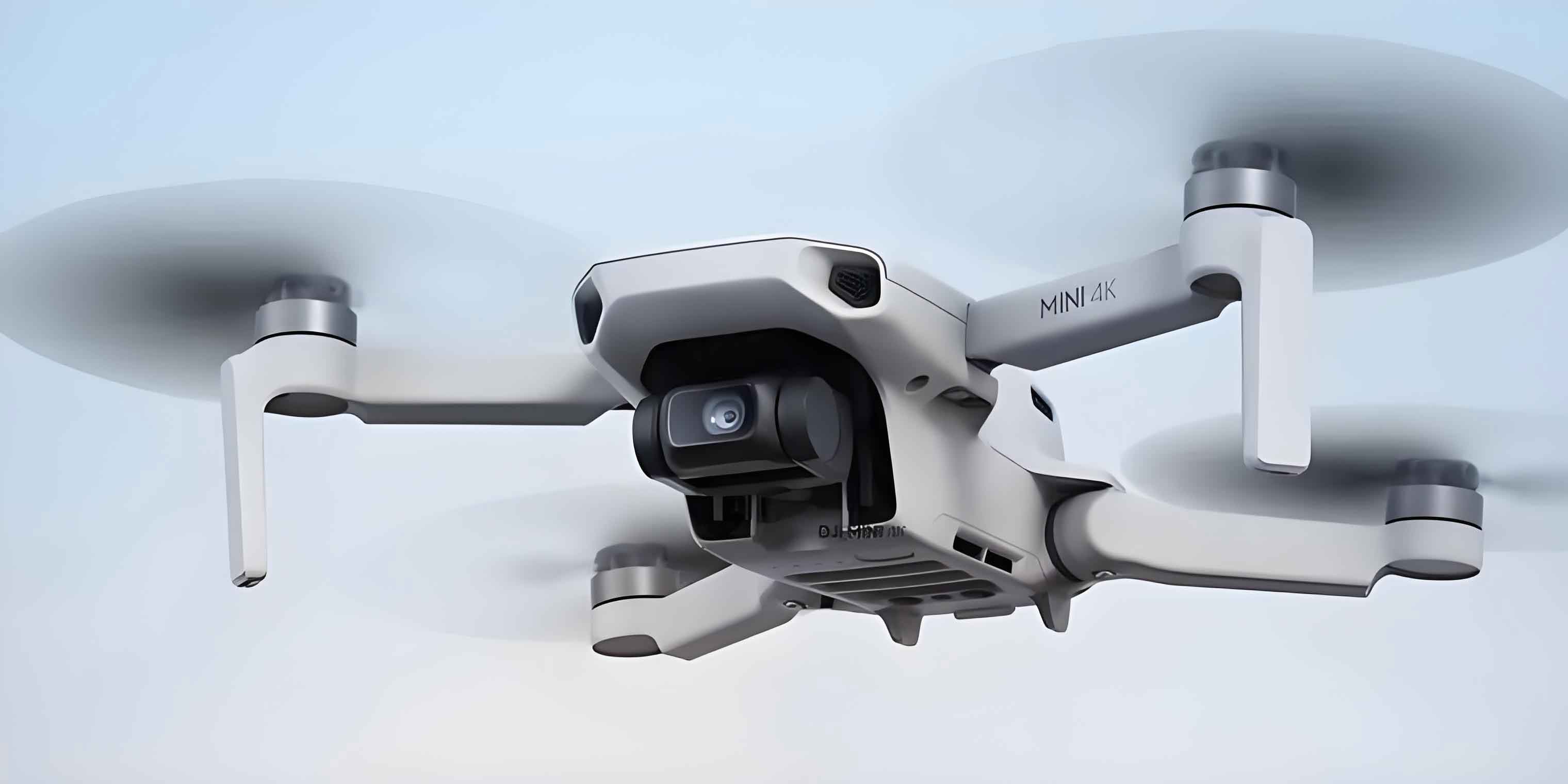
The selection of an appropriate UAV drones platform is the foundational step. Multi-rotor UAV drones, particularly quadcopters, are ideally suited for this task due to their exceptional maneuverability, ability to hover steadily, and capability for close-range inspection. These UAV drones can navigate along transmission corridors while maintaining a stable platform for the camera, ensuring consistent image quality. For this research, a UAV drones system analogous to high-endurance, payload-capable models is considered, characterized by specifications that support prolonged flight and stable image capture under varying environmental conditions, which is crucial for large-scale grid inspection.
Configuring the aerial photography parameters for the UAV drones is critical to obtaining usable imagery. The shooting distance \(D\), which influences ground sample distance and feature clarity, must be carefully calculated. It is a function of the desired image footprint and the camera’s field of view (FOV).
$$ D = \frac{I(x, y) \cdot n_1}{\text{FOV}} \cdot 4 $$
Here, \(I(x, y)\) represents the ground coverage, and \(n_1\) is a scaling factor related to sensor resolution. The navigation height \(H_{dg}\) of the UAV drones relative to the terrain is dynamically adjusted based on the flight path and slope angle \(\alpha\). For missions involving vertical ascent from the takeoff point or flying over sloped terrain, the relative height is determined by the horizontal distance \(L\) and the slope.
$$ H_{dg} = L \tan \alpha + D \cos \alpha $$
Furthermore, to ensure complete stereo coverage and overlap for potential 3D modeling, the baseline \(B_x\) and route spacing \(B_y\) are calculated based on image dimensions (\(n_x, n_y\)) and overlap ratios (\(q_x, q_y\)).
$$ B_x = (1 – q_x) \cdot I(x, y) \cdot n_x, \quad B_y = (1 – q_y) \cdot I(x, y) \cdot n_y $$
Once on station, the UAV drones autonomously follow the transmission corridor, using its control system integrated with GPS to maintain position and altitude, pausing to hover and capture detailed imagery of any potential fault locations identified during the visual inspection flight.
Anti-Background Noise Image Preprocessing
Imagery from UAV drones is inherently prone to corruption from various noise sources, including sensor noise, motion blur, and most significantly, complex and irrelevant background textures. This stage is dedicated to enhancing the signal (power lines) to noise (background) ratio through a three-step process: grayscale conversion, filtering, and contrast enhancement.
Grayscale Conversion: The first operation reduces computational complexity and aligns the processing with luminance-based features. The standard RGB color image from the UAV drones is converted to a grayscale image \(Gray(i,j)\) using the perceptual luminance weighting formula, which prioritizes the green channel as it most closely matches human visual sensitivity to brightness.
$$ Gray(i,j) = 0.299 \cdot R(i,j) + 0.578 \cdot G(i,j) + 0.114 \cdot B(i,j) $$
where \(R, G, B\) are the red, green, and blue channel intensities at pixel \((i, j)\).
Image Filtering (Gaussian Filter): To suppress high-frequency background noise and small, irrelevant details while preserving the linear structure of the power lines, a 2D discrete Gaussian filter is applied. The filtered image \(C(x,y)\) is obtained by convolving the grayscale image \(I\) with a Gaussian kernel \(G\).
$$ C(x,y) = \sum_{u=-c}^{c} \sum_{v=-c}^{c} I(x+u, y+v) \cdot G(u, v) $$
The Gaussian kernel \(G(u,v,\sigma)\) is defined as:
$$ G(u,v,\sigma) = \frac{1}{2\pi\sigma^2} e^{-\frac{u^2 + v^2}{2\sigma^2}} $$
Here, \(c\) defines the half-size of the filter kernel, and \(\sigma\) is the standard deviation controlling the degree of smoothing. This step effectively blurs out fine-grained background textures like leaves or small rocks that could be mistaken for line segments.
Histogram Equalization & Adaptive Stretching: After filtering, the image may still suffer from poor contrast, especially under low-light or high-glare conditions encountered by UAV drones. A global or adaptive contrast stretch is applied to redistribute pixel intensities. Based on an analysis of typical backgrounds, an adaptive scheme is employed. The image’s average gray value \(H\) and a segmentation threshold \(T\) are used to define custom stretching intervals for different background categories, ensuring the thin, dark power lines are sufficiently enhanced against their immediate surroundings. The stretching transformation is given by:
$$ A(x,y) =
\begin{cases}
0, & I(x,y) \leq a \\
\frac{C(x,y) – a}{b – a} \times 255, & a < I(x,y) < b \\
255, & I(x,y) \geq b
\end{cases} $$
where \(a\) and \(b\) are the lower and upper stretch bounds, often derived from the image histogram (e.g., clipping the bottom and top 2% of pixels) or adaptively set based on \(T\) and \(H\). The following table summarizes the adaptive strategy for different background types encountered by UAV drones.
| Background Category | Condition | Original Range | Stretched Range | Purpose |
|---|---|---|---|---|
| Dark Foliage/Shadow | T ≤ 120 | 0 – (T-20) | 0 – (H-20) | Brighten dark lines in shadows |
| (T-20) – 255 | (H-20) – 255 | Suppress bright background | ||
| Snow / Strong Light | T ≥ 120 | 0 – (T-50) | 0 – H | Enhance contrast for faint lines |
| (T-50) – 255 | H – 255 | Control over-saturation | ||
| General Well-lit | Any T | 0 – 255 | 0 – 255 | Global histogram equalization |
| Low Contrast | Any T | 0 – (T-10) | 0 – (H+30) | Aggressively brighten mid-tones |
| (T-10) – 255 | (H+30) – 255 | to reveal obscured lines |
Power Line Detection and Optimization
With a significantly cleaner image, the next step is to detect linear features. The standard Hough Transform is employed for its robustness in detecting lines even when they are broken or partially obscured.
Hough Transform Line Detection: This technique maps points from the image space \((x, y)\) to the parameter space \((\rho, \theta)\), representing lines in the normal form: \(\rho = x \cos \theta + y \sin \theta\). Each edge pixel (e.g., from a Canny edge detector applied to the preprocessed image) votes for all possible \((\rho, \theta)\) pairs that satisfy its equation, forming sinusoidal curves in the Hough space. Points where many curves intersect correspond to prominent lines in the image. By identifying local maxima in the accumulator array of the Hough space, the parameters of the dominant lines are extracted. This method effectively finds the infinite lines that best fit collinear edge pixels identified from the UAV drones imagery.
Line Segment Optimization and Power Line Extraction: The Hough Transform outputs parameters for lines, not segments. A single detected line may encompass a true power line segment, but also include spurious edges from the background or be broken into several pieces due to occlusions. To isolate the actual power line segments, a post-processing optimization combining region growing and connected-component analysis is used.
- Segment Extraction: Along each detected Hough line, a region-growing algorithm is initiated. Starting from seed points, pixels are merged into a region if their gray value is similar to the region’s mean (based on a threshold). This process groups connected pixels that likely belong to the same physical wire, forming distinct line segments \(R_i = \{p(x_j, y_j) | j=1,2,…,m\}\).
- Geometric Analysis: For each extracted segment region \(R_i\) with centroid \((\bar{x}_m, \bar{y}_m)\), its covariance matrix \(C\) is computed to analyze its spatial distribution.
$$ C = \begin{bmatrix} c_{11} & c_{12} \\ c_{21} & c_{22} \end{bmatrix} $$
where
$$ c_{11} = \frac{1}{m}\sum (x_j – \bar{x}_m)^2, \quad c_{12} = c_{21} = \frac{1}{m}\sum (x_j – \bar{x}_m)(y_j – \bar{y}_m), \quad c_{22} = \frac{1}{m}\sum (y_j – \bar{y}_m)^2 $$
The orientation (tilt angle \(\eta\)) of the segment is derived from the eigenvector corresponding to the smallest eigenvalue \(\lambda_1\) of \(C\):
$$ \eta = \tan^{-1}\left( \frac{\lambda_1 – c_{11}}{c_{12}} \right) = \tan^{-1}\left( \frac{c_{21}}{\lambda_1 – c_{22}} \right) $$
This provides a precise, segment-specific orientation. - Segment Fusion: Finally, collinear segments that are spatially close and have similar orientations—characteristics of a single power line interrupted by towers or noise—are fused using linear regression. This reconstructs the complete power line from its fragmented parts, delivering the final, accurate vector representation of the transmission line as captured by the UAV drones.
Experimental Results and Analysis
The proposed methodology was validated on real-world imagery captured by UAV drones patrolling a complex 1,358 km transmission corridor spanning diverse landscapes including forests and urban areas. The performance was evaluated in terms of visual completeness of detection and quantitative accuracy.
Effectiveness of Anti-Background Noise Processing: A critical ablation study compared detection results with and without the proposed preprocessing chain. On raw UAV drones imagery suffering from low contrast and clutter, standard Hough detection frequently produced fragmented lines or missed lines entirely. After applying grayscale conversion, Gaussian filtering, and adaptive histogram stretching, the target power lines were significantly enhanced. The background noise from textures like foliage was suppressed, leading to a cleaner edge map. Consequently, the subsequent Hough Transform and optimization stages produced continuous, well-defined power line detections, effectively eliminating the missed detections prevalent in the unprocessed approach.
Robustness in Diverse Backgrounds: The method was tested on UAV drones images featuring challenging backgrounds such as dense forests and scenes with strong, direct sunlight causing glare and shadows. In both cases, the adaptive preprocessing stage successfully normalized the contrast, and the combined detection pipeline was able to extract the primary power transmission lines with high fidelity. This demonstrates the generalizability of the approach for UAV drones operating in varied and unpredictable environmental conditions.
Comparative Quantitative Analysis: To quantify the detection accuracy, the proposed method was compared against two other established techniques: a method based on airborne LiDAR point cloud clustering and a method using the RBCT (Ray-Based Circle Transform) algorithm. A set of eight UAV-captured images with known ground truth were used. The target detection accuracy was measured as the percentage of the actual power line length correctly identified by the algorithm. The results are summarized below.
| Image No. | LiDAR-based Method [Ref] | RBCT-based Method [Ref] | Proposed UAV Drones Method |
|---|---|---|---|
| 1 | 30% | 45% | 90% |
| 2 | 25% | 40% | 90% |
| 3 | 20% | 45% | 95% |
| 4 | 35% | 50% | 100% |
| 5 | 45% | 55% | 95% |
| 6 | 60% | 60% | 100% |
| 7 | 70% | 85% | 95% |
| 8 | 55% | 80% | 100% |
| Average | 42.5% | 57.5% | 95.6% |
The data clearly indicates the superior performance of the proposed visual pipeline for UAV drones. The anti-background noise preprocessing is the key differentiator, enabling an average detection accuracy sustained above 95%, significantly outperforming the other methods which are more susceptible to environmental noise present in standard UAV drones imagery.
| Background Scenario | Key Challenge | Preprocessing Action | Detection Outcome |
|---|---|---|---|
| Dense Forest Canopy | High-frequency texture noise, occlusion | Strong Gaussian smoothing (higher σ), adaptive stretch for dark regions. | Continuous lines extracted, minor breaks at occlusion points later fused. |
| Strong Sunlight & Glare | High dynamic range, washed-out lines, sharp shadows. | Adaptive stretching using “Snow/Strong Light” parameters to recover detail in highlights/mid-tones. | Power lines successfully recovered from both glare and shadow areas. |
| Urban Area (Buildings) | Numerous strong vertical/horizontal edges. | Standard preprocessing followed by post-filtering of segments based on expected orientation (near-horizontal). | Correct rejection of building edges, accurate power line isolation. |
Conclusion
This research has presented a robust and effective visual inspection methodology for power transmission lines utilizing UAV drones. The core innovation lies in the dedicated anti-background noise preprocessing stage—comprising intelligent grayscale conversion, adaptive filtering, and contrast enhancement—which is tailored to address the specific challenges of aerial imagery. This stage dramatically improves the signal quality for subsequent algorithms. Coupled with the reliable Hough Transform for initial line detection and a sophisticated optimization stage for segment extraction and fusion, the method achieves highly accurate and complete power line detection. Experimental validation on real-world UAV drones data from complex environments confirms that the approach effectively suppresses background interference, maintains an average detection accuracy above 90%, and prevents the missed detections that plague simpler methods. The workflow provides a dependable and automated visual inspection solution, enhancing the capabilities of UAV drones for proactive power grid maintenance and safety assurance. Future work will focus on integrating deep learning-based segmentation to further improve robustness and extend the system to simultaneously detect and classify line components and faults.