
In recent years, the frequency of extreme precipitation and natural disasters has increased in certain regions, posing significant threats to public safety and causing substantial property losses. The undulating terrain and uncertainty of disasters present severe challenges to traditional emergency response methods. The scientific nature of emergency management decision-making highly depends on the timeliness and comprehensiveness of disaster scene information. However, conventional manual surveying suffers from high intensity, low efficiency, and safety risks, often leading to information delays or distortions that directly impact rescue effectiveness. With the development of the low-altitude economy, UAV drones have become a crucial tool for disaster information acquisition due to their flexibility, rapid deployment, and adaptability to complex environments. Yet, existing research often focuses on optimizing single technical aspects, resulting in bottlenecks such as low flight efficiency, uneven data quality in complex terrain, and slow post-processing, failing to form an effective “technology-decision” closed loop. In UAV drones aerial surveying data collection, route planning is a key环节 that directly affects the quality and efficiency of survey data outcomes. Against this backdrop, from a macro perspective of public safety and crisis management, this study explores the application value of the “terrain-following + encircling” route survey method in emergency management decision-making. Through technical optimization and demand matching, we aim to build an efficient information support system, which holds important theoretical and practical significance for enhancing emergency management capabilities and improving public safety mechanisms.
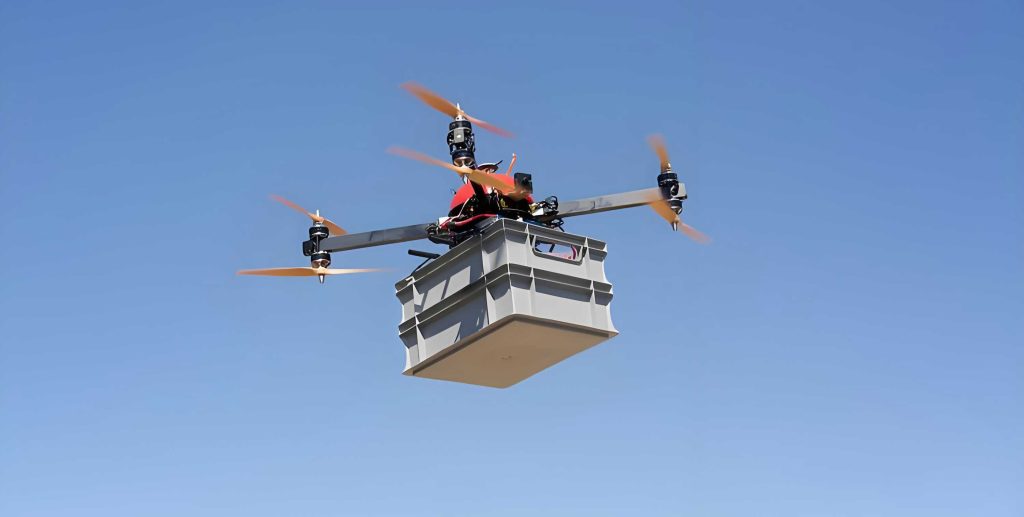
The aerial surveying system of UAV drones primarily consists of two major components: the aerial survey platform and the ground control system. The aerial survey platform serves as the core carrier for airborne data collection, including the UAV drones本体, flight control system, aerial photography equipment, and auxiliary devices. The ground control system undertakes key functions such as route planning, remote操控, real-time data monitoring, and post-processing, providing technical support for efficient survey mission implementation. UAV drones aerial surveying offers advantages like fast data collection speed, high operational flexibility,多元化 observation angles, and outstanding timeliness of results, leading to continuous expansion of application fields. This technology not only meets the accuracy requirements of traditional measurement and positioning but also demonstrates significant application value in emergency surveying, enabling rapid response to突发 scenes and providing precise surveying data. Constant-altitude飞行 is a common flight mode in UAV drones aerial surveying. In this mode, the operational height of the UAV drones remains relatively stable, ensuring consistency in image data and thereby improving subsequent data processing accuracy. However, its adaptability to complex terrain environments is weak. For emergency surveying of landslide disasters occurring in areas with significant terrain起伏, low-altitude飞行 increases collision risks, while high-altitude飞行 leads to loss of image details. Tilt photogrammetry technology, as one of the core technologies of UAV drones aerial surveying, has evolved from traditional vertical photogrammetry. By equipping the UAV drones platform with multi-lens photography devices, it enables multi-directional and multi-perspective data acquisition, significantly reducing information loss caused by ground object occlusion. However, multi-perspective image采集 results in a surge in image data volume, increasing storage and processing costs. Moreover, differences in lighting conditions and shooting distances among images from different angles make image fusion and拼接 more challenging,容易 producing拼接 quality issues. These limitations affect the application of tilt photogrammetry in emergency surveying. Therefore, exploring a UAV drones aerial surveying飞行 technology that meets the demands of complex terrain, acquires more disaster area image information with less data redundancy is of great importance for emergency management decision-making.
The “terrain-following + encircling” flight技术路径 involves several key aspects. First, terrain-following technology适配 is based on Digital Elevation Model (DEM) data of the survey area,预设 the relative height between the UAV drones and the ground surface (e.g., 60–120 meters). By adjusting real-time height to adapt to terrain起伏, it addresses issues such as overexposure in low-lying areas and insufficient resolution in high-altitude areas that occur in traditional fixed-height飞行. This technology can be implemented through self-developed software and applied to主流 UAV drones models, ensuring uniformity in image quality across complex terrain and providing reliable data基础 for disaster identification. The height adjustment can be expressed mathematically as: $$h_{actual}(x,y) = h_{relative} + DEM(x,y)$$ where \(h_{actual}(x,y)\) is the actual飞行 height at coordinates \((x,y)\), \(h_{relative}\) is the preset relative height, and \(DEM(x,y)\) is the terrain elevation from DEM data. This ensures consistent ground sampling distance (GSD) across varying terrain.
Second, encircling route intelligent规划 targets the core disaster area with concentric circle or spiral-shaped encircling routes. During flight, the survey camera angle is set to an inclined state (e.g., 45°), enabling multi-angle coverage of the side contours and boundary details of the disaster core area. Centered on key areas, 3–5 routes are set, and through协同 adjustment of camera angles and route layout optimization, an overlap degree of over 80% is ensured, achieving 360°死角 coverage. Furthermore, algorithm-based optimization of route nodes reduces重复飞行 segments, decreasing flight time and data volume while ensuring coverage quality, alleviating post-processing pressure. The route planning can be optimized to minimize path length. For a circular encircling route with radius \(r\) and \(n\) orbits, the total path length \(L\) can be approximated as: $$L \approx 2\pi r \times n$$ but with smart node reduction, \(L\) is minimized while maintaining coverage.
Third, data processing流程优化 is tailored to the “terrain-following + encircling” route data characteristics,构建 a “lightweight preprocessing – priority modeling of key areas”流程. By filtering模糊 and high-overlap redundant data, data volume is reduced by over 40%. Priority is given to processing key areas such as rescue channels and trapped points, enabling rapid extraction of core information within短时间, meeting the time需求 of the “golden 72 hours” for emergency management decision-making and救援. The data reduction can be modeled as: $$D_{processed} = D_{raw} \times (1 – R_{filter})$$ where \(D_{processed}\) is the processed data volume, \(D_{raw}\) is the raw data volume, and \(R_{filter}\) is the filtering rate (e.g., 0.4 for 40% reduction). This accelerates data throughput.
The advantages of the “terrain-following + encircling” route in emergency management decision-making are analyzed across multiple dimensions. First, complex terrain adaptability is enhanced. In regions where mountainous areas exceed 60% of the terrain, traditional parallel routes are easily obstructed by terrain起伏,难以全面覆盖 survey areas,容易 forming information盲区,导致 key area disaster information cannot be fully captured. Terrain-following technology allows real-time adjustment of飞行 height based on terrain changes, closely贴合 terrain contours to complete surveying, effectively突破 complex terrain limitations on survey coverage. Encircling routes designed for disaster core areas achieve 360°死角 scanning through multi-dimensional飞行 paths,精准 covering areas such as landslide boundaries and valley depths that are难以触及 by traditional routes,彻底 eliminating information遗漏 under complex terrain, providing complete data支撑 for decision-makers to fully grasp disaster impact范围.
Second, decision information quality is强化. The accuracy and consistency of survey data determine the scientificity of emergency management decision-making. Traditional constant-altitude routes in areas with significant terrain起伏 lead to inconsistencies in image resolution,色彩, and brightness due to varying relative heights at different positions,可能 causing decision-makers to misjudge灾情. Terrain-following飞行 controls the relative height between UAV drones and the ground surface, ensuring consistency in image色彩, brightness, etc., thereby improving data reliability. Encircling routes’ multi-perspective拍摄方式 effectively avoids shadows from buildings, mountains, and other objects, making关键信息 such as disaster sources清晰可辨, providing reliable依据 for救援 force allocation. A comparison of data quality metrics can be summarized in the following table:
| Parameter | Traditional Constant-Altitude Routes | “Terrain-following + Encircling” Routes |
|---|---|---|
| Ground Sampling Distance (GSD) Consistency | Low (varies with terrain) | High (maintained via relative height) |
| Image Overlap in Complex Terrain | Often inadequate, leading to gaps | High (≥80%), ensuring full coverage |
| Shadow Avoidance | Limited due to fixed angles | Effective through multi-angle shots |
| Data Redundancy | High, due to uniform sampling | Reduced by optimized paths |
Third, emergency response时效 is optimized. The救援窗口期 of “golden 72 hours” imposes极高要求 on information acquisition and processing efficiency. Traditional routes, due to lack of针对性规划, contain大量冗余 information, increasing data storage压力 and processing time,导致无法及时 provide effective支撑 for emergency management decision-making. The “terrain-following + encircling” route reduces重复拍摄 paths through optimized飞行 paths,大幅 lowering data volume. Combined with the “lightweight preprocessing – priority modeling of key areas” processing流程, it quickly filters模糊 and high-overlap无效 data,优先 extracting core information. This approach significantly shortens the time from information采集 to application, ensuring decision-makers can timely acquire disaster area information within the critical救援窗口期,从而 creating conditions for迅速制定救援方案. The time savings can be expressed as: $$T_{total} = T_{flight} + T_{process}$$ where \(T_{flight}\) is flight time and \(T_{process}\) is processing time. With optimized routes, \(T_{flight}\) is reduced, and with prioritized processing, \(T_{process}\) is minimized for critical data.
Fourth, resource allocation效能 is提升. From an emergency management cost perspective, traditional routes often require多次补测 due to incomplete coverage or data quality issues, leading to increased equipment能耗 and labor costs, making后期 data校对工作量 relatively large. The “terrain-following + encircling” route, through精准 route planning, acquires high-quality data with just one飞行,大幅 reducing补测 rate, decreasing equipment能耗 and labor input, with more stable data quality. In decision resource调配层面, accurate disaster information effectively avoids “盲目救援” phenomena, allowing合理分配 of救援 materials, personnel, and other resources, indirectly reducing the economic costs of emergency management. A cost-benefit analysis can be illustrated with the following formula for total cost \(C\): $$C = C_{flight} + C_{processing} + C_{rescue}$$ where \(C_{flight}\) is the cost of UAV drones operations, \(C_{processing}\) is data processing cost, and \(C_{rescue}\) is rescue operation cost. With the new route, \(C_{flight}\) and \(C_{processing}\) decrease due to efficiency gains, and \(C_{rescue}\) decreases due to better-informed decisions.
This study focuses on the pain points of disaster source information acquisition in emergency management decision-making. Through innovation in the “terrain-following + encircling” route surveying technology, it effectively addresses shortcomings of traditional surveying in complex terrain adaptability, data quality, processing efficiency, and other aspects. Research confirms that this技术路径 can significantly enhance disaster information coverage completeness, decision information reliability, emergency response timeliness, and resource allocation效能, forming a良性循环 of “technology optimization – information精准 – decision science –救援高效”. From a social science perspective, this技术路径 builds an effective衔接范式 between UAV drones aerial surveying and emergency management decision-making, thereby providing a referable “demand-technology” matching logic for technology applications in the public safety field.
Future research can further explore multi-UAV drones协同 “terrain-following + encircling” route planning to improve information acquisition efficiency for large-area disasters. Integrating artificial intelligence technology can enable dynamic route adjustment, enhancing adaptability to uncertainties in disaster scenes. Ultimately,构建 a全链条 intelligent support system of “survey data – decision model – execution feedback” can持续提升 the scientific and精准化 level of emergency management. In the context of increasing global natural disaster risks, the findings of this study hold important借鉴意义 for improving national public safety systems and safeguarding people’s lives and property. The integration of AI can be modeled as an optimization problem: $$\min_{Routes} \left( \alpha \cdot T_{acquisition} + \beta \cdot D_{redundancy} + \gamma \cdot C_{coverage} \right)$$ subject to constraints like battery life and safety, where \(\alpha, \beta, \gamma\) are weights for time, data, and coverage objectives.
In summary, the use of UAV drones in emergency management is revolutionizing how we respond to crises. The “terrain-following + encircling” route design represents a significant advancement, addressing key limitations of existing methods. By leveraging DEM data for adaptive flight and intelligent encircling patterns, UAV drones can provide comprehensive, high-quality data in complex terrains. This not only speeds up response times but also ensures that decision-makers have accurate information to allocate resources effectively. The technical improvements discussed here, such as data过滤 and prioritized processing, further enhance the practicality of UAV drones in urgent scenarios. As technology evolves, the role of UAV drones will only expand, making them indispensable tools for public safety and disaster management worldwide. Future advancements in swarm intelligence and real-time analytics will likely unlock even greater potential for UAV drones in emergency contexts, paving the way for more resilient communities.