
In modern power systems, the safe and stable operation of transmission lines is paramount. Traditional manual inspection methods are increasingly inadequate due to their inefficiency, high risk, and limited coverage. With the rapid advancement of unmanned aerial vehicle (UAV) technology and artificial intelligence, collaborative UAV drone systems offer a transformative solution. In this study, I explore an intelligent inspection and fault diagnosis framework that leverages multiple UAV drones working in concert. The system integrates advanced task allocation, path planning, and deep learning models to automate and enhance the inspection process. The core innovation lies in a synergistic approach that addresses the limitations of single-drone operations, enabling comprehensive, real-time monitoring of extensive power networks. Throughout this article, the term UAV drones will be emphasized to highlight the central role of these autonomous platforms.
The integration of UAV drones into power grid maintenance represents a significant leap forward. These UAV drones can access difficult terrains, reduce human exposure to hazards, and collect vast amounts of high-resolution data. However, deploying a fleet of UAV drones requires careful coordination. This research proposes a holistic system architecture, sophisticated control algorithms, and intelligent analytics to achieve unprecedented levels of efficiency and accuracy. The following sections detail the design, implementation, and validation of this collaborative UAV drone-based system.
System Architecture Design for UAV Drone Collaboration
The effectiveness of any multi-UAV drone operation hinges on a robust and flexible architecture. Our system is built upon three interconnected pillars: a hardware platform, a communication network, and a software system. These components work in unison to support autonomous, coordinated missions over long-distance transmission lines.
Overall Framework
The overall framework is a cloud-edge-end integrated system. At the core is a ground control station that serves as the mission planning and monitoring hub. A fleet of heterogeneous UAV drones, equipped with various sensors, forms the aerial inspection layer. A multi-tier communication network ensures reliable data exchange and command transmission. Finally, a software suite handles everything from real-time data processing to in-depth fault analysis. The synergy between these elements allows the UAV drone swarm to adapt to dynamic environmental conditions and complex inspection tasks.
Communication is the lifeline of the collaborative system. We employ a hybrid network architecture combining 5G, fiber optics, and Beidou short message service (SMS). 5G provides the high bandwidth necessary for streaming high-definition video and LiDAR point clouds from the UAV drones. Fiber offers stable backbone connectivity for fixed assets. In remote areas with poor coverage, the Beidou SMS guarantees the transmission of critical alerts and status updates from the UAV drones, with a response time under 3 seconds. To counter electromagnetic interference prevalent near high-voltage equipment, the communication protocol incorporates WAPI 2.0 and dynamic frequency hopping, maintaining an ultra-low bit error rate below $$10^{-8}$$. This resilient network ensures that the collaborative UAV drone fleet remains reliably connected and controllable.
Hardware Platform Design
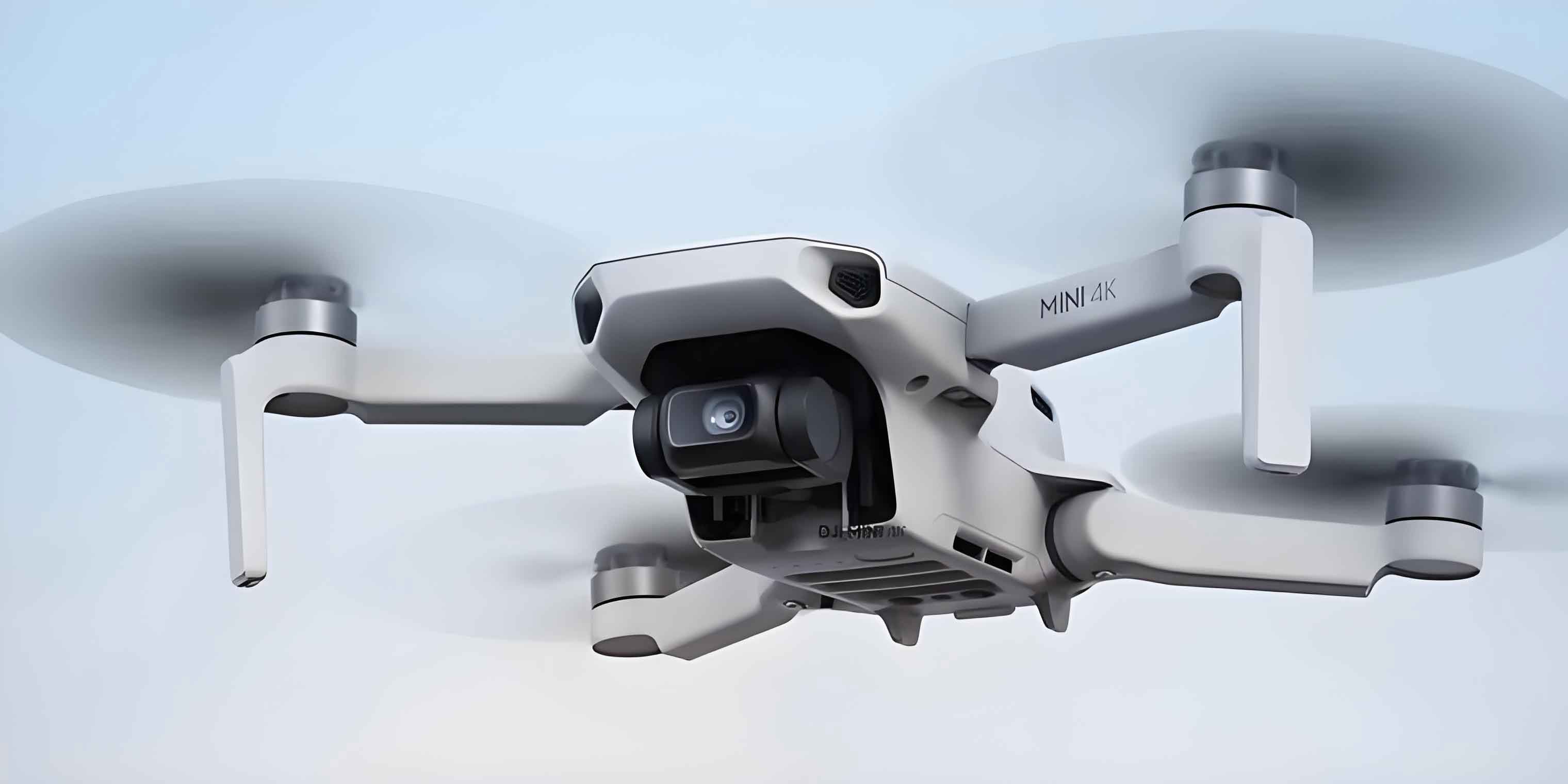
The hardware platform utilizes a hybrid fleet of multi-rotor and fixed-wing UAV drones to balance detailed inspection capability with large-area coverage. Multi-rotor UAV drones are agile and stable, ideal for close-up imaging of towers, insulators, and fittings. Fixed-wing UAV drones excel in endurance and speed, perfect for rapid corridor surveys and 3D mapping. Each UAV drone is outfitted with a suite of sensors, as detailed in Table 1.
| Device Type | Technical Specifications | Primary Application |
|---|---|---|
| Multi-rotor UAV Drone | Endurance: 90 min, Payload: 2 kg, Wind Resistance: Level 6 | Detailed inspection of towers and insulators |
| Fixed-wing UAV Drone | Endurance: 180 min, Range: 60 km, Speed: 72 km/h | Rapid corridor inspection and long-range mapping |
| Visible Light Camera | Resolution: 1920×1080, Optical Zoom: 20× | Identification of surface defects and corrosion |
| Infrared Thermal Imager | Resolution: 640×512, Temp Range: -20°C to 150°C | Detection of overheating components |
| LiDAR Sensor | Scan Frequency: 100 Hz, Accuracy: ±3 cm | 3D modeling and vegetation encroachment analysis |
| On-board Processor | Embedded AI chip for edge computing | Real-time data preprocessing and preliminary analysis |
To extend operational time, the UAV drones are powered by lithium-sulfur batteries supplemented by lightweight solar panels, enabling extended missions. All hardware is designed with environmental resilience, featuring waterproofing and electromagnetic compatibility (EMC) shielding to withstand field conditions. The ground control station is a high-performance computing platform that manages the entire UAV drone fleet, providing real-time status monitoring, data storage, and emergency override capabilities.
Software System Architecture
The software system adopts a microservices architecture for scalability and maintainability. It comprises three core services: Mission Management, Data Management, and Real-time Analytics. The Mission Management service, built on GIS, is responsible for generating and dynamically adjusting flight paths for the UAV drone swarm. The Data Management service cleanses, annotates, and stores the heterogeneous data streams from the UAV drones. The Real-time Analytics service hosts a library of deep learning models for defect detection and fault classification. The platform supports web and mobile interfaces, offering intuitive visualization dashboards. Containerization technology (e.g., Docker) ensures that services can be independently deployed and scaled to handle high-concurrency data processing from multiple UAV drones.
Collaborative Control and Path Planning Algorithms
Orchestrating a fleet of UAV drones for efficient line inspection is a complex optimization problem. It involves intelligently dividing the workload, planning collision-free paths, and ensuring seamless cooperation among all UAV drones.
Multi-UAV Drone Task Allocation Model
We formulate the task allocation problem as a multi-objective optimization aiming to maximize inspection coverage and minimize total energy consumption. The transmission line corridor is partitioned into segments based on tower locations, terrain complexity, and priority levels. Each UAV drone has constraints including battery life, sensor range, and payload capacity. An improved Genetic Algorithm (GA) is employed to solve this NP-hard problem. The objective function minimizes the maximum cost incurred by any single UAV drone, promoting workload balance and risk mitigation. The mathematical formulation is as follows:
Let $$n$$ be the number of UAV drones and $$m$$ be the number of inspection tasks (line segments). Define binary decision variable $$X_{ij}$$, where $$X_{ij} = 1$$ if UAV drone $$i$$ is assigned to task $$j$$, and 0 otherwise. The cost for UAV drone $$i$$ to perform task $$j$$ is $$C_{ij}$$, which includes flight distance and energy cost. Let $$T_i$$ be the total time spent by UAV drone $$i$$ and $$E_i$$ be its total energy consumption. Weighting factors $$\alpha$$ and $$\beta$$ adjust the importance of time balance and energy efficiency. The objective is to:
$$ \min \ Z = \max_{i} \left( \sum_{j=1}^{m} C_{ij} X_{ij} + \alpha T_i + \beta E_i \right) $$
Subject to:
$$\sum_{i=1}^{n} X_{ij} = 1, \quad \forall j \quad \text{(Each task is assigned to exactly one UAV drone)}$$
$$\sum_{j=1}^{m} X_{ij} \cdot d_{ij} \leq D_{i}^{max}, \quad \forall i \quad \text{(UAV drone range constraint)}$$
$$X_{ij} \in \{0, 1\}$$
Here, $$d_{ij}$$ is the distance for UAV drone $$i$$ to task $$j$$, and $$D_{i}^{max}$$ is its maximum allowed travel distance based on battery. The GA iteratively evolves a population of assignment solutions through selection, crossover, and mutation operations until convergence. This model ensures that the collaborative UAV drone system optimally utilizes its resources.
Path Planning Algorithm Design
Once tasks are allocated, each UAV drone requires a detailed, safe, and efficient flight path. Our path planning algorithm is a two-stage hybrid approach. First, a global path is generated using an A* algorithm that considers large-scale obstacles like mountains and restricted airspace. Second, a local refinement is performed using an Ant Colony Optimization (ACO) algorithm to smooth the trajectory, minimize total travel distance, and ensure optimal sensor positioning (e.g., camera angle relative to the power line). The path cost function for ACO is defined as:
$$ \text{Cost}(\tau) = w_1 \cdot L(\tau) + w_2 \cdot \sum_{k} \Theta(\theta_k) + w_3 \cdot R(\tau) $$
Where $$L(\tau)$$ is the path length, $$\Theta(\theta_k)$$ is a penalty for suboptimal viewing angles at waypoint $$k$$, and $$R(\tau)$$ is a risk factor based on proximity to obstacles. The weights $$w_1, w_2, w_3$$ are tuned empirically. Furthermore, a dynamic re-planning module allows UAV drones to adjust their paths in real-time upon detecting unforeseen obstacles (e.g., birds, temporary structures) or adverse weather, ensuring continuous operation.
A critical aspect of path planning for UAV drones is endurance management. We establish a network of pre-defined takeoff and landing points along the inspection route. Each UAV drone continuously monitors its remaining battery capacity. If the system predicts that a UAV drone cannot reach the next critical point, it automatically diverts to the nearest safe landing site for battery swap or recharge. This dynamic endurance-aware planning extends the effective operational range of the UAV drone swarm, enabling a relay-style inspection of very long lines without human intervention.
Collaborative Control Strategy
The control strategy for the UAV drone swarm employs a leader-follower distributed architecture with fault tolerance. One UAV drone is dynamically elected as the leader (or coordinator), responsible for high-level task synchronization and conflict resolution. The follower UAV drones execute their assigned inspection paths autonomously but report status and receive adjustments from the leader. The control law for maintaining formation and avoiding collisions is based on consensus algorithms. For a swarm of $$N$$ UAV drones, the desired velocity for the $$i$$-th UAV drone is given by:
$$ \vec{v}_i^{des} = \vec{v}_i^{goal} + k_p \sum_{j \in \mathcal{N}_i} (\vec{p}_j – \vec{p}_i) – k_v \sum_{j \in \mathcal{N}_i} (\vec{v}_j – \vec{v}_i) – k_o \nabla U_{obs}(\vec{p}_i) $$
Here, $$\vec{v}_i^{goal}$$ is the velocity toward its goal, $$\vec{p}_i$$ and $$\vec{v}_i$$ are its position and velocity, $$\mathcal{N}_i$$ is the set of neighboring UAV drones, and $$k_p, k_v, k_o$$ are gain constants. The term $$\nabla U_{obs}(\vec{p}_i)$$ is a repulsive potential gradient from obstacles. If the leader UAV drone fails, a consensus-based election protocol immediately selects a new leader from the followers, ensuring system robustness. This strategy allows the fleet of UAV drones to operate as a cohesive, resilient unit.
Fault Diagnosis and Intelligent Recognition Models
The raw data collected by the UAV drones is transformed into actionable insights through a pipeline of image processing, deep learning, and multi-sensor fusion. The goal is to automatically identify and classify defects with high precision.
Image Preprocessing and Enhancement
Images captured by UAV drones often suffer from variations in lighting, blur due to motion, and perspective distortion. A standardized preprocessing pipeline is applied to all visible light and infrared images. Let $$I_{raw}$$ denote the raw input image. The steps are:
- Grayscale Conversion: $$I_{gray} = 0.299R + 0.587G + 0.114B$$ for color images.
- Contrast Enhancement: Apply Contrast Limited Adaptive Histogram Equalization (CLAHE).
- Noise Reduction: Use a 2D median filter: $$I_{filtered}(x,y) = \text{median}\{I_{gray}(s,t)\}, (s,t) \in W_{xy}$$, where $$W_{xy}$$ is a local window.
- Geometric Correction: Based on known tower models or feature matching (e.g., SIFT), apply a homography transform to rectify the image to a standard view.
The quality improvement is measured by metrics like Peak Signal-to-Noise Ratio (PSNR) and Structural Similarity Index (SSIM). For a preprocessed image $$I_{proc}$$ and a reference image $$I_{ref}$$:
$$ \text{PSNR} = 10 \cdot \log_{10}\left(\frac{MAX_I^2}{\text{MSE}}\right), \quad \text{where MSE} = \frac{1}{mn}\sum_{i=0}^{m-1}\sum_{j=0}^{n-1}[I_{ref}(i,j)-I_{proc}(i,j)]^2 $$
$$ \text{SSIM}(x,y) = \frac{(2\mu_x\mu_y + c_1)(2\sigma_{xy} + c_2)}{(\mu_x^2 + \mu_y^2 + c_1)(\sigma_x^2 + \sigma_y^2 + c_2)} $$
Preprocessing typically increases PSNR by 5-10 dB and SSIM by 0.1-0.2, providing a cleaner input for subsequent AI models.
Deep Learning-Based Defect Recognition
We employ a hybrid deep learning architecture combining Faster R-CNN for object detection and U-Net for semantic segmentation. This dual approach allows the system to first locate key components (like insulators or dampers) and then precisely segment defects within them. The model is trained on a large dataset of annotated images from UAV drone inspections.
The loss function for the combined model is a weighted sum:
$$ \mathcal{L}_{total} = \lambda_1 \mathcal{L}_{RPN} + \lambda_2 \mathcal{L}_{R-CNN} + \lambda_3 \mathcal{L}_{Dice} $$
where $$\mathcal{L}_{RPN}$$ and $$\mathcal{L}_{R-CNN}$$ are the Region Proposal Network and classification/regression losses from Faster R-CNN, and $$\mathcal{L}_{Dice}$$ is the Dice loss for the U-Net segmentation branch, defined for binary segmentation as:
$$ \mathcal{L}_{Dice} = 1 – \frac{2 \sum_{p} y_p \hat{y}_p}{\sum_{p} y_p + \sum_{p} \hat{y}_p} $$
Here, $$y_p$$ is the ground truth pixel label and $$\hat{y}_p$$ is the predicted probability.
To handle the computational constraints on UAV drones, we adopt an edge-cloud collaborative inference strategy. A lightweight, pruned version of the model runs on the UAV drone’s onboard processor (the “end”) for real-time, preliminary defect screening. Suspicious image patches or feature vectors are then sent to edge servers for more detailed analysis (“edge”). Finally, all data is aggregated in the cloud for model retraining and long-term trend analysis. This architecture balances responsiveness with analytical depth, significantly improving defect recognition accuracy for the UAV drone fleet.
Fault Diagnosis and Early Warning Model
Fault diagnosis integrates multi-source data from the UAV drones: visible images, infrared thermography, and LiDAR point clouds. A Bayesian fusion framework is used to combine evidence from these modalities. Let $$H$$ be the hypothesis that a fault exists at a component. The posterior probability given observations from $$K$$ sensors is:
$$ P(H | O_1, O_2, …, O_K) = \frac{P(H) \prod_{k=1}^{K} P(O_k | H)}{ \sum_{H’} P(H’) \prod_{k=1}^{K} P(O_k | H’) } $$
where $$P(O_k | H)$$ is the likelihood from sensor $$k$$ (e.g., probability of observing a high temperature given a faulty connection).
For early warning, we model the evolution of defect severity as a time series. Using historical inspection data from UAV drones, an autoregressive integrated moving average (ARIMA) model predicts future condition degradation:
$$ \Delta S_t = c + \sum_{i=1}^{p} \phi_i \Delta S_{t-i} + \sum_{j=1}^{q} \theta_j \epsilon_{t-j} + \epsilon_t $$
where $$\Delta S_t$$ is the change in a severity index (e.g., crack length, temperature rise) at inspection cycle $$t$$, $$\phi_i$$ and $$\theta_j$$ are model parameters, and $$\epsilon_t$$ is white noise. When the predicted severity exceeds a threshold, an early warning is issued.
The fusion of infrared thermal data and precise LiDAR measurements from UAV drones is particularly powerful. For instance, correlating a localized temperature anomaly with a millimeter-level displacement measured by LiDAR can diagnose contact loosening long before catastrophic failure. This multi-modal analysis elevates the UAV drone system from a simple data collector to a proactive diagnostic tool.
Experimental Analysis and Application Validation
To validate the performance of the collaborative UAV drone system, we conducted extensive field experiments and analyzed the results quantitatively.
Experimental Design and Data Collection
A 100-kilometer section of a 110 kV transmission line, traversing diverse terrain including mountains, plains, and rivers, was selected as the testbed. A fleet of 5 UAV drones (3 multi-rotor, 2 fixed-wing) was deployed for a continuous 30-day inspection campaign. The data collected is summarized below:
| Data Type | Quantity Collected | Key Annotated Defect Classes |
|---|---|---|
| Visible Light Images | 12,500 | Insulator crack, conductor damage, corrosion, foreign object |
| Infrared Thermal Images | 8,500 | Overheating connection, unbalanced load hotspot |
| LiDAR Point Cloud Data | 350 km of corridor | Vegetation encroachment, ground clearance, tower tilt |
All data was meticulously annotated by power line maintenance experts to create a ground-truth dataset for evaluating the AI models.
Result Analysis and Performance Evaluation
The performance of the collaborative UAV drone system was compared against traditional manual inspection and single-drone inspection. The results, consolidated in Table 3, demonstrate clear advantages.
| Performance Metric | Manual Inspection | Single UAV Drone | Collaborative UAV Drones |
|---|---|---|---|
| Inspection Efficiency (km/day) | 10 | 45 | 80 |
| Defect Recognition Accuracy (%) | 65.2 | 88.5 | 95.2 |
| Average Cost per Kilometer (USD) | ~150 | ~80 | ~50 |
| Data Completeness (%) | 75 | 85 | 98 |
| Minimum Detectable Crack Width | ~5 mm | ~3 mm | 0.5 mm |
| Temperature Measurement Accuracy | ±5°C (handheld) | ±2°C | ±1°C |
The collaborative system improved efficiency by a factor of 8 over manual methods. The deep learning models achieved a mean Average Precision (mAP) of 0.952 for defect detection. The path planning algorithm reduced redundant coverage by approximately 30%, directly lowering energy consumption. The fusion of infrared and visual data increased the detection rate for electrical faults (like faulty splice connectors) by over 25% compared to using either modality alone.
Practical Applications and Remaining Challenges
The system has been trialed by several utility companies, where it successfully identified 35 latent fault hazards, including broken strands, shattered insulators, and overheated jumpers. These early detections allowed for planned, non-emergency repairs, reducing outage times and operational costs. The use of collaborative UAV drones has proven especially valuable for inspecting lines after natural disasters like storms or wildfires, where access is dangerous.
Nevertheless, challenges persist. Operating UAV drones in complex weather (e.g., strong winds, heavy rain) requires more robust flight control and sensor protection. The real-time processing of petabytes of data from large UAV drone fleets demands further optimization of edge computing algorithms. Regulatory restrictions on beyond-visual-line-of-sight (BVLOS) flights for multiple UAV drones also need to be addressed. Future work will focus on enhancing the AI models’ generalization to unseen defect types and environmental conditions, further miniaturizing and hardening the hardware on the UAV drones, and developing fully autonomous “drone-in-a-box” solutions for continuous monitoring.
Concluding Remarks
This study has presented a comprehensive framework for intelligent transmission line inspection and fault diagnosis using collaborative UAV drones. By integrating a hybrid fleet of UAV drones with a resilient communication network, advanced协同 control algorithms, and sophisticated deep learning models, the system addresses the core limitations of traditional inspection methods. The multi-UAV drone task allocation and path planning ensure efficient coverage and resource utilization. The edge-cloud AI analytics enable accurate, real-time defect identification and prognostic health management.
Experimental validation confirms that the collaborative UAV drone system dramatically enhances inspection efficiency, fault diagnosis accuracy, and operational safety while reducing costs. The core innovations—such as the endurance-aware dynamic path planning, multi-sensor Bayesian fusion for diagnosis, and the three-tier edge-cloud computing architecture—provide a robust blueprint for the intelligentization of grid maintenance. The widespread adoption of such UAV drone-based systems holds immense potential for ensuring the reliability and resilience of modern power infrastructures. Future research directions include the development of swarm intelligence for even larger fleets of UAV drones, the integration of 6G communication for ultra-reliable low-latency control, and the application of digital twin technology to create virtual replicas of physical assets updated in real-time by data from UAV drones.