
When parasailors carrying tourists become a viral sensation over the azure waters of Wuzhizhou Island, and when a symphony of three thousand UAV drones paints the night sky during Haikou’s Lantern Festival, it is evident that a new economic map is being charted above Hainan. The low-altitude economy is no longer a distant concept but a vibrant, unfolding reality. Forecasts indicate immense potential, and as an entrepreneur who staked a claim in this frontier, I have witnessed and contributed to its remarkable ascent from the ground up.
My venture, a Hong Kong-invested enterprise focusing on UAV drone technology services, chose Hainan as its home six years ago. The decision was driven by the synergistic potential of the Hainan Free Trade Port’s pioneering policies and the region’s unique geographical and economic landscape. However, the initial vista revealed a significant bottleneck: the absence of a local Civil Aviation Administration of China (CAAC) certification point for UAV drone pilots. Aspiring operators had to undertake a costly and time-consuming journey across the sea to Guangdong province for examinations. This fundamental gap in the talent pipeline was stifling the very industry we sought to build.
Our first mission was clear: to become that foundational pillar. We navigated the stringent approval processes and succeeded in establishing Hainan’s first provisional, and later permanent, CAAC-certified UAV drone pilot license examination and training center. This effectively plugged the talent drain and provided a “one-stop” local solution. The impact was immediate and tangible. We transitioned from addressing a critical pain point to actively cultivating the human capital essential for a thriving UAV drones ecosystem.
The journey, however, was not without its challenges. Developing a robust training curriculum from scratch required adapting best practices to Hainan’s specific tropical environment and nascent industry demands. We meticulously built a teaching framework, investing in simulators, a diverse fleet of training UAV drones, and, most importantly, a team of seasoned instructors, including former civil aviation professionals.
Hainan’s progressive policy environment proved to be a powerful tailwind. The support from incubators like the Hainan Hong Kong and Macao Youth Innovation and Entrepreneurship Service Center provided crucial operational space and networking opportunities. More significantly, Hainan’s ongoing reforms in low-altitude airspace management, culminating in comprehensive development plans, created a predictable and supportive regulatory atmosphere. These policies validated our early bet and accelerated market growth.
Our training philosophy is built on a structured, scenario-based approach. We employ a tiered pedagogical system that seamlessly integrates theory, simulator practice, and hands-on flight training with UAV drones. The core of our value lies in translating a license into practical competence. The demand is diverse, reflecting the expanding applications of UAV drones. We can summarize our primary training pathways and their corresponding skill focuses in the following table:
| Training Pathway | Core Skill Focus | Key Applications for UAV Drones |
|---|---|---|
| CAAC License Certification | Regulatory Knowledge, Basic Flight Maneuvers, Safety Protocols, Airspace Compliance | Mandatory for commercial operation of UAV drones in all sectors. |
| Applied Skills Specialization | Precision Flight, Data Acquisition, Payload Operation, Mission-Specific Software | Aerial Surveying & Mapping, Agricultural Plant Protection, Logistics, Infrastructure Inspection. |
| Youth STEM Education | Basic Aerodynamics, Coding Logic, Hand-Eye Coordination, Teamwork | Drone Soccer, Obstacle Courses, Racing; fostering future innovators for the UAV drones industry. |
The mathematical foundation for safe and efficient UAV drone operation is paramount. For instance, planning a survey mission requires calculating ground coverage. The area covered per flight line can be modeled using the sensor’s field of view and altitude:
$$ A_{coverage} = (2 \cdot h \cdot \tan(\frac{\theta}{2})) \cdot L $$
Where \( A_{coverage} \) is the area covered (in m²), \( h \) is the flight altitude (in meters), \( \theta \) is the sensor’s horizontal field of view (in radians), and \( L \) is the length of the flight line (in meters). For a fleet of \( n \) UAV drones operating in coordination, the total effective coverage area over time \( t \), considering an average operational speed \( v \), can be expressed as:
$$ A_{total}(t) \approx n \cdot v \cdot t \cdot (2 \cdot h \cdot \tan(\frac{\theta}{2})) $$
These principles are not mere theory; they are drilled into every pilot specializing in applied services, ensuring precision and efficiency in real-world tasks.
To date, our “nursery” has graduated over 800 certified pilots, a number that continues to grow. But our vision extends beyond standard certification. We believe in deep-rooted collaboration to secure the industry’s future. Therefore, we have actively partnered with local vocational and higher education institutions. We co-built specialized UAV drone laboratories and developed “micro-degree” programs, blending our practical industry insights with academic rigor to create a sustainable talent pipeline.
The true testament to a mature ecosystem is the diversification of applications. Our trained professionals and our own service teams are now deploying UAV drones across a spectrum that adds tangible value to Hainan’s economy. The previously mentioned aerial light shows represent the spectacular face of this innovation. On a more routine but equally critical level, UAV drones are revolutionizing sectors. In agriculture, they enable precision spraying, which can be modeled for resource optimization. The required volume of agent for a given field area \( A_{field} \) at application rate \( R \) is:
$$ V_{agent} = A_{field} \cdot R $$
A fleet of UAV drones with individual tank capacity \( C_{tank} \) would require \( \lceil \frac{V_{agent}}{C_{tank}} \rceil \) sorties, a calculation that directly impacts operational planning and cost.
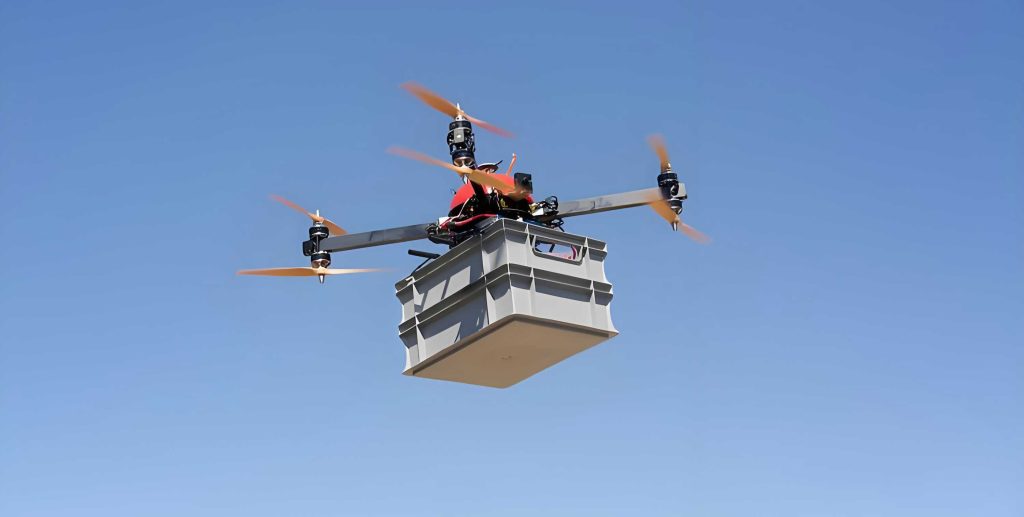
Our business model has evolved in tandem with these applications. We operate the “Cloud UAV Drone Flight Camp” in Haikou, a coastal base dedicated to training, recreation, and R&D. We provide tailored solutions for urban management, logistics, and automated inspection. The expansion is governed by a strategic framework that balances depth and breadth. We can conceptualize our growth strategy using a simple yet effective prioritization matrix, weighing the impact of new services against the required investment in UAV drones technology and training:
| Strategic Initiative | Market Impact Potential | Resource Intensity (Tech/Training) | Current Phase |
|---|---|---|---|
| Core License Training | High (Foundation for all sectors) | Medium (Established, scalable) | Growth & Optimization |
| Advanced Sectoral Applications (e.g., Surveying, Logistics) | High (Direct economic value) | High (Specialized UAV drones, advanced software) | Expansion |
| Public Service & Emergency Response | Very High (Societal benefit) | Very High (Robust, all-weather UAV drones, complex protocols) | Pilot Development |
| Youth STEM & Competition Programs | Medium-Long Term (Future talent) | Low-Medium (Educational UAV drones kits, curriculum) | Established Growth |
The confidence in Hainan’s low-altitude future is unwavering. The combination of free trade port policies, airspace openness, and targeted support creates an unparalleled “golden testing ground.” Looking forward, our roadmap is ambitious. We are developing advanced curricula in low-altitude logistics and emergency response. We are formalizing a “Cloud Youth UAV Drone Club” to systematically nurture the next generation of engineers and pilots. Furthermore, we are engaging in strategic dialogues with leading manufacturers and service providers, exploring collaborations in air route planning and UAV drones airworthiness certification—areas that will define the next phase of sophistication for the industry.
The equation for success in this sector is complex, involving technology, regulation, talent, and market creation. From my first-person perspective, the journey has been one of building blocks: first a license center, then a training ecosystem, now a multidimensional service provider. Every UAV drone that takes flight from our camp, every student who earns a certificate, and every new application we pioneer adds a term to Hainan’s low-altitude economic formula. It is a formula we are proud to be actively writing, one flight at a time.
$$ Future_{Low-Altitude\ Hainan} = \sum (Policy_i + Innovation_j + Talent_k + UAV\ Drones_{Application\_l}) $$
where the sum spans across all progressive policies \( i \), technological innovations \( j \), trained professionals \( k \), and practical applications \( l \) for UAV drones. Our role is to maximize the value of each component in this sum.