
In the field of mine ecological environment monitoring, traditional monitoring methods are constrained by factors such as complex terrain and harsh environments, leading to difficulties in obtaining comprehensive data and challenges in promptly detecting potential ecological threats. To address these issues, this research designs a mine ecological environment monitoring system based on the real-time feedback of unmanned aerial vehicle (UAV) remote sensing imagery. The system adopts a hierarchical architecture divided into four distinct layers. Acknowledging the deficiency of traditional methods in assessing soil erosion, this study specifically integrates a soil erosion indicator into an improved remote sensing ecological index calculation unit. Concurrently, by comprehensively considering multiple factors affecting mine ecology, a multi-indicator system is constructed. To circumvent issues of information redundancy and computational complexity arising from multiple indicators, principal component analysis is employed for dimensionality reduction, culminating in an improved remote sensing ecological index that provides a more comprehensive and accurate reflection of mine ecological environment quality. Within the UAV route planning unit, the Osprey Optimization Algorithm is utilized to simulate the hunting behavior of ospreys, automatically generating optimal flight paths based on the terrain, meteorological data, and mission objectives of the monitoring area. This enhances data collection efficiency and reduces UAV energy consumption. The real-time feedback unit for UAV remote sensing imagery ensures the rapid and accurate transmission of image data by establishing a coordinate system, deploying ground control points, and leveraging LoRa self-organizing network technology, guaranteeing stable data transmission even in complex terrains. The spatiotemporal differentiation characteristics analysis unit for ecological environment quality employs Sen’s slope estimator and the Mann-Kendall test to analyze temporal evolution trends and uses the coefficient of variation to quantify spatial variability. The results demonstrate the significant effectiveness of this system in practical application, providing robust support for the monitoring and management of the mine ecological environment.
Mining resource development is a crucial driver of economic growth, yet the irreversible nature of extraction activities inflicts severe damage on the ecological environment of mining areas. These regions are often plagued by complex environmental issues such as high and steep slopes, dust pollution, and water acidification, posing significant challenges to conventional ecological monitoring techniques. For instance, satellite remote sensing is highly susceptible to cloud cover obstruction; in mining areas with annual precipitation exceeding 800 mm, cloud obstruction frequency can surpass 40%, extending data acquisition cycles to 15-30 days and hindering dynamic monitoring needs. Manual inspections are impractical on steep slopes exceeding 30°, with personnel accessibility dropping below 20%, coupled with safety hazards like landslides, rendering the peripheries and hazardous zones of mines as monitoring blind spots. While fixed monitoring stations enable long-term continuous observation, sensor failure rates increase by 3 to 5 times compared to plain areas when dust concentrations exceed 500 μg/m³, drastically reducing data validity. Furthermore, traditional monitoring methods often focus on single indicators, such as vegetation coverage, neglecting mine-specific ecological elements like soil erosion and dust dispersion, leading to assessment results that fail to holistically reflect the degree of ecological degradation. For example, an open-pit coal mine experienced frequent secondary disasters post-rehabilitation because soil erosion rates were not monitored, and slope stability was overlooked in the restoration plan. These issues highlight the limitations of traditional methods in mining contexts, including incomplete data acquisition, poor timeliness, and oversimplified indicators, underscoring the urgent need for intelligent monitoring technologies tailored to complex mine environments.
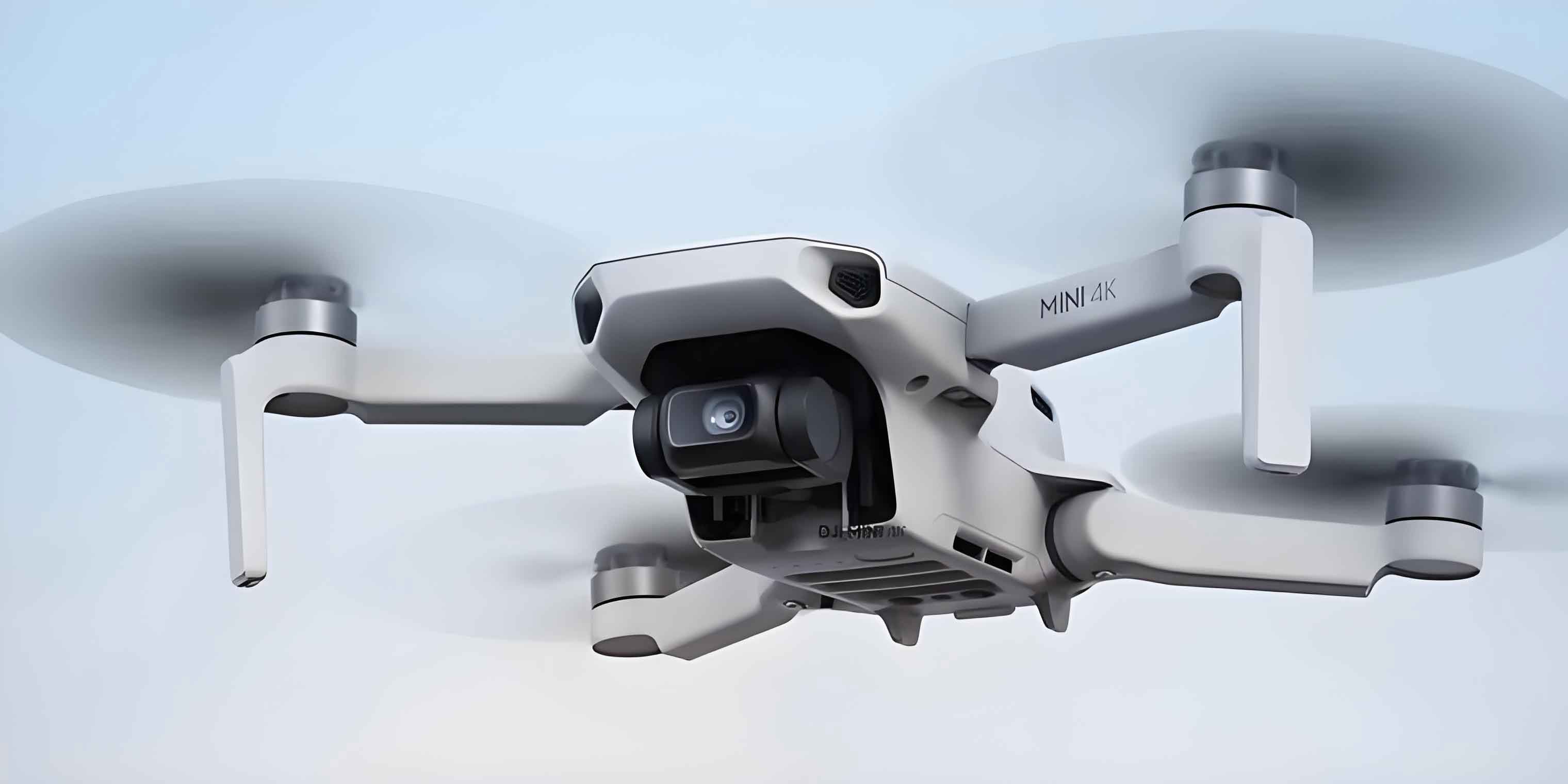
In this context, this research designs a mine ecological environment monitoring system based on real-time feedback from UAV remote sensing imagery. The system employs a layered architecture, dividing functionality into four levels. UAV drones equipped with various sensors utilize LoRa wireless communication technology to transmit remote sensing image data in real-time to a ground control center. For UAV route planning, the innovative application of the Osprey Optimization Algorithm automatically generates optimal flight paths based on the complex terrain, meteorological data, and mission objectives of the monitoring area, solving the problems of difficult and inefficient route planning in complex environments. The real-time feedback unit ensures fast and accurate transmission of imagery by establishing a coordinate system, deploying ground control points, and utilizing LoRa ad-hoc networking. The improved remote sensing ecological index calculation unit addresses the characteristics of mine ecology by introducing a soil erosion indicator and applying normalization and principal component analysis to multiple indicators, providing a comprehensive assessment of ecological quality. The spatiotemporal differentiation analysis unit employs Sen’s slope estimator and the Mann-Kendall test to analyze temporal evolution and the coefficient of variation to quantify spatial change characteristics.
1. Architecture of the Mine Ecological Environment Monitoring System
The monitoring system based on real-time feedback of UAV drones remote sensing imagery adopts a hierarchical architecture, organized into four distinct layers: the Data Acquisition Layer, the Data Transmission Layer, the Data Processing & Analysis Layer, and the Application Layer. Each layer has clearly defined functions, and interactions between layers occur through specific interfaces. This design significantly reduces system complexity and enhances maintainability and scalability, providing an efficient and scientific solution for mine ecological monitoring.
The Data Acquisition Layer, at the system’s forefront, is responsible for data gathering. It utilizes UAV drones as platforms, equipped with a suite of sensors including high-resolution visible-light cameras, multispectral cameras, thermal imagers, and LiDAR. Traditional data acquisition methods struggle to obtain comprehensive and accurate ecological data in complex mine terrains. This study innovatively employs a multi-sensor协同 working mode, rationally allocating operational periods and areas for each sensor based on the ecological characteristics of different mine zones. For example, high-resolution visible-light cameras capture overall geomorphic information, multispectral cameras detect vegetation cover and soil composition changes, thermal imagers monitor surface temperature anomalies, and LiDAR constructs 3D terrain models. This multi-source data fusion approach overcomes the technical challenges of incomplete and inaccurate data acquisition in complex terrain, providing a rich and reliable data foundation for subsequent analysis.
The Data Transmission Layer acts as the system’s connective bridge, managing data flow between the Acquisition and Processing layers. Traditional transmission methods often suffer from unstable signals and data delays in complex mine environments. This study innovatively combines wireless communication technologies like Wi-Fi and 4G/5G, enabling automatic switching based on the UAV drone’s position and signal strength. When the drone is near the ground station, Wi-Fi is prioritized for high-speed, stable transmission; during long-distance flights, it switches to 4G/5G networks to ensure real-time data feedback. This technology solves the problems of unstable and untimely data transmission in complex environments, enabling real-time and efficient image data transfer.
The Data Processing & Analysis Layer is the system’s core. Centered on a high-performance processor, it handles the processing and analysis of acquired image data. It innovatively establishes a mine ecological environment monitoring model based on multi-source data, fusing information from various sensors. Tailored to mine ecology characteristics, it introduces a soil erosion indicator and applies normalization and principal component analysis to multiple indicators, enabling comprehensive and accurate identification of ecological environment quality. This method breaks through the limitations of traditional single-indicator monitoring, addressing the issue of incomplete ecological quality assessment.
The Application Layer, at the top of the system, presents the analysis results—mine ecological environment quality—to users through intuitive maps, charts, and automatically issues warning information. Simultaneously, users can output control commands through this layer to operate the entire system. This design achieves visualization and interactivity of monitoring results, allowing users to promptly grasp ecological dynamics and respond quickly to anomalies.
Through this design, the system effectively addresses the technical challenges of ecological monitoring in complex mine terrains, improving monitoring efficiency and accuracy, and providing powerful support for mine ecological environment protection.
2. System Hardware Design
This study utilizes the DJI Matrice 300 RTK as an open flight platform. To meet the monitoring demands of complex mine environments, a specialized remote sensing monitoring system with high reliability and strong real-time capability is constructed through modular hardware expansion and heterogeneous computing architecture redesign. The system employs a three-level “air-ground-cloud” hardware architecture, comprising the UAV-end Payload Extension Layer, the Ground Station Edge Computing Layer, and the Cloud Collaborative Processing Layer. These layers interact via a LoRa+5G dual-link for low-latency data exchange.
The DJI Matrice 300 RTK is selected as the flight carrier primarily for its mature flight control platform, highly reliable propulsion system, and RTK centimeter-level positioning capability. However, the原生 image processor and wireless communication modules are only suited for basic aerial photography and cannot directly support tasks like synchronous multispectral data acquisition, real-time edge computing, and low-latency remote control. Therefore, the hardware design focuses on functional expansion and performance enhancement, building a specialized aerial operation system for complex mine environments by integrating customized payload modules and communication relay equipment.
2.1 UAV Remote Sensing Imagery Real-time Acquisition Module
Within the Data Acquisition Layer, real-time acquisition of UAV drones remote sensing imagery is a critical component. Mine geological environments are complex, with undulating terrain and variable weather. Traditional manual image data collection is not only inefficient and难以保证 comprehensive and accurate data but also poses significant safety risks for personnel. Therefore, this study employs UAV drones as carriers for real-time image acquisition.
The UAV drones follow pre-planned flight routes while multiple onboard sensors work协同. A carbon fiber vibration-damping gimbal is designed, integrating a Zenmuse Z30 visible-light camera (400-700nm), a RedEdge-M multispectral camera (5 bands), and an XT2 thermal infrared camera (8-14μm). A time-synchronization controller achieves millisecond-level alignment of the three data modes. A co-axial optical design expands the multispectral camera’s field of view (FOV) from the native 22° to 35°, increasing single-sortie coverage by 2.1 times. The visible-light camera, the DJI Zenmuse Z30, precisely captures reflected light in the 400-700nm visible spectrum from the mine surface, obtaining high-resolution true-color images that provide foundational data for直观 observation. The multispectral camera, the RedEdge-M five-channel model, captures spectral information of targets across different bands. Traditional methods struggle to comprehensively assess vegetation cover and soil quality in mines. Analyzing multispectral data to calculate indices like NDVI and soil moisture index enables scientific and accurate evaluation of ecological conditions such as vegetation cover and soil quality, overcoming the limitations of traditional assessment methods. The thermal infrared sensor, the Zenmuse XT2 thermal imaging camera, detects mid-to-far infrared radiation (8-14μm) emitted by objects themselves, used for monitoring changes in mine surface temperature. Previous monitoring of mine surface temperature was often untimely and incomplete. This sensor allows real-time acquisition of surface temperature data, providing powerful support for identifying potential thermal anomaly areas.
The acquired image data is transmitted in real-time to the ground control center via wireless communication technology, providing timely and comprehensive data for subsequent monitoring and analysis. The design of the UAV drones remote sensing imagery real-time acquisition module effectively solves the challenges of image data collection in complex mine environments, improving monitoring efficiency and data quality.
2.2 Data Transmission Layer Design
Within the Data Transmission Layer, a LoRa wireless communication module is constructed to ensure efficient data flow for the monitoring system. In mine ecological environment monitoring, the stability and reliability of data communication are paramount. Traditional communication methods often face issues like insufficient signal coverage, high data loss, and frequent interruptions in the vast and topographically complex mining areas. To address these challenges, LoRa wireless communication technology is selected for data transmission, with its hardware core being the LoRa module. This module includes a LoRa transceiver chip (SX127x series) and a microcontroller (STM32WL series). The LoRa transceiver chip handles signal modulation and demodulation, converting the image data collected by the UAV drones into signals suitable for wireless transmission and reconstructing the original data at the receiver. The microcontroller manages transmission control and communication with external devices.
The LoRa module features significant long-range, low-power, and strong penetration capabilities. In a mining area of 3.55 km², the maximum transmission distance can reach 8.5 km in open areas. In ravine地形, the signal attenuation rate is 35%. Despite significant signal blocking by surrounding slopes in ravines, the LoRa module’s strong penetration maintains relatively stable data transmission with an attenuation rate around 35%, ensuring effective data transfer. On steep slopes, the signal attenuation rate is 28%. Although steep slopes present terrain variations, the propagation environment is somewhat better than ravines, resulting in a lower attenuation rate of 28% for reliable data transmission. Under full-load operation, the LoRa module can operate continuously for up to 72 hours. This low-power characteristic allows the device to operate stably during long-term monitoring tasks, reducing the frequency of battery replacements or recharging, and lowering energy consumption and maintenance costs. This innovative design enables reliable long-distance transmission of image data in mine environments, providing a solid data guarantee for subsequent monitoring and analysis.
2.3 Data Processing & Analysis Layer Design
Within the mine ecological environment monitoring system, the processor module serves as the core “brain,” the intelligent center responsible for the critical task of receiving, processing, and analyzing image data collected by various sensors. Given the variety of sensors and high acquisition frequencies in mine monitoring, the data volume is enormous, imposing stringent requirements on the processor’s capability.
Mine monitoring requires simultaneous processing of three data modes: visible light (RGB), multispectral (5-band), and thermal infrared (single-band), generating up to 2.8 TB of data per sortie per day. Traditional processors often struggle with such massive data volumes, leading to slow processing speeds, low efficiency, and even system lag, failing to meet real-time monitoring and analysis demands. To address this technical challenge, the AMD EPYC 7763 is selected as the system’s processor. The EPYC 7763’s 128 threads enable multi-threaded parallel preprocessing, support AI model inference accelerated by the OpenVINO framework, and real-time generation of ecological assessment reports. Memory bandwidth is configured with 8-channel DDR4-3200, reaching 204.8 GB/s, a 37% improvement over a dual Xeon Gold 6248 setup, effectively addressing the loading latency of multispectral data cubes (512×512×5×float32). It supports 128 PCIe 4.0 lanes, allowing simultaneous connection to 4 NVMe SSDs (total bandwidth 64 GB/s) and 2 GPUs, meeting the processing demands of LiDAR point cloud data. With 64 cores and 128 threads, this powerful multi-core, multi-threaded architecture provides exceptional parallel processing capability, handling numerous data tasks concurrently. In the mine ecological monitoring system, this特性 perfectly aligns with the demand for big data processing. In practice, the AMD EPYC 7763 processor can rapidly process image data collected by UAV drones and other sensors, including operations like image preprocessing, feature extraction, and data fusion, significantly reducing processing time. It also efficiently runs complex ecological monitoring algorithms, such as vegetation index calculation and soil erosion analysis, providing strong support for accurate assessment of mine ecological quality. This design overcomes the shortcomings of traditional processors in big data handling, achieving fast and efficient data processing within the monitoring system, ensuring reliable support for real-time monitoring and decision-making, and significantly enhancing overall system performance and efficiency.
3. System Functional Module Design
Within the system’s Data Processing & Analysis Layer, several key processing units are built around the AMD EPYC 7763 processor. In the UAV route planning unit, the Osprey Optimization Algorithm (OOA) is employed. Traditional route planning algorithms struggle to balance comprehensive coverage with energy efficiency in complex mine terrain. The OOA automatically generates optimal flight paths based on complex terrain, meteorological data, and mission objectives, solving the technical难点 of不合理 and inefficient route planning in complex environments, improving data collection efficiency and reducing UAV drones energy consumption. The real-time feedback unit for UAV drones remote sensing imagery ensures fast and accurate transmission by establishing a coordinate system, deploying ground control points, and utilizing LoRa ad-hoc networking for data transfer. This solves the problems of high packet loss and延迟 inherent to traditional transmission methods in complex terrain, guaranteeing data timeliness and integrity. The improved remote sensing ecological index calculation unit introduces a soil erosion indicator tailored to mine ecology and applies normalization and principal component analysis to multiple indicators, providing a comprehensive reflection of ecological quality, breaking through the limitations of traditional single-indicator assessment. The spatiotemporal differentiation characteristics analysis unit employs Sen’s slope estimator and the Mann-Kendall test to analyze temporal evolution and the coefficient of variation to quantify spatial change, achieving precise and real-time monitoring of the mine ecological environment.
3.1 UAV Route Planning Unit
UAV drones route planning is a core环节 for ensuring comprehensive image data acquisition in mine ecological monitoring. Traditional route planning methods often fail to balance complete area coverage with energy efficiency in the complex and variable mine environment. Mine terrain features significant起伏, irregular obstacle distribution, and complex meteorological conditions, causing traditional algorithms to generate routes with coverage blind spots or excessively long, energy-intensive flight paths, leading to incomplete data collection and increased costs.
To address these technical难点, this study utilizes the Osprey Optimization Algorithm for complete-coverage UAV drones route planning. The OOA模拟 the hunting behavior of ospreys, possessing strong global search and local optimization capabilities. In route planning, the algorithm comprehensively considers factors such as terrain起伏, obstacle locations, meteorological data, and mission objectives. Through iterative optimization, it automatically generates optimal flight paths that ensure complete coverage of the monitoring area by the UAV drones, minimizing data omission, while also rationally planning the trajectory to avoid unnecessary detours and重复 flights, thereby reducing energy consumption and improving flight efficiency. The specific process is as follows:
Step 1: Set algorithm parameters (population size, maximum iterations) and randomly generate N initial routes (osprey individuals) $x_i$, each consisting of several waypoints.
Step 2: Use real-number encoding to represent each individual $x_i$ as a sequence of waypoints $\{a_1, a_2, …, a_n\}$, where $a_i$ represents the waypoint encoding.
Step 3: Design a route cost function $B(x_i)$ to evaluate the quality of a route (individual $x_i$).
$$B(x_i) = \sum_{j=1}^{m-1} (w_1 \alpha_j + w_2 \beta_j + w_3 \gamma_j)$$
where $B(x_i)$ is the route cost; $w_1$, $w_2$, $w_3$ are weights for length, altitude, and threat index, respectively; $\alpha_j$, $\beta_j$, $\gamma_j$ are the flight length, average altitude, and average threat index for the j-th segment of the route.
Step 4: Calculate the cost $B(x_i)$ for each individual, sort the ospreys based on $B(x_i)$, select individuals with higher cost as the “underwater fish” $x_b$, and record the best individual and its position.
$$\max(B(x_i)) \rightarrow x_b$$
Step 5: Determine the fish position $C_{s,i}$ for each osprey $i$.
$$C_{s,i} = \begin{cases} x_b, & r_1 \leq 0.5 \\ C_f(k), & \text{otherwise} \end{cases}$$
where $C_{s,i}$ is the determined fish position for osprey $i$; $C_f(k)$ is the coordinate set of fish positions; $X$ is the population matrix of osprey positions; $r_1$ is a random number in (0,1); $k$ is a random index for a fish position.
Step 6: Each route (osprey individual) adjusts its velocity based on the “fish” position, simulating the osprey moving towards and attacking prey.
$$\hat{x}_i(t) = x_i(t) + d_i \cdot (C_{s,i} – I_i \cdot x_i(t))$$
where $\hat{x}_i(t)$ is the post-attack position of individual $i$; $d_i$ is the position偏移 degree; $x_i(t)$ is the current position; $I_i$ is the direction of the predation behavior.
Step 7: The osprey carries the caught fish to a safe location for consumption, updating its position.
$$x_i(t) = \hat{x}_i(t) + \frac{A_{lb} + d_i \cdot (A_{ub} – A_{lb})}{t}$$
where $x_i(t)$ is the新的 eating location found by individual $i$; $A_{ub}$, $A_{lb}$ are the upper and lower bounds of the solution space.
Step 8: Calculate the route cost $B(x_i(t))$ for the new position. If the new position’s cost is better than the current one, replace the current position; otherwise, keep it.
Step 9: Repeat Steps 4 to 8 until the maximum iteration count $T_{max}$ is reached. $T_{max}$ is determined based on practical mission time constraints and per-iteration duration.
By employing the Osprey Optimization Algorithm for UAV drones route planning, the system effectively overcomes the shortcomings of traditional methods in complex mine environments, achieving efficient and precise image data acquisition. This provides a reliable data foundation for subsequent ecological monitoring and analysis, enhancing the performance and reliability of the entire monitoring system.
3.2 UAV Remote Sensing Imagery Real-time Feedback Unit
The real-time feedback unit is协同 built from UAV drones data acquisition and transmission components. In mine ecological monitoring, achieving real-time and stable transmission of image data is crucial. Traditional data transmission methods are easily interfered with by terrain and obstacles in complex mine environments, leading to unstable transmission and high packet loss rates, severely impacting monitoring timeliness and accuracy. To solve these technical challenges, this study implements a series of methods.
Step 1: Define the mine monitoring area and establish a coordinate system for it.
Step 2: Deploy at least five ground control points (GCPs) within the area,埋设 markers. High-precision positioning at these GCPs effectively corrects geometric distortions in UAV drones acquired images, improving data accuracy.
Step 3: Acquire remote sensing imagery according to the planned UAV drones flight route.
Step 4: Establish a LoRa ad-hoc network and configure module parameters. This overcomes the limited coverage of traditional communication networks, enabling flexible and stable connectivity across vast and complex mine areas.
Step 5: Activate the transmission function, converting the data to be sent into a binary format suitable for LoRa transmission.
Step 6: The LoRa module modulates and spreads the data based on configured parameters, enhancing signal抗干扰 capability and reducing error rates during transmission.
Step 7: Encapsulate the remote sensing image data into packets and transmit them via the LoRa module’s send command.
Step 8: The ground control center receives the imagery data and sends an acknowledgment (ACK) signal back to the sender. If no ACK is received within a timeout period, the sender can retransmit or report failure, ensuring transmission reliability.
Step 9: After transmission, the LoRa module enters a low-power mode, awaiting the next task, thereby extending device lifespan and reducing energy consumption.
Through this process, real-time, stable, and reliable transmission of UAV drones remote sensing imagery data is achieved, providing strong technical support for mine ecological environment monitoring.
3.3 Improved Remote Sensing Ecological Index Calculation Unit
The Remote Sensing Ecological Index (RSEI) is an effective method for assessing regional ecological quality based on remote sensing technology. Traditionally, it focuses on four key indicators—wetness, greenness, heat, and dryness—constructed from combinations of visible and infrared bands to reflect surface特征. However, for mine ecological environment assessment, these four indicators have明显的 limitations and难以 comprehensively and accurately describe the complex ecological quality.
The basis for the Improved Remote Sensing Ecological Index (IRSEI) stems from an in-depth analysis of the traditional RSEI’s limitations in mine assessment and optimization based on the actual characteristics of mine ecology. The traditional RSEI, comprising only four indicators, fails to fully reflect the complexity. Mine areas often exhibit poor ecological quality and high spatial heterogeneity, making a single principal component (PC1) inadequate for capturing the complex interactions among multiple ecological indicators. Furthermore, mine environments are heavily influenced by human activities and change rapidly, requiring more sensitive indicators to capture dynamic changes.
To address these technical难点, this study introduces a soil erosion indicator into the traditional RSEI framework. Soil erosion is a significant manifestation of ecological degradation in mines,破坏 soil structure, reducing fertility, and potentially triggering geological disasters like landslides, severely impacting the mine ecosystem. By incorporating soil erosion, a more robust mine remote sensing ecological index calculation model is constructed. This model comprehensively considers factors like wetness, greenness, heat, dryness, and soil erosion, providing a more complete and accurate reflection of the actual mine ecological condition. Since the traditional RSEI primarily uses the first principal component, and mine areas have poor ecological quality with high spatial heterogeneity, a single PC is insufficient. Therefore, the IRSEI incorporates both the first (PC1) and second (PC2) principal components in its calculation to improve assessment comprehensiveness and accuracy. As the five indicators (wetness, greenness, heat, dryness, soil erosion) have different units, they cannot be directly computed. Thus, each ecological indicator is normalized to eliminate unit influence and ensure balanced weighting. The IRSEI, calculated from periodically acquired remote sensing imagery, can dynamically reflect ecological changes, providing scientific basis for restoration and management.
(1) Greenness Indicator
Greenness, representing vegetation vigor, is described by the Normalized Difference Vegetation Index (NDVI), calculated from the difference in reflectance between the red and near-infrared bands in remote sensing imagery.
$$E_1 = \frac{K_n – K_r}{K_n + K_r}$$
where $E_1$ is NDVI; $K_n$ is near-infrared band reflectance; $K_r$ is red band reflectance. NDVI ranges from -1 to 1. Values closer to 1 indicate lush vegetation and high coverage, while values closer to -1 indicate sparse vegetation. A value of -1 signifies bare land, providing直观 evidence of vegetation destruction.
(2) Wetness Indicator
Wetness assesses surface moisture content in soil, vegetation, and water bodies. First, a Tasseled Cap Transformation (K-T transform) is applied to the imagery, projecting original multispectral bands into a new feature space containing a wetness component. Then, the wetness component is calculated using reflectance from multiple bands (blue $K_B$, green $K_G$, red $K_R$, near-infrared $K_n$, and two shortwave infrared bands).
$$E_2 = 0.1511K_B + 0.1972K_G + 0.3283K_R + 0.3407K_n – 0.7117K_{SWIR1} – 0.4559K_{SWIR2}$$
where $E_2$ is the wetness indicator.
(3) Dryness Indicator
The dryness indicator reflects surface aridity and land degradation, derived from the average of the Soil Index (SI) and the Index-based Built-up Index (IBI).
$$SI = \frac{(K_R + K_B) – (K_n + K_G)}{(K_R + K_B) + (K_n + K_G)}$$
$$IBI = \frac{ \frac{2K_{SWIR1}}{K_{SWIR1}+K_n} – [\frac{K_n}{K_n+K_R} + \frac{K_G}{K_G+K_{SWIR1}}] }{ \frac{2K_{SWIR1}}{K_{SWIR1}+K_n} + [\frac{K_n}{K_n+K_R} + \frac{K_G}{K_G+K_{SWIR1}}] }$$
$$E_3 = \frac{IBI + SI}{2}$$
where $E_3$ is the dryness indicator.
(4) Heat Indicator
The heat indicator reflects surface temperature. It is calculated because surface temperature is influenced not only by solar radiation and weather but also by land cover, vegetation, and human activity, indirectly indicating ecological conditions. First, calculate the radiance $D$ for the thermal infrared band.
$$D = \delta \cdot W + \epsilon$$
where $\delta$ is gain, $\epsilon$ is bias, $W$ is the digital number (DN) value.
Then, calculate the at-sensor brightness temperature $F$.
$$F = \frac{K_2}{\ln(\frac{K_1}{D} + 1)}$$
where $K_1$, $K_2$ are calibration constants.
Finally, calculate the land surface temperature $E_4$.
$$E_4 = \frac{F}{1 + (\frac{\lambda F}{\rho}) \ln \varepsilon}$$
where $\lambda$ is the central wavelength of the thermal band, $\rho = 1.438 \times 10^{-2} m \cdot K$, and $\varepsilon$ is surface emissivity. For simplification in the IRSEI calculation, $E_4$ often directly uses the brightness temperature $F$ or a simplified LST value after atmospheric correction.
(5) Soil Erosion Indicator
Mining activities inevitably disturb land, causing exposure and, over time, soil erosion. Therefore, the annual average soil erosion modulus $E_5$ is used for quantitative analysis.
$$E_5 = R \cdot K \cdot L \cdot S \cdot C \cdot P$$
In the Universal Soil Loss Equation (USLE) form used here:
$$E_5 = U_1 \cdot U_2 \cdot U_3 \cdot U_4 \cdot U_5 \cdot U_6$$
where $U_1$ is the rainfall erosivity factor, $U_2$ is the soil erodibility factor, $U_3$ is the slope length factor ($L$), $U_4$ is the slope steepness factor ($S$), $U_5$ is the cover-management factor ($C$), and $U_6$ is the support practice factor ($P$). These can be derived from remote sensing and GIS data. For instance, $U_5 (C)$ related to vegetation cover can be estimated as:
$$U_5 = \begin{cases} 1, & f = 0 \\ 0.658 – 0.3436 \cdot \ln(f), & 0 < f \leq 78.3 \\ 0, & f > 78.3 \end{cases}$$
where $f$ is the vegetation coverage percentage derived from NDVI.
Since these five indicators have different units, they must be normalized before calculating the IRSEI.
$$Q_i = \frac{E_i – E_{i,\min}}{E_{i,\max} – E_{i,\min}}$$
where $Q_i$ is the normalized value for indicator $i$; $E_{i,\max}$, $E_{i,\min}$ are its maximum and minimum pixel values; $E_i$ is the original pixel value.
Principal Component Analysis (PCA) is applied to the five normalized indicators. The traditional RSEI mainly uses PC1. However, due to poor ecological quality and high spatial heterogeneity in mines, a single PC is insufficient. Therefore, this system incorporates both PC1 and PC2.
$$PC_i = PCA(Q_1, Q_2, Q_3, Q_4, Q_5)$$
where $PC_i$ is the i-th principal component score for a pixel.
$$I_0 = J_1 \cdot PC_1 + J_2 \cdot PC_2$$
where $I_0$ is the initial ecological index; $J_1$, $J_2$ are the contribution rates (eigenvalues) of PC1 and PC2, respectively.
Finally, $I_0$ is normalized to obtain the Improved RSEI ($\hat{I}$).
$$\hat{I} = \frac{I_0 – I_{0,\min}}{I_{0,\max} – I_{0,\min}}$$
where $\hat{I}$ is the IRSEI, ranging from 0 to 1. Higher values indicate better ecological quality.
| $\hat{I}$ Range | Grade | Ecological Environment Quality Description |
|---|---|---|
| 0.8 – 1.0 | Excellent | Very good ecological quality |
| 0.6 – 0.8 | Good | Relatively good ecological quality |
| 0.4 – 0.6 | Moderate | Average ecological quality |
| 0.2 – 0.4 | Poor | Relatively poor ecological quality |
| 0 – 0.2 | Bad | Very poor ecological quality |
3.4 Spatiotemporal Differentiation Characteristics Analysis Unit
Based on the IRSEI ($\hat{I}$), spatiotemporal differentiation characteristics are analyzed to reveal dynamic trends and spatial distribution patterns, providing scientific support for ecological protection. For temporal evolution analysis, traditional methods often lack accuracy in trend judgment and reliability in significance testing. This study innovatively combines Sen’s slope estimator and the Mann-Kendall (MK) test. Sen’s slope ($h$)直观 reflects the trend of IRSEI over time, calculated from differences between time points, reducing the impact of outliers.
$$h = \text{median} \left( \frac{\hat{I}_j – \hat{I}_i}{j – i} \right), \quad \forall i < j$$
where $h > 0$ indicates an improving trend, $h = 0$ stability, and $h < 0$ a degrading trend. The MK test checks trend significance. The statistic $S$ is calculated as:
$$S = \sum_{i=1}^{n-1} \sum_{j=i+1}^{n} \text{sign}(\hat{I}_j – \hat{I}_i)$$
where $\text{sign}(x) = 1$ if $x>0$, $0$ if $x=0$, and $-1$ if $x<0$. For $n > 10$, $S$ is approximately normally distributed with variance:
$$\text{Var}(S) = \frac{n(n-1)(2n+5)}{18}$$
The standardized test statistic $Z$ is:
$$Z = \begin{cases} \frac{S-1}{\sqrt{\text{Var}(S)}}, & S > 0 \\ 0, & S = 0 \\ \frac{S+1}{\sqrt{\text{Var}(S)}}, & S < 0 \end{cases}$$
A positive $Z$ indicates an increasing trend, negative a decreasing trend. The trend is statistically significant if $|Z| > Z_{1-\alpha/2}$ (e.g., $1.96$ for 95% confidence, $2.58$ for 99%).
For spatial variation analysis, addressing uneven and highly variable ecological quality in mines, the Coefficient of Variation (CV) is introduced to quantify relative dispersion.
$$CV = \frac{\sigma_{\hat{I}}}{\mu_{\hat{I}}}$$
where $\sigma_{\hat{I}}$ is the standard deviation of IRSEI over space (e.g., within a defined region or time period), and $\mu_{\hat{I}}$ is its mean. A higher CV indicates greater spatial variability or fluctuation in ecological quality. Comparing CV values across different zones helps identify areas with unstable or highly variable ecological conditions.
The system operational workflow integrates these units: First, route planning parameters are set, and initial routes are generated. The OOA plans the optimal path for the UAV drones. A coordinate system is established with GCPs deployed. The UAV drones then acquire imagery along the route. A LoRa network transmits the data reliably to the ground station. The five ecological indicators are calculated from the imagery and normalized. The IRSEI is computed via PCA. Sen’s slope, MK test, and CV are used for spatiotemporal analysis. Finally, a comprehensive assessment of the mine’s ecological environment quality is conducted based on the IRSEI and its spatiotemporal characteristics.
4. Experimental Results and Analysis
A metallic mine located in a mountainous region was selected as the test site. The area features complex terrain with elevations between 500-800 m, slopes of 20°-40°, and a total area of 3.55 km², containing ravines and steep slopes. Vegetation coverage is low, with existing open-pit mining areas and tailings ponds. The open-pit area covers 1.5 km², and the tailings pond has a capacity of 600,000 m³. Prolonged mining has impacted the surrounding ecology, necessitating assessment via the real-time monitoring system.
UAV drones served as the aerial platform, equipped with a high-resolution visible-light camera, a multispectral camera, and a thermal infrared sensor, constituting the front-end monitoring equipment. Key acquisition parameters were set as shown in the following table (summarizing the provided Chinese table in English):
| Parameter | Visible-light Camera | Multispectral Camera | Thermal Infrared Sensor |
|---|---|---|---|
| Flight Altitude | 80-120 m (GSD 2-3 cm) | 60-100 m (GSD 4-6 cm) | 50-80 m (Resolution 0.5-1 m) |
| Overlap | Along 80%, Side 70% | Along 75%, Side 65% | Along 60%, Side 50% |
| Shutter Speed | 1/1000s (sunny) – 1/500s (cloudy) | Auto (based on light) | N/A |
| Aperture | f/5.6 | f/4.0 | N/A |
| ISO | 100-400 | Fixed 200 | Auto (Sensitivity 0.05°C) |
| Acquisition Time | 10:00-14:00 (sun angle >30°) | 10:00-14:00 | Pre-dawn / Post-sunset |
The UAV route planning unit was executed, designing a flight path covering the entire mining area based on its地形. The UAV drones performed three sorties, collecting 585 visible-light, 535 multispectral, and 621 thermal infrared images.
Using the imagery from 2024 as the primary dataset, and referencing historical data from 2014 to 2023 as a baseline, the system’s improved RSEI calculation unit was run. The results for the five ecological indicators and the corresponding IRSEI ($\hat{I}$) are summarized below (based on the provided Chinese table):
| Year | PC | Wetness | Greenness | Heat | Dryness | Soil Erosion | $\hat{I}$ |
|---|---|---|---|---|---|---|---|
| 2014 | PC1 | 0.68 | 0.72 | 0.35 | 0.28 | 0.18 | 0.82 |
| PC2 | -0.12 | 0.25 | 0.61 | -0.34 | 0.09 | ||
| 2020 | PC1 | 0.58 | 0.58 | 0.53 | 0.43 | 0.32 | 0.67 |
| PC2 | -0.21 | 0.15 | 0.73 | -0.25 | 0.18 | ||
| 2024 | PC1 | 0.50 | 0.47 | 0.65 | 0.54 | 0.43 | 0.35 |
| PC2 | -0.27 | 0.09 | 0.81 | -0.19 | 0.24 |
As shown in Table 3, the IRSEI ($\hat{I}$) exhibits a clear declining trend from 2014 (0.82) to 2024 (0.35), indicating an overall degradation in the mine’s ecological environment quality over the decade. The spatial distribution maps of IRSEI for 2014, 2020, and 2024 visually confirm this trend, showing a reduction in areas classified as “Excellent” or “Good” and an expansion of areas classified as “Poor” or “Bad,” particularly around the open-pit and tailings pond zones.
To further substantiate these findings, spatiotemporal differentiation analysis was conducted for the period 2014-2024. The results of the temporal trend analysis using Sen’s slope and the MK test are summarized below:
| Trend Category (by Sen’s slope) | Sen’s Slope Range | Area (km²) | Percentage (%) | MK Test Significance | Area (km²) | Percentage (%) |
|---|---|---|---|---|---|---|
| Improving Trend | > 0 | 0.50 | 14.1 | Not Significant | 0.53 | 14.9 |
| Stable | ≈ 0 | 1.20 | 33.8 | No Significant Change | 1.25 | 35.2 |
| Degrading Trend | < 0 | 1.85 | 52.1 | Significantly Degrading | 1.77 | 49.9 |
Table 4 reveals that a significant portion of the area (52.1%) experienced a degrading trend, with 49.9% showing statistically significant degradation. This confirms that the scope of ecological破坏 far exceeds the area showing improvement or stability.
The spatial variability analysis using the Coefficient of Variation (CV) yielded the following results:
| CV Level | CV Range | Area (km²) | Percentage (%) |
|---|---|---|---|
| Low | CV ≤ 0.15 | 0.85 | 23.9 |
| Moderate | 0.15 < CV ≤ 0.30 | 1.02 | 28.7 |
| High | 0.30 < CV ≤ 0.50 | 1.20 | 33.8 |
| Very High | CV > 0.50 | 0.48 | 13.6 |
Areas with high and very high CV (combined 47.4%) indicate significant ecological change or instability over the study period.
A more detailed analysis comparing different functional zones within the mine provides further insight:
| Functional Zone | Area (km²) | Mean IRSEI Change (2014-2024) | % Area with Significant Degradation | Mean CV |
|---|---|---|---|---|
| Open-pit Mining Area | 0.8 | -0.045 | 65 | 0.42 |
| Tailings Pond | 0.6 | -0.038 | 58 | 0.38 |
| Vegetation Buffer Zone | 1.65 | -0.025 | 40 | 0.28 |
Table 6 clearly shows that the open-pit area and tailings pond, representing intense human activity, experienced the most severe degradation (largest negative mean change, highest % of significant degradation) and highest variability (CV). The vegetation buffer zone also degraded, likely due to the扩散 of impacts from the core mining zones. This analysis pinpoints the primary sources of ecological破坏 and their zones of influence.
To evaluate the system’s performance, tests were conducted on data acquisition completeness and core processing capability. Spatial coverage completeness, defined as the ratio of actually surveyed area to the target area, was used as the metric for acquisition. The requirement was ≥98% under wind conditions ≤ Level 6 and ≥95% under wind > Level 6. The results from multiple sorties under different wind conditions met these specifications. The core processing capability was measured in data throughput (GB processed per second).
A comparative analysis was performed against three other methods: 1) Satellite-UAV + Quantitative Remote Sensing Inversion, 2) Multispectral Technique + Least Squares Support Vector Machine, and 3) Remote Sensing Technique + Core Parameters. The comparison under identical test conditions is summarized below:
| Method Group | Spatial Coverage (%) | Data Processing Time (hours) | Energy Consumption (kWh) |
|---|---|---|---|
| Satellite-UAV + Quantitative Remote Sensing Inversion | 85 | 12.5 | 15.2 |
| Multispectral Technique + LSSVM | 78 | 9.8 | 12.7 |
| Remote Sensing Technique + Core Parameters | 72 | 7.3 | 9.5 |
| Proposed Method | 90 | 6.6 | 8.2 |
Analysis of Table 7 shows that the proposed method outperforms the others in all three metrics. It achieves the highest spatial coverage (90%), the shortest data processing time (6.6 hours), and the lowest energy consumption (8.2 kWh). This demonstrates the proposed system’s superior practicality and efficiency for mine ecological monitoring.
5. Conclusion
This research designed a mine ecological environment monitoring system based on the real-time feedback of UAV drones remote sensing imagery. The system employs a multi-sensor (multispectral, LiDAR, thermal infrared)协同 observation strategy to achieve centimeter-level resolution surface monitoring, integrated with RTK positioning to ensure geometric accuracy. By introducing a soil erosion indicator and integrating it with wetness, greenness, dryness, and heat through principal component analysis, an Improved Remote Sensing Ecological Index (IRSEI) was developed for dynamic assessment. Testing verified the system’s reliability. The results demonstrate that the system achieves high-precision remote sensing image acquisition in complex terrain, with spatial coverage exceeding 98% under wind ≤ Level 6 and 95% under higher winds, meeting data integrity requirements. The system’s core processing capability显著 outperformed the three comparison methods. The IRSEI calculations revealed an overall declining trend in the mine’s ecological quality, with severe degradation concentrated in the open-pit and tailings pond areas. The experimental results confirm the system’s significant advantages for mine ecological environment monitoring, providing a scientific basis for ecological restoration and management.