
In the context of advancing agricultural mechanization and modernization, Unmanned Aerial Vehicles (UAVs), commonly known as drones, have garnered significant attention. Their application in plant protection, particularly for pest and disease control, is progressively expanding. From my professional perspective, the integration of UAV drones represents a transformative shift, offering unprecedented efficiency, precision, and safety compared to traditional ground-based methods. This article aims to provide a detailed examination of the operational value, core principles, practical strategies, and future integration potential of UAV drones in contemporary agricultural pest management.
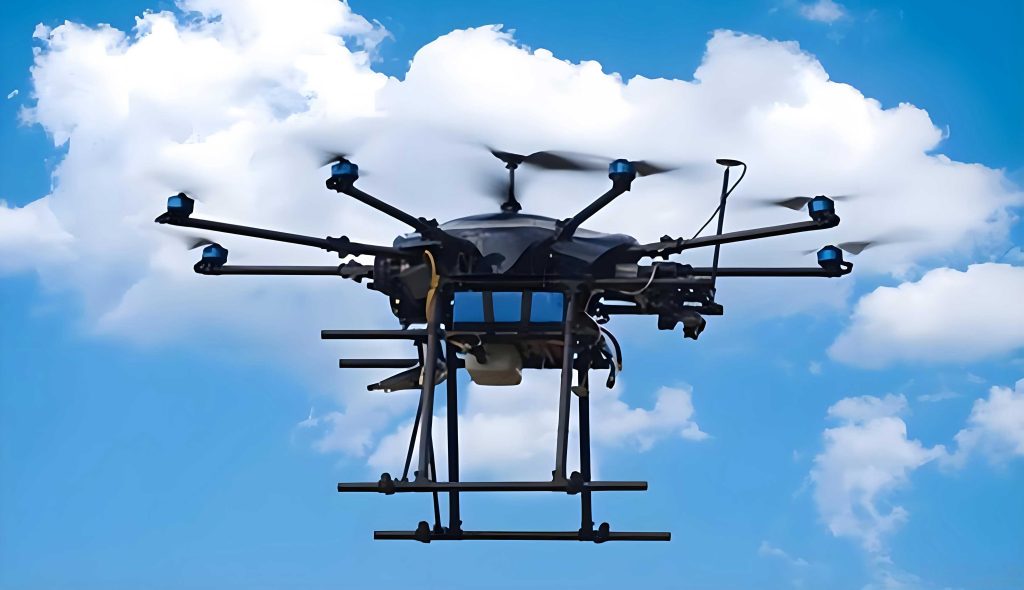
The fundamental value proposition of employing agricultural UAV drones is multifaceted. Typically capable of carrying a payload of approximately 10 kg of agrochemicals, these systems are highly maneuverable and support low-altitude flight operations. A single UAV drone can treat about 0.07 hectares per minute, drastically reducing labor requirements and operational time. Beyond speed, the precision of UAV drone application is paramount. They enable uniform spray distribution and targeted chemical delivery, which significantly enhances pesticide utilization efficiency. This precision minimizes chemical waste, lowers overall control costs, and improves application safety by reducing human exposure. Furthermore, the downwash airflow generated by the rotors of a UAV drone improves droplet penetration and coverage on crop surfaces, leading to more effective pest and disease suppression. The ability of UAV drones to hover allows for focused or repeated spraying on specific infestation hotspots, thereby increasing the tactical responsiveness of control measures.
1. Foundational Principles and Technological Basis for UAV-Based Plant Protection
The effective deployment of agricultural UAV drones is not merely about piloting an aircraft; it is a science-driven process. Success hinges on adhering to core principles and understanding the interplay between various agronomic and technological factors. The foundational principle remains “Prevention First, Integrated Management.” Operations must be planned based on actual field scouting data and official pest forecast bulletins to accurately determine control targets and optimal treatment timings.
The technological workflow involves several integrated components. First, a detailed operational plan is formulated, considering geography, crop type, adjacent sensitive areas (e.g., apiaries, aquaculture ponds, residential zones), and prevailing meteorological conditions. Second, critical application parameters are set based on the specific pest or disease, its location on the plant, crop growth stage, and the physicochemical properties of the selected pesticides and adjuvants. This includes determining the appropriate UAV drone model, flight parameters, and application volume.
A typical agricultural UAV drone system comprises the airframe, propulsion units (motors and propellers), a flight controller and navigation system (often with RTK-GNSS for centimeter-level precision), a payload system (liquid tank, pump, piping, and spray nozzles), and communication links. The choice of nozzle type (e.g., hydraulic, air induction) and configuration directly influences droplet spectrum (size distribution), which is critical for coverage, drift mitigation, and efficacy.
The integration of smart technologies is becoming standard. Real-time kinematic positioning ensures accurate flight paths and overlap. Sensors can monitor flow rate and tank level. More advanced systems integrate with data platforms that log flight trajectories, speed, height, and spray volume in real-time, enabling immediate quality control and traceability.
2. Pre-Operation Preparation and Safety Protocols
Meticulous preparation is non-negotiable for safe and effective UAV drone operations. A comprehensive pre-flight checklist must be rigorously followed.
2.1 Pre-Flight Inspection and System Calibration
The inspection begins with a visual assessment of the airframe for any structural damage, loose parts, or improper assembly. The integrity of the propulsion system—including motor mounts, propellers, and arms—is critical for stability. The spray system demands particular attention: nozzles must be clean, unclogged, and correctly installed according to the required flow rate and spray pattern. The number and arrangement of nozzles must align with the desired swath width and droplet distribution. A system calibration should be performed to verify that the commanded flow rate matches the actual output across the operational pressure range. Communication systems between the ground control station and the UAV drone must be tested for stability, especially in areas with potential signal interference.
2.2 Operational Safety and Environmental Safeguards
Safety protocols protect both personnel and the environment. A clear safety perimeter must be established during operations to prevent unauthorized access. All personnel, including pilots and ground crew, must wear appropriate Personal Protective Equipment (PPE). Crucially, the area to be sprayed must be cleared of all non-essential personnel before operation commences. Environmental risk assessment is integral. This involves identifying and establishing buffer zones to protect nearby sensitive crops, water bodies, livestock, and human habitats from potential spray drift. Adherence to no-fly zones designated by aviation authorities is mandatory.
3. Core Operational Strategies for UAV Drones in Pest Control
3.1 Meteorological and Environmental Specifications
The performance of spray applications via UAV drones is highly susceptible to weather. Optimal conditions are essential for maximizing efficacy and minimizing off-target movement. Operations should be conducted under no-rain conditions, with minimal dew on the crop canopy. Wind speed must be carefully monitored; a general threshold is below 3 m/s (approximately 6.7 mph or 11 km/h) to control drift. Relative humidity plays a key role in droplet evaporation; a humidity level above 40% is favorable to reduce evaporation losses. Temperature extremes should be avoided, with an operational range typically between 5°C and 35°C. High temperatures accelerate evaporation, while low temperatures can affect fluid viscosity and system performance.
3.2 Scientific Selection and Formulation of Pesticides and Adjuvants
The choice of chemical inputs is as important as the application technology. For UAV drone applications, formulations with good solubility, suspension, or emulsification characteristics at low dilution ratios are preferred. These include Suspension Concentrates (SC), Oil-based Dispersions (OD), Emulsions in Water (EW), and Soluble Liquids (SL). These formulations minimize the risk of nozzle clogging and ensure homogeneous mixture in the tank.
Tank mixing requires careful planning. A “jar test” for compatibility should be conducted before large-scale mixing to check for precipitation, gelation, or separation. As a rule of thumb, do not mix more than three different products, and the mixed solution should be used within a few hours of preparation.
The use of specialized UAV drone adjuvants is strongly recommended. These include deposition aids, anti-drift agents (often polymers or oils), and humectants. They modify the physical properties of the spray solution, promoting droplet coalescence, reducing fine, drift-prone droplets, and enhancing droplet retention and spread on the target surface. The addition of an adjuvant can be modeled to improve theoretical coverage:
$$ C_{eff} = C_0 \cdot (1 + \eta_a) $$
Where $C_{eff}$ is the effective coverage, $C_0$ is the baseline coverage without adjuvant, and $\eta_a$ is the efficiency coefficient of the adjuvant (typically 0.1 to 0.3).
| Formulation Type | Suitability for UAV | Key Characteristics | Recommended Adjuvant Type |
|---|---|---|---|
| Suspension Concentrate (SC) | Excellent | Good suspension, less prone to clogging. | Deposition aid, Anti-drift polymer. |
| Oil Dispersion (OD) | Excellent | Good penetration, low evaporation. | Often included in formulation. |
| Emulsion in Water (EW) | Good | Stable emulsion, good coverage. | Spreader-sticker, Drift control agent. |
| Water Dispersible Granule (WG) | Good (if fully dissolved) | Requires thorough mixing. | Compatibility agent, Buffer. |
| Soluble Liquid (SL) | Good | Fully soluble, low risk of clogging. | Humectant, Evaporation retardant. |
3.3 Setting Standardized and Rational Operational Parameters
Parameter optimization is the cornerstone of precision application. Incorrect settings can lead to poor coverage, over-application, or excessive drift. The primary parameters are flight height, flight speed, and application volume (spray rate).
Flight Height (H): Defined as the distance from the spray nozzles to the top of the crop canopy. For most field crops, an optimal range is 2 to 4 meters. Flying too low risks collision and creates uneven swaths due to turbulent airflow; flying too high increases drift and reduces deposition density.
Flight Speed (V): Typically maintained between 3 to 5 m/s (10.8 – 18 km/h). Maximum speed should generally not exceed 6 m/s. Higher speeds reduce the effective spray time per unit area, potentially requiring a higher flow rate to maintain the desired application volume.
Application Volume (Q): This is the total volume of spray mixture applied per hectare (L/ha). It is a critical variable determined by crop canopy density, growth stage, and pest penetration requirements. General guidelines are:
– Early growth stages: 15 – 30 L/ha
– Mid to late growth stages: 22.5 – 45.0 L/ha
For specific pests, like fall armyworm or rust in a corn-soybean strip cropping system, the volume may need to be increased to 30 – 45 L/ha to ensure adequate canopy penetration and coverage.
The relationship between these parameters and the nozzle flow rate is given by:
$$ q = \frac{Q \cdot V \cdot W}{60000} $$
Where:
– $q$ is the required total flow rate from all nozzles (L/min)
– $Q$ is the target application volume (L/ha)
– $V$ is the flight speed (m/s)
– $W$ is the effective spray swath width (m)
The constant 60000 converts units (10,000 m²/ha * 60 s/min / 1000 L/m³ ≈ 60000).
| Crop Stage / Type | Target Pest/Disease | Flight Height (m) | Flight Speed (m/s) | Application Volume (L/ha) | Notes |
|---|---|---|---|---|---|
| Cereal (Early) | Aphids, Leaf miners | 2.0 – 2.5 | 3.5 – 4.5 | 15 – 25 | Open canopy, lower volume sufficient. |
| Cereal (Heading) | Fungal diseases (Rust, Blight) | 2.5 – 3.5 | 3.0 – 4.0 | 30 – 40 | Dense canopy requires higher volume for penetration. |
| Corn/Soybean (Mid) | Fall Armyworm, Soybean Rust | 3.0 – 4.0 | 3.0 – 3.5 | 35 – 45 | Tall crops, need for under-leaf coverage. |
| Orchard (Canopy) | Coding Moth, Powdery Mildew | 4.0 – 6.0* | 2.0 – 3.0 | 50 – 100+ | *Height above canopy. Requires specialized programming for 3D canopy coverage. |
4. Implementing the Full-Cycle Application Strategy with UAV Drones
The power of UAV drones extends beyond mere spray application; they enable a data-driven, full-cycle approach to crop health management.
4.1 Early-Stage: Proactive Monitoring and Prevention
Equipped with high-resolution RGB or multispectral cameras, UAV drones serve as powerful scouting tools. By conducting regular automated survey flights, I can collect vast datasets on crop health, vigor, and spatial variability. Early signs of biotic stress (pests, diseases) or abiotic stress (nutrient deficiency, water stress) can be detected before they are visible to the naked eye. Spectral indices, such as the Normalized Difference Vegetation Index (NDVI), can be calculated:
$$ NDVI = \frac{(NIR – Red)}{(NIR + Red)} $$
where $NIR$ is near-infrared reflectance and $Red$ is red reflectance. Anomalous NDVI values in specific zones can trigger targeted ground verification and, if necessary, preemptive or precise curative treatments with the same UAV drone platform, shifting from calendar-based to need-based interventions.
4.2 Mid-Stage: Targeted and Responsive Control
Upon confirmation of a pest or disease outbreak, UAV drones facilitate rapid response. The geo-referenced maps from the scouting phase allow for the creation of prescription maps. Instead of uniformly treating an entire field, the UAV drone can apply pesticides only to infested areas (variable rate application), significantly reducing chemical usage. For localized severe infestations, the hover-and-spray capability enables focused treatment. In cases like viral diseases where removal of infected plants is necessary, UAV drones can first map their exact GPS coordinates for efficient removal crews to follow.
4.3 Post-Application: Efficacy Assessment and Documentation
The role of the UAV drone continues after spraying. Follow-up surveillance flights are conducted to monitor treatment efficacy. By comparing pre- and post-application NDVI or other stress indices, I can quantitatively assess the recovery rate of the crop. Areas showing poor recovery are flagged for further investigation—which could involve different chemical modes of action, adjusted application parameters, or agronomic corrections. This feedback loop creates a continuous learning and optimization cycle for farm management.
| Management Phase | Primary UAV Function | Data/Output | Action Trigger |
|---|---|---|---|
| Pre-Season / Early Growth | Baseline mapping & zoning | Soil EC maps, Elevation models, Early stand count. | Precision planting, Zonal seed/fertilizer rates. |
| Vegetative Growth | Health monitoring & scouting | NDVI maps, Canopy cover %, Early stress detection. | Targeted nutrient/irrigation, Preventive pest alerts. |
| Pest/Outbreak Period | Precision application | Prescription maps, Application logs. | Site-specific chemical application, Focused biological control release. |
| Post-Application | Efficacy evaluation | Post-spray NDVI, Damage assessment maps. | Treatment efficacy scoring, Decision on need for re-spray. |
| Harvest & Post-Harvest | Yield estimation & record keeping | Yield prediction maps, Full-season analytics report. | Harvest planning, ROI analysis for inputs. |
5. Post-Operation Quality Control and Efficacy Evaluation
Ensuring the quality of the UAV drone application is critical for achieving the desired biological result and for professional accountability.
5.1 Measuring Droplet Deposition Density and Distribution
Before a full-scale operation, deposition tests are conducted. Water-sensitive paper (WSP) cards or similar droplet collectors are placed at strategic locations within the crop canopy (top, middle, lower). They are arranged along a line perpendicular to the flight path. After a test pass, the cards are collected and analyzed using image analysis software to determine droplet density (droplets per cm²) and size spectrum (Volume Median Diameter, VMD). Minimum deposition density thresholds are:
– Non-systemic (contact) pesticides: ≥ 30 droplets/cm².
– Systemic pesticides: ≥ 20 droplets/cm².
The coverage percentage can be estimated from droplet data, though it’s a complex function of density and droplet size. A simplified conceptual metric is effective coverage ($C_{eff}$):
$$ C_{eff} \propto N_d \cdot \frac{\pi (D_{VMD}/2)^2}{A_{sample}} $$
where $N_d$ is the number of droplets and $D_{VMD}$ is the Volume Median Diameter.
5.2 Real-Time Monitoring of Flight and Application Data
During commercial operations, telemetry data from the UAV drone is monitored in real-time via a dedicated platform. This includes live tracking of flight path adherence, altitude, speed, and instantaneous flow rate. Any significant deviation from preset parameters (e.g., flying too fast, leading to under-dosing) triggers an alert, allowing the pilot or supervisor to intervene immediately.
5.3 Field Efficacy Investigation and Remedial Actions
Biological efficacy is the ultimate measure of success. After a suitable interval post-application (e.g., 3, 7, 14 days), field assessments are conducted. This involves comparing pest counts or disease severity indices between treated and untreated control areas. The percent control or efficacy can be calculated:
$$ Efficacy (\%) = \left(1 – \frac{P_{treated}}{P_{control}}\right) \times 100 $$
where $P$ represents pest population or disease index.
Areas with subpar control are analyzed for causes: was it due to improper parameter setting, missed coverage (e.g., field edges, behind obstacles like poles), pest resistance, or incorrect product choice? Based on this, spot remedial treatments using the UAV drone or manual methods are organized for problem zones.
| KPI Category | Specific Metric | Measurement Method | Target / Standard |
|---|---|---|---|
| Operational Accuracy | Path Deviation | RTK-GNSS Log Analysis | < 0.3 m lateral deviation |
| Spray Deposition | Droplet Density | Water Sensitive Paper Analysis | > 20-30 droplets/cm² (target dependent) |
| Spray Deposition | Deposition Uniformity (CV) | Chemical tracer analysis across swath | Coefficient of Variation < 20% |
| Application Accuracy | Actual vs. Planned Volume | Telemetry data (total sprayed vs. area covered) | Within ±5% of target volume |
| Biological Efficacy | Percent Control | Field sampling (pest counts, disease scoring) | > 85% control (product & target dependent) |
| Economic & Environmental | Chemical Savings | Comparison with conventional blanket rate | 15-40% reduction in chemical use |
6. Integration with Advanced Technologies and Future Outlook
The future of agricultural UAV drones lies in deeper integration with other smart farming technologies (IoT, AI, Big Data) to create fully autonomous crop management systems.
1) Internet of Things (IoT) and Predictive Analytics: UAV drones will function as mobile data nodes within a larger IoT network. Data from static field sensors (soil moisture, microclimate stations) will be fused with high-resolution spatial data from UAV drones. Machine learning models trained on this multi-source historical data will evolve from detection to prediction, forecasting pest outbreaks and disease risks with high spatiotemporal accuracy, enabling truly proactive management.
2) Advanced Remote Sensing and AI-Powered Diagnostics: Beyond RGB and multispectral cameras, the integration of hyperspectral sensors, LiDAR, and thermal cameras with UAV drones will provide unprecedented diagnostic depth. Hyperspectral data can identify specific plant stress signatures linked to nutrient deficiencies or early-stage diseases before symptoms appear. LiDAR provides precise 3D models of canopy structure, allowing for volume-based spray rate calculation (e.g., liters per cubic meter of canopy) rather than area-based, which is far more accurate for orchards and vineyards. Deep learning algorithms, such as Convolutional Neural Networks (CNNs), will automate and increase the accuracy of pest and disease identification from UAV drone-captured imagery.
3) Swarm Technology and Autonomous Operations: The coordination of multiple UAV drones (swarms) operating simultaneously over large areas will become feasible. This requires advanced fleet management software and communication protocols. Fully autonomous operations, where a UAV drone stationed at a field-edge charging dock is tasked via a cloud platform, conducts its scouting or spraying mission, and returns for charging and data upload without human pilot intervention, represent the next frontier.
The potential for synergy is immense. A system could be envisioned where ground-based IoT sensors trigger an alert, an autonomous scouting UAV drone is dispatched to confirm and map the issue, an AI model prescribes a treatment, and a sprayer UAV drone executes the application—all with minimal human input, maximizing efficiency, precision, and sustainability.
Conclusion
The application of agricultural UAV drones in pest and disease management offers a compelling value proposition characterized by enhanced operational efficiency, superior application precision, improved environmental safety, and the enablement of data-driven decision-making. Realizing this potential requires a systematic approach grounded in scientific principles: stringent adherence to meteorological guidelines, scientific selection of inputs, meticulous calibration of operational parameters, implementation across the entire crop cycle, and rigorous post-application quality and efficacy assessment. As these systems continue to converge with artificial intelligence, advanced sensing, and swarm robotics, UAV drones are poised to transition from being advanced application tools to becoming the central nervous system of intelligent, sustainable crop production systems. The ongoing challenge for practitioners and researchers is to refine integration protocols, develop robust decision-support models, and validate economic and environmental benefits across diverse cropping systems, thereby ensuring that the promise of UAV drone technology is fully realized in global agriculture.