
The rapid proliferation of the Internet of Things (IoT) has catalyzed transformative applications such as smart cities, industrial automation, and autonomous driving. These applications generate massive volumes of data and impose stringent demands for low-latency, high-reliability, and intelligent processing. However, IoT devices are often constrained by limited computational power, storage, and battery life, making it challenging to meet these complex requirements through local processing alone.
Mobile Edge Computing (MEC) emerges as a pivotal solution by deploying computing resources at the network edge closer to end-users. This paradigm enables tasks to be processed locally without being transmitted to a distant cloud, significantly reducing end-to-end latency and enhancing system reliability. Nevertheless, traditional ground-based MEC infrastructure suffers from inherent limitations in terms of geographical coverage, deployment cost, and adaptability to dynamic scenarios like emergency response, large-scale events, or remote monitoring in harsh environments.
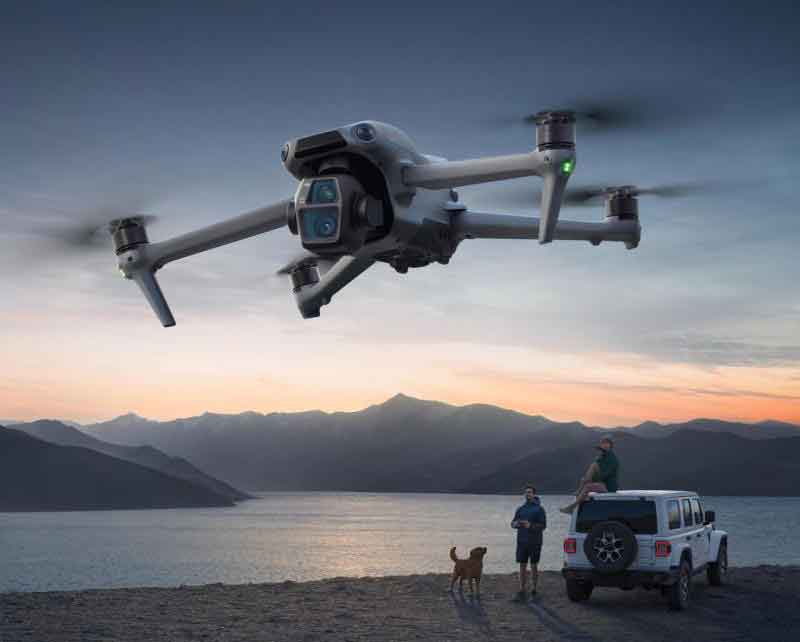
Unmanned Aerial Vehicles (UAVs), or drones, offer a compelling remedy to these limitations. Their inherent mobility, flexible three-dimensional deployment, and strong line-of-sight (LoS) communication links make them ideal candidates for providing on-demand aerial edge computing services. A UAV can act as a flying edge server or a relay, offering computational offloading opportunities for ground IoT devices where fixed infrastructure is absent, overloaded, or damaged.
While single-UAV assisted MEC systems have been extensively studied, they often fall short in serving large-scale IoT networks due to limited coverage and computational capacity. Consequently, cooperative multi-UAV systems are essential. However, most existing research on multi-UAV MEC focuses on optimizing aggregate system metrics like total latency or energy consumption, often overlooking two critical performance dimensions: task success rate and user fairness.
In practical scenarios such as disaster recovery, vehicular networks, or industrial IoT, ensuring that computational tasks from all devices have a high probability of successful completion is paramount. Simultaneously, maintaining fairness among users prevents service starvation for any device, which is crucial for system robustness and equitable service quality. Optimizing these two metrics jointly presents a significant challenge due to the complex interdependencies between UAV trajectory planning, task offloading decisions, and resource allocation in a dynamic three-dimensional space.
To address this gap, this paper investigates a multi-UAV cooperative MEC system. We formulate a joint optimization problem aimed at maximizing the long-term task success rate and user fairness, under practical constraints including three-dimensional UAV mobility, transmission power, computational resource allocation, and energy budgets. The problem’s high dimensionality, mixed continuous-discrete action space (involving trajectory, offloading ratio, UAV selection, etc.), and time-varying environment make traditional optimization methods intractable for online decision-making.
Therefore, we propose a novel deep reinforcement learning (DRL) based solution. Specifically, we design a Multi-UAV Soft Actor-Critic (MU-SAC) algorithm. SAC is a maximum entropy RL framework renowned for its superior exploration capabilities and stability in continuous action spaces. Our MU-SAC algorithm features a hybrid action structure to handle both continuous (e.g., offloading ratio, power, CPU frequency) and discrete (e.g., UAV selection) decisions. It employs a centralized-training-with-decentralized-execution (CTDE) paradigm, enabling coordinated learning from global system information while allowing distributed policy execution. The state representation incorporates multi-modal information including spectrum, channel conditions, energy status, and positional data, allowing the policy to adaptively search the feasible domain. Experimental results demonstrate that our proposed MU-SAC algorithm significantly outperforms baseline methods like TD3, PPO, and random policy in terms of cumulative reward, task success rate, and Jain’s fairness index, while exhibiting robust scalability with an increasing number of UAV drones.
System Model and Problem Formulation
2.1 System Overview
We consider an aerial edge computing system within a square area of side length $A$. The system comprises $I$ ground IoT devices, $K$ UAV drones acting as mobile edge servers or relays, and one stationary ground MEC server. The set of IoT devices is denoted by $\mathcal{I} = \{1,2,\ldots,I\}$, and the set of UAV drones is denoted by $\mathcal{K} = \{1,2,\ldots,K\}$. The ground MEC server is denoted by $s$. The system operates in discrete time slots indexed by $n \in \{1,2,\ldots,N\}$, each of duration $\Delta t$.
The location of IoT device $i$ is fixed at $\mathbf{w}_i = (x_i, y_i)$. The horizontal coordinate of UAV $k$ in time slot $n$ is $\mathbf{q}_k[n] = (X_k[n], Y_k[n])$, and its altitude is $Z_k[n]$. The ground server $s$ is located at $\mathbf{w}_s = (x_s, y_s)$. The distances are calculated as follows:
$$d_{ik}[n] = \sqrt{\|\mathbf{q}_k[n] – \mathbf{w}_i\|^2 + Z_k[n]^2}, \quad d_{ks}[n] = \sqrt{\|\mathbf{q}_k[n] – \mathbf{w}_s\|^2 + Z_k[n]^2}.$$
2.2 Air-to-Ground Channel Model
The channels between IoT devices and UAV drones, and between UAV drones and the ground server, are modeled as Rician fading channels to account for strong LoS components. The channel gain between device $i$ and UAV $k$ is given by:
$$h_{ik}[n] = \sqrt{\rho d_{ik}[n]^{-\xi[n]}} \left( \sqrt{\frac{\beta}{\beta+1}} h_{ik}^{\text{LoS}} + \sqrt{\frac{1}{\beta+1}} h_{ik}^{\text{NLoS}} \right).$$
Similarly, the channel gain between UAV $k$ and server $s$ is:
$$h_{ks}[n] = \sqrt{\rho d_{ks}[n]^{-\xi[n]}} \left( \sqrt{\frac{\beta}{\beta+1}} h_{ks}^{\text{LoS}} + \sqrt{\frac{1}{\beta+1}} h_{ks}^{\text{NLoS}} \right).$$
Here, $\rho$ is the channel power gain at a reference distance of 1 meter, $\beta$ is the Rician factor, $h^{\text{LoS}}=1$, and $h^{\text{NLoS}} \sim \mathcal{CN}(0,1)$. The path loss exponent $\xi[n]$ is a decreasing function of the UAV drone’s altitude $Z_k[n]$, modeled as $\xi[n] = \max(p_1 – p_2 \cdot 10 \log_{10}(Z_k[n]), 2)$, where $p_1, p_2 > 0$ are environment-specific parameters.
Let $x_{ik}[n] \in \{0,1\}$ indicate the connection between device $i$ and UAV $k$ ($1$ if connected). The uplink data rate from device $i$ to UAV $k$ is:
$$R_{ik}[n] = b_{ik}[n] \log_2\left(1 + \frac{P_i[n] |h_{ik}[n]|^2}{b_{ik}[n] N_0}\right),$$
where $b_{ik}[n]$ is the bandwidth allocated by UAV $k$ to device $i$, $P_i[n]$ is the transmit power of device $i$, and $N_0$ is the noise power spectral density. The downlink/data relay rate from UAV $k$ to server $s$ is:
$$R_{ks}[n] = b_{ks}[n] \log_2\left(1 + \frac{P_k[n] |h_{ks}[n]|^2}{b_{ks}[n] N_0}\right),$$
where $b_{ks}[n]$ and $P_k[n]$ are the allocated bandwidth and transmit power for UAV $k$.
2.3 Computation Offloading and Latency Model
Each IoT device generates a computation task per time slot. The task of device $i$ in slot $n$ is characterized by data size $L_i[n]$ (bits), computation intensity $c_i[n]$ (CPU cycles/bit), and a maximum tolerable latency $T_i^{\max}[n]$. The device offloads the entire task to its associated UAV drone $k$. The UAV drone then makes a task-splitting decision: a fraction $\alpha_{ik}[n] \in [0,1]$ of the task ($\alpha_{ik}[n]L_i[n]$ bits) is computed locally on the UAV, while the remainder $(1-\alpha_{ik}[n])L_i[n]$ bits are forwarded to the ground MEC server $s$ for processing.
The resulting latencies are:
- Uplink Transmission Latency: $T_i^{\text{UL}}[n] = L_i[n] / R_{ik}[n]$.
- UAV Computation Latency: $T_{i}^{\text{C,UAV}}[n] = \alpha_{ik}[n] L_i[n] c_i[n] / f_{k,i}[n]$, where $f_{k,i}[n]$ is the CPU frequency allocated by UAV $k$ to device $i$’s task.
- Backhaul Transmission Latency (UAV to Server): $T_i^{\text{BH}}[n] = (1-\alpha_{ik}[n])L_i[n] / R_{ks}[n]$.
- Server Computation Latency: $T_{i}^{\text{C,MEC}}[n] = (1-\alpha_{ik}[n]) L_i[n] c_i[n] / f_{s,i}[n]$, where $f_{s,i}[n]$ is the CPU frequency allocated by server $s$.
The end-to-end latency for the task is determined by the sequential and parallel operations. The total latency is:
$$T_i[n] = T_i^{\text{UL}}[n] + \max\left(T_{i}^{\text{C,UAV}}[n], \; T_i^{\text{BH}}[n] + T_{i}^{\text{C,MEC}}[n]\right).$$
A task is considered successful if $T_i[n] \leq T_i^{\max}[n]$ and the involved devices/UAV have sufficient energy.
2.4 Energy Consumption Model
The energy consumption for IoT device $i$ is primarily due to transmission:
$$E_i^{\text{UL}}[n] = P_i[n] T_i^{\text{UL}}[n].$$
The energy consumption for UAV $k$ includes propulsion, transmission, and computation:
$$E_k[n] = E_k^{\text{fly}}[n] + E_k^{\text{BH}}[n] + E_k^{\text{C}}[n].$$
Propulsion energy is modeled based on rotor aerodynamics: $E_k^{\text{fly}}[n] = P_k^{\text{fly}}[n] \Delta t$, where $P_k^{\text{fly}}[n]$ is a function of the UAV drone’s velocity $v_k[n]$.
$$P_k^{\text{fly}}[n] = P_0 \left(1 + \frac{3 v_k[n]^2}{U_{\text{tip}}^2}\right) + P_1 \left( \sqrt{1 + \frac{v_k[n]^4}{4 v_0^4}} – \frac{v_k[n]^2}{2 v_0^2} \right)^{1/2} + \frac{1}{2} d_0 \rho s A v_k[n]^3.$$
Transmission energy for relaying: $E_k^{\text{BH}}[n] = P_k[n] T_i^{\text{BH}}[n]$.
Computation energy: $E_k^{\text{C}}[n] = \sum_{i \in \mathcal{I}} \kappa_k f_{k,i}[n]^2 \alpha_{ik}[n] L_i[n] c_i[n]$, where $\kappa_k$ is the effective switched capacitance of the UAV’s processor.
The ground server is assumed to have a stable power supply, so its energy consumption is not considered a constraint.
2.5 Problem Formulation
Let $\eta_i[n] = \frac{1}{n} \sum_{j=1}^{n} \mathbb{1}(T_i[j] \leq T_i^{\max}[j] \wedge E_i^{\text{rem}}[j] \geq E_i^{\text{UL}}[j])$ denote the time-averaged task success rate of device $i$ up to slot $n$, where $\mathbb{1}(\cdot)$ is the indicator function and $E_i^{\text{rem}}$ is the remaining energy. We employ Jain’s fairness index to measure equity among devices:
$$F[n] = \frac{\left(\sum_{i=1}^{I} \eta_i[n]\right)^2}{I \sum_{i=1}^{I} \eta_i[n]^2}.$$
The index $F[n] \in [1/I, 1]$, with a higher value indicating greater fairness.
Our objective is to maximize the long-term system utility, which is a weighted sum of the negative normalized latency and the fairness index, while penalizing UAV drones that fly out of the allowed area. We jointly optimize the IoT device association $\mathbf{X} = \{x_{ik}[n]\}$, UAV drone trajectory and resource allocation $\mathbf{Q} = \{\mathbf{q}_k[n], Z_k[n], \alpha_{ik}[n], P_k[n], f_{k,i}[n], b_{ik}[n], b_{ks}[n]\}$, and server resource allocation $\mathbf{F}_s = \{f_{s,i}[n]\}$.
The optimization problem P1 is formulated as:
$$
\begin{aligned}
& \underset{\mathbf{X}, \mathbf{Q}, \mathbf{F}_s}{\max} \quad \frac{1}{N} \sum_{n=1}^{N} \sum_{i=1}^{I} \left[ b_0 \left(1 – \frac{T_i[n]}{T_i^{\max}[n]}\right) + \frac{b_1}{I} F[n] \right] – \lambda \sum_{n=1}^{N} K_{\text{out}}[n] \\
& \text{s.t.} \\
& \text{C1: } \sum_{k=1}^{K} x_{ik}[n] \leq 1, \quad \forall i, n. \\
& \text{C2: } \sum_{i=1}^{I} x_{ik}[n] \leq M, \quad \forall k, n. \\
& \text{C3: } 0 \leq P_i[n] \leq P_i^{\max}, \quad \forall i, n. \\
& \text{C4: } 0 \leq P_k[n] \leq P_k^{\max}, \quad \forall k, n. \\
& \text{C5: } \sum_{n=1}^{N} E_i^{\text{UL}}[n] \leq E_i^{\text{rem}}[0], \quad \forall i. \\
& \text{C6: } \sum_{n=1}^{N} E_k[n] \leq E_k^{\text{rem}}[0], \quad \forall k. \\
& \text{C7: } \sum_{i=1}^{I} \sum_{k=1}^{K} b_{ik}[n] \leq B^{\text{UL}}, \quad \forall n. \\
& \text{C8: } \sum_{k=1}^{K} b_{ks}[n] \leq B^{\text{BH}}, \quad \forall n. \\
& \text{C9: } \sum_{i \in \mathcal{I}_k[n]} f_{k,i}[n] \leq F_k^{\max}, \ f_{k,i}[n] \geq 0, \quad \forall k, n. \\
& \text{C10: } \|\mathbf{q}_k[n+1] – \mathbf{q}_k[n]\| \leq V_k^{\max} \Delta t, \quad \forall k, n. \\
& \text{C11: } |Z_k[n+1] – Z_k[n]| \leq U_k^{\max} \Delta t, \quad \forall k, n. \\
& \text{C12: } Z_k^{\min} \leq Z_k[n] \leq Z_k^{\max}, \quad \forall k, n.
\end{aligned}
$$
Here, $b_0, b_1 > 0$ are weighting constants, $\lambda$ is a penalty factor, and $K_{\text{out}}[n]$ is the number of UAV drones leaving the designated area in slot $n$. C1-C2 are association constraints. C3-C4 are power constraints. C5-C6 are energy budget constraints. C7-C8 are bandwidth constraints. C9 is the UAV computation capacity constraint. C10-C12 are 3D mobility constraints for the UAV drone.
Reinforcement Learning-Based Solution
3.1 Markov Decision Process Formulation
The dynamic and stochastic nature of the problem makes it suitable for modeling as a Markov Decision Process (MDP), solved via DRL.
State Space: The global state $s[n] \in \mathcal{S}$ in time slot $n$ includes:
- Positions of all UAV drones: $\mathbf{q}_k[n], Z_k[n]$ for $k \in \mathcal{K}$.
- Locations and task profiles of all IoT devices: $\mathbf{w}_i, L_i[n], c_i[n]$ for $i \in \mathcal{I}$.
- Remaining energy of all entities: $E_i^{\text{rem}}[n], E_k^{\text{rem}}[n]$.
- Historical success rates: $\eta_i[n]$ for $i \in \mathcal{I}$.
Action Space: The joint action $a[n] \in \mathcal{A}$ is hybrid (continuous and discrete). For each IoT device $i$, the action is $A_i[n] = \{x_{ik}[n], P_i[n]\}$. For each UAV drone $k$, the action includes its movement $\Delta X_k[n], \Delta Y_k[n], \Delta Z_k[n]$, task split ratios $\alpha_{ik}[n]$, transmit power $P_k[n]$, and CPU frequency allocations $f_{k,i}[n]$. The server action is $A_s[n] = \{f_{s,i}[n]\}$.
Reward Function: The immediate reward $r[n]$ is designed to reflect the objective of P1, guiding the agent towards high success rates and fairness:
$$r[n] = \sum_{i=1}^{I} \left[ b_0 \left(1 – \frac{T_i[n]}{T_i^{\max}[n]}\right) \mathbb{1}(\text{task } i \text{ associated}) + \frac{b_1}{I} F[n] \right] – \lambda K_{\text{out}}[n].$$
The reward balances per-task latency reduction, system-wide fairness, and adherence to operational boundaries for the UAV drones.
3.2 The MU-SAC Algorithm Design
We propose the Multi-UAV Soft Actor-Critic (MU-SAC) algorithm. SAC is an off-policy actor-critic algorithm that maximizes a trade-off between expected return and policy entropy, encouraging exploration and improving robustness.
Network Architecture: We employ the CTDE framework.
- Critic Networks (Centralized): Two state-action value (Q) networks $Q_{\phi_1}, Q_{\phi_2}$ are trained to mitigate overestimation bias. Their targets are provided by two slowly updating target Q-networks $Q_{\phi_1′}, Q_{\phi_2′}$.
- Actor Network (Policy – Decentralizable): A stochastic policy network $\pi_{\theta}$ outputs the parameters of a probability distribution (e.g., Gaussian for continuous actions, Categorical for discrete UAV selection) over actions given the state. The policy is trained to maximize the expected Q-value plus an entropy term.
Action Mapping: The policy network outputs normalized values in $[-1, 1]$. These are mapped to real-world values:
- Continuous actions (Power, CPU freq, $\alpha$): Linear scaling: $a_{\text{real}} = \frac{a_{\text{norm}}+1}{2}(a_{\max} – a_{\min}) + a_{\min}$.
- Discrete action (UAV selection): The logits for each UAV (including a “no-connection” option) are processed via a Softmax function to yield a probability distribution. The agent samples from this distribution during training and selects the argmax during execution.
- UAV drone movement: The normalized output $(a_r, a_{\theta}, a_{\phi})$ is mapped to spherical coordinate changes (radius, azimuth, elevation), which are then converted to Cartesian coordinate increments $(\Delta X, \Delta Y, \Delta Z)$, respecting the speed constraints C10-C11.
Loss Functions and Training: The key innovation lies in the maximum entropy objective. The critic is updated by minimizing the Bellman error:
$$J_Q(\phi_j) = \mathbb{E}_{(s,a,r,s’) \sim \mathcal{D}} \left[ \left( Q_{\phi_j}(s,a) – y \right)^2 \right], \quad j \in \{1,2\},$$
where the target $y$ is:
$$y = r + \gamma \left( \min_{j=1,2} Q_{\phi_j’}(s’, \tilde{a}’) – \alpha \log \pi_{\theta}(\tilde{a}’|s’) \right), \quad \tilde{a}’ \sim \pi_{\theta}(\cdot|s’).$$
Here, $\gamma$ is the discount factor, $\alpha$ is the temperature parameter balancing reward and entropy, and $\mathcal{D}$ is a replay buffer. The policy is updated to maximize the expected future reward plus entropy:
$$J_{\pi}(\theta) = \mathbb{E}_{s \sim \mathcal{D}, a \sim \pi_{\theta}} \left[ \min_{j=1,2} Q_{\phi_j}(s,a) – \alpha \log \pi_{\theta}(a|s) \right].$$
The temperature $\alpha$ can also be learned automatically to maintain a target entropy level. The training process involves sampling batches from the replay buffer and performing gradient updates on the actor and critic networks, followed by a soft update of the target networks.
Experimental Results and Analysis
4.1 Simulation Setup
We simulate a square area of $1 \text{ km} \times 1 \text{ km}$. Key parameters are summarized in the table below. IoT devices are randomly and uniformly distributed. We compare MU-SAC against three baselines: Twin Delayed DDPG (TD3), Proximal Policy Optimization (PPO), and a Random policy. All neural networks are multi-layer perceptrons (MLPs). The results are averaged over multiple independent runs with different random seeds.
| Parameter | Value |
|---|---|
| Area Side Length $A$ | 1 km |
| Number of IoT Devices $I$ | 20 |
| Number of UAV Drones $K$ | 3 (default) |
| Uplink Bandwidth $B^{\text{UL}}$ | 6.5 MHz |
| Backhaul Bandwidth $B^{\text{BH}}$ | 6.5 MHz |
| Time Slot Duration $\Delta t$ | 40 ms |
| IoT Transmit Power $P_i^{\max}$ | [0.01, 0.1] W |
| UAV Altitude Range $[Z^{\min}, Z^{\max}]$ | [50, 120] m |
| UAV Computation Cap $F_k^{\max}$ | 5 GHz |
| Task Data Size $L_i[n]$ | [200, 1000] Kb |
| Max Tolerable Latency $T_i^{\max}[n]$ | [20, 40] ms |
| Path Loss Params $(p_1, p_2)$ | (2.5, 0.05) |
| Rician Factor $\beta$ | 10 dB |
4.2 Performance Evaluation
We evaluate three core metrics: Average Cumulative Reward, Task Success Rate, and Jain’s Fairness Index.
Cumulative Reward: Figure 1 (conceptual plot) shows the learning curves. MU-SAC achieves the highest final reward and demonstrates the fastest convergence and lowest variance among the learning-based algorithms. Its maximum entropy formulation fosters efficient exploration in the complex hybrid action space, leading to better policy discovery. TD3 performs second best but shows slightly higher variance and slower initial learning. PPO converges to a lower reward plateau, likely due to its on-policy nature and higher sample complexity. The Random policy remains at the lowest level, as expected.
Task Success Rate: As shown in Figure 2, the task success rate directly reflects the system’s effectiveness. MU-SAC stabilizes at a success rate of approximately 0.80, significantly outperforming TD3 (~0.77), PPO (~0.71), and Random (~0.53). This indicates that the policies learned by MU-SAC are better at making coordinated decisions—such as positioning UAV drones favorably, selecting appropriate offloading splits, and allocating resources—to meet the stringent latency deadlines of a larger proportion of tasks.
Fairness Index: Figure 3 illustrates the evolution of Jain’s fairness index. MU-SAC maintains the highest and most stable fairness, around 0.76-0.77. This is a critical result, demonstrating that optimizing for long-term reward with our formulated objective inherently promotes equitable service across IoT devices. MU-SAC avoids strategies that consistently favor a subset of devices with better channels or locations. TD3 and PPO achieve fairness around 0.75 and 0.72, respectively, while the Random policy results in low fairness (~0.57).
4.3 Scalability with Number of UAV Drones
We investigate the system’s scalability by varying the number of cooperating UAV drones from 2 to 5. The results, conceptualized in Figure 4, show that the average cumulative reward increases with the number of UAV drones for MU-SAC. This is intuitive because more UAV drones provide greater spatial coverage, more aggregate computational resources, and more offloading options for IoT devices. Importantly, the learning curves for different scales remain stable, and the performance gains are consistent, demonstrating the robustness and scalability of the MU-SAC algorithm. The coordination mechanism learned by the centralized critic effectively manages the increased complexity of the multi-agent system.
Conclusion
This paper addressed the critical challenge of jointly optimizing task success rate and user fairness in a multi-UAV-assisted MEC system. We formulated a comprehensive problem incorporating 3D UAV drone trajectory, hybrid task offloading, and resource allocation under practical constraints. To solve this complex, dynamic problem, we developed the MU-SAC algorithm, a deep reinforcement learning approach based on the maximum entropy Soft Actor-Critic framework.
MU-SAC effectively handles the mixed continuous-discrete action space through a tailored policy network and action mapping. Its design promotes efficient exploration and stable learning. Simulation results conclusively demonstrate that MU-SAC outperforms strong baseline algorithms like TD3 and PPO. It achieves a higher task success rate, ensures greater fairness among IoT devices, and obtains a superior cumulative reward. Furthermore, the algorithm exhibits excellent scalability, with system performance improving gracefully as the number of cooperating UAV drones increases.
This work highlights the potential of advanced DRL techniques for managing complex, collaborative aerial edge computing systems. Future research directions include extending the framework to environments with obstacles, incorporating more sophisticated channel and mobility models, and investigating federated learning across the UAV drone fleet to enhance privacy and reduce communication overhead.