
In modern power systems, the safe and stable operation of transmission lines is critical for reliable electricity supply. However, during winter, icing disasters pose severe threats, leading to failures such as line breaks and tower collapses. Traditional icing monitoring methods, such as manual inspections and fixed sensors, are often limited by coverage, real-time capability, and accessibility, especially in remote or mountainous regions like the云贵山区 mentioned in the context. To address these challenges, I explore a novel approach based on UAV drone low-altitude photography for monitoring and early warning of transmission line icing. This method leverages the agility, flexibility, and high-resolution imaging capabilities of UAV drones to enhance monitoring accuracy and timeliness, ultimately improving the resilience of power grids against icing hazards.
The integration of UAV drone technology into power line inspections represents a significant advancement. UAV drones, or unmanned aerial vehicles, are equipped with advanced flight control, navigation, and摄影 systems that enable low-altitude photography. This allows for detailed visual assessments of transmission lines under various weather conditions. In this article, I delve into the technical aspects, methodologies, and applications of using UAV drones for icing monitoring. I will discuss the components of UAV drone low-altitude photography, the危害 of icing on transmission lines, the advantages over traditional methods, and a comprehensive framework for data collection, image processing, icing assessment, and early warning. Throughout, I emphasize the role of UAV drones as a transformative tool, and I incorporate tables and formulas to summarize key concepts, ensuring a thorough analysis that meets the required depth.
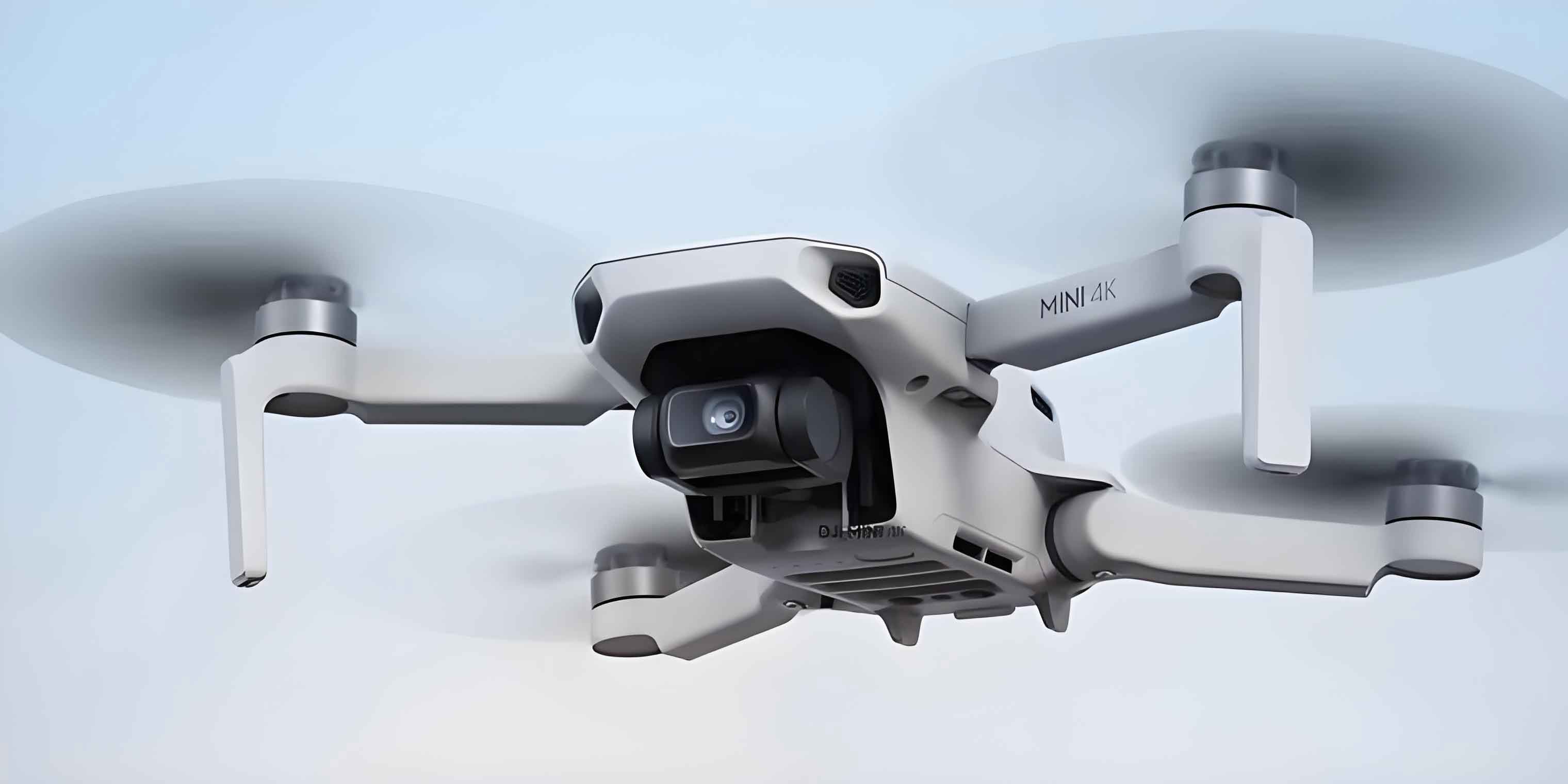
UAV drone low-altitude photography technology primarily involves three core components: the flight control system, the navigation system, and the摄影 equipment. The flight control system manages the UAV drone’s attitude and trajectory, ensuring stable flight along predefined routes. It uses sensors like gyroscopes and accelerometers to adjust to environmental conditions, which is crucial for capturing clear images in windy or turbulent areas. The navigation system relies on Global Navigation Satellite Systems (GNSS), such as GPS or北斗, to provide precise positioning data. This enables accurate航线 planning and allows the UAV drone to maintain a consistent distance from transmission lines, typically flying at low altitudes of 10-50 meters for optimal imaging. The摄影 equipment includes high-resolution digital cameras, infrared sensors, or thermal imagers. Modern UAV drones are often equipped with cameras capable of capturing 4K or higher resolution images, with features like multi-spectral sensing for enhanced detail. For icing monitoring, visible light cameras help visualize ice accumulation on lines and towers, while infrared or thermal cameras detect temperature anomalies that may indicate icing-induced stress or insulation issues. The synergy of these components allows UAV drones to perform efficient and reliable data acquisition over extensive transmission networks.
Icing on transmission lines is a serious natural phenomenon that occurs when supercooled water droplets freeze upon contact with cold surfaces. The危害 are multifaceted and can severely compromise grid integrity. Mechanically, ice accumulation increases the weight and wind load on lines and towers, leading to excessive mechanical stress. When the ice load exceeds the design limits of the components, it can cause conductor breakage, insulator damage, or even tower collapse. Electrically, ice can reduce insulation performance by forming conductive paths or causing flashovers, especially when combined with pollution or humidity. Additionally, ice-induced vibrations, such as galloping or aeolian vibration, accelerate wear and tear on hardware, shortening the lifespan of transmission assets. In regions prone to heavy icing, these effects can result in widespread power outages, economic losses, and safety risks. Traditional monitoring methods, like ground patrols or weather stations, often fail to provide timely or comprehensive data due to logistical constraints. Hence, there is a pressing need for advanced solutions like UAV drone-based monitoring to mitigate these risks.
The advantages of using UAV drone low-altitude photography for icing monitoring are substantial. Compared to conventional approaches, UAV drones offer superior coverage and flexibility. They can easily navigate complex terrains, such as mountains, forests, or rivers, following预设航线 to inspect long stretches of transmission lines. This capability is enhanced by their ability to adjust飞行 paths in real-time based on situational needs, allowing for targeted inspections of critical sections like重冰区段 or交叉跨越段. In terms of data acquisition, UAV drones provide high-resolution imagery that reveals fine details of ice thickness, shape, and distribution. The real-time data transmission feature enables immediate analysis at ground control centers, facilitating rapid response to emerging icing threats. Moreover, UAV drones are cost-effective and reduce human exposure to hazardous environments. By integrating multiple sensors, such as visible and thermal cameras, they offer a holistic view of icing conditions, supporting both qualitative and quantitative assessments. These benefits make UAV drone technology a cornerstone for modern icing monitoring strategies.
To implement an effective icing monitoring and early warning system using UAV drones, I propose a structured methodology encompassing data collection, image preprocessing, icing assessment, and预警. Each step is designed to leverage the capabilities of UAV drones while ensuring accuracy and reliability.
UAV Drone Data Collection
The first phase involves selecting appropriate UAV drone platforms and equipment, followed by meticulous航线 planning and data acquisition. The choice of UAV drone depends on the terrain and monitoring requirements. For instance, multi-rotor UAV drones are suitable for short-distance, stable hovering inspections in flat areas, while fixed-wing or hybrid UAV drones excel in long-range, endurance missions over复杂地形. The payload capacity of the UAV drone determines the types of sensors it can carry. Common options include high-resolution RGB cameras for visible light imaging and infrared/thermal cameras for temperature mapping. In critical areas like重冰区段, I recommend using UAV drones with advanced stabilizers and high-end sensors to capture precise data. Table 1 summarizes typical UAV drone选型 criteria.
| UAV Drone Type | Advantages | Limitations | Recommended Use |
|---|---|---|---|
| Multi-rotor UAV Drone | High maneuverability, stable hovering, easy operation | Short flight time, limited speed | Localized inspections, complex terrain spots |
| Fixed-wing UAV Drone | Long endurance, high speed, large coverage | Requires takeoff/landing space, less agile | Long-distance transmission line surveys |
| Hybrid UAV Drone | Combines VTOL and forward flight | Higher cost, complex maintenance | Versatile missions in mixed terrain |
| Sensors: RGB Camera | High-resolution visible images, color accuracy | Poor performance in low light | General icing visualization |
| Sensors: Thermal Camera | Detects temperature variations, works in darkness | Lower spatial resolution | Identifying thermal anomalies due to icing |
航线 planning is critical for efficient data collection. Using software tools, I design flight paths that cover the entire transmission line corridor, considering factors like line geometry, obstacles, and weather conditions. The UAV drone is programmed to fly at a consistent altitude and speed, with overlapping images to ensure complete coverage. The data acquisition流程 includes pre-flight checks, autonomous flight execution, and data storage. During flight, the UAV drone captures images at regular intervals, which are transmitted to a ground station for实时 monitoring. This process minimizes human intervention and maximizes data integrity.
Image Preprocessing for Icing Analysis
Raw images from UAV drones often contain noise, low contrast, or distortions due to environmental factors like fog, snow, or camera motion. Preprocessing enhances image quality to facilitate accurate icing analysis. Image enhancement techniques, such as histogram equalization or contrast stretching, improve visibility by adjusting pixel intensities. For example, applying a gamma correction can brighten dark areas where ice might be present. Denoising methods, like Gaussian filtering or median filtering, remove random noise while preserving edges. In mathematical terms, a Gaussian filter convolves the image with a kernel defined by:
$$ G(x,y) = \frac{1}{2\pi\sigma^2} e^{-\frac{x^2+y^2}{2\sigma^2}} $$
where $$ \sigma $$ controls the blur intensity. This helps smooth out noise without losing critical details of ice formations.
Image segmentation isolates regions of interest, such as ice-covered sections of conductors or insulators. Thresholding is a common approach, where pixels are classified based on intensity values. For icing images, I might use Otsu’s method to automatically determine an optimal threshold. Region-growing and edge-detection algorithms, like the Canny detector, can also delineate ice boundaries. After segmentation, feature extraction quantifies icing characteristics. Key features include ice area (in pixels), perimeter, thickness estimates, and shape descriptors like circularity or eccentricity. These features are computed using image processing libraries and serve as inputs for assessment models. Table 2 outlines common preprocessing steps and their purposes.
| Technique | Description | Mathematical Formulation | Purpose in Icing Monitoring |
|---|---|---|---|
| Histogram Equalization | Enhances contrast by redistributing intensity values | $$ s_k = T(r_k) = \sum_{j=0}^{k} \frac{n_j}{N} $$ | Improve visibility of ice against背景 |
| Gaussian Filtering | Reduces noise via convolution with Gaussian kernel | $$ I'(x,y) = I(x,y) * G(x,y) $$ | Smooth images while preserving edges |
| Otsu’s Thresholding | Automatic threshold selection for segmentation | $$ \sigma^2_w(t) = \omega_0(t)\sigma^2_0(t) + \omega_1(t)\sigma^2_1(t) $$ | Separate ice regions from non-ice areas |
| Canny Edge Detection | Detects edges using gradient maxima | $$ \nabla I = \sqrt{(\frac{\partial I}{\partial x})^2 + (\frac{\partial I}{\partial y})^2} $$ | Identify boundaries of ice accretion |
| Feature Extraction | Computes geometric and statistical features | Area = ∑ pixels; Thickness ≈ f(image scale) | Quantify icing severity for assessment |
Icing Monitoring and Assessment
Once images are preprocessed, I employ models to estimate icing thickness and evaluate severity. Icing thickness estimation is crucial for predicting mechanical loads. Two primary approaches are used: image-based methods and physical models. Image-based methods rely on geometric analysis of UAV drone-captured images. By comparing images taken at different times or using stereo vision, I can infer thickness changes. For instance, if a conductor’s diameter appears larger due to ice, the thickness $$ \Delta r $$ can be approximated as:
$$ \Delta r = \frac{D_{\text{iced}} – D_{\text{bare}}}{2} $$
where $$ D_{\text{iced}} $$ and $$ D_{\text{bare}} $$ are the apparent diameters from images, calibrated using known reference points. More advanced techniques use photogrammetry to create 3D models from multiple UAV drone images, allowing for volumetric calculations.
Physical models simulate ice growth based on meteorological data. These models incorporate heat transfer and fluid dynamics principles. A simplified equation for ice accretion rate might be:
$$ \frac{dm}{dt} = \pi R \rho_i \frac{dR}{dt} = f(T, V, \text{liquid water content}) $$
where $$ m $$ is ice mass, $$ R $$ is ice radius, $$ \rho_i $$ is ice density, $$ T $$ is temperature, and $$ V $$ is wind speed. By inputting local weather data from stations along the transmission line, I can predict thickness over time. Combining both approaches enhances accuracy; for example, using UAV drone images to validate physical model outputs.
To assess icing severity, I define a comprehensive指标体系 that includes physical, mechanical, and electrical factors. Physical indicators include ice thickness, weight per unit length, and coverage area. Mechanical indicators involve conductor tension and sag changes, which affect structural integrity. Electrical indicators focus on insulation resistance or leakage current. A key metric is the deviation from design values, such as comparing real-time ice thickness $$ d_{\text{actual}} $$ to the design ice thickness $$ d_{\text{design}} $$. The risk level can be expressed as a ratio:
$$ R_{\text{ice}} = \frac{d_{\text{actual}}}{d_{\text{design}}} $$
Values of $$ R_{\text{ice}} $$接近 1 indicate high risk. Table 3 lists typical assessment indicators.
| Indicator Category | Specific Indicator | Measurement Method | Threshold for Concern |
|---|---|---|---|
| Physical Features | Ice Thickness (mm) | UAV drone image analysis or sensors | > 30% of design thickness |
| Physical Features | Ice Weight (kg/m) | Calculated from thickness and density | > 50% of allowable load |
| Mechanical Impact | Conductor Tension (N) | Derived from sag measurements | 接近 maximum design tension |
| Mechanical Impact | Sag Increase (m) | Photogrammetry from UAV drone | Reduces clearance below safety margin |
| Electrical Impact | Insulation Resistance (MΩ) | Thermal imaging or historical data | Significant drop from baseline |
| Composite Risk | Design Deviation Ratio | $$ R_{\text{ice}} = d_{\text{actual}} / d_{\text{design}} $$ | > 0.8 for high risk |
Icing Early Warning Method
Based on the assessment, I establish an early warning system to proactively mitigate risks. Warning thresholds are set using a combination of design standards, historical data, and real-time monitoring from UAV drones. Design parameters, such as maximum allowable ice thickness or tension, form the basis for critical thresholds. For instance, if the design ice thickness is $$ D $$, I might define yellow, orange, and red alerts corresponding to fractions of $$ D $$, such as $$ 0.3D $$, $$ 0.5D $$, and $$ 0.8D $$, respectively. These thresholds should be tailored to local conditions; for example, in high-risk ice zones identified during line design, lower thresholds may apply to ensure safety. The use of UAV drone data allows for dynamic threshold adjustment based on current weather forecasts and observed icing trends.
The warning system employs a分级 mechanism with distinct response protocols. When icing parameters exceed predefined levels, alerts are triggered and disseminated to grid operators. Table 4 outlines a sample warning分级 framework.
| Warning Level | Trigger Condition (Example) | Response Actions | UAV Drone Role |
|---|---|---|---|
| Yellow (Mild) | Ice thickness ≥ 0.3 × design thickness | Increase monitoring frequency, inspect via UAV drone | Conduct regular flights for updates |
| Orange (Moderate) | Ice thickness ≥ 0.5 × design thickness | Prepare de-icing equipment, adjust load | Focus on critical sections with detailed imaging |
| Red (Severe) | Ice thickness ≥ 0.8 × design thickness | Emergency response, possible line de-energization | Continuous surveillance with real-time data feed |
The release of warnings should be automated through a central platform that integrates UAV drone data, weather inputs, and assessment models. Upon detection of a threshold breach, the system generates alerts via SMS, email, or dashboard notifications. This ensures timely decision-making, such as dispatching crews for de-icing or rerouting power. The UAV drone’s ability to provide real-time imagery enhances situational awareness during预警 events, allowing operators to visually confirm conditions before taking action. Moreover, historical data from UAV drone missions can be used to refine threshold settings and improve prediction accuracy over time.
In conclusion, the method based on UAV drone low-altitude photography offers a robust solution for monitoring and early warning of transmission line icing. By harnessing the mobility and imaging capabilities of UAV drones, I can achieve comprehensive coverage, high-resolution data acquisition, and real-time analysis. The integration of image processing, physical modeling, and risk assessment enables precise icing evaluation, while a structured预警 system facilitates proactive management. This approach not only enhances the safety and reliability of power grids but also reduces operational costs and human风险. Future developments may involve AI-driven image analysis for automatic ice detection or swarm UAV drone networks for large-scale monitoring. As UAV drone technology evolves, its application in icing monitoring will undoubtedly become more sophisticated, solidifying its role as an indispensable tool in modern power system maintenance.
Throughout this exploration, I have emphasized the versatility of UAV drones in addressing icing challenges. From data collection to预警, every step benefits from the unique advantages of UAV drone platforms. By adopting this methodology, power utilities can transform their icing management strategies, ensuring resilience against winter hazards and contributing to a stable electricity supply. The continuous innovation in UAV drone sensors and algorithms will further empower this field, making icing monitoring more efficient and effective in the years to come.