
The technological revolution within the field of engineering surveying is profoundly driven by the deepening integration of Unmanned Aerial Vehicle (UAV) drone systems. The enhancement of measurement precision has emerged as the pivotal factor determining the quality of surveying and mapping deliverables. Traditional terrestrial methods increasingly reveal limitations in efficiency and accessibility within complex terrains and large-scale project sites. In contrast, UAV drone technology has inaugurated a novel pathway for acquiring high-precision spatial data. Prevailing research has predominantly concentrated on hardware performance optimization, leaving a systematic, synergistic investigation of flight control, image processing, and environmental influences as an incomplete framework. This fragmented technological state frequently leads to instabilities and fluctuations in precision during practical operations, struggling to meet the stringent demands of modern engineering projects for data reliability. Consequently, constructing a holistic precision control model encompassing the entire data acquisition workflow has become the central challenge for overcoming current application bottlenecks.
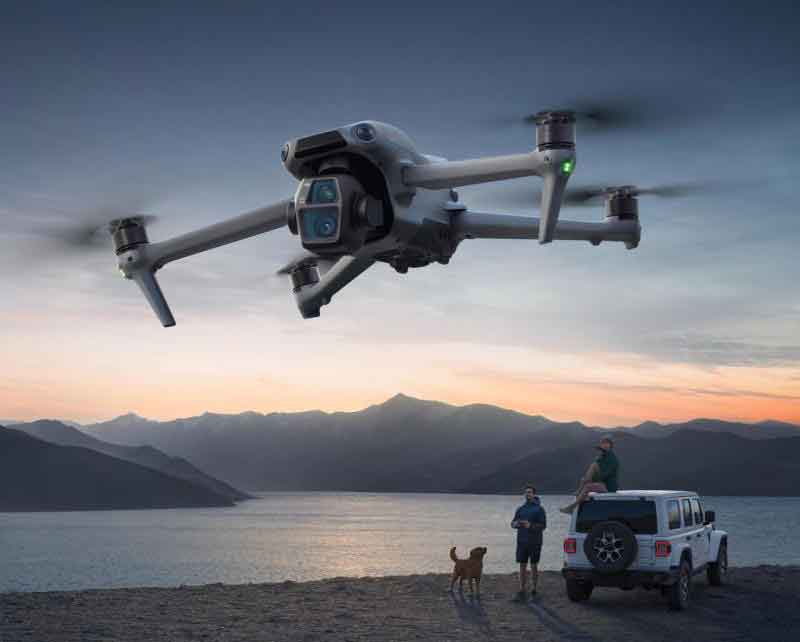
The engineering application of UAV drone surveying is undergoing a critical transition from prioritizing efficiency to being fundamentally guided by precision. This paradigm shift necessitates a comprehensive re-evaluation of every link in the geospatial data production chain. A prominent contradiction in current practice is the disparity between the technology’s potential and its realized effectiveness, rooted in the insufficient adaptation of precision control methodologies to specific engineering contexts. While collaborative optimizations among the flight platform, payload sensors, and data processing software have seen progress, tailored solutions for particular project requirements remain scarce. To break through this impasse, it is imperative to establish an integrated precision assurance system that seamlessly connects “equipment selection — mission planning — data processing,” thereby forming a precise matching mechanism between technical parameters and engineering specifications.
Precision Analysis of UAV Drone Technology in Engineering Surveying
Analyzing the precision of UAV drone technology in engineering surveying is a complex yet critical process. This technology leverages high-precision sensors mounted on UAV drones to rapidly and efficiently capture high-resolution imagery of the Earth’s surface. In engineering surveying, the degree of precision directly determines the accuracy and reliability of the final results. The precision of a UAV drone system is primarily manifested in its capability to acquire high-resolution imagery, the sophistication of its data processing algorithms, and the stability of its measurement outputs.
First, the ability to capture high-resolution images allows the UAV drone to record minute surface details, significantly enhancing measurement fidelity. Second, advanced processing algorithms perform precise geometric corrections, radiometric adjustments, and image registration on the collected data, thereby minimizing systematic and random errors. Finally, a well-calibrated UAV drone system exhibits high stability and repeatability, enabling the acquisition of consistent measurement results across different timeframes and environmental conditions.
In practical application, a series of measures must be implemented to harness and enhance this precision. This includes meticulous optimization of flight parameters, careful selection of mission timing for optimal lighting, and the deployment of accurately surveyed Ground Control Points (GCPs). Furthermore, rigorous quality control and precision assessment protocols must be applied to the captured imagery to ensure the final deliverables meet specified accuracy standards. The overall error budget for a UAV drone survey can be conceptualized as the root sum square of individual error sources:
$$
\sigma_{total} = \sqrt{\sigma_{GNSS}^2 + \sigma_{IMU}^2 + \sigma_{camera}^2 + \sigma_{processing}^2 + \sigma_{GCP}^2}
$$
Where:
- $\sigma_{GNSS}$ is the error from the Global Navigation Satellite System positioning.
- $\sigma_{IMU}$ is the error from the Inertial Measurement Unit.
- $\sigma_{camera}$ is the error related to camera calibration and lens distortion.
- $\sigma_{processing}$ is the error introduced during photogrammetric processing.
- $\sigma_{GCP}$ is the error associated with the measurement and distribution of Ground Control Points.
Understanding and controlling these components is essential for the successful deployment of UAV drone technology.
| Error Source Category | Specific Factors | Impact on Precision | Common Mitigation Strategies |
|---|---|---|---|
| Platform & Navigation | GNSS Positioning Accuracy | Directly affects absolute geolocation of images. | Use of PPK/RTK-enabled UAV drones; longer observation periods for base stations. |
| IMU Stability & Calibration | Affects image orientation (roll, pitch, yaw). | Regular IMU calibration; use of high-grade IMU units. | |
| Sensor & Payload | Camera Calibration (Interior Orientation) | Critical for accurate 3D reconstruction; uncalibrated cameras cause model deformation. | Pre-flight laboratory or field calibration; use of stable, high-quality cameras. |
| Image Resolution & Sensor Noise | Higher resolution allows detection of smaller features; noise reduces clarity. | Select appropriate sensor size and pixel pitch; use optimal ISO settings. | |
| Flight Mission Design | Flight Altitude (GSD) | Lower altitude provides smaller Ground Sample Distance (GSD), increasing detail. | Balance GSD requirements with coverage area and battery life. GSD = (Flight Altitude × Sensor Pixel Size) / Focal Length. |
| Image Overlap (Front & Side) | Insufficient overlap leads to failed 3D model generation or reduced accuracy. | Typically use 70%-80% front overlap and 60%-70% side overlap for complex terrain. | |
| Flight Speed & Path Stability | High speed can cause motion blur; unstable path creates irregular overlap. | Use automated flight planning software; adjust speed for lighting conditions. | |
| Environmental Conditions | Lighting & Shadows | Harsh shadows and low contrast reduce feature matching accuracy. | Fly during “soft” light hours (e.g., mid-morning, mid-afternoon); avoid noon. |
| Atmospheric Conditions (Wind, Haze) | Wind induces platform vibration; haze reduces image contrast. | Fly in calm weather; use appropriate filters; consider multi-spectral sensors for haze penetration. | |
| Ground Control | GCP Accuracy & Distribution | Provides absolute scale and coordinates, correcting cumulative errors. | Use high-precision surveying methods (e.g., GNSS static) for GCPs; distribute evenly across project area, including perimeter and elevation changes. |
Advantages of UAV Drones in Engineering Surveying
Enhanced Measurement Efficiency and Precision
Traditional engineering surveying often relies on manual reconnaissance or ground-based instruments, which is time-consuming, labor-intensive, and poses increased difficulty and risk in complex or inaccessible terrain. The advent of UAV drone systems has fundamentally altered this landscape. UAV drones offer exceptional mobility and flexibility, capable of quickly reaching the target airspace and performing comprehensive, multi-angle imaging of topography. Equipped with advanced sensors like high-resolution RGB cameras, LiDAR, or multispectral imagers, UAV drones can capture high-fidelity surface data in real-time, including terrain relief, geomorphological features, and structural positions. This data, through post-processing, yields high-precision deliverables such as Digital Terrain Models (DTMs), Digital Surface Models (DSMs), and orthomosaics, dramatically boosting both the speed and accuracy of surveys.
Moreover, UAV drone surveys are largely unconstrained by ground conditions. In mountainous areas, wetlands, or deserts, the UAV drone can effortlessly traverse landscapes where traditional methods are impractical. This capability also mitigates human-induced errors such as fatigue or visual misjudgment, enhancing the overall reliability of the measurement outcomes. Therefore, the UAV drone not only accelerates the surveying process but also provides more accurate and dependable data for engineering design and construction.
Reduced Operational Costs and Risks
Engineering surveys traditionally require significant investments in manpower, equipment, and financial resources. For large-scale projects, surveying costs constitute a considerable portion of the budget. The application of UAV drones effectively curtails these expenses by: 1) minimizing the need for extensive manual field reconnaissance, saving labor costs; 2) accelerating data acquisition, thereby shortening project timelines and associated time costs; and 3) reducing reliance on certain expensive ground-based instruments for initial mapping, lowering capital equipment costs.
Beyond cost savings, UAV drone operations significantly diminish occupational hazards. In traditional surveying, personnel must physically access often hazardous sites, exposing them to risks like traffic accidents, geological hazards, or harsh environmental conditions. UAV drone surveys can be conducted via remote operation from a safe location, removing personnel from direct danger and substantially lowering the overall risk profile of the surveying work.
Increased Flexibility and Scalability
UAV drone surveys offer remarkable flexibility, adapting to a wide spectrum of requirements. Whether for small-scale, detailed inspections or large-area, macro-level monitoring, the UAV drone platform can be rapidly deployed to provide precise geospatial data. The payload versatility of UAV drones allows them to be equipped with various sensors—such as thermal infrared cameras, multispectral scanners, or gas detectors—to gather diverse types of information tailored to specific project needs (e.g., heat loss assessment, vegetation health analysis). This flexibility ensures a broad application horizon for UAV drone technology in engineering.
Furthermore, the technology possesses inherent scalability. As UAV drone hardware, sensor technology, and software algorithms continue to advance, the precision and efficiency of surveys will keep improving. Crucially, UAV drone systems can be integrated with other cutting-edge technologies like cloud computing, big data analytics, and artificial intelligence. This convergence fosters the development of increasingly intelligent and automated surveying systems, promising even more efficient and powerful solutions for the engineering sector.
Key Application Areas and Precision Enhancement Strategies
Topographic Mapping
UAV drone technology acts as a transformative tool for topographic mapping, overcoming the efficiency, cost, and accessibility constraints of conventional ground surveys and manned aerial LiDAR. The agile nature of UAV drone systems enables rapid, comprehensive coverage of extensive areas, particularly in rugged, inaccessible terrain. In practice, UAV drones equipped with high-precision LiDAR sensors emit laser pulses to measure micro-variations in surface elevation, achieving vertical accuracies at the centimeter level. The collected point cloud data, after filtering and classification, can generate high-resolution DTMs and DSMs. For photogrammetric approaches, modern processing software employs Structure from Motion (SfM) and Multi-View Stereo (MVS) algorithms to automatically reconstruct 3D topography from overlapping imagery. The planning parameters for such a mission are vital for precision. The relationship between flight altitude (H), camera focal length (f), sensor pixel size (p), and the resulting Ground Sample Distance (GSD) is fundamental:
$$
GSD = \frac{H \times p}{f}
$$
A smaller GSD yields higher spatial detail. Furthermore, the required image overlap is calculated based on the desired model quality and terrain complexity. The area covered by a single image on the ground (A) is a function of GSD and image dimensions in pixels (W, H):
$$
A = (W \times GSD) \times (H \times GSD)
$$
Mission planning software uses these principles to automate flight path generation, ensuring sufficient overlap (e.g., 75% frontlap, 60% sidelap) for robust 3D reconstruction across the entire project site.
Land Use Investigation
UAV drones are revolutionizing land use and land cover (LULC) mapping by filling the gap between coarse satellite imagery and labor-intensive field surveys. The low-altitude operational capability of UAV drones allows for the collection of ultra-high-resolution imagery, unimpeded by cloud cover. When equipped with multispectral or hyperspectral sensors, UAV drones can detect subtle spectral signature differences, enabling not just basic classification (e.g., forest, agriculture, urban) but also detailed analysis of crop species, plant health (via indices like NDVI), or water quality parameters. The Normalized Difference Vegetation Index (NDVI) is a common metric derived from multispectral UAV drone data:
$$
NDVI = \frac{(NIR – Red)}{(NIR + Red)}
$$
Where $NIR$ is the reflectance in the near-infrared band and $Red$ is the reflectance in the red band. This index is crucial for precision agriculture and ecological monitoring. By conducting repeat surveys, UAV drones facilitate the creation of time-series datasets for quantifying urban expansion rates, monitoring agricultural practices, and assessing the effectiveness of land restoration projects, thereby providing empirical evidence for spatial planning and policy-making.
| Application Primary Goal | Recommended Sensor Type | Key Metrics/Outputs | Precision Considerations |
|---|---|---|---|
| High-Resolution 3D Topography | RGB Camera (Global Shutter) | Orthomosaic, DTM/DSM, Point Cloud | Camera calibration accuracy; GSD; overlap. Accuracy: 1-3x GSD horizontally, 1-5x GSD vertically. |
| Volumetric Calculations (Stockpiles, Excavation) | RGB Camera or LiDAR | High-density Point Cloud, Volumetric Reports | Stable flight pattern; GCPs for absolute scale. LiDAR provides better accuracy in vegetated areas for ground points. |
| Land Use / Vegetation Analysis | Multispectral Sensor | NDVI, SAVI, other spectral indices; Classification Maps | Radiometric calibration (reflectance panels); consistent sun angle across flights. |
| Infrastructure Inspection (Cracks, Deformation) | High-Megapixel RGB Camera | High-res Orthomosaic, 3D Model | Very low GSD (e.g., <1 cm); oblique imaging angles; stable flight in close proximity. |
| Thermal Mapping (Energy Loss, Water Leaks) | Thermal Infrared (TIR) Camera | Thermal Orthomosaic, Temperature Profiles | Emissivity settings; environmental temperature/humidity correction; flight during stable thermal conditions. |
Mine Surveying
In mining engineering, UAV drone technology provides a safe, efficient, and precise alternative for routine and volumetric surveys. Traditional methods struggle with the scale, dynamism, and danger of mine sites. UAV drone systems, particularly those with LiDAR payloads, can quickly generate centimeter-accurate DSMs of pits, stockpiles, and tailings dams. The volume (V) of a stockpile, for instance, can be calculated by comparing a DSM of the pile to a DTM of the base surface, often using the prism method or triangulated irregular network (TIN)-based calculations integrated in processing software:
$$
V = \sum_{i=1}^{n} A_i \times \bar{\Delta h}_i
$$
Where $A_i$ is the area of a cell (e.g., from a TIN triangle or grid cell) and $\bar{\Delta h}_i$ is the average height difference within that cell. For monitoring mine progression, sequential UAV drone surveys enable precise calculation of cut-and-fill volumes, slope stability analysis, and compliance checking with design benches. Thermal and multispectral sensors on UAV drones further extend their utility to detecting spontaneous combustion hotspots and mapping the extent of mineral or contaminant seepage, supporting both operational safety and environmental management.
Practical Application Case Study
A practical application involved a new secondary highway project in a mountainous region of Guangxi, China. The proposed route spanned approximately 52.36 km, with a required survey corridor of 200 meters on either side of the centerline. The complex, linear nature of the project made it an ideal candidate for UAV drone surveying to overcome the limitations of traditional methods and efficiently collect high-resolution data for engineering design.
1. UAV Drone Platform Selection: After evaluating the difficult terrain and logistical constraints, the DJI Phantom 4 RTK UAV drone was selected. This platform integrates a real-time kinematic GNSS module, dramatically improving the geotagging accuracy of each captured image. Its key specifications included a flight time of ~30 minutes, a 1-inch 20-megapixel CMOS sensor, and a mechanical shutter—all critical for high-precision, large-scale mapping.
2. Mission Planning and Parameter Optimization: Using specialized flight planning software, the team designed the mission. For a target map scale of 1:500 and the required precision, a Ground Sample Distance (GSD) of approximately 2.5 cm was calculated and set by adjusting the flight altitude. The flight plan was configured with 80% front overlap and 70% side overlap to ensure robust 3D model generation in the steep terrain. The planned flight lines ensured complete coverage of the 200-meter corridor.
3. Ground Control and Execution: A network of highly accurate Ground Control Points (GCPs) was established using RTK GNSS receivers and evenly distributed throughout the project length, particularly at elevation breaks. The UAV drone mission was then executed autonomously. The integrated RTK system on the UAV drone recorded precise positional data for each image exposure, reducing the dependency on, but still being strengthened by, the physical GCPs.
4. Data Processing and Accuracy Validation: The collected imagery was processed using photogrammetric software (e.g., ContextCapture, Pix4D, or Agisoft Metashape). The workflow included aligning images using the RTK-enhanced positions, optimizing the bundle adjustment with GCPs for absolute accuracy, and generating dense point clouds, DTMs, DSMs, and a seamless orthomosaic. The accuracy was validated by comparing coordinates of independent check points (not used in processing) against their known surveyed values. The resulting root mean square error (RMSE) is a standard measure of UAV drone survey accuracy:
$$
RMSE = \sqrt{\frac{\sum_{i=1}^{n}(Z_{survey,i} – Z_{model,i})^2}{n}}
$$
For this project, the achieved accuracy met and exceeded the 1:500 scale requirements, demonstrating the UAV drone system’s capability for delivering engineering-grade survey data efficiently and safely in challenging environments. This case underscores the critical importance of a systematic approach—from platform choice and careful planning to rigorous processing—in realizing the high-precision potential of UAV drone technology.