
The rapid evolution of low-altitude economies has propelled Unmanned Aerial Vehicles (UAVs), particularly quadrotor drones, to the forefront of technological applications. Their simple mechanical structure, exceptional maneuverability, and vertical take-off and landing capabilities make them invaluable assets in fields ranging from military reconnaissance and precision agriculture to logistics and infrastructure inspection. However, the core challenge in harnessing the full potential of a quadrotor UAV drone lies in its complex dynamics. It is an underactuated, highly coupled, and nonlinear system with six degrees of freedom (position and orientation) but only four independent control inputs (rotor speeds). This inherent complexity is significantly exacerbated when the vehicle operates in real-world environments characterized by unpredictable external disturbances such as wind gusts, payload variations, and model uncertainties. Consequently, developing robust control strategies that ensure high-precision trajectory tracking under these adverse conditions remains a critical and active area of research.
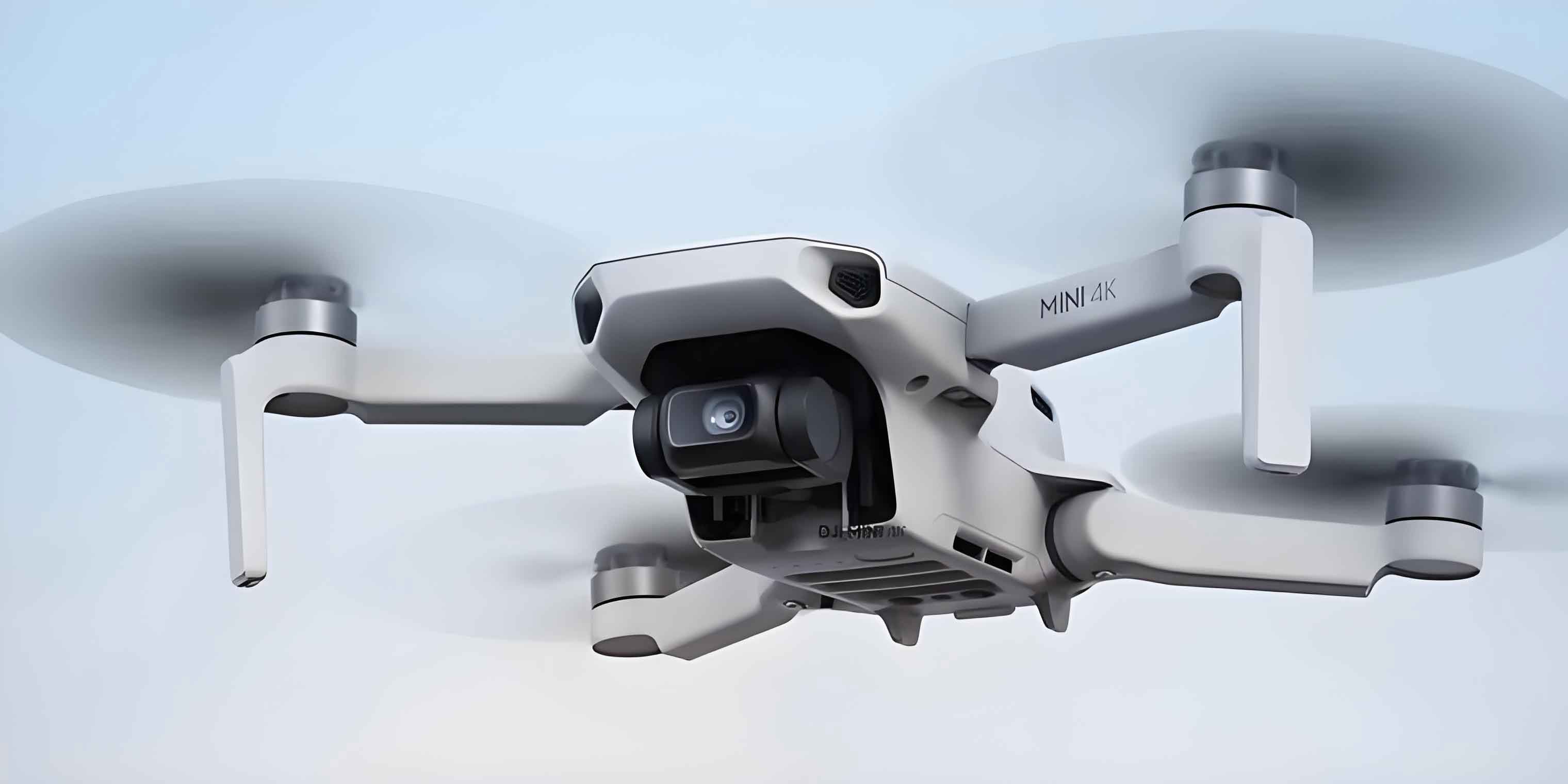
Traditional control architectures for UAV drones often adopt a hierarchical, cascaded structure, separating the slower translational (outer-loop) dynamics from the faster rotational (inner-loop) dynamics. While effective in nominal conditions, this decoupled approach can suffer from performance degradation and even instability under significant disturbances and strong dynamic coupling, as it often relies on the ideal, instantaneous tracking of the inner attitude loop—an assumption that frequently breaks down in practice. This limitation motivates the exploration of more holistic control paradigms.
In this context, the Fully-Actuated System (FAS) approach offers a transformative perspective. Instead of decomposing the system, the FAS methodology seeks to mathematically reformulate or represent the system dynamics in a form where the control input appears explicitly and directly alongside the highest-order derivative of every state variable to be controlled. For an underactuated system like a quadrotor UAV drone, this is not trivial and requires a profound model transformation. Once achieved, it allows for the direct design of a unified control law that simultaneously addresses all states, leading to natural decoupling and simplified stability analysis. This paper presents a novel, integrated control solution for disturbance rejection in UAV drones by synergizing the FAS framework with a Dynamic Compensator (DC) and a Linear Extended State Observer (LESO).
Our primary contributions are threefold. First, we demonstrate a systematic state transformation that converts the standard 6-DOF nonlinear and uncertain dynamics model of a quadrotor UAV drone into a mixed-order fully-actuated system model. This reformulation is foundational, moving beyond the traditional cascade structure and enabling direct state feedback control. Second, building upon this model, we design a composite control law. The law’s inner loop employs an LESO to achieve real-time, accurate estimation of unmeasurable state derivatives and the lumped effect of unknown disturbances. The outer loop is a FAS controller integrated with a first-order dynamic compensator. The compensator introduces an additional degree of freedom, enhancing tracking precision and disturbance rejection capabilities. A key practical advantage is that the controller gains can be explicitly solved and are dependent on a single, tunable bandwidth parameter, dramatically simplifying the parameter adjustment process for the UAV drone operator. Third, we provide rigorous stability analysis proving the Uniformly Ultimately Bounded (UUB) stability of the closed-loop system. Comprehensive numerical simulations validate the proposed method, showing its superior performance in tracking complex trajectories under significant external disturbances compared to traditional and basic FAS-based methods.
Mathematical Modeling and Transformation to a Fully-Actuated Form
We begin by establishing the dynamic model of a quadrotor UAV drone. Define an inertial frame $\mathcal{I} = \{X_I, Y_I, Z_I\}$ and a body-fixed frame $\mathcal{B} = \{X_B, Y_B, Z_B\}$ attached to the drone’s center of mass. Let $\boldsymbol{\zeta} = [x, y, z]^T$ denote the position vector in $\mathcal{I}$, and $\boldsymbol{\eta} = [\phi, \theta, \psi]^T$ represent the Euler angles (roll, pitch, yaw). The rotation matrix from $\mathcal{B}$ to $\mathcal{I}$ is $\mathbf{R}_{\mathcal{I}}^{\mathcal{B}}$. Under the common assumptions of a rigid body and near-hover flight conditions (small angles), the simplified dynamics using the Lagrangian formulation are:
$$
\begin{aligned}
m \ddot{\boldsymbol{\zeta}} &= \begin{bmatrix} 0 \\ 0 \\ -mg \end{bmatrix} + \mathbf{R}_{\mathcal{I}}^{\mathcal{B}} \begin{bmatrix} 0 \\ 0 \\ T \end{bmatrix} + \mathbf{W}_p, \\
\mathbf{J} \ddot{\boldsymbol{\eta}} &= \boldsymbol{\tau} – \mathbf{C}(\boldsymbol{\eta}, \dot{\boldsymbol{\eta}})\dot{\boldsymbol{\eta}} + \mathbf{W}_a,
\end{aligned}
$$
where $m$ is the mass, $g$ is gravity, $T$ is the total thrust, $\mathbf{J} = \text{diag}(I_{xx}, I_{yy}, I_{zz})$ is the inertia matrix, $\boldsymbol{\tau} = [\tau_\phi, \tau_\theta, \tau_\psi]^T$ are the control torques, $\mathbf{C}(\boldsymbol{\eta}, \dot{\boldsymbol{\eta}})$ represents Coriolis and centrifugal terms, and $\mathbf{W}_p$, $\mathbf{W}_a$ are vectors aggregating external disturbances and unmodeled dynamics acting on translation and rotation, respectively.
The standard model is underactuated because $T$ directly influences only the linear acceleration along the body’s $Z_B$ axis, and the attitude must be manipulated to induce horizontal motion. The core idea of our transformation is to treat the system as a whole. We first define intermediate control inputs $u_0$ and $\mathbf{h}$:
$$
u_0 = \frac{T}{m} \cos\theta \cos\phi, \quad \mathbf{h} = \begin{bmatrix} \tau_\phi/I_{xx} \\ \tau_\theta/I_{yy} \\ \tau_\psi/I_{zz} \end{bmatrix}.
$$
Next, we focus on the translational dynamics. By examining the horizontal plane accelerations $\ddot{x}$ and $\ddot{y}$, we find that the desired roll ($\phi$) and pitch ($\theta$) angles can be algebraically derived from the desired translational acceleration and yaw angle. To expose the full-actuation property, we introduce new variables $\alpha = \tan\theta$ and $\beta = \tan\phi / \cos\theta$. The translational dynamics become:
$$
\begin{aligned}
\ddot{x} &= u_0 (\alpha \cos\psi – \beta \sin\psi) + w_x, \\
\ddot{y} &= u_0 (\alpha \sin\psi + \beta \cos\psi) + w_y, \\
\ddot{z} &= u_0 – g + w_z.
\end{aligned}
$$
The critical step is to differentiate the $\ddot{x}$ and $\ddot{y}$ equations twice. This process introduces the fourth derivatives of $x$ and $y$, and crucially, it makes the second derivatives of the new intermediate inputs $\alpha$ and $\beta$ (i.e., $\ddot{\alpha}$, $\ddot{\beta}$) appear explicitly. After extensive algebraic manipulation and by defining an extended state vector $\mathbf{Z}$ that includes the original states and the intermediate input $u_0$ and its derivatives, we can write the transformed system in the following compact matrix form, which reveals its fully-actuated nature:
$$
\begin{aligned}
\ddddot{x} \\
\ddddot{y} \\
\ddot{z} \\
\ddot{\psi}
\end{bmatrix} &=
\begin{bmatrix}
B_{11} & B_{12} & 0 & 0 \\
B_{21} & B_{22} & 0 & 0 \\
0 & 0 & 1 & 0 \\
0 & 0 & 0 & 1
\end{bmatrix}
\begin{bmatrix}
\ddot{\alpha} \\
\ddot{\beta} \\
u_0 \\
u_3
\end{bmatrix}
+
\begin{bmatrix}
f_1(\mathbf{Z}) \\
f_2(\mathbf{Z}) \\
-g \\
f_\psi(\mathbf{Z})
\end{bmatrix}
+
\begin{bmatrix}
D_1 \\
D_2 \\
w_z \\
w_\psi
\end{bmatrix}.
\end{aligned}
$$
Here, $u_3$ is related to the yaw control input. The terms $f_i(\mathbf{Z})$ encapsulate the complex nonlinear coupling and known dynamics, while $D_i$ and $w$ terms represent disturbances. The key feature is that the matrix $\mathbf{B}$ multiplying the effective control vector $\mathbf{u}_{eff} = [\ddot{\alpha}, \ddot{\beta}, u_0, u_3]^T$ is non-singular under standard flight conditions ($\cos\theta \cos\phi \neq 0$). Therefore, we have successfully transformed the original underactuated UAV drone model into a mixed-order fully-actuated system:
$$
\boldsymbol{\xi}^{(n)} = \mathbf{B}(\mathbf{Z}) \mathbf{u}_{eff} + \mathbf{f}(\mathbf{Z}) + \mathbf{W},
$$
where $\boldsymbol{\xi} = [x, y, z, \psi]^T$ and $n$ is 4 for $x$ and $y$, and 2 for $z$ and $\psi$. In this form, the control input $\mathbf{u}_{eff}$ directly and explicitly influences the highest derivative of each output state, enabling the direct application of the FAS control design methodology.
| Parameter | Symbol | Value |
|---|---|---|
| Mass | $m$ | 3.245 kg |
| Gravity | $g$ | 9.81 m/s² |
| Arm Length | $L$ | 0.25 m |
| Thrust Coefficient | $C_T$ | $9.138 \times 10^{-6}$ |
| Drag Coefficient | $C_D$ | $1.368 \times 10^{-7}$ |
| Roll Inertia | $I_{xx}$ | $0.173\, \text{kg·m}^2$ |
| Pitch Inertia | $I_{yy}$ | $0.161\, \text{kg·m}^2$ |
| Yaw Inertia | $I_{zz}$ | $0.343\, \text{kg·m}^2$ |
Controller Architecture and Design
The overall control architecture for the UAV drone integrates three main components: the Linear Extended State Observer (LESO), the Dynamic Compensator (DC), and the Fully-Actuated System (FAS) control law. The LESO estimates unmeasurable state derivatives and total disturbances, the FAS law provides the primary tracking control based on the transformed model, and the DC adds an extra layer of dynamic feedback to enhance performance. The structure is depicted conceptually in the following flowchart and detailed in the subsequent sections.
Step 1: Linear Extended State Observer (LESO) Design
For a generic $n^{th}$-order fully-actuated subsystem $\xi^{(n)} = f + b u + d$, we define an extended state $x_{n+1} = d$ (the total disturbance). The system is rewritten as:
$$
\begin{aligned}
\dot{x}_1 &= x_2, \\
& \vdots \\
\dot{x}_n &= x_{n+1} + b u, \\
\dot{x}_{n+1} &= \dot{d},
\end{aligned}
$$
where $x_1 = \xi$. A linear observer for this extended system is:
$$
\begin{aligned}
\dot{\hat{x}}_1 &= \hat{x}_2 + l_1 (x_1 – \hat{x}_1), \\
& \vdots \\
\dot{\hat{x}}_n &= \hat{x}_{n+1} + b u + l_n (x_1 – \hat{x}_1), \\
\dot{\hat{x}}_{n+1} &= l_{n+1} (x_1 – \hat{x}_1).
\end{aligned}
$$
The observer gains $l_i$ are chosen to place all poles of the observer error dynamics at $-\omega_o$, where $\omega_o$ is the observer bandwidth. This yields:
$$
l_i = \frac{(n+1)!}{i!\, (n+1-i)!} \omega_o^i, \quad i=1,\ldots,n+1.
$$
We implement separate LESOs for the $(x,y)$-subsystem (4th order), the $z$-subsystem (2nd order), and the $\psi$-subsystem (2nd order) of our UAV drone model, providing estimates $\hat{\boldsymbol{\xi}}^{(i)}$ and $\hat{\mathbf{W}}$.
Step 2: Fully-Actuated Control Law with Dynamic Compensation
Let the tracking error be $\mathbf{e} = \boldsymbol{\xi} – \boldsymbol{\xi}_d$. For the $n^{th}$-order FAS model $\xi^{(n)} = f + b u + d$, the ideal control law to achieve exact linearization and disturbance rejection would be:
$$
u = \frac{1}{b} \left[ -f – \hat{d} + \xi_d^{(n)} – \mathbf{k}^T \mathbf{e}^{(0:n-1)} \right],
$$
where $\mathbf{k} = [k_0, \ldots, k_{n-1}]^T$ are feedback gains chosen for desired closed-loop dynamics, e.g., $(s^n + k_{n-1}s^{n-1} + \ldots + k_0) = (s + \omega_c)^n$. This assigns all closed-loop poles to $-\omega_c$, the controller bandwidth. The gains are explicitly:
$$
k_i = \frac{n!}{i!\, (n-i)!} \omega_c^{n-i}.
$$
This is the basic FAS control. To improve performance, especially in the presence of estimation errors from the LESO $(\tilde{d} = d – \hat{d})$, we introduce a first-order dynamic compensator. We define an auxiliary variable $\sigma$ with dynamics:
$$
\dot{\sigma} = a_\sigma \sigma + \mathbf{b}^T \mathbf{e}^{(0:n-1)},
$$
where typically $a_\sigma = 0$. The control law is then modified to:
$$
u = \frac{1}{b} \left[ -f – \hat{d} + \xi_d^{(n)} – \mathbf{k}^T \mathbf{e}^{(0:n-1)} – k_\sigma \sigma \right].
$$
The parameters $a_\sigma, \mathbf{b}, k_\sigma$ are co-designed with $\mathbf{k}$ to achieve a desired $(n+1)^{th}$-order characteristic polynomial for the augmented error system, e.g., $(s + \omega_c)^{n+1}$. This provides an additional degree of freedom to shape the response and improve robustness for the UAV drone. Applying this generalized design to our mixed-order UAV drone system (with $\mathbf{B}^{-1}$ playing the role of $1/b$), the final composite control law is:
$$
\mathbf{u}_{eff} = \mathbf{B}^{-1}(\hat{\mathbf{Z}}) \left[ -\hat{\mathbf{f}}(\hat{\mathbf{Z}}) – \hat{\mathbf{W}} + \boldsymbol{\xi}_d^{(n)} – \mathbf{K} \hat{\mathbf{e}}^{(0:n-1)} – \mathbf{K}_\sigma \boldsymbol{\sigma} \right],
$$
where $\boldsymbol{\sigma}$ is the vector of dynamic compensator states for each channel, and $\mathbf{K}, \mathbf{K}_\sigma$ are diagonal gain matrices determined solely by the chosen bandwidth $\omega_c$.
Stability Analysis and Simulation Results
Stability Analysis: The stability of the closed-loop UAV drone control system can be analyzed using the separation principle for the LESO and the controller. Under the assumptions that the total disturbance $d$ and its derivative $\dot{d}$ are bounded, the LESO estimation errors are proven to be bounded and converge to a small region whose size is inversely proportional to the observer bandwidth $\omega_o$. Substituting the control law into the error dynamics and considering the dynamic compensator leads to an augmented error system. Using Lyapunov theory or frequency domain analysis, it can be shown that the tracking error $\mathbf{e}$ is Uniformly Ultimately Bounded (UUB). The ultimate bound is inversely proportional to the controller bandwidth $\omega_c$, demonstrating that both performance and robustness of the UAV drone can be systematically improved by increasing these bandwidths within practical limits (e.g., actuator saturation, noise sensitivity).
Simulation Validation: We validate the proposed Dynamic Compensator-based FAS (DC-FAS) method for the UAV drone through numerical simulations in MATLAB/Simulink. The drone parameters are listed in Table 1. The desired trajectory is a challenging spiral ascent:
$$
\boldsymbol{\xi}_d(t) = [2\cos(0.5t),\, 2\sin(0.5t),\, 0.5t + 3,\, 0]^T.
$$
Significant external wind disturbances are injected:
$$
\mathbf{W}_p = [\sin(0.2t)+0.3t,\, \sin(0.3t),\, 2\sin(0.2t)]^T, \quad \mathbf{W}_a = [0.2\sin(t),\, 0.3\sin(0.7t),\, 0.1\sin(0.8t)]^T.
$$
We compare our DC-FAS method against two benchmarks: 1) A traditional dual-loop FAS (TDFAS) method, and 2) A basic FAS method without the dynamic compensator (FAS). The control parameters are set as $\omega_c = 2.7$ rad/s and $\omega_o = 20$ rad/s.
The 3D trajectory tracking results clearly show the superiority of the DC-FAS method. While all controllers cause the UAV drone to follow the spiral, the TDFAS exhibits noticeable lag, and the basic FAS shows oscillations. The DC-FAS trajectory almost perfectly overlaps with the desired path. The position tracking error plots quantitatively confirm this: the DC-FAS method reduces the steady-state tracking error in the x, y, and z directions by approximately 90.9%, 87.1%, and 94.1%, respectively, compared to the TDFAS method. Furthermore, the DC-FAS controller effectively regulates the yaw angle to zero despite disturbances, while the other methods show minor drift or oscillation.
| Algorithm | $E_x$ (m) | $E_y$ (m) | $E_z$ (m) | $E_\psi$ (rad) |
|---|---|---|---|---|
| TDFAS | 0.0397 | 0.0387 | 0.0118 | 0.0002 |
| FAS (no DC) | 0.0067 | 0.0090 | 0.0004 | 0.0001 |
| DC-FAS (Proposed) | 0.0036 | 0.0050 | 0.0007 | 0.0002 |
The performance of the LESOs is also verified. The estimation errors for both the state derivatives and the lumped disturbances converge to near zero within 2 seconds, demonstrating the observer’s effectiveness in providing the necessary information for the control law. Finally, a Monte-Carlo simulation with ±20% parameter variations in mass and inertia was conducted over 100 runs. The results show that the tracking error trajectories remain tightly bounded and consistent, proving the robustness of the DC-FAS controller for the UAV drone against model uncertainties.
Conclusion and Future Work
This paper has presented a novel, integrated control framework for achieving high-precision, robust trajectory tracking in quadrotor UAV drones operating under complex disturbances. The core of the method lies in a profound model transformation that converts the standard underactuated 6-DOF dynamics into a mixed-order fully-actuated system. This reformulation bypasses the limitations of traditional cascaded control architectures. Based on this model, we developed a composite control strategy synergizing a Linear Extended State Observer (LESO) for real-time disturbance and state estimation, a Fully-Actuated System (FAS) control law for direct state feedback, and a first-order Dynamic Compensator (DC) to enhance disturbance rejection and tracking accuracy. A significant practical contribution is the explicit parameterization of all controller gains by a single bandwidth parameter, greatly simplifying the tuning process for UAV drone applications. Theoretical analysis confirms the Uniformly Ultimately Bounded stability of the closed-loop system. Extensive simulations demonstrate that the proposed DC-FAS method outperforms existing FAS-based and traditional methods, particularly in maintaining precise tracking of a complex spiral trajectory under significant wind disturbances and model uncertainties.
Future research will focus on several important extensions. First, we will consider state and input constraints (e.g., actuator saturation, safe flight envelopes) explicitly within the FAS-DC framework to enhance the practical safety of autonomous UAV drones. Second, investigating the integration of online optimization techniques for automatic and adaptive tuning of the key bandwidth parameters ($\omega_c$, $\omega_o$) in response to changing flight conditions or mission phases is a promising direction. Finally, experimental validation on a physical quadrotor UAV drone platform is essential to assess the method’s performance under real-world sensor noise, communication delays, and unmodeled aerodynamic effects.