
The rapid evolution of low-altitude economies and the proliferation of advanced aerial applications have propelled urban logistics using Unmanned Aerial Vehicles (UAV drones) to the forefront of technological innovation. Characterized by high levels of digitization and intelligence, UAV drone-based delivery systems represent a significant facet of new quality productive forces. Offering unparalleled advantages such as rapid response, swift delivery, and high automation, UAV drones present a transformative solution for enhancing urban distribution efficiency and service quality. Typical systems for urban logistics involve multi-rotor UAV drones, ground control stations, command-and-control data links, and supporting infrastructure like vertiports or automated delivery cabinets. The unique capabilities of multi-rotor UAV drones, particularly vertical take-off and landing (VTOL) and agile hovering, make them exceptionally suitable for operations within the complex urban canyons formed by tall buildings.
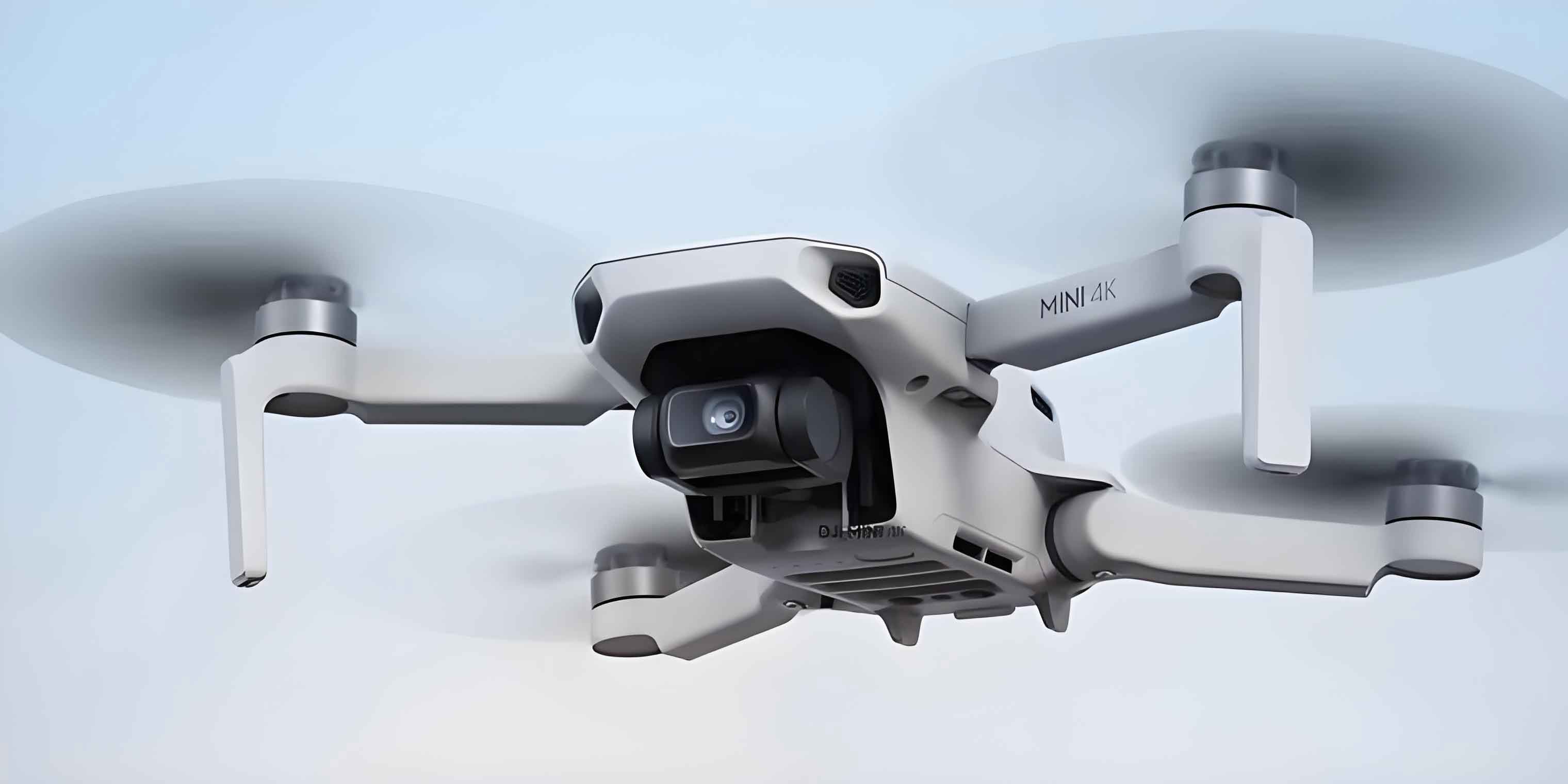
However, the low-altitude urban airspace is fraught with challenges. Operations are constrained by high-rise structures, complex terrain, and dynamic wind fields. Beyond physical obstacles, UAV drone operations face practical hurdles such as communication interruptions, electromagnetic interference, and crucially, low public acceptance due to concerns over noise, privacy, and safety. These multifaceted constraints make the scientific and rational planning of UAV drone logistics routes a foundational and critical technology for ensuring the safe, efficient, and sustainable development of urban air mobility. Unlike simple point-to-point pathfinding for a single UAV drone, logistics route planning must contend with high-density, networked operations, demanding solutions that optimize overall network throughput and efficiency while rigorously adhering to safety and societal constraints. This article synthesizes current research and practical developments to review methodologies for planning urban logistics UAV drone routes.
1. Evolution and Structural Modeling of UAV Drone Logistics Routes
The development of UAV drone logistics routes has progressed from simple ad-hoc paths to structured, network-oriented systems. Initial operations, often under regulatory pilot programs, focused on single UAV drone deliveries along pre-approved, non-structured paths, typically in less dense areas. As demand for scalability and timely delivery increased, the need for managing multiple UAV drones between the same origin-destination pairs became apparent. This led to the formalization of dedicated takeoff/landing areas and the segmentation of routes into distinct phases: en-route segments connecting vertiports and specialized approach/departure routes for managing traffic in the immediate vicinity of landing pads. To mitigate mid-air collision risks, regulatory bodies and operators widely adopted structured, unidirectional route systems with maintained lateral and vertical separation. The culmination of this evolution is the formation of interconnected route networks, enabling large-scale, efficient urban logistics operations.
Standardized definitions now categorize a UAV drone logistics route into three core components: the En-route Segment (connection between vertiports), the Approach/Departure Route (for entering/exiting the vertiport airspace), and the Vertiport/Landing Platform. The structural design of these components, particularly the en-route and approach/departure segments, significantly impacts operational performance, including delay, safety, and energy consumption.
1.1 A Parametric Structural Model for UAV Drone Routes
Based on practical implementations and research, a generalized parametric model can be defined to encapsulate the structure of an urban logistics UAV drone route. This model decomposes a complete mission from origin vertiport \(P_o\) to destination vertiport \(P_d\) into a sequence of functional segments and key points, as illustrated in the conceptual framework and summarized in the table below.
The complete route \(R\) can be expressed as a concatenation of these segments for departure and arrival:
$$ R = R_{dep} \oplus R_{enroute} \oplus R_{arr} $$
where the departure phase \(R_{dep} = r_t \oplus r_{wd} \oplus r_d\), the en-route phase \(R_{enroute} = r_c\), and the arrival phase \(R_{arr} = r_a \oplus r_{wa} \oplus r_l\). The operator \(\oplus\) denotes the sequential connection of these path segments.
| Segment | Notation | Start & End Points | Primary Function | Key Design Parameters & Considerations |
|---|---|---|---|---|
| Vertical Takeoff | \(r_t\) | \(P_o \rightarrow P_{lt}\) (Lift-off Point) | Rapid ascent from ground | Obstacle clearance, required cruise altitude. |
| Departure Wait | \(r_{wd}\) | \(P_{lt} \rightarrow P_{wd}\) (Wait Point) | Holding for sequencing into departure stream | Available airspace, UAV drone size, traffic density, safe separation. Parameterized by wait capacity (e.g., number of holding slots). |
| Departure Route | \(r_d\) | \(P_{wd}/P_{lt} \rightarrow P_d\) (Departure Fix) | Climb to merge into en-route airway | Obstacle avoidance, UAV drone performance. Can be horizontal, vertical, or inclined. |
| Cruise/En-Route | \(r_c\) | \(P_d \rightarrow P_a\) (Arrival Fix) | Primary transit between vertiports | Airspace restrictions, ground obstacles, wind fields, noise/privacy zones, electromagnetic interference. Parameterized by cruise altitude(s). |
| Arrival Route | \(r_a\) | \(P_a \rightarrow P_{wa}/P_{ll}\) | Descent from en-route to vertiport vicinity | Obstacle avoidance, UAV drone performance. Can be horizontal, vertical, or inclined. |
| Arrival Wait | \(r_{wa}\) | \(P_{wa} \rightarrow P_{ll}\) (Landing Align Point) | Holding for sequencing and final approach clearance | Available airspace, UAV drone size, traffic density, safe separation. Parameterized similarly to \(r_{wd}\). |
| Vertical Landing | \(r_l\) | \(P_{ll} \rightarrow P_d\) | Final descent and touchdown | Precision landing capability, obstacle clearance, control performance. |
This parametric model reveals critical design choices, such as whether departure and arrival fixes (\(P_d\) and \(P_a\)) are co-located or separated, and whether inbound and outbound cruise altitudes are equal or staggered. These choices have a proven, systematic impact on network delay. For instance, segregated fixes generally outperform co-located ones by reducing conflict points, and staggered cruise altitudes can significantly reduce delays compared to a single, higher shared altitude.
2. Factors Influencing UAV Drone Route Planning in Urban Environments
Effective UAV drone route planning requires a holistic assessment of numerous interacting factors that constrain or weight the feasible airspace. These factors can be categorized into four primary domains.
2.1 Ground Impact Risk
A UAV drone experiencing a failure could crash, posing a risk to people and property on the ground. The risk is a function of the probability of failure and the severity of the resulting harm, which depends on impact kinetics and potential for fire/explosion from onboard batteries. Planning must incorporate ground risk assessment, often guided by methodologies like the Specific Operations Risk Assessment (SORA), to ensure routes overpopulated areas are justified by mitigating measures or have acceptably low residual risk.
2.2 Public Acceptance: Noise and Privacy
Public tolerance is a critical non-technical constraint. Noise, primarily from rotor blades, is a major source of annoyance. The acoustic signature of small UAV drones differs from traditional aircraft, often featuring broader-band noise that is more perceptible. Annoyance typically decays with increasing distance from the community. Privacy concerns arise from onboard cameras. Mitigation strategies involve regulating UAV drone altitude and camera resolution to reduce ground detail capture and employing secure data handling protocols like blockchain for recorded footage. A simple model for perceived noise nuisance \(N\) at a ground point might relate to UAV drone distance \(d\) and sound power level \(L_w\):
$$ N \propto \frac{L_w}{d^{\alpha}} $$
where \(\alpha\) is an attenuation factor.
2.3 Weather Conditions, Especially Wind
Low-altitude urban wind fields are highly turbulent and variable, significantly affecting UAV drone operations. High winds can cause loss of control or excessive deviation from the planned path. Even moderate winds impact energy consumption and flight stability. The effective speed \(V_{eff}\) of a UAV drone flying with an airspeed \(V_a\) in a wind vector \(\vec{W}\) is given by:
$$ \vec{V}_{eff} = \vec{V}_a + \vec{W} $$
Route planning must account for prevailing and gust wind patterns to ensure navigability and energy efficiency, often requiring dynamic adaptation.
2.4 Infrastructure: Vertiports and CNS
Infrastructure availability fundamentally shapes the route network. Vertiport/Platform Location involves a multi-objective optimization (cost, coverage, time) under constraints like UAV drone range and payload. The problem extends to network design, including charging stations and hub locations.
Communication, Navigation, and Surveillance (CNS) systems are vital for safety. Reliable low-altitude communication requires enhanced cellular networks (LTE/5G/6G) and hybrid satellite links. Navigation in urban canyons suffers from Global Navigation Satellite System (GNSS) degradation, necessitating fusion with inertial, visual, or ground-based augmentation. Surveillance relies on cooperative systems (Remote ID, ADS-B) and non-cooperative methods (radar, electro-optics), with challenges in data fusion, latency, and coverage gaps.
3. Core Methodologies for UAV Drone Route Planning
The planning problem can be decomposed based on the airspace phase: en-route planning for transit between vertiports and approach/departure planning for managing traffic flows near vertiports. Subsequently, network-level planning coordinates multiple interacting routes.
3.1 En-Route Planning Methodologies
This seeks the minimum-cost flight path between two points in the presence of the aforementioned constraints. The core approaches are summarized below.
| Method Category | Core Principle | Advantages | Limitations | Typical Application Scenario |
|---|---|---|---|---|
| Graph Search (Dijkstra, A* variants) | Discretizes airspace into a graph; searches for a globally optimal path based on edge weights (distance, risk, energy). | Optimality guarantees, stable computation, easily integrates cost functions. | High computational load from discretization; requires graph updates in dynamic environments. | Static/semi-static environments for shortest-path or risk-aware planning. |
| Intelligent Optimization (Particle Swarm, Ant Colony) | Uses population-based metaheuristics to perform global search, handling multiple constraints. | Strong global search capability; handles non-linear, multi-objective problems well. | Slow convergence; parameter-sensitive; prone to local optima. | Multi-objective optimization in complex urban terrains. |
| Sampling-Based (RRT, PRM) | Randomly samples the configuration space to build a tree or graph, incrementally finding a feasible path. | Efficient in high-dimensional spaces; naturally incorporates motion constraints. | Path quality can be sub-optimal and variable; random nature can fail in narrow passages. | Dynamic obstacle avoidance and real-time feasible path generation. |
| Artificial Intelligence (Deep Reinforcement Learning) | An agent learns an optimal policy (path) through trial-and-error interactions with a simulated environment, guided by a reward function. | High adaptability to complex, dynamic, and unstructured environments; no need for explicit environmental modeling. | Requires extensive training data/simulation; unstable convergence; generalization can be limited. | Adaptive, real-time route planning in non-structured environments. |
The choice depends on the trade-off between optimality, real-time capability, and environmental complexity. For instance, a risk-aware planner might use an A* algorithm on a graph where edge weight \(w_{ij}\) combines distance \(d_{ij}\) and risk \(r_{ij}\): $$ w_{ij} = \alpha \cdot d_{ij} + \beta \cdot r_{ij} $$ where \(\alpha\) and \(\beta\) are weighting factors.
3.2 Approach and Departure Route Planning
This is distinct due to confined airspace, converging traffic flows, and the need for precise, conflict-free procedures. Research focuses on designing structured airspace (e.g., holding points, stacking rings) and control rules for high-density operations.
| Method Category | Core Principle | Advantages | Limitations | Typical Application |
|---|---|---|---|---|
| MDP/Reinforcement Learning | Models UAV drone maneuvers as a sequential decision process; uses distributed control to self-organize conflict-free paths. | Handles uncertainty and dynamic scenarios; does not require a rigid, predefined airspace structure. | High training cost; safety verification is challenging; performance depends on environment model. | Self-organizing traffic flows in unstructured vertiport airspace. |
| Simulation-Based Rule Design | Defines fixed procedures (e.g., holding patterns, sequencing rules) and uses simulation to evaluate and tune parameters like holding point locations. | Clear, controllable procedures; high stability and predictability under defined rules. | Inflexible; poor adaptability to dynamic disturbances or unexpected events. | Vertiports with predefined, published arrival/departure procedures. |
| Structured Path Search (A* on predefined networks) | Discretizes the terminal airspace into a structured network (e.g., concentric rings) that enforces spatial separation, then applies graph search for optimal paths. | Explainsable, verifiable results; low computational cost; structure aligns naturally with regulatory separation standards. | Relies on pre-computed complex airspace models; weak adaptability to sudden changes (e.g., wind gusts). | Static, capacity-optimized approach path planning for hub vertiports. |
3.3 Route Network Planning
This is a Multi-Agent Path Finding (MAPF) problem at scale, aiming to plan multiple conflict-free routes simultaneously. Methods are categorized by their decision architecture.
| Method Category | Core Principle | Advantages | Limitations | Typical Scenario |
|---|---|---|---|---|
| Centralized Optimal (Conflict-Based Search) | Searches the combined solution space for all UAV drones, detecting conflicts and adding constraints iteratively until a globally optimal, conflict-free set of paths is found. | Guarantees global optimality; decision process is traceable. | Computational cost grows exponentially with the number of UAV drones; impractical for large-scale or dynamic networks. | Small-scale, static network planning where optimality is paramount. |
| Centralized Sub-optimal (Priority-Based, e.g., HCA*) | Assigns priorities to routes/UAV drones and plans sequentially; lower-priority agents must detour around the paths of higher-priority ones. | Simple, fast, and easily implementable; good scalability. | Does not guarantee optimality; can create chain reactions of conflicts in dense scenarios. | Medium-scale networks with moderate conflict density requiring fast planning. |
| Distributed/Decentralized | Each UAV drone or operator plans independently using local information, resolving conflicts through negotiation or local coordination protocols. | Highly scalable and flexible; suitable for multi-operator environments; supports real-time adjustments. | Difficult to guarantee global optimality or even feasibility; communication and synchronization overhead increases with agent count. | Large-scale, dynamic networks with multiple independent operators. |
4. An Integrated Framework for UAV Drone Logistics Route Planning
Synthesizing the components discussed, a comprehensive, integrated planning framework is proposed. This framework operates across three hierarchical layers: Airspace Planning, Route Planning, and Route Network Planning, ensuring a systematic flow from defining usable space to deploying a functional operational network.
The framework is governed by the following high-level workflow:
- Airspace Planning Layer:
- Input: Regulatory policies, operational constraints (obstacles, noise-sensitive areas, no-fly zones).
- Process: Determine legally flyable volume. Subtract constrained areas to obtain Navigable Airspace. Partition this airspace functionally (e.g., en-route corridor vs. terminal area). Model each partition using a suitable computational model (e.g., grid for terminal area, visibility graph for en-route).
- Output: A discretized, computable representation of the available airspace (\(G_{term}\) for terminal, \(G_{enroute}\) for en-route).
- Route Planning Layer:
- Input: Airspace models (\(G_{term}\), \(G_{enroute}\)), origin-destination pair (\(P_o\), \(P_d\)), UAV drone performance model, route structure template (from Parametric Model).
- Process: Instantiate the parametric model for the given O-D pair. Define usage rules for shared nodes/edges in \(G_{term}\) (e.g., sequencing at holding points). Employ appropriate planning algorithms (from Tables 2 & 3) for each segment (\(r_d, r_c, r_a\)) within their respective airspace models, subject to the defined rules. Integrate segments into a complete, conflict-free route \(R\) for a single UAV drone flow.
- Route Network Planning Layer:
- Input: Set of all O-D demands, vertiport locations, network topology choice (hub-and-spoke, point-to-point, etc.), safety separation standards (derived from risk assessment or time-based intervals).
- Process: Determine planning order for O-D pairs (e.g., by demand, priority). For each O-D pair in sequence, execute the Route Planning Layer, treating airspace already allocated to previously planned routes as dynamically constrained. Ensure the new route maintains safe separation from all existing routes. This iteratively builds the network \(N = \{R_1, R_2, …, R_n\}\).
- Output: A conflict-free, operable UAV drone logistics route network.
This integrated approach ensures that routes are not planned in isolation but are instead born from a coherent airspace design and are coordinated at the network level to maximize throughput and efficiency. The separation standard \(\delta_{min}\) (lateral/vertical) is a critical network-wide parameter, often defined by a risk threshold or a temporal minimum: $$ P_{collision} = f(\delta_{min}) < P_{threshold} $$
5. Conclusion and Future Perspectives
The planning of urban logistics UAV drone routes is a complex, multi-disciplinary challenge central to the realization of safe and scalable low-altitude transportation. This review has traced the evolution from simple paths to structured networks, defined a parametric model to encapsulate route architecture, analyzed key influencing factors, and compared the core methodological approaches for en-route, terminal, and network-level planning. The synthesis of these elements into an integrated framework provides a methodological blueprint for both research and practical implementation.
Future research should focus on enriching the parametric model with a wider array of design parameters and adaptive connection schemes to cater to diverse mission profiles. This lays the groundwork for multi-parameter co-optimization across segments, routes, and the network. Furthermore, planning algorithms must evolve to incorporate real-time dynamics such as transient electromagnetic interference, flexible use of airspace, dynamic rerouting for contingencies, and the ultra-high-density scheduling of UAV drone flows. Enhancing the assessment models for dynamic factors like real-time wind fields and adaptive noise prediction will be crucial. The ultimate goal is the development of robust, scalable, and efficient planning systems that underpin the next generation of urban air mobility, ensuring that UAV drone logistics operations are not only feasible but also safe, efficient, and socially harmonious.