
In modern agriculture, the application of pesticides using unmanned aerial vehicles (UAV drones) has emerged as a transformative technology, particularly for crops with complex canopy structures like grapevines. This study focuses on addressing the challenges of pesticide application in vineyard systems, specifically in regions such as the Helan Mountain area, where traditional methods face efficiency and coverage issues. We propose a full-width side spraying method utilizing a low-altitude UAV drone to enhance deposition uniformity and penetration. Through computational fluid dynamics (CFD) simulations and experimental validation, we analyze the downwash airflow characteristics of a quad-rotor UAV drone under various operational conditions, optimize a side spray diversion structure, and verify the feasibility of this approach. Our work aims to contribute to the advancement of precision agriculture by leveraging UAV drone technology for dynamic environmental adaptations.
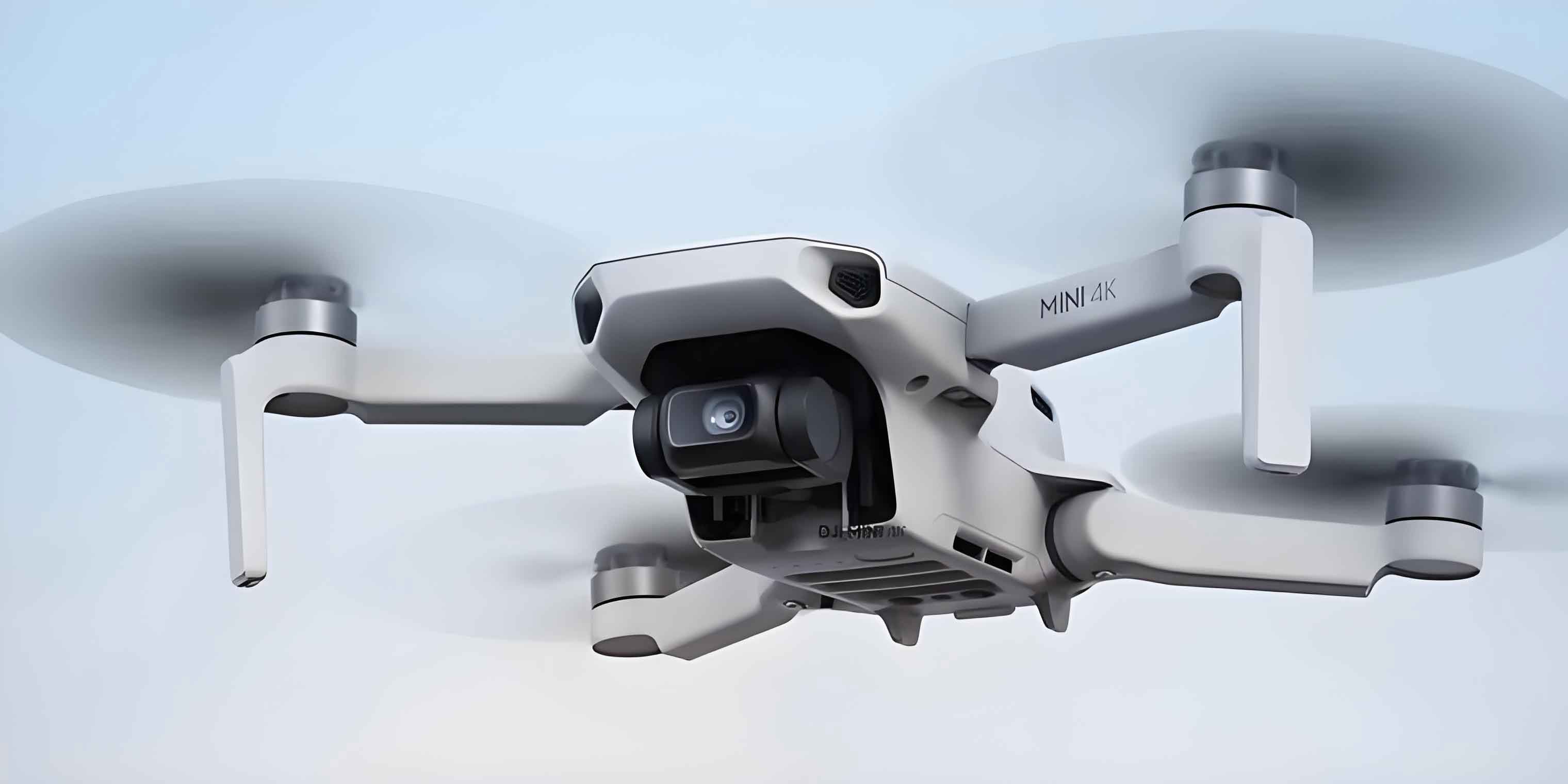
The rapid adoption of UAV drones in agricultural settings stems from their ability to perform targeted spraying with reduced labor and chemical usage. However, the effectiveness of a UAV drone heavily depends on the aerodynamic interactions between its rotors and the crop canopy. In this study, we investigate the wind field generated by a quad-rotor UAV drone during low-altitude operations, with an emphasis on hover and crosswind scenarios. By integrating transient turbulent CFD models, we simulate the downwash airflow to understand spatial distribution patterns. Subsequently, we design and optimize a side spray diversion structure tailored for trellised grapevines, ensuring efficient pesticide delivery. This research not only addresses practical application hurdles but also lays groundwork for future innovations in UAV drone-based plant protection systems.
Our methodology begins with defining the geometric and operational parameters of the UAV drone. We base our model on a standard quad-rotor configuration, simplifying non-essential mechanical details to focus on aerodynamic effects. The key specifications are summarized in Table 1, which includes parameters such as rotor size, mass, and flight capabilities. These parameters are critical for accurate CFD simulations and real-world validation of the UAV drone performance.
| Parameter | Unit | Form/Value |
|---|---|---|
| Motor Type | – | X8 |
| Blade Size | inch | 30 folding propeller |
| Electronic Speed Controller | A | 80A FOC |
| Supply Voltage | V | 44.4 |
| Maximum Takeoff Mass | kg | 23 |
| Wheelbase | mm | 1393 |
| Unfolded Dimensions | mm | 1075 × 1075 × 490 |
| Folded Dimensions | mm | 635 × 666 × 490 |
| Liquid Tank Capacity | L | 16 |
| Frame Mass | kg | 5 (excluding spray system) |
To simulate the wind field of the UAV drone, we employ a Reynolds-averaged Navier-Stokes (RANS) approach coupled with the RNG κ-ε turbulence model. This model is chosen for its robustness in handling rotating flows and transient effects commonly encountered in UAV drone operations. The governing equations are derived from conservation laws, incorporating source terms to account for rotational dynamics. The general form of the control equation in a moving coordinate system attached to the rotor is given by:
$$
\frac{\partial}{\partial t} \int_{V} \mathbf{W} dV + \oint_{S} (\mathbf{F}(\mathbf{W}) – \mathbf{G}(\mathbf{W})) dS = \int_{V} \mathbf{Q} dV
$$
where \(\mathbf{W}\) represents the conservative variable vector, \(S\) is the surface area, \(\mathbf{F}(\mathbf{W})\) and \(\mathbf{G}(\mathbf{W})\) are the inviscid and viscous flux vectors, respectively, and \(\mathbf{Q}\) is the source term accounting for rotational effects. The components are defined as:
$$
\mathbf{W} = \begin{bmatrix} \rho \\ \rho u \\ \rho v \\ \rho w \\ \rho \varepsilon \end{bmatrix}, \quad \mathbf{F}(\mathbf{W}) = \begin{bmatrix} \rho (q_n – q_b) \\ \rho u (q_n – q_b) + p \hat{n}_x \\ \rho v (q_n – q_b) + p \hat{n}_y \\ \rho w (q_n – q_b) + p \hat{n}_z \\ \rho \varepsilon (q_n – q_b) + p q_b \end{bmatrix}, \quad \mathbf{G}(\mathbf{W}) = \begin{bmatrix} 0 \\ \tau_{xx} \hat{n}_x + \tau_{yx} \hat{n}_y + \tau_{zx} \hat{n}_z \\ \tau_{xy} \hat{n}_x + \tau_{yy} \hat{n}_y + \tau_{zy} \hat{n}_z \\ \tau_{xz} \hat{n}_x + \tau_{yz} \hat{n}_y + \tau_{zz} \hat{n}_z \\ \phi_x \hat{n}_x + \phi_y \hat{n}_y + \phi_z \hat{n}_z \end{bmatrix}, \quad \mathbf{Q} = \begin{bmatrix} 0 \\ \rho w \Omega \\ 0 \\ -\rho u \Omega \\ 0 \end{bmatrix}
$$
Here, \(\rho\) is fluid density, \(u, v, w\) are velocity components, \(p\) is pressure, \(\hat{n}_x, \hat{n}_y, \hat{n}_z\) are normal vector components, \(q_n\) and \(q_b\) are fluid and grid motion velocities, \(\Omega\) is rotational speed, and \(\tau_{ij}\) and \(\phi_i\) represent viscous terms. For turbulence closure, the RNG κ-ε model equations are:
$$
\frac{\partial}{\partial t} (\rho k) + \frac{\partial}{\partial x_i} (\rho k u_i) = \frac{\partial}{\partial x_j} \left( \alpha_k \mu_{\text{eff}} \frac{\partial k}{\partial x_j} \right) + G_k + G_b – \rho \varepsilon – Y_M + S_k
$$
$$
\frac{\partial}{\partial t} (\rho \varepsilon) + \frac{\partial}{\partial x_i} (\rho \varepsilon u_i) = \frac{\partial}{\partial x_j} \left( \alpha_\varepsilon \mu_{\text{eff}} \frac{\partial \varepsilon}{\partial x_j} \right) + C_{1\varepsilon} \frac{\varepsilon}{k} (G_k + C_{3\varepsilon} G_b) – C_{2\varepsilon} \rho \frac{\varepsilon^2}{k} – R_\varepsilon + S_\varepsilon
$$
where \(k\) is turbulent kinetic energy, \(\varepsilon\) is dissipation rate, \(\mu_{\text{eff}}\) is effective viscosity, \(G_k\) and \(G_b\) are generation terms, and \(C_{1\varepsilon}, C_{2\varepsilon}, C_{3\varepsilon}, \alpha_k, \alpha_\varepsilon\) are constants. This formulation enables accurate prediction of the downwash airflow for the UAV drone under study.
The simulation domain is constructed as a hexahedral volume measuring 6 m × 6 m × 5 m, with the UAV drone positioned centrally. Four cylindrical rotating zones encapsulate the rotors, each with a radius of 400 mm and height of 60 mm. We utilize an unstructured mesh with adaptive refinement in critical regions, resulting in approximately 1,670,032 cells. Boundary conditions are set as follows: the bottom face is a no-slip wall, side faces are pressure outlets, and the rotors employ a sliding mesh approach with rotational motion. The environmental parameters for the CFD analysis are detailed in Table 2, which includes fluid properties and operational settings for the UAV drone.
| Parameter Setting | Unit | Type/Value |
|---|---|---|
| Flow Field Type | – | Internal flow field |
| Outlet Pressure | MPa | 0 |
| Turbulence Model | – | κ-ε |
| Gravity Acceleration | m/s² | -9.81 |
| Air Density | kg/m³ | 1.225 |
| Air Dynamic Viscosity | Pa·s | 1.7894 × 10⁻⁵ |
| Reference Temperature | K | 288.15 |
We first analyze the downwash airflow characteristics of the UAV drone in hover conditions at a height of 3.5 m and rotor speed of 2000 rpm. The quad-rotor configuration involves opposite rotations for adjacent rotors, leading to complex aerodynamic interactions. The velocity distribution reveals that the wind field emanates symmetrically from each blade, with pressure differences inducing a downward airflow. The maximum velocity occurs directly below the rotors, and the flow field converges and diffuses with increasing distance, forming an inverted funnel shape. To quantify this, we define velocity zones: low-speed (<2 m/s), medium-speed (2–4 m/s), and high-speed (>4 m/s). The medium-speed region dominates, covering about 70% of the area, while the high-speed zone is minimal at 7%. This stratification is crucial for understanding how the UAV drone influences spray deposition.
Further investigation involves slicing the flow field at various heights below the rotors, from 0.5 m to 3.4 m. The results show that as height increases, the coverage area of the wind field expands, but the average velocity decreases. At heights between 2.5 m and 3.0 m, the high-velocity regions from adjacent rotors begin to merge, indicating flow field unification. We evaluate four flight heights (2.0 m to 3.5 m) to assess coverage area and average velocity trends. The data are summarized using the following empirical relationships derived from simulations:
$$
A(h) = A_0 e^{-k_v h} + C
$$
where \(A(h)\) is the coverage area at height \(h\), \(A_0\), \(k_v\), and \(C\) are constants. Similarly, the average velocity \(V_{\text{avg}}(h)\) follows a parabolic trend:
$$
V_{\text{avg}}(h) = a h^2 + b h + c
$$
with coefficients \(a, b, c\) determined through curve fitting. Based on these analyses, we identify an optimal spraying height range of 2.5 m to 3.5 m for the UAV drone, aligning with the canopy dimensions of trellised grapevines.
Next, we examine the impact of crosswind on the UAV drone’s wind field. Under a crosswind speed of 1 m/s, the downwash airflow exhibits significant drift, particularly in regions away from the rotors where velocities drop below 5 m/s. We classify the flow field into drift and non-drift zones, with the drift zone (velocity <5 m/s) constituting approximately 78% of the distribution area. This drift primarily affects the leeward side of the UAV drone, leading to asymmetric spray patterns. The velocity distribution under crosswind can be modeled using a modified advection-diffusion equation:
$$
\frac{\partial \mathbf{u}}{\partial t} + (\mathbf{u} \cdot \nabla) \mathbf{u} = -\frac{1}{\rho} \nabla p + \nu \nabla^2 \mathbf{u} + \mathbf{F}_{\text{wind}}
$$
where \(\mathbf{u}\) is velocity vector, \(p\) is pressure, \(\nu\) is kinematic viscosity, and \(\mathbf{F}_{\text{wind}}\) represents crosswind forcing. These insights highlight the need for structural optimizations to mitigate drift and enhance targeting for the UAV drone.
To address these challenges, we design a side spray diversion structure for the UAV drone, intended to capture and direct the downwash airflow toward grapevine canopies. The structure features a funnel-shaped upper section with a diameter of 320 mm to maximize wind field capture, and a lower outlet diameter of 85 mm for nozzle attachment. It is constructed from ABS material, with properties listed in Table 3. The design aims to leverage the flow field merging zones identified in simulations, thereby improving spray dispersion and reducing wind field tearing.
| Parameter | Unit | Value |
|---|---|---|
| A (Upper Diameter) | mm | 320 |
| B (Lower Diameter) | mm | 85 |
| Material | – | ABS |
| Density | g/cm³ | 1.06 |
| Tensile Modulus | MPa | 2270 |
| Tensile Strength | MPa | 46.0 |
| Molding Shrinkage Rate | % | 0.42–0.72 |
We simulate the diversion structure installed at heights of 0.3 m, 0.5 m, and 0.7 m below the UAV drone rotors. The results indicate that outlet velocity decreases with lower installation heights, while inlet airflow area increases. At 0.3 m, the outlet velocity is 2.6 m/s; at 0.5 m, it is 2.5 m/s; and at 0.7 m, it drops to 2.0 m/s. Flow separation occurs at certain heights due to variations in wind field absorption. Based on these findings, we recommend an installation range of 0.3 m to 0.5 m for the diversion structure on the UAV drone, as this balances velocity retention and coverage. The optimized structure enhances airflow guidance, ensuring that sprayed droplets effectively reach the grapevine leaf layers with improved penetration.
For experimental validation, we conduct field tests using a quad-rotor UAV drone equipped with the designed diversion structure. We measure wind speeds at multiple points below the UAV drone, corresponding to simulation data points. The measurement setup divides the area into zones: rotor center, blade tip, flow convergence, and central regions. At each zone, we place four detection lines with points at heights of 0.2 m, 0.4 m, 0.6 m, and 0.8 m. A TA641A anemometer is used, with a measurement range of 0.3–30.0 m/s and an error of ±3%. The relative error between simulated (\(v_m\)) and measured (\(v_s\)) velocities is calculated as:
$$
a = \frac{v_s – v_m}{v_s} \times 100\%
$$
The results show close agreement, with errors generally within 10%. For instance, in the central region, the maximum error is 9.55%, while in other zones, errors are lower. Some discrepancies arise from measurement limitations, such as points where wind speeds fall below the anemometer’s threshold (0.3 m/s). Overall, the validation confirms the reliability of our CFD models for the UAV drone wind field analysis.
In conclusion, our study demonstrates the effectiveness of a low-altitude UAV drone for full-width side spraying in vineyard applications. We characterize the downwash airflow of a quad-rotor UAV drone, revealing velocity distribution patterns and crosswind impacts. The optimization of a side spray diversion structure, based on CFD simulations, significantly improves airflow guidance and spray efficiency. Experimental tests validate our models, showing minimal error margins. This work underscores the potential of UAV drone technology to revolutionize agricultural spraying, offering solutions for difficult-to-reach canopies and dynamic environmental conditions. Future research could explore multi-rotor configurations or advanced control algorithms to further enhance the performance of UAV drones in precision agriculture.
The integration of UAV drones into agricultural practices continues to evolve, driven by needs for efficiency and sustainability. Our findings highlight key aerodynamic principles that govern UAV drone operations, providing a foundation for designing more effective spraying systems. By leveraging computational tools and empirical data, we can optimize UAV drone parameters for specific crops, such as grapes, ensuring targeted pesticide delivery and reduced environmental drift. The side spray method developed here exemplifies how tailored engineering can address real-world challenges, making UAV drones indispensable tools in modern farming. As technology advances, we anticipate further innovations in UAV drone autonomy, sensing, and adaptation, paving the way for smarter agricultural ecosystems.
Throughout this research, the term UAV drone has been emphasized to reinforce its centrality in our investigations. From simulation to experimentation, the UAV drone serves as the core platform for implementing our proposed spraying methodology. The insights gained not only apply to grapevine cultivation but also extend to other high-value crops with similar canopy structures. By continuing to refine UAV drone designs and operational strategies, we can unlock new possibilities for precision agriculture, contributing to food security and environmental stewardship on a global scale.