
The rapid evolution of low-altitude economies worldwide has positioned the Unmanned Aerial Vehicle (UAV), or drone, as a pivotal technology. Leveraging advantages such as low cost and high maneuverability, UAV drones are being deployed across an ever-expanding array of sectors including logistics, disaster management, precision agriculture, and aerial photography. However, this proliferation brings significant societal challenges, ranging from privacy violations and airspace congestion to their potential use in illicit activities and security threats. Therefore, developing robust, reliable methods for UAV drone detection and, critically, recognition or classification of specific drone models, is paramount for ensuring safe and regulated airspace integration. Radar systems, with their all-weather, day-and-night, and long-range capabilities, have emerged as a cornerstone technology for this task.
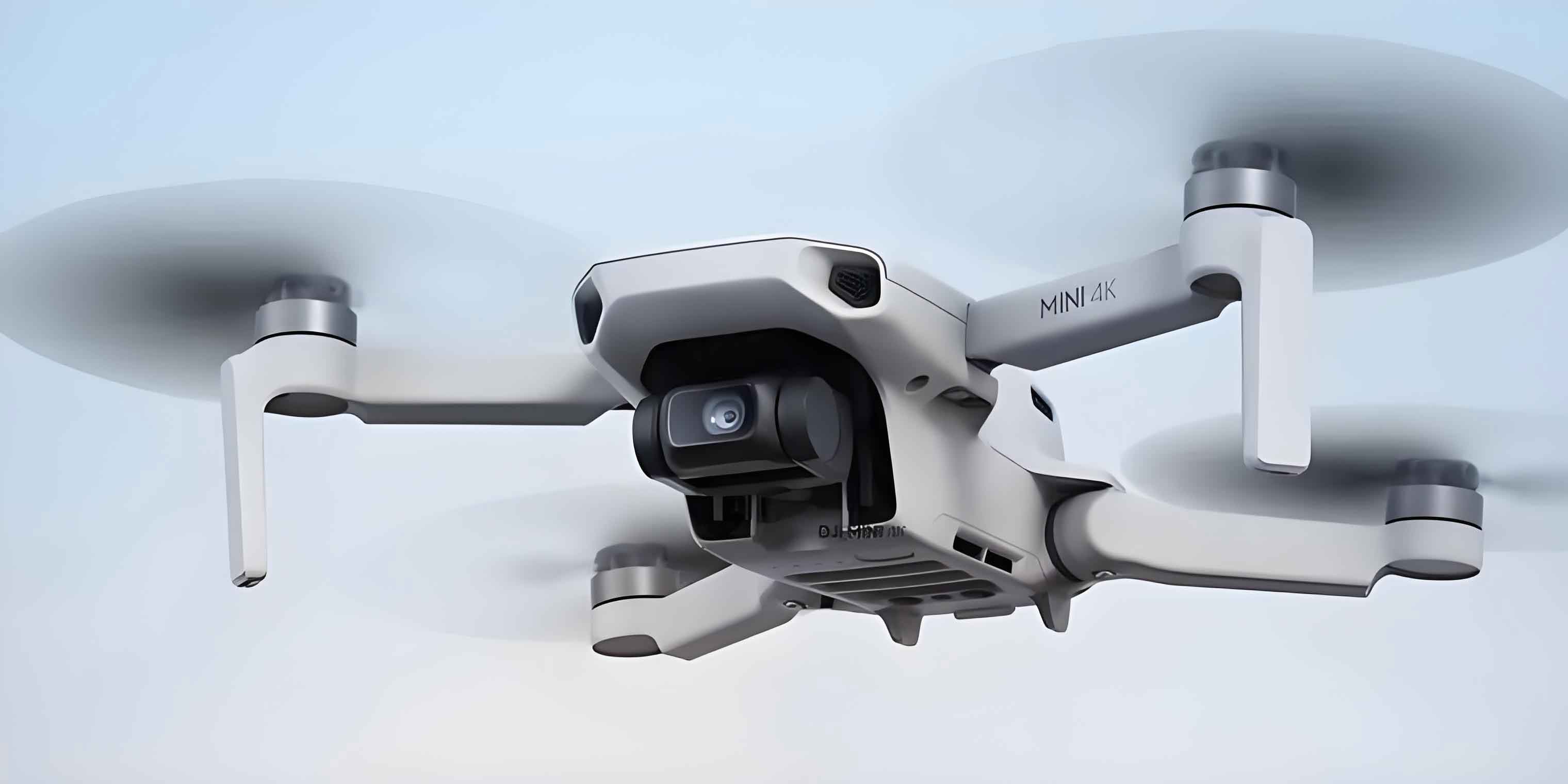
Contemporary UAV drone recognition techniques predominantly rely on the analysis of micro-Doppler signatures. The rotating blades of a UAV drone introduce characteristic frequency modulations onto the radar return signal, creating a unique “micro-Doppler signature” in the joint time-frequency domain that acts as a fingerprint for the type of drone. Both traditional machine learning algorithms (e.g., Support Vector Machines, Random Forests) and modern deep learning approaches (e.g., Convolutional Neural Networks) have been applied to classify UAV drones based on these signatures extracted from time-frequency representations like spectrograms. While effective under favorable conditions, a fundamental limitation of micro-Doppler-based methods is their acute sensitivity to noise. As the Signal-to-Noise Ratio (SNR) of the radar echo deteriorates—a common scenario for small, low-Radar Cross-Section (RCS) UAV drones at longer ranges—the classification performance degrades sharply. The intricate patterns in the spectrogram become obscured, leading to a significant drop in recognition accuracy.
This vulnerability necessitates the exploration of complementary or more robust features for UAV drone discrimination. Modern radar technology is rapidly advancing towards multi-frequency, multi-polarization, and multi-angle systems. Polarimetric radar, which transmits and receives electromagnetic waves in specific polarization states (e.g., Horizontal-H, Vertical-V), captures richer information about a target’s geometrical structure, material composition, and orientation. Polarimetric features, derived from the fully measured scattering matrix, have been extensively and successfully used in remote sensing for terrain and land cover classification. Their application is now extending to the UAV drone domain. While some preliminary work has utilized polarimetry to distinguish UAV drones from biological targets like birds, its potential for fine-grained model classification among different UAV drones remains largely underexplored. This represents a promising new avenue to augment or enhance recognition systems, particularly in low-SNR regimes where micro-Doppler features falter.
This article presents and validates a UAV drone recognition method based on the multidimensional feature enhancement offered by polarimetric radar. The core proposition is to fuse a diverse and complementary set of polarimetric descriptors with enhanced, discriminative features derived from the Doppler spectrum. The method systematically extracts three major categories of polarimetric features: 1) Polarimetric Cross-Correlation Parameters, 2) Polarimetric Scattering Characteristics obtained from established decomposition theorems, and 3) Polarimetric Invariants. Concurrently, to counteract noise sensitivity, we apply Linear Discriminant Analysis (LDA) directly to the Doppler spectra from each polarization channel. LDA acts as a supervised dimensionality reduction and feature enhancement tool, projecting the high-dimensional spectral data onto a new subspace that maximizes inter-class separability while minimizing intra-class variance, thus extracting “inter-class strong discriminative features.”
The final feature vector for classifying a UAV drone observation is formed by concatenating the selected robust polarimetric features with these LDA-enhanced spectral features. A Random Forest classifier is then employed for final model discrimination. We analyze the contribution of various polarimetric features to the UAV drone recognition task and comprehensively evaluate the proposed method against several baseline approaches using measured data. Experimental results demonstrate that the multidimensional feature enhancement strategy effectively mitigates the performance drop in low-SNR conditions, achieving a significant improvement in UAV drone recognition rates compared to traditional methods relying solely on raw micro-Doppler features.
Multidimensional Feature Extraction from Polarimetric Radar Returns
The foundation of the proposed method is the fully polarimetric radar measurement, represented for each time sample \(n\) by the \(2 \times 2\) complex scattering matrix \(\mathbf{S}_n\):
$$ \mathbf{S}_n = \begin{bmatrix} S_{HH}[n] & S_{HV}[n] \\ S_{VH}[n] & S_{VV}[n] \end{bmatrix} $$
where \(S_{PQ}[n]\) denotes the complex scattering coefficient for transmit polarization \(P\) and receive polarization \(Q\) (\(P, Q \in \{H, V\}\)). For reciprocal media in a monostatic configuration, \(S_{HV} = S_{VH}\). To generate stable and statistically meaningful features, the raw complex time series for each polarization channel are first processed (detection, tracking, range-cell extraction) to obtain a target’s trajectory. This trajectory is then segmented into coherent processing intervals, each containing \(d\) consecutive and temporally associated scattering matrices. The following feature extraction procedures are applied to each of these segments.
1. Multidimensional Polarimetric Feature Suite
A comprehensive set of 22 polarimetric features is computed from the averaged properties of the \(d\) scattering matrices in a segment. These features are categorized and summarized in the table below, where \(\langle \cdot \rangle\) denotes the ensemble average over the segment.
| Category | Feature Name | Mathematical Expression / Description |
|---|---|---|
| Polarimetric Cross-Correlation Parameters | Linear Depolarization Ratio (LDR) | \( LDR = \frac{\langle |S_{HV}|^2 \rangle}{\langle |S_{HH}|^2 \rangle} \) |
| Differential Reflectivity (ZDR) | \( Z_{DR} = \frac{\langle |S_{VV}|^2 \rangle}{\langle |S_{HH}|^2 \rangle} \) | |
| Co-polar Correlation Coefficient (\(\rho_{HHVV}\)) | \( \rho_{HHVV} = \frac{\langle S_{HH} S_{VV}^* \rangle}{\sqrt{\langle |S_{HH}|^2 \rangle \langle |S_{VV}|^2 \rangle}} \) (Magnitude & Phase) | |
| Cross-pol Correlation Coefficient (\(\beta\)) | \( \beta = \frac{\langle S_{HH} S_{HV}^* \rangle}{\sqrt{\langle |S_{HH}|^2 \rangle \langle |S_{HV}|^2 \rangle}} \) (Magnitude & Phase) | |
| Cross-pol Correlation Coefficient (\(\epsilon\)) | \( \epsilon = \frac{\langle S_{VV} S_{HV}^* \rangle}{\sqrt{\langle |S_{VV}|^2 \rangle \langle |S_{HV}|^2 \rangle}} \) (Magnitude & Phase) | |
| Polarimetric Scattering Characteristics | Cloude-Pottier Decomposition (H/\(\bar{\alpha}\)/A) | |
| Entropy (H) | \( H = -\sum_{i=1}^{3} p_i \log_3 p_i \), where \( p_i = \lambda_i / \sum \lambda_j \) from eigen-decomposition of coherency matrix \(\mathbf{T}\). Measures scattering randomness. | |
| Mean Alpha Angle (\(\bar{\alpha}\)) | \( \bar{\alpha} = \sum_{i=1}^{3} p_i \alpha_i \). Indicates dominant scattering mechanism (surface: ~0°, volume: ~45°, dihedral: ~90°). | |
| Anisotropy (A) | \( A = \frac{\lambda_2 – \lambda_3}{\lambda_2 + \lambda_3} \). Describes the relative significance of secondary scattering mechanisms. | |
| Pauli Decomposition Components | Surface Scattering (\(|a|\)) | \( |a| = | \langle S_{HH} \rangle + \langle S_{VV} \rangle | \) |
| Dihedral Scattering (\(|b|\)) | \( |b| = | \langle S_{HH} \rangle – \langle S_{VV} \rangle | \) | |
| Volume Scattering (\(|c|\)) | \( |c| = 2 | \langle S_{HV} \rangle | \) | |
| Krogager Decomposition Components | Sphere (\(k_s\)) | \( k_s = |S_{r1}| \) |
| Diplane (\(k_d\)) | \( k_d = \min(|S_{11}|, |S_{rr}|) \) | |
| Helix (\(k_h\)) | \( k_h = \left| |S_{11}| – |S_{rr}| \right| \) where \(S_{rr}, S_{11}, S_{r1}\) are circular basis coefficients derived from \(\mathbf{S}\). |
|
| Freeman-Durden Decomposition Powers | Volume Scatter Power (\(P_v\)) | \( P_v = f_v \cdot \text{tr}(\mathbf{C}_v) \), from model fit \(\mathbf{C} = f_v\mathbf{C}_v + f_d\mathbf{C}_d + f_s\mathbf{C}_s\). |
| Double-Bounce Power (\(P_d\)) | \( P_d = f_d \cdot \text{tr}(\mathbf{C}_d) \) | |
| Surface Scatter Power (\(P_s\)) | \( P_s = f_s \cdot \text{tr}(\mathbf{C}_s) \) | |
| Polarimetric Invariants | Modulus of Determinant (\(\Delta\)) | \( \Delta = |\det(\langle \mathbf{S} \rangle)| \). Related to target complexity. |
| Trace of Power Matrix (\(P_1\)) | \( P_1 = |\langle S_{HH} \rangle|^2 + 2|\langle S_{HV} \rangle|^2 + |\langle S_{VV} \rangle|^2 \). Represents total scattered power. | |
| Depolarization Index (\(D\)) | \( D = 1 – \frac{|\text{tr}(\langle \mathbf{S} \rangle^2)|}{\text{tr}(\langle \mathbf{S}^H \mathbf{S} \rangle)} \). Indicates number of dominant scatterers. | |
| Characteristic Polarization State: Direction Angle (\(\phi_d\)) | Derived from solving \( (\langle \mathbf{S} \rangle^H \langle \mathbf{S} \rangle) \mathbf{h} = \mu \mathbf{h} \). Related to target orientation. | |
| Characteristic Polarization State: Ellipticity Angle (\(\tau_d\)) | Derived as above. Related to target symmetry. | |
The physical interpretation of these features provides the link to UAV drone structure. For instance, a UAV drone with large, flat surfaces (e.g., a fixed-wing body) may exhibit stronger surface scattering components (\(|a|, P_s\)), while rotating propellers are likely to increase volume scattering (\(|c|, P_v, H\)) and potentially helix scattering (\(k_h\)). Metallic junctions (like the arm-body connection on a quadcopter) can produce dihedral or double-bounce scattering (\(|b|, P_d, k_d\)). The polarimetric invariants offer a compact, rotationally insensitive description of the UAV drone’s electromagnetic scattering properties.
2. Extraction of Inter-Class Strong Discriminative Features via LDA
To complement the polarimetric description and enhance robustness to noise, we process the Doppler spectrum from each polarization channel (HH, HV, VH, VV) separately. For a given segment of \(d\) time samples, the Discrete Fourier Transform yields a \(d\)-dimensional Doppler spectrum vector \(\mathbf{F}\). Let there be \(K\) different UAV drone classes in the training set. For a specific polarization channel, we have a set of spectrum vectors \(\mathcal{D}_i = \{\mathbf{F}^{(i)}_1, …, \mathbf{F}^{(i)}_{n_i}\}\) for each class \(i \in \{1, …, K\}\), with \(n_i\) samples per class.
Linear Discriminant Analysis seeks a projection matrix \(\mathbf{W}\) that maps the original \(d\)-dimensional spectra to a lower-dimensional subspace (of dimension at most \(K-1\)) where classes are maximally separated. This is achieved by maximizing the ratio of between-class scatter to within-class scatter. The within-class scatter matrix \(\mathbf{S}_W\) and the between-class scatter matrix \(\mathbf{S}_B\) are defined as:
$$ \mathbf{S}_W = \sum_{i=1}^{K} \sum_{\mathbf{F} \in \mathcal{D}_i} (\mathbf{F} – \boldsymbol{\mu}_i)(\mathbf{F} – \boldsymbol{\mu}_i)^T $$
$$ \mathbf{S}_B = \sum_{i=1}^{K} n_i (\boldsymbol{\mu}_i – \boldsymbol{\mu})(\boldsymbol{\mu}_i – \boldsymbol{\mu})^T $$
where \(\boldsymbol{\mu}_i\) is the mean vector of class \(i\) and \(\boldsymbol{\mu}\) is the overall mean vector. The optimal projection \(\mathbf{W}\) consists of the eigenvectors corresponding to the largest eigenvalues of the generalized eigenvalue problem \(\mathbf{S}_B \mathbf{w} = \lambda \mathbf{S}_W \mathbf{w}\). The projected features, \(\mathbf{Y} = \mathbf{W}^T \mathbf{F}\), are the “LDA-enhanced” or “inter-class strong discriminative features.” For \(K=7\) UAV drone classes, this reduces the spectral dimension from \(d\) (e.g., 256) to just 6 per channel, effectively denoising and extracting the most class-relevant spectral information for UAV drone discrimination.
3. Classification Framework
The final feature vector for a data segment is constructed by concatenating two components: 1) A selected subset of the 22 polarimetric features (found to be contributive via analysis), and 2) The LDA-projected features from all four polarization channels (\(4 \times (K-1)\) dimensions). This results in a compact, yet highly informative, multidimensional feature vector representing the UAV drone target.
The Random Forest (RF) algorithm is chosen as the classifier. RF is an ensemble method that builds multiple decision trees during training and outputs the mode of their predictions. It offers several advantages: robustness to overfitting, the ability to handle high-dimensional data, and, crucially, an inherent mechanism for estimating feature importance via out-of-bag (OOB) error or mean decrease in impurity. This allows us to analyze the contribution of different polarimetric features to the UAV drone recognition task. The RF training process involves bootstrap sampling from the training set and random feature subset selection at each node split, promoting diversity among the trees and leading to a strong, generalized model for UAV drone classification.
Experimental Analysis and Contribution of Polarimetric Features
The proposed method was validated using a dataset collected by a high-resolution, fully polarimetric radar system operating in the Ka-band (34.5-35.5 GHz) with 1 GHz bandwidth, providing a range resolution of 0.2 meters. The system was used to gather data on seven distinct commercial UAV drone models during flight maneuvers including hovering and circling. For each UAV drone, a continuous polarimetric time series was recorded, processed into segments of length \(d=256\), and labeled, resulting in 768 feature samples per UAV drone model.
Contribution Analysis of Polarimetric Features
Before fusion, the individual contribution of the 25-dimensional polarimetric feature set (22 basic features plus the complex-valued correlation coefficients \(\rho_{HHVV}\), \(\beta\), \(\epsilon\)) was assessed. A Random Forest model was trained using these features alone, and feature importance was quantified using the Mean Decrease in Impurity (MDI) method. The results, visualized in a bar chart (not reproduced here), revealed a clear hierarchy. The three complex correlation coefficients (\(\rho_{HHVV}\), \(\beta\), \(\epsilon\)) showed nearly zero contribution to distinguishing among the seven UAV drone models.
To understand this, we calculated the Separability Index (SI) for the feature set containing only these correlation coefficients. The SI between two classes \(i\) and \(j\) is defined as the ratio of their inter-class distance to their average intra-class spread:
$$ \text{SI}_{i,j} = \frac{\|\boldsymbol{\mu}_i – \boldsymbol{\mu}_j\|_2}{(\bar{\delta}_i + \bar{\delta}_j)/2} $$
where \(\bar{\delta}_i\) is the average Euclidean distance between all samples within class \(i\). An SI value close to or greater than 1 indicates good separability. The overall and pairwise SI values for the correlation features were all significantly below 0.5, confirming their poor discriminative power for fine-grained UAV drone model recognition in this context. Consequently, these three features were excluded from the final polarimetric set, leaving 19 contributive polarimetric features. Other features like the Freeman decomposition components (\(P_d, P_s\)), characteristic angles (\(\phi_d, \tau_d\)), depolarization index (\(D\)), and total power (\(P_1\)) showed moderate but non-zero contribution.
Recognition Performance Validation and Comparative Study
The effectiveness of the proposed multidimensional feature enhancement method was evaluated against four baseline schemes under varying Signal-to-Noise Ratio (SNR) conditions. Gaussian noise was added to the raw radar IQ data to simulate different SNR levels, specifically at main Doppler SNR points of 30 dB, 20 dB, 10 dB, and a clean (no noise) condition. A 5-fold cross-validation protocol was used, and the average recognition rate across folds is reported. The compared schemes are:
- Scheme 1 (Pol-Only): Uses only the 19 selected polarimetric features.
- Scheme 2 (Micro-Doppler-Only): Uses the raw \(d\)-dimensional Doppler spectra from all 4 pol channels concatenated (\(4d\) features, e.g., 1024-D).
- Scheme 3 (LDA-Spectra-Only): Uses the LDA-projected features (\(4 \times (K-1) = 24\) dimensions) from the Doppler spectra.
- Scheme 4 (Pol + Micro-Doppler): Concatenates features from Scheme 1 and Scheme 2.
- Scheme 5 (Proposed: Pol + LDA-Spectra): Concatenates features from Scheme 1 and Scheme 3. This is the proposed method.
The recognition rates for all schemes across SNR levels are summarized in the following table.
| SNR Level | Scheme 1: Pol-Only | Scheme 2: Micro-Doppler-Only | Scheme 3: LDA-Spectra-Only | Scheme 4: Pol+Micro-Doppler | Scheme 5: Proposed (Pol+LDA-Spectra) |
|---|---|---|---|---|---|
| Clean (No Noise) | 67.81% | 94.74% | 93.06% | 94.66% | 93.79% |
| 30 dB | 63.52% | 83.76% | 87.17% | 83.56% | 87.93% |
| 20 dB | 56.60% | 63.50% | 75.07% | 64.47% | 77.21% |
| 10 dB | 49.24% | 50.20% | 55.95% | 52.72% | 59.90% |
The analysis of the results leads to several key conclusions regarding UAV drone recognition:
- Standalone Feature Performance: Under clean and high-SNR conditions, the raw micro-Doppler features (Scheme 2) yield the highest accuracy, significantly outperforming polarimetric features alone (Scheme 1). This confirms the strong discriminative power of micro-Doppler signatures for UAV drone models when observed clearly. However, Scheme 1 still provides a non-trivial baseline, proving that polarimetric properties contain model-specific information.
- Value of LDA Enhancement: Comparing Scheme 2 and Scheme 3 reveals the noise-robustness benefit of LDA. At high SNR (30 dB, Clean), the raw spectra slightly outperform the LDA-projected ones, as LDA’s linear projection may discard some useful nonlinear variance. However, as SNR drops to 20 dB and 10 dB, the LDA-enhanced spectra (Scheme 3) consistently and significantly outperform the raw spectra (Scheme 2). This demonstrates that LDA effectively extracts the most class-separable components while suppressing noise, making it highly valuable for low-SNR UAV drone recognition scenarios.
- Superiority of Feature Fusion: The fusion strategies (Scheme 4 & 5) generally outperform or match the best single-modality method at each SNR. Critically, the proposed Scheme 5 (Pol + LDA-Spectra) delivers the best or nearly best performance across all SNR levels. Its superiority is most pronounced in challenging low-SNR conditions.
- Effectiveness of the Proposed Method: The proposed multidimensional feature enhancement method (Scheme 5) achieves a remarkable balance. At high SNR, it maintains performance nearly equivalent to the traditional micro-Doppler approach (94.74% vs. 93.79%). At low SNR, it introduces substantial gains. At a main Doppler SNR of 20 dB, the proposed method improves the UAV drone recognition rate by 13.71 percentage points over the traditional micro-Doppler-only method (77.21% vs. 63.50%). At 10 dB SNR, the improvement is 9.70 percentage points (59.90% vs. 50.20%). This robustness stems from the complementary nature of the features: the polarimetric features, derived from multi-look averaging and nonlinear transformations, are inherently more stable to noise and describe intrinsic scattering properties of the UAV drone structure. The LDA-enhanced spectral features provide a compact, discriminative representation of the dynamic micro-motion signature. Together, they create a robust descriptor that mitigates the weaknesses of either approach used in isolation.
Conclusion and Future Directions
This article has presented a novel and effective method for UAV drone model recognition based on multidimensional feature enhancement from polarimetric radar data. The core innovation lies in the synergistic fusion of a comprehensive suite of physically interpretable polarimetric descriptors—spanning correlation parameters, scattering decompositions, and invariants—with supervised, noise-robust features extracted from the Doppler spectrum via Linear Discriminant Analysis. This approach directly addresses the critical limitation of conventional micro-Doppler-based techniques: their rapid performance degradation in low-SNR environments typical of small UAV drone surveillance.
Experimental validation on a measured dataset of seven UAV drone models confirmed the value of polarimetric analysis for this task and decisively demonstrated the superiority of the proposed fusion strategy. The contribution analysis provided insight into which polarimetric features are most relevant for distinguishing among UAV drone models. Most importantly, the results showed that the proposed method maintains high recognition accuracy under favorable conditions while delivering significant performance gains of over 13 and 9 percentage points at 20 dB and 10 dB main Doppler SNR, respectively, compared to the standard micro-Doppler approach.
The implications for practical UAV drone surveillance systems are clear. By leveraging the rich information available from modern polarimetric radars and applying intelligent feature enhancement and fusion, it is possible to build classifiers that are far more resilient to the noisy, real-world conditions where drone identification is most needed. Future work will explore several promising directions: integrating deep learning architectures to automatically learn optimal feature combinations from raw polarimetric time-frequency data or scattering matrix sequences; expanding the dataset to include more UAV drone models, different flight modes, and complex multi-drone scenarios; and investigating the fusion of polarimetric features with other modalities, such as high-range-resolution profiles or inverse synthetic aperture radar (ISAR) images, for a more comprehensive UAV drone target characterization. The path forward for robust UAV drone recognition lies in the intelligent multidimensional exploitation of all information contained within the radar echo.