
The efficient and reliable operation of photovoltaic (PV) power plants is paramount for harnessing solar energy, a key clean and renewable resource. Traditional inspection methods, such as manual ground-based checks, are plagued by low efficiency, limited coverage, and an inability to detect latent defects. The advent of intelligent UAV drone systems offers a transformative new approach. This article presents a novel PV inspection methodology that leverages a UAV drone equipped with a dual-spectral imaging system. By synchronously capturing and fusing visible and near-infrared (NIR) band images of solar modules, the system enables accurate identification of critical faults like hot spots, micro-cracks, and power degradation. This research provides a scientific foundation for advanced PV system fault diagnosis, aiming to significantly reduce operational and maintenance costs while enhancing overall energy yield. Consequently, a detailed study on the dual-spectral sensing technology for UAV drone photovoltaic inspection systems is conducted.
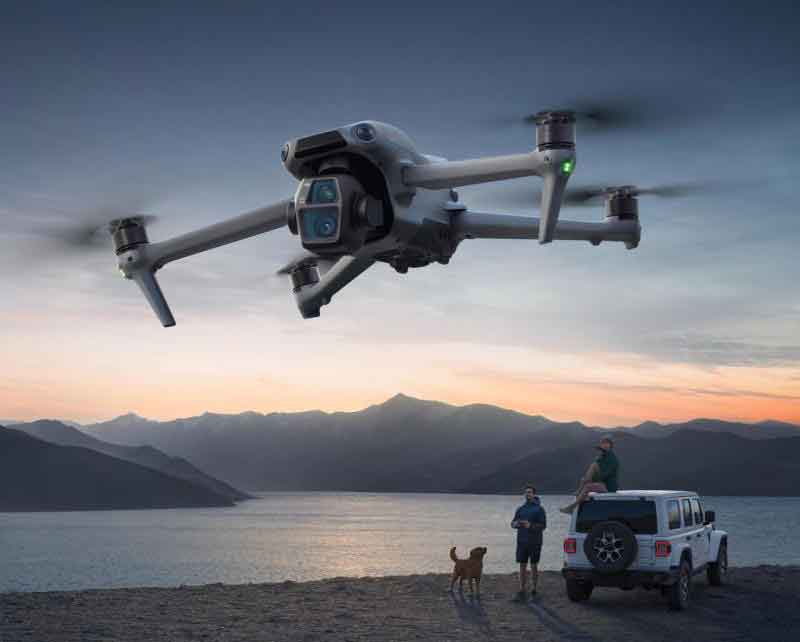
The integration of UAV drone technology with advanced sensing payloads is a cornerstone of modern industrial inspection, enabling rapid, large-scale data acquisition from perspectives previously difficult or costly to achieve.
Fundamentals of Dual-Spectral Sensing Technology
Theoretical Basis of Dual-Spectral Perception
Dual-band remote sensing fusion technology integrates spectral information from the visible and infrared bands, providing a richer, multi-faceted perspective for target detection and identification. In the visible spectrum (approximately 380–780 nm), imagery clearly renders the structural and color information of objects. For solar PV modules, visible-light images are instrumental in identifying surface characteristics such as soiling, discoloration, or obvious physical damage like shattered glass. For instance, a crack on a cell’s surface exhibits distinct texture and reflection properties compared to the surrounding area, which can be extracted using sophisticated image processing algorithms.
In contrast, imagery in the infrared band (spanning from ~760 nm into the thermal infrared region) primarily reflects the thermal radiation characteristics of objects. Within a PV module, a hot spot defect—caused by localized current mismatch, shading, or cell failure—results in abnormal Joule heating. This localized temperature rise manifests as a bright region in a thermal or near-infrared image due to increased radiance. This principle is grounded in Planck’s Law of blackbody radiation, which describes the spectral radiance $B_{\lambda}(T)$ of a body at absolute temperature $T$:
$$B_{\lambda}(T) = \frac{2hc^2}{\lambda^5} \cdot \frac{1}{e^{\frac{hc}{\lambda k_B T}} – 1}$$
where $h$ is Planck’s constant, $c$ is the speed of light, $\lambda$ is the wavelength, and $k_B$ is Boltzmann’s constant. The total power radiated per unit area is given by the Stefan-Boltzmann law:
$$P = \epsilon \sigma T^4$$
where $\epsilon$ is the emissivity and $\sigma$ is the Stefan-Boltzmann constant. By detecting anomalies in thermal radiation intensity, hot spots and other thermal irregularities can be precisely located.
The advantage of dual-spectral perception over single-band sensing is profound. A single spectral channel relies on limited information: visible imaging has low sensitivity to temperature variations, making thermal defects invisible, while infrared imaging, though sensitive to heat, lacks the fine textural detail necessary to identify subtle physical cracks or soiling patterns. Dual-spectral perception fuses these complementary strengths. Through the integrated analysis of visible and infrared data, objects can be detected and characterized with higher accuracy in complex environments, drastically improving the comprehensiveness and precision of PV module defect detection. The theoretical underpinning lies in the differential interaction of light with matter across different wavelengths, as described by spectral reflectance and emissivity models.
Core Technologies for Dual-Spectral Image Acquisition
Selecting an appropriate dual-spectral camera is critical for successful implementation. Key parameters govern performance and must be carefully balanced. Image clarity is directly related to spatial resolution; higher-resolution cameras can reveal minute瑕疵 but impose greater burdens on data storage, transmission, and processing. Sensitivity, often measured in lux, determines imaging quality under varying illumination; high-sensitivity sensors enable clear data capture in low-light conditions, mitigating issues from uneven sunlight or cloud cover. The spectral response range must be chosen to align with the characteristic signatures of PV defects. A common combination is a standard RGB sensor for the visible range and an InGaAs sensor for the short-wave infrared (SWIR, e.g., 900-1700 nm) range, which is highly effective for detecting thermal anomalies in silicon cells. Frame rate affects the camera’s ability to capture moving targets without motion blur; a high frame rate is beneficial for a fast-moving UAV drone platform. To enhance image utility, preprocessing steps like noise reduction (e.g., using Gaussian filtering or wavelet transforms) and contrast enhancement are essential to suppress irrelevant background information and accentuate target features. For mixed pixels common in remote sensing, spectral unmixing algorithms based on linear mixture models can decompose a pixel’s spectrum into constituent endmember fractions. Key parameters for dual-spectral camera selection are summarized below.
| Camera Parameter | Description | Impact on Image Acquisition |
|---|---|---|
| Resolution | Number of pixels in the image (e.g., 1920×1080, 3840×2160). | Higher resolution yields finer detail for identifying micro-defects but increases data volume exponentially. |
| Sensitivity / SNR | The signal-to-noise ratio, or minimum illumination required for a usable image. | Higher sensitivity allows for operation in diverse lighting (dawn, dusk, cloudy), improving inspection scheduling flexibility. |
| Spectral Response Range | The wavelength intervals to which the camera’s sensors are sensitive (e.g., Visible: 400-700 nm, SWIR: 900-1700 nm). | Must cover the diagnostic bands for PV faults. SWIR is crucial for detecting temperature-related issues in silicon cells. |
| Frame Rate | Number of image frames captured per second (fps). | A higher frame rate minimizes motion blur for high-speed UAV drone flights, ensuring image sharpness. |
| Co-registration Accuracy | The pixel-level alignment accuracy between the visible and IR sensor images. | Critical for effective pixel-level data fusion. Poor registration leads to inaccurate defect localization and analysis. |
Theory and Technology for PV Defect Identification Based on Dual-Spectral Data
In dual-spectral imaging, common PV module defects exhibit distinct signatures. A hot spot prominently appears as a localized high-temperature region in the infrared channel due to significantly increased thermal radiance, as per the Stefan-Boltzmann law. In the visible channel, it may show no obvious sign or a slight discoloration. Micro-cracks disrupt the electrical and thermal integrity of the cell. They can create localized series resistance increases, leading to subtle thermal patterns detectable in the IR band. In the visible band, their detection relies on analyzing changes in reflection and light scattering; advanced edge detection algorithms (e.g., Canny, Sobel) or texture analysis can be employed to extract these fine linear features.
For automated, robust fault diagnosis, machine learning and deep learning methods are paramount. Convolutional Neural Networks (CNNs) have emerged as a powerful tool. A CNN’s architecture is theoretically grounded in hierarchical feature learning. Its convolutional layers apply learnable filters (kernels) to extract spatially local features (edges, textures, patterns):
$$ (I * K)_{ij} = \sum_{m} \sum_{n} I_{i+m, j+n} K_{m,n} $$
where $I$ is the input image (or feature map) and $K$ is the convolution kernel. Pooling layers (e.g., max pooling) perform down-sampling to reduce dimensionality and induce translational invariance. Fully connected layers at the network’s end perform classification based on the high-level features learned. By training a CNN on a large dataset of labeled dual-spectral images (visible and IR patches of both healthy and defective modules), the model learns to accurately identify and classify defects like hot spots, cracks, snail trails, and bypass diode failures. Fusion can occur at different levels: early fusion (concatenating visible and IR channels as input), late fusion (processing channels separately and merging decisions), or mid-fusion within the network architecture.
UAV Drone Platform Adaptation Design
Selection Criteria and Key Performance Indicators
Choosing the right UAV drone platform is fundamental for effective PV inspection. The selection involves a trade-off between various platform types, each with distinct characteristics governed by aerodynamics. Multi-rotor UAV drones (quadcopters, hexacopters) offer excellent maneuverability, vertical take-off and landing (VTOL) capability, and stable hovering, making them ideal for small-to-medium plants or complex terrain. However, they suffer from limited flight endurance and payload capacity. Fixed-wing UAV drones provide superior endurance and speed, covering vast, open-field PV plants efficiently. Their operation is based on generating lift via forward motion and wing aerodynamics ($L = \frac{1}{2} \rho v^2 S C_L$), but they require a runway or launcher for take-off and landing, and cannot hover. Hybrid VTOL UAV drones combine multi-rotor agility for take-off/landing with fixed-wing efficiency for cruise, offering a compelling balance for large-scale inspections. Key selection metrics include: Endurance, which dictates the maximum area inspectable per flight; Payload Capacity, which must support the dual-spectral camera, gimbal, and other avionics; and Flight Stability, crucial for acquiring blur-free images, often enhanced by advanced flight controllers and gimbals based on PID control theory. A comparison is shown below.
| UAV Drone Type | Key Characteristics | Typical Endurance | Typical Payload Capacity | Stability & Hovering | Ideal Application Scenario |
|---|---|---|---|---|---|
| Multi-rotor | High maneuverability, VTOL, easy operation. | 20 – 45 minutes | 1 – 5 kg | Excellent hovering stability. | Rooftop plants, small-to-medium ground-mounted plants, detailed inspection of specific zones. |
| Fixed-wing | Long endurance, high cruise speed, efficient. | 1 – 4+ hours | 2 – 10 kg | Stable in forward flight; cannot hover. | Very large-scale PV farms in flat, open terrain. |
| Hybrid VTOL | VTOL capability combined with efficient forward flight. | 1 – 2.5 hours | 3 – 8 kg | Stable in both hover and cruise modes. | Large plants with varied terrain or where runway access is limited. |
Adaptation Design for Integrating Dual-Spectral Sensing Payloads
Integrating the dual-spectral camera onto the chosen UAV drone requires careful engineering design. The payload must be mounted in a position that ensures an unobstructed field of view (FOV) covering the PV arrays below, avoiding propeller or landing gear shadows. The mounting location significantly impacts the UAV drone’s center of gravity (CG) and aerodynamic stability. The CG must remain within the manufacturer’s specified limits for stable flight, a principle from rigid-body mechanics. Mounting the payload low and central is generally preferred. Furthermore, the aerodynamic drag introduced by the camera housing and gimbal must be minimized to avoid reducing flight endurance. The power system needs adaptation; the dual-spectral camera, gimbal servos, and onboard computer consume additional power. The UAV drone’s battery capacity must be derated to account for this, or a higher-capacity battery pack may be required, adhering to energy balance equations: $E_{total} = (P_{propulsion} + P_{payload}) \times t_{flight}$. Communication links must be optimized. A high-bandwidth, low-latency digital data link (e.g., using COFDM technology) is necessary for real-time transmission of high-resolution dual-spectral video or images to the ground control station. Robust anti-interference capabilities are essential, especially in environments with potential electromagnetic interference from inverters or substations, which is analyzed using communication theory models for signal-to-interference-plus-noise ratio (SINR).
System Architecture of the UAV-Based Dual-Spectral Inspection System
Overall System Architecture Planning
The proposed intelligent inspection system is architected into three interconnected layers: the Aerial Platform Layer, the Ground Control & Communication Layer, and the Data Processing & Analysis Layer. The Aerial Platform consists of the UAV drone, the dual-spectral imaging payload, and onboard avionics (flight controller, GPS, telemetry). Its primary function is to execute pre-planned or manually controlled flight missions and capture geo-tagged dual-spectral image data. The Ground Control & Communication Layer includes the Ground Control Station (GCS) software running on a laptop or tablet, and the radio transceivers. The GCS is used for mission planning, real-time monitoring of the UAV drone’s status (position, altitude, battery level), and reception of telemetry and image data. It forms the human-machine interface for the operator. The Data Processing & Analysis Layer is the system’s brain, often hosted on a dedicated server or cloud platform. It receives and stores the raw dual-spectral data, executes the automated defect detection and classification algorithms, and generates comprehensive inspection reports. The layers communicate via wireless datalinks, forming a distributed system based on client-server and publish-subscribe models. The architecture ensures modularity, scalability, and real-time operability.
Functional Construction of the Data Processing Center
The Data Processing Center handles the core computational tasks. First, it requires a robust data storage and management framework. A relational database (e.g., PostgreSQL/PostGIS) or a time-series database is used to manage metadata (flight logs, GPS coordinates, timestamps). The large-volume image files are stored in a distributed file system or cloud storage (e.g., AWS S3), often compressed using codecs like H.265 or JPEG2000 that balance quality and size. The central function is automated defect detection and analysis. This involves a pipeline: 1) Preprocessing: Image calibration, radiometric correction, and precise registration of visible and IR image pairs. 2) Feature Extraction & Fusion: Applying the trained deep learning model (e.g., a two-stream CNN) to the registered image pair to extract and fuse spectral and spatial features. 3) Classification & Localization: The model outputs defect classifications and their precise pixel-level locations within the images. These locations are then geo-referenced using the UAV drone’s GPS and photogrammetry data. The final output is a comprehensive inspection report, which can include: Plant overview statistics; A detailed defect list with type, severity, and exact GPS location; Visual heat maps overlaid on plant layouts showing defect density; Trend analysis comparing current results with historical data to identify degradation patterns; and Maintenance recommendations prioritized by impact on energy yield. Furthermore, by accumulating historical data, the system can transition towards predictive analytics, using machine learning models to forecast future failure rates or performance decline for specific module batches or zones.
System Performance Testing and Practical Application Case Analysis
Design of System Performance Testing Protocol
A rigorous testing protocol is designed to evaluate the integrated system’s performance under various real-world conditions. The key metrics under evaluation are: 1) Defect Detection Accuracy: Measured by Precision ($P = \frac{TP}{TP+FP}$), Recall ($R = \frac{TP}{TP+FN}$), and F1-Score ($F1 = 2 \cdot \frac{P \cdot R}{P+R}$), where TP, FP, FN are true positives, false positives, and false negatives, respectively. Testing uses a controlled set of PV modules with known, verified defects (introduced artificially or identified by lab tests). 2) Data Transmission Stability: Evaluated by measuring packet loss rate and average latency during live transmission of dual-spectral video streams from the UAV drone to the GCS over a typical operational distance (e.g., 1 km). 3) Operational Efficiency: Assessed by measuring the area coverage rate (hectares per hour) achievable by the UAV drone system while maintaining the required image overlap for photogrammetry (e.g., 70-80% front and side overlap).
Test scenarios are varied to simulate different challenges:
- Lighting Conditions: Tests under clear noon sun (high contrast, potential saturation), overcast diffuse light, and early morning/late afternoon (long shadows, low sun angle).
- PV Module Technologies: Testing on monocrystalline silicon, polycrystalline silicon, and thin-film (CIGS, CdTe) modules, as their defect signatures in both spectra can differ.
- Environmental Factors: Operation in areas with potential RF interference, in moderate winds (e.g., 15-25 km/h), and across varying temperatures.
Specialized instruments are used for ground truthing, including high-resolution handheld IR cameras, IV curve tracers for electrical verification, and electroluminescence (EL) imaging setups for crack validation.
Analysis of System Performance Test Results
Statistical analysis of test data provides a comprehensive performance profile. Typically, results show that the dual-spectral CNN model significantly outperforms single-spectrum models, especially in discriminating between dirt (which appears cool in IR but dark in visible) and genuine hot spots (hot in IR). However, performance variations are observed across scenarios. Under strong noon sunlight, visible images may suffer from specular reflections (glint) that can be mistaken for bright defects, and thermal contrast for hot spots can be reduced if the entire module is heated uniformly. The fusion algorithm must be robust to these conditions. In low-light or overcast conditions, visible image quality degrades, increasing reliance on the IR channel, which itself may have lower signal-to-noise ratio for subtle thermal gradients.
Comparing results against target benchmarks reveals areas for improvement. If detection accuracy for micro-cracks is below target, potential root causes include: insufficient spatial resolution of the camera for sub-millimeter cracks; inadequate training data for crack features under various lighting angles; or suboptimal fusion strategy that fails to leverage the subtle complementary features from both spectra. If data transmission exhibits instability, causes could be electromagnetic interference from plant infrastructure degrading the RF link, or physical obstacles intermittently blocking the line-of-sight signal path between the UAV drone and ground antenna.
Based on this analysis, specific improvement strategies are formulated. To enhance accuracy, one can employ data augmentation techniques during model training, incorporate super-resolution algorithms for the imagery, or adopt more advanced network architectures like Vision Transformers (ViTs) for better global context understanding. To boost communication robustness, one can implement frequency-hopping spread spectrum (FHSS) techniques, use dual-receiver diversity antennas on the ground, or employ mesh networking between multiple UAV drones or ground nodes. These iterative refinements, guided by systematic testing, are crucial for evolving the UAV drone-based dual-spectral inspection system from a prototype to a highly reliable industrial tool.
In conclusion, this project successfully designed and prototyped a UAV-based photovoltaic inspection system utilizing dual-spectral sensing. The system synergistically combines the theoretical principles of multi-spectral analysis, the mobility of an adapted UAV drone platform, and the power of deep learning-based data fusion to achieve accurate identification of key PV module faults. While performance testing under diverse real-world conditions identified challenges related to environmental extremes and model generalization, it also provided clear pathways for optimization through algorithmic refinement and hardware improvements. This integrated UAV drone system offers a scientifically grounded, efficient, and scalable solution for PV plant condition monitoring. Its widespread adoption holds significant potential to reduce operational expenditures, prevent energy yield losses, and extend asset lifespan, thereby contributing substantially to the economic viability and sustainable growth of the global solar energy sector.