
The rapid proliferation of Unmanned Aerial Vehicle (UAV) drone technology presents a dual-edged sword for global megacities—centers of finance, governance, and innovation often termed “super first-tier” cities. While drones offer immense benefits for logistics, surveillance, and infrastructure management, their potential for misuse in sensitive urban environments has escalated dramatically. The threat spectrum ranges from privacy invasion and contraband smuggling to deliberate disruption of critical infrastructure and major public events. This paper, from my perspective as an observer and analyst of urban security technologies, provides a comprehensive examination of the current state, inherent limitations, and probable evolution of Counter-Unmanned Aerial Systems (C-UAS) within the unique and demanding context of the megacity.
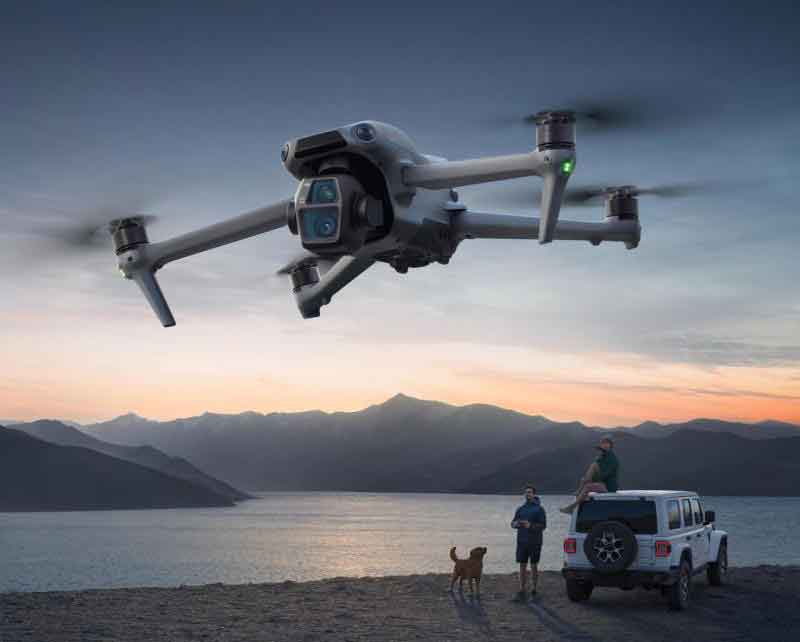
The urban fabric of a megacity creates a uniquely challenging environment for airspace security. The dense concentration of skyscrapers, complex electromagnetic noise from countless communication systems, high population density, and the frequent hosting of high-profile events create a perfect storm of vulnerabilities and operational hurdles. Traditional air defense systems are ill-suited for detecting and mitigating small, low-flying, and slow-moving (often called “low, slow, and small” or LSS) UAV drones. These consumer-grade or custom-built platforms can be easily acquired, are difficult to track on conventional radar, and can be programmed to fly autonomously, evading simple countermeasures. The urgency for robust, intelligent, and scalable C-UAS solutions has never been greater.
1. The Current Arsenal: A Taxonomy of Counter-UAV Technologies
Contemporary C-UAS strategies can be broadly classified into two categories: soft-kill and hard-kill methods. Soft-kill techniques aim to disrupt or take control of a UAV drone without causing physical destruction, while hard-kill methods physically neutralize the threat.
1.1 Soft-Kill Countermeasures
These methods target the data links, navigation systems, and command channels of the UAV drone.
1.1.1 Radio Frequency (RF) Jamming
This is one of the most common C-UAS techniques. It involves emitting high-power electromagnetic noise on the frequency bands used by UAV drones for command & control (C2) and telemetry (e.g., 2.4 GHz, 5.8 GHz). The jamming signal-to-noise ratio must overwhelm the legitimate signal, severing the link between the drone and its operator. The effectiveness \(E_{j}\) can be modeled as a function of jamming power \(P_j\), path loss \(L_p\), and the drone receiver’s processing gain \(G_p\):
$$E_{j} \propto \frac{P_j}{L_p \cdot G_p}$$
In a megacity, \(L_p\) is highly variable due to severe multipath propagation and shadowing from buildings, making consistent jamming coverage difficult.
1.1.2 GNSS Spoofing
Global Navigation Satellite System (GNSS) spoofing involves broadcasting counterfeit GPS/Galileo/BeiDou signals that are more powerful than the authentic satellite signals. The UAV drone’s navigation system locks onto these false signals, allowing the spoofer to manipulate the drone’s perceived location, speed, and time. This can force the drone to land, hover, or fly to a designated capture point. The spoofing signal \(S_{spoof}\) must satisfy:
$$P_{spoof} > P_{sat} + M, \quad \text{and} \quad \Delta \tau_{spoof} \approx \Delta \tau_{true}$$
where \(P_{spoof}\) and \(P_{sat}\) are the received signal powers, \(M\) is the receiver margin, and \(\Delta \tau\) represents the code phase. Urban canyons can block true satellite signals, ironically making spoofing easier in some locations but also limiting the spoofing system’s own reach.
1.1.3 Cyber Takeover (Hacking)
This technique exploits software vulnerabilities in the UAV drone’s firmware or its ground control station. By intercepting and deciphering communication protocols, a cyber-attack can inject malicious commands, hijack control, or install malware to disable the drone. The success rate \(S_c\) depends on the vulnerability index \(V_{uav}\) and the sophistication of the attack suite \(A_c\):
$$S_c = f(V_{uav}, A_c)$$
While highly effective against commercial models with known protocols, it is less reliable against custom or encrypted UAV drone systems.
1.2 Hard-Kill Countermeasures
These methods result in the physical interception or destruction of the rogue UAV drone.
1.2.1 Directed Energy Weapons (DEWs): Lasers & HPM
High-Energy Lasers (HEL): Focus a concentrated beam of coherent light onto the UAV drone’s airframe, causing rapid heating, melting, or combustion of critical components (e.g., batteries, motors). The energy required \(Q\) to disable a target is a function of laser power \(P_l\), dwell time \(t_d\), spot size \(A_s\), and the target material’s absorption \(\alpha\) and specific heat \(c\):
$$Q = \int_{0}^{t_d} \frac{P_l \cdot \alpha}{A_s} \, dt \quad \text{and must satisfy} \quad Q \geq m \cdot c \cdot \Delta T_{fail}$$
where \(m\) is the mass of the critical component and \(\Delta T_{fail}\) is its failure temperature. Atmospheric attenuation from fog, rain, or smog—common in coastal megacities—significantly reduces effective range.
High-Power Microwave (HPM): Emits a burst of wide-area microwave radiation to induce high voltages in the UAV drone’s electronic circuitry, causing permanent damage. The peak power requirement is enormous, and collateral damage to nearby civilian electronics is a major concern in urban settings.
1.2.2 Kinetic and Entanglement Solutions
Interceptor Drones with Nets: A “good” UAV drone is deployed to chase and capture a “bad” UAV drone using a launched or tethered net. This requires advanced autonomous tracking and flight control algorithms for the interceptor.
Projectile-Based Nets: Launched from ground stations, these net rounds physically ensnare the target drone. Range and accuracy are limited, and falling debris poses a safety risk.
Eagle and Drone Hunters: The use of trained birds of prey or specialized interceptor drones designed for physical collision. While visually impressive, scalability and reliability in complex environments are low.
| Technology | Working Principle | Primary Advantages | Core Limitations in Megacities | Typical Engagement Scenario |
|---|---|---|---|---|
| RF Jamming | Overwhelms control frequencies | Wide area effect, fast response | Collateral interference, ineffective against pre-programmed UAV drones, illegal frequency use | Crowded events, perimeter defense |
| GNSS Spoofing | Injects false navigation signals | Covert, can lead to safe capture | Requires clear signal path, ineffective against vision/terrain-following UAV drones | Static protection of fixed sites |
| Cyber Takeover | Exploits software vulnerabilities | Precise, no collateral damage | Requires specific protocol knowledge, slow against new threats | Against known commercial UAV drone models |
| High-Energy Laser | Thermal ablation of components | Speed-of-light engagement, precision | Line-of-sight only, severe weather degradation, eye safety, high power | Point defense of critical assets |
| Interceptor Drones/Nets | Physical capture or collision | Minimizes ground debris, reusable | Limited speed/range, requires own airspace management, high cost per engagement | Low-altitude, slow-moving single targets |
2. Critical Limitations and Challenges in the Megacity Battlespace
The deployment of C-UAS systems in super first-tier cities is fraught with unique difficulties that often negate the theoretical effectiveness of the technologies described above.
2.1 The Complex Electromagnetic Environment (EME): The urban RF spectrum is saturated with Wi-Fi, cellular (4G/5G), Bluetooth, and broadcast signals. This noise floor \(N_{urban}\) is极高, which both complicates the detection of a UAV drone’s faint signal and reduces the effective jamming ratio. Furthermore, malicious actors can exploit this noise to hide their drone’s communications or use less common, unjammed frequencies.
2.2 Urban Canyon Effects: Skyscrapers create severe signal multipath, shadowing, and blockage. This disrupts the line-of-sight required for effective RF jamming, GNSS spoofing, and especially laser engagement. A drone can use buildings as cover, popping up briefly to complete its mission. Detection and tracking radar systems struggle with ground clutter in such environments.
2.3 Collateral Damage and Safety: Hard-kill methods are extremely problematic. A laser miss or a shot-through drone can damage property or injure people. A drone disabled by HPM or shot down by a kinetic interceptor becomes a falling hazard. The legal and public relations liability of such outcomes is immense.
2.4 Asymmetric Cost and Scalability: A hostile UAV drone can be built for a few hundred dollars. Defeating it with a laser system costing millions, or even an interceptor drone costing tens of thousands, is economically unsustainable, especially against swarms. This cost asymmetry \(C_{asym}\) is a fundamental challenge:
$$C_{asym} = \frac{C_{counter}}{\sum_{i=1}^{N} C_{drone_i}} \gg 1, \quad \text{where } N \text{ is swarm size.}$$
2.5 Regulatory and Legal Gray Zones: Jamming and spoofing often violate national telecommunications laws because they indiscriminately disrupt licensed spectrum. Determining rules of engagement for destroying a drone over private property is legally complex.
3. The Future Trajectory: Towards Intelligent, Integrated, and Adaptive C-UAS
To overcome these challenges, the next generation of urban C-UAS will not rely on a single technology but will evolve into intelligent, layered systems. The future focus will be on detection, decision, and integration.
3.1 AI-Powered Detection and Identification
The first and most critical step is knowing a threat exists. Future systems will fuse data from a heterogeneous sensor grid:
- Multispectral Sensing: Combining radar (for all-weather range/velocity), RF scanners (for signal fingerprinting), electro-optical/infrared cameras (for visual identification), and acoustic sensors (for propeller signature analysis).
- AI/ML Data Fusion: Machine learning algorithms, particularly deep neural networks for computer vision and signal classification, will process this sensor fusion data in real-time. They will not only detect a UAV drone but classify its model, estimate its intent based on flight path, and distinguish it from birds or other authorized drones. The classification confidence \(Conf_{AI}\) can be modeled as:
$$Conf_{AI} = \sum_{s=1}^{S} w_s \cdot F_s(D_s),$$
where \(w_s\) is the weight for sensor type \(s\), \(D_s\) is its data, and \(F_s\) is the AI model for that sensor modality.
3.2 Integrated “Detect-Track-Identify-Decide-Engage” (DTIDE) Systems
Disparate sensors and effectors will be networked into a single command and control (C2) system. This C2 node, powered by AI, will assess the threat level, consider the environment (e.g., population density below the drone), and automatically recommend or execute the most appropriate, proportionate response from a layered toolkit. This moves from a single-technology solution to a technology-integrated system-of-systems.
3.3 Adaptive and Proportionate Response Sequencing
The system’s response will be graduated and intelligent:
- Early Warning & Tracking: AI fuses sensor data to establish a track.
- Non-Kinetic Intervention: The system first attempts a soft-kill. It may try targeted, narrowband RF jamming on the specific drone’s identified frequency, or launch a spoofing attack to guide it to a safe zone.
- Kinetic as Last Resort: Only if the soft-kill fails and the threat is deemed severe (e.g., carrying a payload, heading for a critical crowd), the system authorizes a precise hard-kill option, such as a laser from a protected location or a net-carrying interceptor drone.
3.4 Counter-Swarm Technologies
The ultimate challenge is a swarm of UAV drones. Future systems will need swarm intelligence themselves to counter this. Concepts include:
- Broadcast DEW: HPM systems designed to blanket a large volume of airspace.
- Swarm vs. Swarm: Deploying defensive UAV drone swarms that can physically overwhelm or disrupt an attacker swarm.
- Swarm Disruption Networks: Using high-powered RF pulses or cyber-attacks to break the intra-swarm communication mesh network, causing it to disintegrate.
3.5 Regulatory and Airspace Management Evolution
Technology alone is insufficient. The future requires:
- Universal Remote ID: Mandatory, unspoofable digital license plates for all UAV drones, allowing authorities to instantly identify authorized vs. unauthorized flights.
- Dynamic Geofencing: Real-time, digitally-enforced no-fly zones that can be instantly established around temporary events, communicated directly to compliant drones.
- UAV Traffic Management (UTM): Integration of commercial and civil drones into a managed airspace ecosystem, making anomalous, non-cooperative UAV drone behavior starkly obvious and easily actionable.
| System Layer | Core Components | Function | Enabling Technology |
|---|---|---|---|
| Sensing & Detection | Radar, RF, EO/IR, Acoustic arrays | Persistent, 360° surveillance and target acquisition | AI/ML for sensor fusion & classification, low-SWaP sensor design |
| Command & Control (C2) | AI Decision Engine, Battle Management System | Fuses data, assesses threat, selects optimal response | Cloud/edge computing, secure low-latency networking, predictive analytics |
| Effect Response | Modular “Layered” Effectors (RF Jammer, Spoofer, Interceptor Drone, Laser) | Executes proportionate neutralization | Adaptive jamming waveforms, cooperative drone interceptors, miniaturized DEW |
| Airspace Integration | UTM Interface, Remote ID Monitor | Provides context, distinguishes friend from foe | Standardized APIs, blockchain for ID verification |
4. Conclusion
The security of megacities against malicious UAV drone incursions is a constantly evolving contest between innovation and counter-innovation. Current C-UAS technologies, while effective in controlled scenarios, are severely hampered by the physics and complexities of the dense urban environment. Standalone jammers, spoofers, or lasers are inadequate solutions. The path forward lies not in seeking a single technological “silver bullet,” but in the sophisticated integration of diverse detection sensors and neutralization effectors under the guidance of artificial intelligence. The future urban C-UAS will be an intelligent, networked system—a cognitive shield that can see, understand, decide, and act with precision and proportionality. This evolution must be paralleled by robust legal frameworks and airspace management systems that empower defenders while protecting the legitimate use of UAV drone technology. The goal is to create a resilient urban environment where the immense benefits of drones can be harnessed safely, and their threats can be neutralized with minimal risk to the city and its inhabitants.